High concept, as best I understand it, refers to a story in which the ideas underlying the plot take precedence, perhaps even to the detriment of character development. Star Wars is sometimes cited as an example, as with its epic space-battles, Empire vs. Resistance theme, and surplus of action and adventure, there was little room – especially given the time limitations of the film medium – for character development. Yet Star Wars was successful for its concept, one that spawned many a spin-off, from comic books to video games, not to mention the six films.
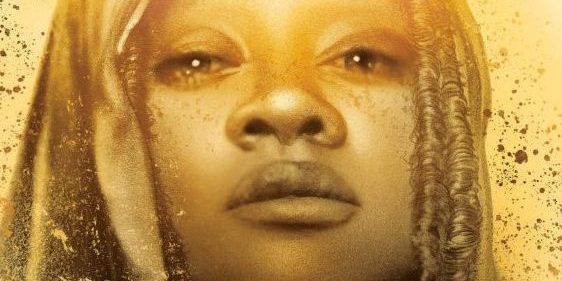
Certainly high concept and character development need not be mutually exclusive, as evidenced by Nnedi Okorafor’s Who Fears Death. I anticipate that many will argue my classification of the book as high concept at all. Who Fears Death is a speculative fiction novel set in post-apocalyptic Sudan. The apocalypse is so “post” in fact, that we never learn, nor does it even matter, what circumstances brought about the end of the world we know, replacing it with a seemingly endless expanse of desert and a peppering of ruined technology.
The focus, instead, is on the future. The narrator, Onyesonwu, is about to be stoned to death, and she is recounting the tale of how she came to be in that situation. As the readers, we are permanently invested in how the story’s present will lead to those circumstances, and as such are pulled along towards an inevitable conclusion.
This made for an interesting narrative strategy, because while on the one hand it created a sense of urgency and anxiety, there was also a loss of suspense, because regardless of what dangerous circumstances found her, we could disregard anything that did not lead Onyesonwu to the execution chamber. There was the prevailing sense that like in the Great Book heralded by the people of the story, everything that was to happen was already written. Of course, literally, every story we read is already written, or there would be no book, but that sense is not necessarily present in the reading. This kind of thing is often subverted when the narrator’s own expectations are defied for how things will ultimately play out. But in Who Fears Death, there was the sense of an inescapable fate. One perhaps, preordained by an almighty force.
Coming back to the idea of “high concept”, Who Fears Death, for its fatalistic structure, could have easily fallen into the trap of giving the overall plot precedence over the characters. Yet, on the contrary, the vast majority of the book was spent developing the characters as they traveled – no, were pulled along – towards their fate.
We come to regard Onyesonwu as a woman of indomitable will and purpose, yet in spite of that, the sense prevails that for all her strength, there is nothing at all that she can do to avoid her fate. The story – the concept – is in fact, stronger, and no matter how she struggles, she is to be merely whipped about in the figurative sandstorm. The prospect of Onyesonwu’s death hangs heavily over the entire story, reinforced by the characters’ own awareness of their fate by way of prophetic visions. It becomes almost oppressive in its inevitability.
Yet Who Fears Death is a study in contrasts, because while the characters are ruled by their circumstances, they are developed into fully-realized, living, breathing, believable people. It may be for this reason that the tension created by the sense of unavoidable fate is so strong, because most of us do not subscribe to such fatalistic notions, and so therefore neither should those characters with which we identify.
There is also a contrast that comes as the plot itself is turned on its head by the actions of the characters. Before she is executed, Onyesonwu manages to “rewrite” the Great Book – and again, how this happens seems to be completely beyond her control – in the process altering the fate of the world and its characters in subtle ways. Ways that left room for the changes to be perceived by those who were attuned to such things – as were other sorcerers like Onyesonwu herself.
The novel ends with a rewrite of the first chapter, in which Onyesonwu is not stoned to death, but rather destroys her captors and escapes, heading off in search of those she had lost: her lover, her friends, who fate had cruelly wrested from her before taking her life. But could they, who died before the point of revision, still live elsewhere, in a world literally outside of the story told in the Great Book? Perhaps.
This interplay between fate and self-determination, the meta-concept of a novel about a Great Book that once rewritten changes the structure of the novel itself, is an absolute mind-fuck, albeit a good one. And it is for this reason that I would call Who Fears Death a high concept novel. Yet for the precedence of its ideas, it remains a book full of strong characterizations, ones that both determine and are determined by the course of the narrative.
Follow the Waves, written by Amal El-Mohtar, and collected in the Lesbian Steampunk anthology Steam-Powered, is a story filled with gorgeous, rhythmic language, of the sort to be expected from someone who is a poet first. It seems that nearly every paragraph is layered with multiple meanings, and contain phrases that we could even call verses, which work as well as metaphor as at face value. Sometimes the language blends the senses together – overlapping sounds with visuals, feelings with scents or flavors – yet without any real adjustment required by the reader.
The world El-Mohtar has crafted is one in which gems are cut and carved in such a way as to facilitate people having dreams tailored to their specifications. Yet, of course there is a necessary disparity in perception between dreamer and crafter, and so Hessa – a dreamcrafter and protagonist of the story – sometimes must imagine the unfamiliar, through a synthesis of her own experiences.
One particular dream, for an important client, required her to create a backdrop along the sea. But, having never visited the sea, and furthermore averse to the very description of it, Hessa struggles with the crafting of the gem. Not until she has a chance encounter with a woman named Nahla, who apart from the norms of this particular society wears her hair in loose waves instead of in the braids that indicate one’s profession and/or station, is Hessa able to successfully carve a vision of the sea into the gem.
This very concept evokes the poetic sensory oscillation that I referred to earlier, with a woman’s hair able to inspire a vision of the sea, which in turn is embedded into a gem, to be experienced within the dreams of yet another. The title “Follow the Waves” is particularly poignant for me, as waves make me think first of frequencies, rhythms – manifest in matter or energy, as sound, shape, taste, or the movement of water.
Something as abstract as these waves could indeed be transmitted between the structure of the Nahla’s hair, Hessa’s interpretation retrieved from the light bouncing off of it, rendered physically in the gem, and perhaps echoed along some unconscious frequency to occupy the dreams of the client.
It is this concept of waves that carries throughout the story, flowing with its own rhythm through El-Mohtar’s poetic language. Take for instance the following passage, in which Hessa crafts a dream for a client while masturbating to the memory of Nahla for inspiration:
Hessa ground a cabochon with her right hand while her left slid between her legs, rocking her to the memory of long fingers she built into feathers, sprouted to wings just as she moaned a spill of warm honey and weightlessness. Afterwards she felt ashamed. She thought, surely someone would notice – surely, some dreamer would part the veils of ecstasy in their sleep and find her burning behind them.
We start with the visual of Hessa grinding the stone with one hand, pleasuring herself with the other. El-Mohtar’s language oscillates effortlessly back and forth between the physical, the concrete, and the abstract, with the touch of long fingers becoming the idea of feathers taking flight. Then, again, as we return to the physical sensation of orgasm – weightlessness – and the taste and temperature of warm honey.
The “parting of the veils of ecstasy”, exposing Hessa’s moment of indignity, also evokes the parting of her legs, behind which she is physically burning with the pleasure of orgasm. All of this without any breaks in the rhythm of the language, nor in the continuity of the narrative. On the contrary, it is beautiful use of a physical metaphor to describe an abstract sensation.
Later in the story, Hessa meets Nahla face to face, who accuses her of co-opting her unconscious self – her dream persona – and using her as toy for Hessa’s own pleasure. Here again El-Mohtar plays with the idea of waves, now not only transmitted between physical and abstract mediums, but across the realm of the collective unconscious. It suggests a continuity that challenges our idea of discrete phenomena, which may be mere waves in a continuous universal rhythm more so than individual things defined by physical or conceptual boundaries.
It is quite an achievement to maintain such a rhythm, both conceptually and linguistically, and El-Mohtar does it for pages more until a sudden, jarring note creates a disruption.
“Yes.” She smirked, and there was something cruel in the bright twist of it.
There it is, one word – smirk – a single note of discord in an otherwise beautiful rhythm. “Smirk” is an ugly word, at least for me, both visually and phonetically jarring to the point where I refuse to even use it any of my own writing. Not only is it an ugly word, it is an ugly gesture, one that expresses an ugly mindset, or at least a moment of ugly thinking. So smug and facetious and condescending and self-important all contained within the twist of a mouth. I can even hear a certain sound – an ugly “hmph” that goes along with it.
Were this my story, or were I the editor, I would have suggested that El-Mohtar exclude it altogether, and merely infer the smirk through the “cruel twist of the mouth”. I might, in a moment of pretention, suggest that this would be more showing than telling. But as a reader, it occurs to me that this note of discord might have been intentional, that the jarring sensation it created was precisely the point.
Up to this moment, Hessa had found a rhythm of her own, precipitated upon her fantasies of Nahla. The thing about fantasies, though, is that they project virtues and merits upon people and objects that may not truly be reflected in those people or objects themselves. Indeed Hessa not only projects her fantasy upon Nahla, she molds her with it, carving and shaping her like she does her gems. In this way she is able to sustain the rhythm of her workflow, which the reader experiences through El-Mohtar’s use of language.
Then Hessa’s encounter with Nahla is itself jarring, a clashing of fantasy and reality that fractures both. Nahla is not the beautiful, sensual, accommodating lover of Hessa’s dreams, but a rather coarse and abrasive woman, revealed with no greater clarity than in the instant of her smirk. The disruption the word creates for the reader parallels Hessa’s own discordant experience with Nahla.
Now it is quite possible that this entire analysis is the result of my hypersensitivity to language, and the projection of my own philosophical ideas onto El-Mohtar’s narrative. But in that her word choice seemed so perfect, so precise, and so rhythmic throughout the story, and given the prevailing concept of waves – oscillating between the language of the writer and the sensory interpretations of the reader – I am almost certain that the smirk was chosen purposefully.
Although it is prose, El-Mohtar’s story functions more like a poem in that the aesthetic and layers of concept and meaning take precedence over the plot, which actually ends at a point where I crave to know what happens next. Yet for that reason it loses nothing for ending the way it does, instead giving readers the opportunity to go back over the story in their heads, to play in its textures and folds, to hear and feel its rhythm, and indeed to follow the waves.
For a long time I’ve contemplated the relativism of insanity. I’ve seen people – usually homeless – sitting on the city sidewalks and murmuring to themselves or screaming nonsensical outbursts. Most people probably look at these individuals and, if they don’t ignore them entirely, they dismiss them as crazy. Perhaps they are, but sometimes I wonder just what that means. If perception is completely subjective, and reality is quite different for everyone with the exception of the few observed phenomena that humans generally agree upon, who’s to say that those murmurs or outbursts aren’t perfectly sane within another person’s reality?
Steel Rider, by Rachel Manija Brown, has a protagonist by the name of Corazon, who is a one of these titular riders. What these riders have in common is that they all somehow managed to gain access to some “other desert” within the deserts of the United States southwest, perhaps another dimension, where they were mentally bonded with giant steel robots called steeds. Each of the three women that we know this to have happened to in the story also experienced some sort of psychological trauma: the death of a husband, the massacre of a family, years of abuse.
As a child, Corazon heard voices in the things around her, and she often had trouble making sense of them, instead trying to block them out. But her experience with these voices encroached upon her reality, the accepted reality of her family, making it so that she was unable to care for herself and her family was unwilling to do so. They locked her in her own room for two years, until her sister, in a moment of mercy, left the door open for her to escape. Corazon ran out into the desert, shifted into that “other desert”, and returned in command of a steed called Nocturno.
The woman cocked her head toward the steaming pan, as if it might whisper the answer. I listened idly, now that she’d put the idea in my mind, and the pan began to recite nonsense poetry full of sibilants. The world is so talkative when I’m not riding Nocturno. [p. 145]
Upon her return to this world, this dimension, this reality, whatever the distinction may be between the two places, Corazon could still hear voices, but they no longer troubled her, and she could now make sense of them. In fact, the voices became a part of her new reality, practically another sense, with mountains and rivers or desert sands and frying pans communicating with her on a wavelength that others simply cannot perceive.
This is quite the interesting concept, and it brings me back to my earlier reflections about the relativism of insanity. We cannot know what the so-called “crazy” person experiences that causes them to act as they do, to act in ways that most of us find perverse or intimidating.
I recall a conversation with a woman who was in the process of getting her degree in clinical social work, her program involving work with patients at a local mental hospital. As she explained her work to me, and described several patients with a mostly compassionate outlook, she still could not refrain from referring to some of them as “just plain crazy”. Of course it is the fact that there is nothing plain or ordinary about their behavior that makes us perceive them as crazy in the first place.
What that conversation told me was that even amongst those who better understand the underlying conditions and the variables that can lead to someone having a perception of reality that conflicts with the surrounding world, there is a consensus that it all amounts to illness, rather than mere difference.
We take it for granted that our perception of reality is grounded in some objective truth. We do not even consider the possibility that there is no such thing, that instead “reality” is composed of a multitude of overlapping spheres of perception, the shared spaces together making up those aspects of reality that we agree upon – the collective consciousness, to give it another name.
What was it about traveling to that “other desert” that allowed Corazon to reconcile the disparity between her world of voices and the collective consciousness where such things were dismissed as indicators of insanity?
Is it not possible that the agreed-upon reality is restrictive, that it was the limitations of the collective consciousness that created the disparity, rather than any physical or mental dysfunction of Corazon herself? If so, then perhaps being able to detach from this reality momentarily, by traveling into that other world, she was able to gain some clarity, and emerge in a better place, where she is able to navigate the inner and outer spaces more fluidly.
Although I do not come away from my reading of Steel Rider with any greater clarity on the matter of mental illness versus differing perception, it is a story that I think could get people to think about psychological disparities in a different light. This may not be a matter of compassion, but also of advancement as a society, because it has always been those who “think differently” who have enabled us to evolve from the ordinary into the extraordinary.
Perhaps the paths to those other realities that are postulated by physicists and experienced by shamans are not opened by any physical tearing of time or space, but rather an inner journey between modes of perception.
John Coffey in The Green Mile. Cash in The Family Man. Bagger Vance in The Legend of Bagger Vance. These are just a few of the magical negro archetypes that have appeared in American fiction, particularly films, for decades.
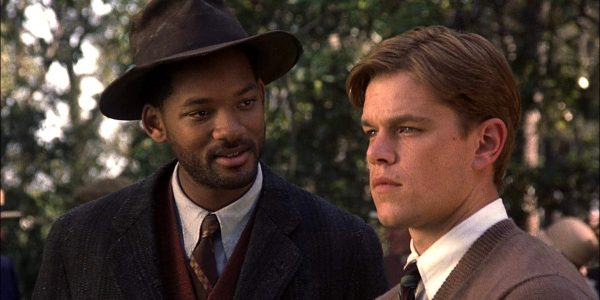
Will Smith as Bagger Vance
For anyone unfamiliar with the term, magical negro refers to a black character, who often by virtue of some magical or spiritual power helps the white protagonist through some personal challenge or crisis. The magical negro is seldom developed as a character in his or her own right, and often adheres to a number of different stereotypes. The character of Bagger Vance is particularly ironic given that the film is named after him, yet we never learn anything about him, and once he has fulfilled his role as purveyor of the white protagonist’s salvation or redemption, he disappears just as suddenly as he came.
Because the character is not developed, the audience does not really get the opportunity to peer into the magical negro’s thoughts, their concerns, their own personal take on the events as they transpire. One might wonder what would happen to the truly self-aware magical negro, and by that I mean one who is aware of the archetype and his or her own adherence to it.
Nnedi Okorafor’s Magical Negro presents an unnamed fantasy world, perhaps even an alternative Earth. Given that the main character’s name is Thor the Brave, Okorafor evokes Norse mythology, and makes it plain that the main character is white, with his “long blonde hair blowing in the breeze”.
It is one of the oldest clichés that the “forces of darkness” will set upon that which is good and “light”. In a medium where the heroes are most often white and characters of color – especially black characters – are reduced to plot devices, and in a society where power is designated along lines of “light” and “dark”, the old trope is necessarily racialized.
Poor Thor the Brave stands at the brink of death – literally, as he stands at the edge of a cliff, with malevolent shadow creatures approaching his back to destroy him. Then out of nowhere – at least not anywhere important enough for us to know in any detail – a black man appears and attempts to explain to Thor how he can save himself, by tapping into the power within his own heart. Shortly thereafter, the shadow creatures fall upon the black man and pierce him through the chest.
Here, Okorafor points the finger at another popular Hollywood tradition: killing off the black character first, and before s/he has a chance to develop. These two conventions complement each other so well, it is a wonder that they are not used together more often. Perhaps that is where Hollywood draws the line; after all, they wouldn’t want to be seen as ham-fisted in their approach. No, never that.
But Okorafor’s story takes a dramatic turn, as the magical negro has a moment of self-awareness. He dismisses the shadow creatures with a stern rebuke, then turns to Thor with some choice words:
“Look…fuck you.” Then he looked up at the blue sky and said, “My ass comes here to save his ass and after I tell him what he needs to do, I get sixed? Whatchu think I am? Some fuckin’ shuckin’, jivin’, happy Negro still dying for the massa ‘cause my life ain’t worth shit?”
The Magical Negro then proceeds to use his unexplained powers to magically toss Thor off the cliff to his death. He breaks the fourth wall, warning the reader that things are about to change, that the end is nigh for the mystical black sacrificial lamb.
One can only hope that while Hollywood continues to use the Magical Negro archetype, that there will be a parallel stream of stories where characters of color get their due. After all, I certainly would pay the price of admission for a film about such a bombastic character, especially as he goes off in pursuit of “Hobbits, castles, Rastas, dragons, juke joints, princesses and shit.”
American Gods, a novel by Neil Gaiman, depicts a metaphorical war between the gods of the old world and the gods of the new. It begins as the main character, Shadow, is set to be paroled after three years in prison for assault. Tragically, only two days before his release, he learns that his wife was killed in a car accident. Out of prison, and with no real home to return to, he is approached by a man calling himself “Mr. Wednesday”, who offers him a job as his assistant. Apprehensive at first Shadow takes the job, not realizing that he is setting in motion a complicated series of events which will determine the fate of the American consciousness.
For Gaiman, the gods themselves are born of human thought; they evolve through changes in telling and retelling of their stories. Selective pressures determine their form and their viability at any given time in the collective consciousness. Just as certain organisms are more fit for survival based upon their relationship to the surrounding environment – i.e. natural selection – gods become viable or unfit with respect to the mental climate of a society or culture.
Some gods are the “offspring” of other gods, as opposed to evolutions, because a story retold and altered as it travels may remain the same where it originated, resulting in two separate but related forms of the same god – parents and children.
For example, the “Father” of the Christian trinity, often depicted as an old European man in the heavens, can be seen as an evolution of the Greek Zeus, who also wore a long white beard and resided in the sky. Likewise the figure of Jesus Christ is a conglomeration of various figures who preceded him. He is an evolution of the “Godman”, present throughout many mythological traditions, who dies and is resurrected. Some of his analogues include Osiris of Egypt and Dionysus of Greece. And it was Odin, like Jesus, who was also crucified and his side pierced with a spear. The conflation of myths to create the story of Jesus is discussed in detail in Jesus and the Lost Goddess by Timothy Freke and Peter Gandy:
Jewish Gnostics combined the Exodus initiation myth of the Jewish Christ Moses-Jesus and the initiation myths of the pagan Godman Osiris-Dionysus to create a unique synthesis we know as the gospel of Jesus Christ. (Freke & Gandy, 18)
It is possible too, although no historical evidence exists to support it, that the evolving myth incorporated the account of a real life person crucified around the time he was said to have lived in order to lend it greater validity. Ultimately, though, whether or not the “Son” or the “Father” actually exist, how they manifest in the consciousness of their believers is likely to differ from their physical or metaphysical reality. They become, for each believer, a subjective phenomenon, as evidenced by the many different interpretations or depictions in art.
This concept of gods as creations – even extensions – of human consciousness is not a new one, and is in fact well established within the psychology of religion. For every person or society, the god or gods in some way embody their culture and the different aspects of their environment as they perceive it.
In this way, the existence of gods is cyclical and somewhat paradoxical, sharing a self-same identity with those who believe. Even an almighty creator god itself stems from the minds of those it was said to have created.
There is a blurring of the line between metaphor and reality as the gods have real physical world manifestations. These gods are not the all-seeing, all-knowing entities one may expect. On the contrary, they are depicted as mortal, vulnerable, and live much like human beings – holding jobs, forming relationships, eating, sleeping, and dying. It is quite novel to see the legendary All-Father, Odin, cast as a lecherous and manipulative con man, or the Egyptian God of Death, Anubis, working as a coroner.
Many gods and supernatural beings, both popular and obscure – make an appearance, such as Kali and Ganesha of India, Anansi of West Africa, leprechauns from Ireland, Anubis and Thoth from Egypt, and djinni from the Middle East. Gaiman then introduces the “new gods”, such as Media – a woman in heavy makeup so perfect as to be unreal, Television – taking on the form of a generic celebrity personality, and Internet – an arrogant fat kid one might picture as the head of a successful dot-com business. More or less anything that has dominated the American consciousness is represented as a god – be it a new technology such as drugs, railroads, cars, and airplanes – or important changes in the way people live.
Anything that dominates mental space, so as to inspire reverence or devotion, can be a “god”. A television can even be seen as an altar, and indeed people plant themselves in front of them on specific daily schedules. They make sure not to miss their favorite programs, showing the same kind of rigorous devotion as a person who regularly attends church on a given day. As such, the deities draw their power and thrive, or weaken and perish, on the strength of their adherents’ beliefs.
“So, yeah, Jesus does pretty good over here [in America]. But I met a guy who said he saw him hitchhiking by the side of the road in Afghanistan and nobody was stopping to give him a ride. You know? It all depends on where you are.” (Gaiman, p. 208)
The American incarnations of the old world gods were carried within the minds of people who migrated from Europe, Asia, and Africa, but who maintained their traditions. In time, however, as cultures collided, blended, or were altogether displaced, many of the gods were lost to time, and in effect, succumbed to death. They are being steadily displaced with each new evolution in American culture, from the proliferation of the railroads during the industrial revolution to the advent of mass communication in the 20th century. Although most people would not acknowledge it, Gaiman points out that there are strong similarities between the worship of traditional deities at altars, and the common American practice of sacrificing time and devotion to the television.
While American Gods has all the excitement and suspense of an actual and even believable war between gods, it is in fact an allegory for the struggle between thought-phenomena for the right to occupy people’s minds.
Religions are, by definition, metaphors after all: God is a dream, a hope, a woman, an ironist, a father, a city, a house of many rooms, a watchmaker who left his prize chronometer in the desert, someone who loves you – even perhaps, against all evidence, a celestial being whose only interest is to make sure your football team, army, business or marriage thrives, prospers, and triumphs over all opposition. (Gaiman, p. 508)
The central idea of the book is that as societies change, advancing culturally and technologically, there is less time or “brain space” for old customs and old beliefs. The story takes place in the United States, which is becoming an increasingly secular society. Gaiman conveys the capriciousness of the American consciousness, how at ever-diminishing intervals, our minds shift from one paradigm to the next; religion for new age spirituality, books for television, newspapers and radio for internet. Only the ideas – here represented by gods – with the ability to change with the times can even hope to survive.
Shadow in many ways represents the iconic American. He is noticeably large and physically intimidating, ethnically ambiguous, superficially simple, and yet deceptively intelligent. Story-wise he is the son of a human woman and the god, Odin, perhaps a reference to the duality between this nation’s religiosity and modernity. He also represents the minds of all Americans, who are often forced to find a middle ground between old ideals with new ones created by rapid changes in society and culture.
He is first recruited by Odin as a crucial ally for the old world gods, as they make their bid for survival in an ever-changing world. The conflict comes to a head when Odin is killed by the new gods, but as Shadow eventually discovers, the whole affair was an elaborate scheme – a “two man con” – perpetrated by Loki, along with Odin himself. His death, which he knew to be only temporary, was the final push the old world gods needed to engage in all-out war with the new.
After crossing over to the new world, the American incarnation of Odin weakened with time, as the devotion of his followers diminished. Gods after all are subjective thought phenomena and manifest through the actions of those who believe in them. As they enter the collective consciousness, meaning that multiple – even many – people agree on the details, their ability to influence the world increases. But for Odin in the United States there were no more of the sacrifices of old, or wars fought in his name. Odin was a god of death, one who was therefore empowered by sacrifice, and in order to sustain himself, he orchestrated a master plan.
The war between the old world gods and the new world gods would inevitably be a massacre, with great casualties on both sides. Loki would dedicate the battle to Odin, ensuring that each death restored the All-Father’s strength. Loki himself, who thrived on chaos, stood to gain just as much power from the war itself. Parallels could be drawn between this scheme and the many battles – both physical and ideological – fought in the name of religion throughout history in order to sustain one creed or another.
Unfortunately for Odin and Loki, Shadow discovers the plan, and eventually becomes the arbiter between both sides, convincing them that the war itself is pointless, and will only serve to sustain unnecessary conflict. As Shadow manages to avert the catastrophe, Gaiman’s message seems to be that modern secularism does not have to be at odds with traditional spirituality or religiosity in the human consciousness, that the brain has ample capacity for both.
Reality is not so much different from Gaiman’s epic tale. Consider a holy war in which two opposing sides each believe that their god exists, and that the god of the other side does not. And this is why they are fighting. Whether or not either god “exists” is irrelevant, because so long as there are believers, and they think that violence is their only recourse, they will be driven to continue such a war indefinitely.
The mind truly is a battleground, with a war occurring on the small scale within every individual, as in the case of the seminary student who tries to reconcile his commonly held beliefs with obvious contradictions in history or scripture, or the atheist who cannot fully dismiss the sense of wonder that nature inspires to mere mechanical selection. The battle also takes place macrocosmically in the public consciousness, as different denominations disagree on the specific details of their gods, or debate on how or whether or not they should be invoked towards political ends.
The very idea that something like a television or a celebrity could be observed with the same reverence as a god may fly in the face of traditional religious perspectives, but the very nature of religion as a cultural phenomenon is often to adapt to changes in the global consciousness of its adherents. This is the very point of the book, that as the battle for “brain space” rages on, with each new scientific innovation, new interpretations of history, shifts in culture and society, we must reconcile these changes with the deep-seated desire in all of us to hold on to some part of our pasts. Whether or not our ancient gods projected themselves from the collective unconscious, or later became rationalizations of our emerging interpretations of the surrounding environment is a question that may be an end in itself, rather than one that even needs an answer.
Octavia E. Butler was renowned amongst science fiction authors for many reasons, from the literary content of her work to her implicit commentary on society to her stretching the usual tropes to the point of snapping. She proves that while there may be “no more original stories”, there remain ways to revisit familiar elements with a fresh pair of eyes and give them new life.
An example of this can be found in her novel Wild Seed, the protagonist of which is a shapeshifter – hardly anything new in the realm of fantasy, but perhaps not so common to science fiction. What Butler does with her shapeshifter – Anyanwu – however, is completely uncommon, in that she deeply considers all of the implications of what it means to even be a shifter, the full parameters of that ability.
The analogue that comes to mind is the wind elemental, who will of course control currents of air, maybe fashion them into slicing wind blades. But how many will manipulate air to create a vacuum around an opponent to suffocate him, or in combat with a fire elemental, simply withdraw the oxygen from the flames and render him powerless? Authors tend to delve into only the most superficial aspects of a given phenomenon, which is what makes them worn and trite.
Butler describes Anyanwnu’s abilities this way:
And you have not understood how completely that one body can change. I cannot leave it as you can, but I can make it over. I can make it over so completely in the image of someone else that I am no longer truly related to my parents. It makes me wonder what I am – that I can do this and still know myself, still return to my true shape. [p. 198]
As a shapeshifter, Anyanwu has complete control of her body down to the smallest unit. We see her perform the expected, such as transforming into other people, or even animals. But we also come to understand that because aging is entirely a physical process, Anyanwu for her ability to control all such processes, is also in fact, an immortal. For this, she has lived thousands of years, and countless different lives. In the particular situation above, Anyanwu is discussing how she transformed from an African woman to a white man.
The setting was the southern United States in 1840, a time when as an African woman, she would have been enslaved. She invented the identity of a white man and even purchased other enslaved people under the pretense that she would own them herself, only to instead create a sort of egalitarian commune in the midst of a time and place that such a thing should have been impossible.
Furthermore, she was married to a white woman, one who for her own special abilities, became fully aware of who and what Anyanwu really was – that is, a black woman – and loved her just the same. In the above section, Anyanwu is further clarifying her abilities within the context of an offer she made to her wife, to transform herself so completely into a white man that they may have children. However, during the time, a white woman who gave birth to black children was looked upon with scorn, “becomes almost an animal in the eyes of other whites”.
Under normal circumstances, Anyanwu only changes her outer appearance, but in this case she was willing – and able – to transform her very DNA, although this term was not yet known, to give her wife white children. In the end, the wife recognized the implications of such a change for Anyanwu, that she would be asking her to be something completely other than herself, invalidating her worth as a human being. The compromise was instead, for the two not to have children at all, and instead continue caring for the greater community as their family.
But the above passage also raises an interesting question about the content of “self”. If a person were able to transform themselves down to their very DNA, yet still somehow maintain their concept of self, how exactly do we define such a quantity? It would seem to me that, as Susan Blackmore discusses in her book The Meme Machine, that self is merely a collection of mutually benefitting ideas – memes – which in the spirit of preservation enter into a sort of collaboration, defining “self” within the brain of the human being.
This concept of self as a collection of interchangeable parts is consistent with our existential freedom to “reinvent” ourselves, once we recognize that we have the ability to do so. We can change how we interface with others, our outward appearance, our language, our gender, even to a point our “race” – at least with respect to our own internal concept of self, apart, if not completely removed from the perceptions of others.
The character with whom Anyanwu is speaking is another immortal, Doro, who although he cannot shapeshift, is a telepath with the ability to transfer himself from one body to another, “overwriting” the “soul” of the person who occupies the body and in effect killing them. His nature is an anathema to Anyanwu and forms much of the central conflict between them.
Wild Seed, which is part of Butler’s Patternmaster series of novels, does not get around to explaining the nature of Doro’s power, though most – including Anyanwu – believe him to be some sort of devil or spirit. However, knowing Octavia Butler to be a science-fiction writer, and one who always goes beyond the usual expectations for the genre, I suspect he is something far more complex.
I suspect that Anyanwu’s understanding of her own abilities and the implicit question of self offers some insight into Doro as well. It is my hypothesis that Doro is actually telepathically imprinting all of his knowledge, memories, and aspects of his personality – that is, the contents of his “self” – into the mind of the new host. He is, in terms of the body he originally occupied, his DNA, everything physical about him, long dead. But he manages to preserve himself by proxy, through a transference of “self” as a collection of memes.
If my theory proves to be true – although I actually suspect the above hints may be all Butler is willing to give, leaving readers to extrapolate for ourselves – it is yet another example of how the standard elements of speculative fiction can be infused with new life, so as to seem like entirely new concepts. In a sense, Butler shows us that whatever “self” defines the genre, is subject to the same existential transformation we see in Anyanwu and Doro.
The Coyote Kings of the Space-Age Bachelor Pad by Minister Faust is a complex work of fiction, from which it is difficult to pull a single unifying thread. Philosophical, historical, literary, political, and pop cultural references abound, such that it offers a connection point for many different audiences, while at the same time potentially losing others in the sheer volume of proprietary information – that is, exclusive to certain academic or cultural spheres.
For this, any attempt to “close read” a small sample of such a dense work risks overlooking just how many themes Faust is tackling – from the importance of brotherhood (specifically intimate male-male bonding without the false-necessity of homosexuality and subsequent stigmatization), to the little-discussed political motives of crack-cocaine distribution.
Minister Faust also evokes the parallel between the destroyer impulse and the advance of civilization – the latter usually attributed to mankind’s collective creativity. It is this theme that I will explore, through the lens of Heinz Meaney, one of Coyote Kings’ primary antagonists.
The World Man whose skull becomes sky and whose bones become mountains after he is murdered by his children – the Green Man whose body is seed becoming spring growth and summer harvest after assassination at the hands of his brother – the Sacrifice Man made of flesh but who is a woodworker nailed directly onto wood (as if the ancient code makers could not have been more clear) and whose followers wear a model of the device that murdered Him like a talisman (only incomprehensible if one neglects the core revelation) – is the earth-god who must die so that Its children may live upon Its flesh… [p. 530]
Meaney is a man who seeks the power to dominate and devour the rest of mankind to stand at what he projects to be the pinnacle of human evolution. To that end he destroys lives – through murder, manipulation, theft, deceit, even literally cannibalizing others. The “core revelation” of which he speaks is that it is through the lens of the “grotesque” that humans can truly understand the driving force behind both civilization and human evolution. Not just the pain of initiation into any number of social groups or status echelons, but how great advancement for the one has often come at the literal “sacrifice” of an other. He offers the alternate interpretation of the story of Cain and Abel, suggesting that Cain was in fact rewarded for his sacrifice of his brother, as from Cain sprouted civilization – again regarded as the gauge of human evolution.
Truly it is a strange – indeed grotesque – practice for Christians to wear the symbol of their savior’s destruction, under the pretext that it was through his suffering that mankind was redeemed from Original Sin. It is ironic, too, that Christians have often turned their noses up or pointed accusatory fingers down at faiths which practice animal and human sacrifice, while celebrating the sacrifice of their own religion’s central figure. Their hypocrisy is enabled by the purely bogus distinction between “sacrifice” and “martyrdom”.
In casting Heinz as a rather detestable antagonist, Minister Faust seems to be suggesting that we look at civilization in a different light. That perhaps we should look at it not so much for the boons it has granted humankind, but with respect to the oft-forgotten sacrifices – of human labor, flesh, and spirit – which make up its foundation.
Heinz speaks of the advances in medicine founded upon the sacrifice of animals and says that we are not likely to discard them on account of the millions of human lives they have saved. He also mentions discoveries made through torture in Japan and China, and mass murder in the Jewish holocaust.
I was reminded of Naomi Klein’s The Shock Doctrine, wherein she lays out in explicit detail the shock treatment practices of torturer-psychologists, which were intended to unmake the victim and make his mind fertile for new suggestion. Klein draws a parallel between the shock treatment of individuals and the shock tactics employed against entire nations, the latter of which – not so coincidentally – often directly incorporated the former. The series of military coups in South America in the 1960s and 1970s, in which countless dissenters were executed, created such a “shock” to the public consciousness that they were less resistant to sweeping economic changes from a socialist model to a neoliberal one.
The events of September 11, 2001 in the United States, and the rush to build anew in New Orleans and Iraq, in the aftermath of natural disasters and man-made destruction respectively, offer more contemporary examples of how “advancement” has been predicated upon enormous sacrifice. Not one’s own willing sacrifice for the good of others, which we call altruism, but the more predatory sacrifice of another for one’s own gain. We call that parasitism.
Meaney extrapolates his central thesis of sacrifice to what may seem to be an absurd extreme – specifically, the need for the children of the earth-god (humanity) to devour that god (our world) in order to reach the next stage of evolution. But is it truly any different from or less extreme than the real-world myopia and immediate gratification motives of neoliberalism and the industrial complexes that ravage the planet in its name?
It was interesting to me that Minister Faust also drew a distinction between the “agro-sedentary pastoral” epoch, in which women and goddesses were the seat of power, and the “technomobile”, “urbanized”, “modern” period, built upon the primacy of men and male gods. The shift from the more egalitarian agrarian societies of antiquity to the more contemporary selfish capitalistic societies of today is itself a result of what Meaney calls the “phallic imperative”. Our modern civilization’s destroyer impulse is often referred to as the “rape” of the planet, a term that may seem like hyperbole in common discourse, but becomes poignant within the broader context of the epochal shift.
Heinz Meaney’s implication is that our final advancement as human beings will be predicated upon the annihilation of the world itself. Minister Faust seems to be suggesting we look at our “highly advanced” civilization for what it is – violent, invasive, and ultimately destructive for both those who have been and will continue to be sacrificed, and the sacrificer as well. Meaney, after all, meets an explosive end on the wrong side of a shotgun. Food for thought, perhaps, for other parasites and cannibals.
One thing that separates classic and modern fantasy, and seems to persist as a dividing line between British and American works as well, is the prevalence of lengthy exposition, particularly that applied to the setting. Psychologist B.F. Skinner posited that with each subsequent generation, modern audiences have greater need for immediate gratification in their consumption of media. Newspapers gave way to radio, and radio to television, and with each new innovation, the need – and thereby the desire – to wait decreased.
This certainly seems true for me in my reading of fantasy, as I find the works of Tolkien nigh unreadable, and I dismiss Robert Jordan as long-winded and pretentious. My eyes automatically glaze over any detailed descriptions of the slope of a hill or that precise shade of orange that only occurs in an autumn sky at 7:18 AM on the Northwest coast of – insert fantasy land here – during the second solstice on the morning after a full moon. I mean, seriously, give me a break. Who has time for that nonsense?
There were times during my reading of Richard K. Morgan’s The Steel Remains when my gaze jumped over a bit of exposition, my brain deeming it insignificant as I bridged the gap in text with my own imagination. Regardless of my personal tastes, one thing is for certain: an author cannot ever expect the reader to see their environment precisely as they imagine it, no matter how precise the description. Isn’t it better, then, to cover it in broad strokes, and leave it to the reader’s mind to ink the finer details? While Morgan is nowhere near as wordy as a Jordan or a Tolkien, he could stand a trim here and there. However, one thing that I can say for him is that he has moments of truly stunning exposition.
The sun lay dying amid torn cloud the color of bruises, at the bottom of a sky that never seemed to end. Night drew in across the grasslands from the east, turned the persistent breeze chilly as it came. There’s an ache to the evenings up here, Ringil had said once, shortly before he left. It feels like losing something every time the sun goes down. [p. 12]
For most people, and in most places, sunsets are regarded as beautiful, for their dazzling and often unique array of color, for the opportunity to look directly at the sun, for the painterly transition from day to night. For this, they are often the setting for many romantic scenes in books and film alike.
Yet, from the very first sentence of the paragraph above, we view the sunset through a different lens – one of morose, even pessimistic contemplation. The sun is not merely setting to rise another day, it is dying. The clouds are torn, suggesting that their condition is not natural, but has been inflicted upon them. The color is of bruises, not the more benign hues of flowers or other more pleasant things. In fact, the sun is not so much setting, it seems, as being assaulted by the oncoming of night – wounded, killed, then gone permanently cold.
Aside from the obvious success of this passage in creating a mood, it also speaks volumes about the character Ringil, a grizzled war veteran who is estranged from his family, and completely cynical towards political establishment. His is an embittered, often caustic personality, and yet here in this paragraph we get to see some of the wounded spirit beneath the calloused persona. Far from filling his head with romantic notions, the sunset in this place fills him with an ache, a sense of loss – perhaps another reminder of all that he has suffered, on the battlefield, in the court, and amongst his own family. It is a rare insight into the vulnerability of a man who otherwise interacts with people from the other end of a blade – both his physical weapon and his sharp tongue.
More than creating a vivid visual, this bit of exposition serves additional purposes – one being to convey the mood of the place, and also the far more important task of character development. In my opinion, this is the strength of the modern writer, to be able to say so much in so little space, to be concise but no less evocative.
Broken Kingdoms, a fantasy novel by N.K. Jemisin, was a delight to read for many reasons, amongst them for having a woman of color as the lead character. When one considers the tropes of fantasy, they may think of Tolkien’s elves, dwarves, and dark lords. Few, unless they personally feel that inability to identify with the characters, would consider the absence of characters of color to be one of most common aspects of fantasy novels.
It is interesting that for all “darkness” figures into the thinking of fantasy authors, it is conspicuously absent from the features of the characters. The exceptions are perhaps the “dark lords” and such, who play off of the fact that darkness equates to evil in the white literary imagination. Tolkien himself even took it a step further, equating not only darkness with evil in the abstract, but designing his evil characters – goblins, trolls, and the like – with Africanesque features.
So, again, it was refreshing for the main character in a fantasy story to be a woman of color. Truly, for all the lack of protagonists of color in general, the absence is even more pronounced for women. It is as if “the darkness” obscures the authors’ ability to see the possibility for merit in such characters, or perhaps more mundanely, the prospect of profitability in the mainstream market.
One could say, and certainly it has been argued, that such exclusion is the product of experience, or lack thereof, that for fantasy authors – the vast majority of those who have been published being white men – people of color simply do not factor into their frame of reference. It is an argument with some validity I am sure, but it seems to falter when we consider the preponderance of ethnic fetishism, that is, the exoticification of the “other”.
For their distance from white beauty standards, black women are the most often excluded, while their Asian counterparts are more likely to be exotified. Still, it is more likely for a black woman to be fetishized for her blackness – and moreso any meaning ascribed to such a quality – than to be regarded for her personhood. This phenomenon is a reflection of Western culture as a whole, one that Jemisin in a suitable twist uses fantasy to illuminate. The protagonist, Oree, says:
Men praise parts of me endlessly – always the parts, mind you, never the whole. They love my long legs, my graceful neck, my storm of hair, my breasts (especially my breasts). Most of the men in Shadow were Amn, so they also commented on my smooth, near-black Maro skin, even though I told them there were half a million other women in the world with the same feature. [p. 24]
There it is in the first sentence, “always the parts, mind you, never the whole,” a commentary on how a person can be viewed in fragments, the imagination taking the pieces it wants while discarding the rest.
While this sort of objectification is common in general for men in their regard for women, it is particularly poignant in the case of women of color, who are often altogether invisible. Again keeping in mind their disqualification from the white beauty standard, even the “parts” viable for recognition in the imaginations of white men are limited.
To lend some weight to my analysis of Jemisin’s meaning here, in her world, the Amn race are analogous to Europeans, not only for their pale skin and angular features, but for their near world dominance – a hold they achieved, no less, through conquest and colonization. Indeed, Oree’s people, the Maro, were mostly annihilated in one fateful battle with the Amn.
The passage describes how these Amn – white – men lust over Oree’s dark skin, while at the same time demonstrating how Maro women in general are invisible to them. Only when dark skin can whet their sexual appetites does it receive any acknowledgment. And for that fetishism, the minds, the souls, the irruption of culture beneath the skin continue to go unnoticed. Jemisin and other authors of color, as well as more progressive-minded white authors, are the rebuttal to these tropes of fetishism and exclusion.
It is interesting to note that Oree’s invisibility was dangerous, for hidden beneath her dark skin is the very power to unmake the world. There may be a statement hidden here as well, because for all that black women are ignored outside of their sexual merits, black men by contrast are actively perceived as a threat in mainstream Western societies. Oree’s father was murdered for the threat he was deemed to present, while Oree herself remained beneath the radar.
Yet, of course Jemisin’s message probably is not that women of color, more than mere sexual beings, should also be recognized as a threat. Oree is a being as rich and multifaceted and complex as any other, one that should be recognized as an individual for all her merits and flaws – the latter never having anything to do with her skin color. She demonstrates artistic ability, wisdom, vulnerability, perseverance, and unfaltering love. And by the story’s end Jemisin shows that for all Oree’s capacity for destruction, she is more fundamentally a being of creation and preservation, through her art and by way of motherhood.
Perhaps the message then, is that the matrix of potential is far greater than what can be observed on the outside. Fetishism and exclusion – both in fantasy and real life – are equal in their disregard for this simple truth.
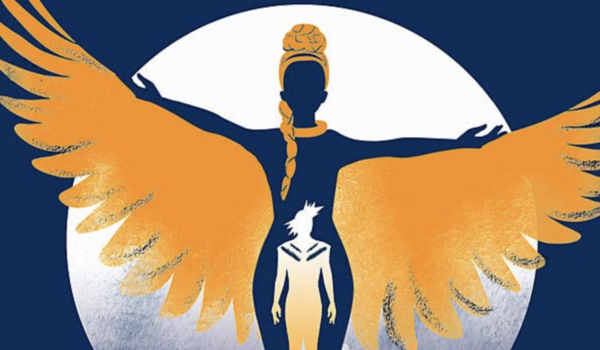
Until the Monsters Come is a speculative fiction novel that I’ve been working on for the last six years, half of which takes place in the “real world”, or what I call the Wake, and the other in a parallel world called Nou.
One of the main characters is an Indigenous Australian boy — Wiradjuri specifically – named Elan, living in New South Wales in the 1930s. For the part of Elan’s story that takes place in the Wake, I am borrowing from accounts of the Stolen Generations, from first hand accounts taken from the landmark Bringing Them Home Report, released in 1997.
Elan from UTMC (Early Concept)
As I’ve continued writing, however, I’ve gotten to thinking about cultural appropriation in fiction, and I came across this article by Nisi Shawl, which talks about how to classify the appropriator – as either invader, tourist, or guest:
Invaders arrive without warning, take whatever they want for use in whatever way they see fit. They destroy without thinking anything that appears to them to be valueless. They stay as long as they like, leave at their own convenience. Theirs is a position of entitlement without allegiance.
Tourists are expected. They’re generally a nuisance, but at least they pay their way. They can be accommodated. Tourists may be ignorant, but they can be intelligent as well, and are therefore educable.
Guests are invited. Their relationships with their hosts can become long-term commitments and are often reciprocal.
I actually wrote to the Miss Shawl and she advised me to do some outreach to members of the “host culture” from which I am drawing:
You are only an invited guest if someone at home in the culture in question invites you into it. Doesn’t sound like that has happened here. I am in no position to tell you if you are a tourist or invader. Again, that is the call of those at home in the culture in question. So I suggest you do some outreach along the same lines as you’ve done with me, but in that direction. My only other helpful tip is that tourists engage in some form of exchange with their hosts, which is much less the case with invaders (though colonizers and exploiters offer unequal exchanges for the good they appropriate, too).
I intend to take her advice, but the trouble is that I do not even know how to begin this process of reaching out. It would be awfully strange for me to try to contact some random Indigenous Australian and ask questions about cultural appropriation. The questioning itself would seem to me to foolishly ignore individual experiences and divergent perspectives, the existence of disparate groups beneath the umbrella term “Indigenous Australians”, and impose upon any given individual some responsibility to represent an entire group of people.
I have searched the internet for online Indigenous communities with little success, many of them outdated or riddled with spammers. Others are closed non-profit or community groups that I feel I would be rather self-important in approaching, as they are preoccupied with real concerns, and would not have time to respond to some random would-be author from the States. There seem to be a few possible leads on Facebook, but I remain skeptical about who started those communities and for what purpose. So I’ve decided to write this post as a way of putting my questions “out into the ether”, so to speak, for anyone to weigh in.
I am not looking for permission to write my story. Instead what I hope for is some feedback on the appropriateness of drawing from people’s real-life horror stories and placing them within a fiction novel. Of course all fiction draws from real life, but I’m wondering if I’m crossing some line between simply re-telling the story and co-opting it for my own purposes. People do it all the time with reckless abandon and without any concern for the sensibilities of the host culture.
And I don’t want to do that.
In my story, I am not delving too deeply into the particulars of Wiradjuri culture, but more the experience of a forceful distance created between Indigenous Australians and their families, livelihoods, and heritage, by this period of reprehensible government policy. Where my fantasy elements overlap with Australian mythology, it is coincidental, as I am actually drawing more from the psychology of Carl Jung and Gnosticism. However, there are common – maybe even perennial – themes that move through different cultures, and where I found synchronicity with Australian mythology I was thrilled at the coincidence, given that I had chosen an Indigenous protagonist.
There is nothing particular to the Stolen Generations experience that I must use. I am using those accounts without going into any of the lasting effects, the political ramifications, any of that, instead taking them in a vacuum as pure examples of human cruelty. Still, I did choose an Indigenous Australian character for specific reasons.
First is that the Stolen Generations story is one that is not too well known outside of Australia. Second is that I am insistent that my protagonist be a character of color, not only for the fact of inadequate representation of people of color in fiction, but an intentional rebellion against Western sensibilities and standards for what makes a “worthy” or “identifiable” protagonist.
I would be especially interested in corresponding with Wiradjuri people, given that I have chosen to make my protagonist a member of that particular group. But truly, any serious feedback would be appreciated and taken under due consideration as I continue my writing.