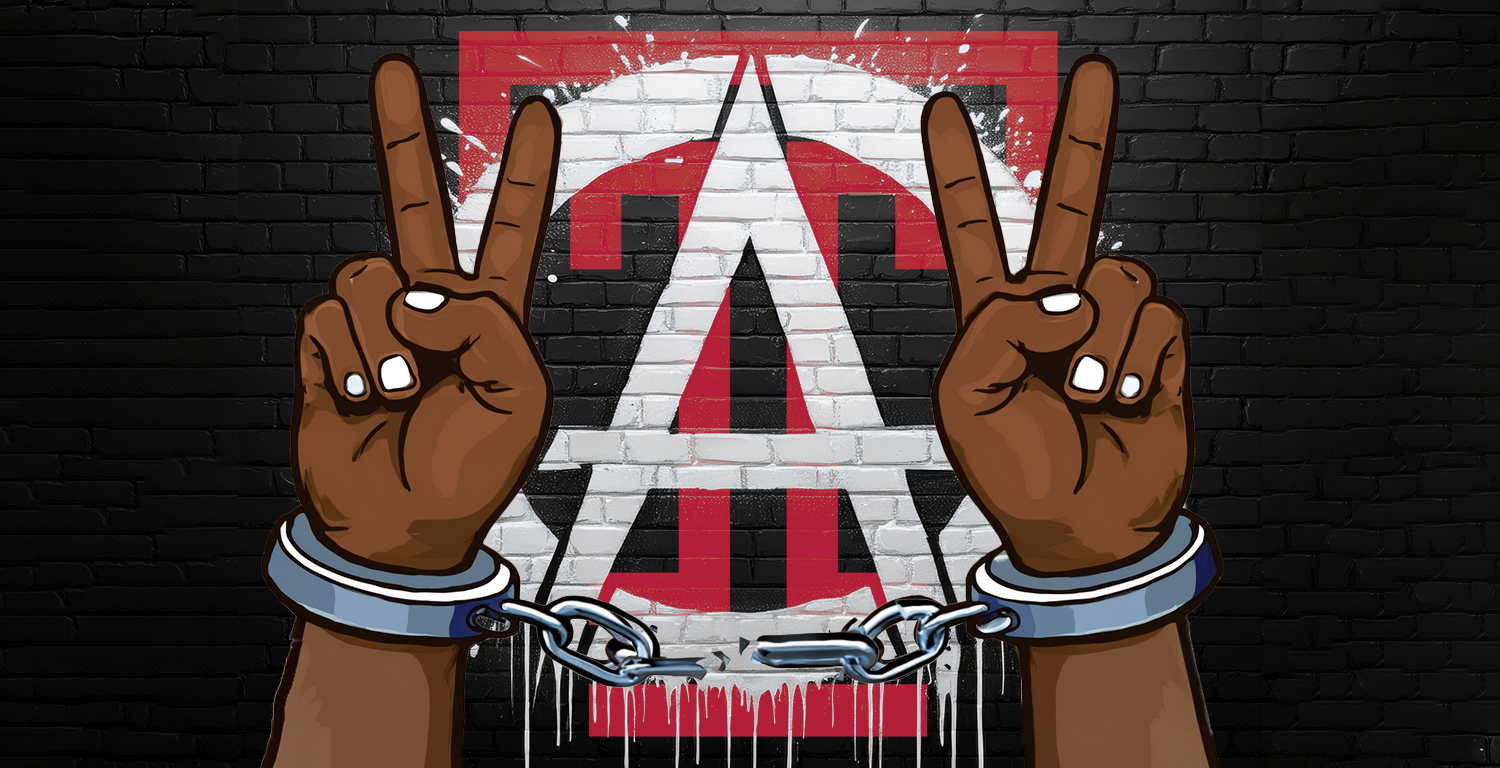

In August of 2022, I enrolled in the Temple Geography PhD program. By December of 2024, I was exiting the program early, with a Master’s Degree. I did not make this decision arbitrarily, nor did I leave because of any academic or personal difficulties. It was the result of members of the Geography Department (GENUS), including my own advisor, creating a hostile academic environment.
This is my attempt to hold certain individuals publicly accountable, even as I expect there to be no consequences for them. I am also writing this to provide information: to current and future Geography PhD students, as they pursue their own degrees and make decisions about who they want to work with, and to people and organizations outside the Academy, that they might weigh the pros and cons of any deeper engagement with the individuals named here. I should note, however, that my characterization of the GENUS “department” as hostile does not extend to any faculty not explicitly named here, most of whom I’ve never even met, any of the staff, or my fellow graduate students.
(As this is quite a long post, my advice for anyone taking the time to read it is that the main body of the post sufficient frames most of the supplementary content — screenshots of texts and emails — so skim or even skip it, unless you really want or need that deeper context.)
When People Tell You Who They Are…
I applied to the Temple Geography PhD program with full self-awareness of the inherent contradictions of being a self-professed school abolitionist and seeking 5 more years of schooling. I was also quite forthright about this tension in my statement of goals:
It may seem ironic that a school abolitionist would seek to enroll in a PhD program for at least another five years, but rather than more schooling, I am seeking to enter a community of practice, to engage with like-minded scholars in the co-construction of knowledge and more importantly, its application to radically improving the lived realities of the people of Philadelphia.


The committee that accepts students into the program presumably read my statement, and therefore had some idea of what to expect from me. My advisor, Christina Rosan, absolutely knew, as we were familiar with each other for a full year before the program began. They read my letter and said, “okay, come on in…and here’s some funding.” Perhaps 2022 was close enough to the short-lived post-George Floyd white liberal racial awakening that the committee felt obligated to swallow down any concerns or apprehensions in the name of “DEI”, and/or to keep up appearances as “good white people”, or even “allies”.
Regardless, that search for a community of practice, for application, is what never manifested for me at Temple, and what became the central tension in my time there. The rest, unfortunately, was a clash of fragile egos with a personality (mine) that gives no quarter to such fragility, least of all when it’s wielded against me in a hierarchical fashion.
Fall 2022: Fragile Egos and Hierarchies
It was bad from the beginning. In Fall 2022, the COVID-19 pandemic was still raging, new variants emerging, cases spiking, and the first whisperings of so-called Long COVID were getting louder. I was a new parent to a 7-month old, and son to a high-risk parent who also assisted me with childcare. Protecting the health and wellbeing of my family was paramount.
And so even though Temple’s policy was “mask-optional”, which generally meant “no masks”, I wrote to all my professors in advance to ask if we — professors and students both — could discuss a class policy. Two of three agreed, and the result was that everyone would mask. It wasn’t contentious at all. But the third professor, Jacob Shell, informed me that he wouldn’t even bother to ask the class because he himself would not be masking. Why? In his words:
running a seminar over 2.5 hours is enjoyable but physically-mentally demanding—at least the way I do it–and with a mask on the whole time it becomes much harder
At the time I couldn’t imagine what this meant. What could he possibly be doing that was so “physically and mentally demanding”? Aerobics? Or maybe he had some kind of disability? I decided to play it by ear.
As it turned out, what was so demanding is that Shell spent most of the two and a half hours talking. In fact, he out-talked the students 4-to-1. I know, because I timed it one day out of morbid curiosity. The first inklings of an argument were bubbling up.
The class was Geographic Inquiry, the purpose of which is to orient new students within the Temple Geography PhD program by offering a kind of survey of the sub-disciplines and the historical and thematic turns made over the years. That would’ve all been fine, except that Shell chose to take something relatively mundane and practical and change it into what I can only describe as intellectual masturbation — framing it all within Thomas Kuhn’s concept of “paradigms”.
If that wasn’t enough, he assigned us a reading from Italian fascist mystic Julius Evola, a racist misogynist who continues to inspire other racist misogynists in the present day. Why? I couldn’t say for sure, but what’s thematically resonant here is that Julius Evola, according to his Wikipedia entry, valued “authority, hierarchy, order, discipline, and obedience”.
About a month in, my concerns about COVID were still present and I saw no legitimate reason for Shell to to place what seemed to be nothing more than his personal comfort, above the health and wellbeing of my child. So I emailed him again. This time I copied the whole class, to circumvent Shell’s administrative bottleneck. I raised two issues: 1) my objection to his mask policy, specifically that he had made the decision unilaterally, and 2) my problem with his idea of a seminar being a 2 hour lecture, broken up only by the occasional question, which after 20-30 seconds of silence, he would usually answer himself. And then quite logically, I connected the two:
I swear I’m not trying to be facetious with this next part, but the connection between Issue #1 and Issue #2 is that maybe if you made more space for us to talk, it wouldn’t be so “physically-mentally demanding” for you to wear a mask. Please also understand that if there’s a tone you’re picking up on from this email, it is coming entirely from my ongoing concerns about the safety and well-being of my 7-month old child.
I made references to the health of my child four times in that email. And yet Shell never acknowledged it. He instead suggested I take the issue up with the department chair, Melissa Gilbert, knowing that she could not, because of university policy, demand he do anything different. It was a move that basically communicated he didn’t give a shit about my kid. But I was supposed to sit in front of this man while he gassed on about paradigms and mystical fascists, without complaint? Not likely.
In our back and forths about the merits of a lecture-dominated “seminar”, his feedback was that I “should worry less about how [he is] teaching the class, and more about getting reading and assigned documentary viewing done”. Also that his motivation was to get across to the class “a certain set of ”anchor’ ideas—ideas which are not always obvious to students”. And then, as if to reinforce his point, he compared his approach to the relationship between the inimitable Ruth Wilson Gilmore and her PhD advisor Neil Smith, as:
the product of a distinct tradition of taking the professor-student relationship, defined in a hierarchical way, as real and something to launch from.
This condescending elitist, who would place his own comfort above the health of his students and their families, nevermind their agency in making choices about their own health, also found it necessary to teach about a man who valued “authority, hierarchy, order, discipline, and obedience”, and to position himself as the Neil Smith to my Ruth Gilmore? Him? Mentoring me? The analogy was an insult to everyone involved. It’s almost comical now, but at the time, it had an early tarnishing effect on my experience.
In the end, I chose to attend the class virtually, but I also decided to make something clear to Shell:
Know, though, that our relationship will never be one of mentor and mentee, as you are not some superior scholar by whom I will be inspired, or directed. It’s that exact top down attitude that I find objectionable. But it matters not. Your class checks a box. And so it will be checked. That is all.
Shell is a man whose academic understanding of people and place is so out of touch with the actual people and places he talks about – and worse, lives and works in proximity to – that in December of 2024 he was “amazed” that the restoration of a statue of some 11th century Icelandic explorer, who never stepped foot into what would become Philadelphia, is the priority of precisely no one.

A look through Shell’s Twitter feed suggests an unwavering devotion to Eurocentrism, to extolling the virtues of European (and mostly male) thinkers, and to criticizing any political efforts to challenge or undermine their importance. Shell’s Geographic Inquiry class was the same: in discussing all of the “turns” in Geography as a discipline, the only non-white person he had us read was Chinese Human Geographer Yi-Fu Tuan, while the only woman was Ellen Semple.
While I wouldn’t deny the outsized role of European / white scholars in Geography, being an imperialist discipline for most of its history, I found it strange that Shell deemed the scholarship from other people and places irrelevant to its development over the years. Yet a place was reserved for Julius Evola, who wasn’t a geographer at all. This, taken together with his inflation of Neil Smith’s role within Ruthie Gilmore’s scholarship, while neglecting her own significance in steering Geography through its more recent turns, his hierarchical mentality, general arrogance, and total disregard for the health and wellbeing of my family, created an atmosphere permeated by white supremacy, even as he never made it explicit.
If only that were all I had to deal with in my first semester. But it was only one example of the “professor-student relationship, defined in a hierarchical way”.
Sanjoy Chakvravorty is someone I would characterize as a third world apologist for capitalism[1]I’m aware of the inelegance and obsolescence of the term “third world”, but I use it with intentional derision, and to separate this man from the “Global South”, which I … Continue reading, one who rejects arguments for climate drawdowns in the Global South, because non-Western countries are due their opportunities for economic growth at the expense of the planet. Chakravorty is somewhat infamous at Temple, having been there for over twenty years, yet deaf to the whispers of disgust swirling around him from every direction — students and faculty both — presumably because his own internal dialogue is too loud.
At some point he made a statement, something to the effect of the average Indian only owning three acres of land. And that this was not enough to make a living. I was rather stunned, as someone from Philadelphia, where we have pitched battles over urban agriculture done in 2,000 square foot parcels, and as a permaculturist, who knows that with the right methods, very large yields can be generated from relatively small amounts of land. I tried to bring these points up to him, and he, without any counter-evidence, just kept insisting that I was wrong. After advancing several related arguments, and even saying I had at the citations to back it up, he attempted to shut me down, saying “Kermit, you need to know when to back off”.
Y’all. Listen…
Anyone who knows me, also knows that “I am not the one”. Which means that aside from generally rejecting hierarchy, particularly where it subordinates me to anyone else, people should understand that their positions within certain formal, professional contexts, are completely dissolved outside of those contexts, and even more immediately where they treat me with disrespect. That’s a roundabout way of saying: don’t say any shit to me in the classroom that you’re not willing to say to me on Berks street.
I approached Chakvavorty after class, to set clear boundaries for our would-be professor-student relationship. We had a contentious discussion, in which he explained that he “has been studying land issues for 10 years”, and accused me of “only having ideology”, and claiming — evidently with zero knowledge of the term — that permaculture “is technology too expensive for India”. He also saw fit to place the blame for Sri Lanka’s food crisis, resulting in part from the government’s sudden banning of pesticides, on environmental activist Vandana Shiva. This revealed a shallow understanding of both Shiva’s overall arguments for regenerative agriculture, and the broader sociopolitical dynamics in Sri Lanka.
Within a rather long five minutes, Chakravorty outed himself as both someone who, in spite of 10 years of study, had no idea what he was talking about in this particular context, and as someone who, perhaps for his credentials, automatically assumed his 10 years gave him more knowledge than me. Oblivious to the possibility that for all he knew about me — that being nothing — I could’ve myself been a smallholder farmer in India for the past 30 years. It was the same mentality as Shell, which presumes that students are automatically, for their position in the academic hierarchy, less knowledgeable.
Toward the end of our conversation, Chakravorty said to me that “your insistence on arguing this point makes me inclined to not take anything else you say seriously.” Not only unprofessional, but unscholarly, and undermining of his credibility. Or, to put it a different way: his insistence on refusing any evidence that contradicts his position makes me inclined to dismiss every bit of academic output he’s ever produced. Because what, for his ego, has he failed to consider or even notice? At the urging of my partner, who didn’t believe he would evaluate my work fairly, I ended up dropping the class.
A culture of internal debate is inherent to Academia, from the common practice of peer review, to the “defense” of dissertations, to fact that many articles are written from a defensive posture, with the authors’ anticipating critique and trying to write “ahead” of it. Academics should, at any time, expect their ideas to come under scrutiny, and be prepared to counter them with their own evidence and citations. Why should my challenge of these professors at Temple not be received in the same way?
Because the key word in “peer review” is peer. Where challenges come from other, similarly credentialed academics, they warrant due consideration, not for their merits, but for the status which underpins them. For both Shell and Chakravorty, because I was a student, independent of the merit of my arguments, or even my own credentials, I was not qualified to challenge their ideas or their authority because of the “professor-student relationship, defined in a hierarchical way”.
That these two SIMMS[2]Acronym for “Self-Important Mutual Masturbation Society”. SIMMS can refer to departments, whole universities, or the Academy as an institution. It is also appropriate to call an … Continue reading, one whose class I was in for maybe two weeks, and the other who gave me an A- for the semester, tried to make a case against my continuing in the program after the first year, only further demonstrates how much ego supplants reality. And, in case you’ve lost track, this was all still in my first semester.
Interlude: The Passion of Dr. Christina Rosan
I met Christina Rosan (Tina) in 2021, when we were both working group co-leads for Drexel’s Climate Resilience Research Agenda. During that time, I came to learn about Tina’s other projects, which aligned well with my own aspirations, and a budding interest in Geography. It was Tina who convinced me to apply to the Temple Geography PhD Program, which I did with the explicit intention of having her be my advisor. Throughout the three and a half years we’ve known each other, we worked on various things, both within the student-advisor relationship, and beyond.
The most significant of these was “PREACT”, an NSF grant proposal to create an environmental mapping tool, toward which I donated hours of free labor and insights. When PREACT’s progress stalled, and I was invited to participate in a related project with a different team, I was very intentional about trying to bring Tina onboard, or where those attempts were rebuffed, keeping her apprised of its progress. I was steadfast in my loyalty. Because I had come to regard Tina as a friend — something which would later prove to be an egregious error in judgment.
Throughout our relationship, I remained consistent. Authentic, candid, perhaps to a fault, prone to liberal use of hyperbole and profanity, if it serves the point I’m trying to make in any given moment. None of this seemed to phase Tina, but if it did, there were many ways, both passive and direct, and many opportunities for her to express a discomfort, displeasure, or even concern with how I communicate. She never did. Never showed even an inkling. More than that she regularly engaged with me, and on many occasions we commiserated over our experiences within GUS.
My sense that Tina was a friend, not just an advisor, wasn’t just because of what I was able to share with her, but what she shared with me, which suggested a certain level of trust. She told me about her struggles within the Geography department, including her distaste for various faculty within the department. Tina had a particular gripe with Kimberley Thomas, who she saw as leading the charge to drop “urban studies” from the department name, which Tina saw as diminishing of her own work, and weakening the already tenuous connection between her and the department, given she is not a geographer by training. She shared her dissatisfaction with the pace of her career advancement, specifically around publishing requirements, her feeling that the book she had co-written a few years earlier was not being counted as it should have been.
I saw parallels between my feelings of alienation in the Temple Geography PhD Program, and Tina’s own expressions of feeling like something of an outsider. I thought this, perhaps more than anything, made us the right fit for each other. It became a regular thing for me to consult her opinion on different faculty as I decided whether or not to take a class, or even to consider them as possible members of my committee. If she had thoughts on a person, she would make suggestions based on how compatible our respective personalities were. Other times she would let on that she just disliked certain people, which didn’t necessarily translate into advising against taking their class, just perhaps that I should be wary.
What would eventually become clear, however, was that what I perceived as cause for commiseration and solidarity between Tina and I, was actually more a sign of her own fragility and sense of professional precarity at Temple. In one way or another, Tina was always a victim: of Kim’s attempts to marginalize her within the department, of Abby Sullivan’s rudeness when Tina reached out Philadelphia’s Office of Sustainability to discuss PREACT. She was a victim again, when a former colleague — barely an acquaintance, really — pursued a similar project and was able to actually get the funding where she was not. She was, in her imagination at least, maligned by the entire planning department at Temple — particularly Lynn Mandarano — who she suspected of resenting her for being in the Geography department, on the wrong side of an old rivalry.
When I look back on it now, I realize that Tina never quite “got me”, or perhaps never really tried to do so. While our conversations outside of the program were fruitful, those within the student-advisor dynamic seemed to always return to what I needed to do to comply with the PhD requirements. I asked her on multiple occasions to try to understand the bigger picture of what I was trying to do, and why I was having such a hard time. I offered her additional context, and asked her to read my earlier work, that she might understand how I imagined my own trajectory. That she never took me up on any of it was something I attributed to her lack of time or capacity (as a researcher, professor, and parent), rather than any lack of interest or commitment as my advisor.
But the warning signs were always there, echoes of earlier experiences where people who hold some social or political power yet simultaneously harbor some dubious claim to victimhood, are in some position to hurt me personally or professionally. That these experiences have almost always involved white women, like Tina, is not a coincidence, but rather inherent to the entire race-class power dynamic between us. In spite of my experience, how this would all manifest, how it would come to a head, still managed to surprise me.
Spring 2023: On Strikes and (the lack of) Solidarity
It was in my second semester that TUGSA, the graduate student union, went on strike, and where it was revealed just how little respect the university administration has for graduate students. “You aren’t an essential function of the university” is what they said to TUGSA representatives during negotiations. What surprised me was the complicity and cowardice within the Geography department, most of all from Melissa Gilbert, who was department chair at the time. Rather than using her position to provide some cover, she complied with the administration’s demand to identify the students who were striking. Worse, she also had the audacity to scab for a student’s class. The text thread below is a conversation between me and Melissa, in which I refuse to admit whether or not I’m striking, and question her rationale.


At the same time me, I was also having conversations with Tina, whose concern, like always, was about my ability to complete the program, and how striking might affect it. But what’s more relevant to here is how Tina offered nothing by way of defense of her colleague, nor did she take issue with my colorful language — no indication that she felt disrespected by it, or threatened by it. This is important context for later.


I do need to add here that after the strike ended, Melissa helped to get my former teacher assistant assignment (which was no longer available) changed into an research assistantship with Tina so that I could be paid for the rest of the semester. That was much appreciated on a personal level, and while it doesn’t give me cause to withdraw my previous statements, I’d revise them slightly to say Melissa was guilty of “cowardice”, as a behavior in a particular moment, as opposed to characterizing her as a “coward” overall. This whole situation, however, left me distrustful of Melissa, insofar as my ultimate inability to form a committee, as I will discuss in more detail later.
Fall 2023: Public Policy and Fundamental Differences
As the primary caregiver for my young child, it was difficult, if not impossible, for me to teach in-person synchronous classes as the work requirement for my enrollment. I avoided this in my first two semesters by being assigned as a teacher assistant, grading undergraduate work, which I could do on my own time, and from home. Knowing that I couldn’t count on TA assignments always being available, I searched for other funding options every semester. For Fall 2023, I was able to secure a fellowship with Temple’s Public Policy Lab (PPL), mostly I think, by riding a wave of good will that Tina had established with the people who ran the program. I want to be clear that at this point, Tina did seem genuinely committed to my longevity and success.
The PPL fellowship was a challenge for two reasons. First was that the expectation was that I attend in-person meetings two days a week, which was impossible for me because of my childcare responsibilities. As far as I knew, there was an understanding between myself and the PPL directors, but Tina clearly insinuated that they were unhappy with the arrangement.
I find it very difficult to understand passive aggressive behavior, or a general unwillingness to be candid or forthright. It’s probably clear from my account so far that if I have an issue with someone, I approach them directly to discuss it. If there was a problem with my not attending PPL meetings on the second day, I should’ve heard something about it, whether in person or even by email. So, really, I can’t even be sure that the PPL directors had a problem, or if it was actually Tina, more to do with the social capital she spent to get me into the fellowship in the first place. Maybe she felt that my “halftime” commitment reflected badly on her? If so, this was yet another thing that could’ve been addressed with me directly.
The second reason that the PPL fellowship was challenging was its very structure: bringing together graduate students and faculty from different disciplines to discuss their active or forthcoming research and/or projects. At least one week in advance, each fellow would share their work with the group, and then we would all discuss it, critique it, offer feedback during in-person meetings.
This quality of interdisciplinarity wasn’t the problem in itself. Rather it was that there was no unifying pretext or theme, other than perhaps the vague category of “public policy,” which my work, and certain others, didn’t really address. The discussions we had during PPL meetings were interesting, and even productive in some cases, and I am sure at least some fellows walked away with some valuable feedback — some of which, I’d like to believe, I was able to provide. But because we were mostly from different disciplines, and writing from certain foundations which were not mutually understood, the sessions sometimes featured a lot of confusion, explanations, and clarifications.
When it was my turn to share my work, I got the sense rather quickly that most people either had not read it, or had given it only a cursory glance, perhaps at the last minute. I say this because most of the questions that were raised were addressed in the work itself, in that hallowed academic tradition of anticipatory defensiveness. More than that, the questions exposed a complete misunderstanding of what I was actually trying to do, resurfacing the core tension between theory and practice which was emblematic of my entire experience at Temple.
At one point, Colin Hammar, the Associate Director of the PPL asked me a question which made no sense to me in the moment, but for which I have since conjectured a satisfactory explanation. What I presented was an early version of my Building BLOCs research, which if you’re unfamiliar with my work, is about modeling resilience at the scale of the city block, as an actual practice, if for reasons that are currently only theoretical. Colin asked something to the effect of “What about equity?” — that if my block alone were to achieve some standard of resilience, as I defined it, what about all the other blocks which did not have the same experience?
Huh?
This was confusing to me for two reasons. First, the paper I submitted clearly explained that my work was about modeling, and that successes and failures would be shared in an attempt to “scale” the desirable outcomes. Second, by what definition of equity should one group of people be denied the benefits of their labor, simply because other people do not share in those benefits? Completely absent from the question, too, was any consideration of the context in which my research and work was situated: poor and working class, and mostly Black, and therefore any improvement of their quality of life, especially where achieved through their own self-determination, would mitigate deeply entrenched inequities. This context was laid out at the start of the paper.
I also will never forget how, at the end of my session, Judith Levine, the director of the Public Policy Lab, said “good luck” with a smirk and a roll of her eyes. It really is the subtle things. My time in the Academy was like a war of attrition, so many micro and passive aggressions that could be plausibly denied even as their grinding effect continued to take its toll.
Some time later, I came to my own explanation of Colin’s question. If the lens through which he was viewing my work was public policy, such as could — theoretically — improve quality of life citywide, then I suppose focusing all of my attention in one small place could seem “unfair”? If, also, he was of a mind that the state is the only vehicle through which inequalities could be resolved, our two frameworks were almost entirely incompatible. Colin would hardly be the first person I’ve encountered who could not grasp the possibility of people improving their own lived conditions outside of and even against the whims of the government.
I only realized that Christina Rosan was another of these individuals when she said so directly. One day, as we were walking and talking through West Philly, she told me in so many words, that she “didn’t believe what I believe” — that people, of their own volition and power, and without state intervention, were capable of changing our current conditions. This, for me, was the first real “crack” in my self-assurance that she was the right person to advise me on my PhD journey. It was from this point on that every dogmatic return to the fundamentals — her constant harping on what I needed to do to get through the program, more about compliance than engaging with the actual content or merits of my work — felt more like an irreconcilable difference.
Spring 2024: Neurodivergence vs. Compliance
I came into the PhD program knowing more or less what I wanted to study, what I wanted to write about, and at least the kinds of things I wanted to accomplish through practice. This position emerged from a deep understanding of my own needs, as well as my neurodivergence. As anyone with ADHD will tell you, doing anything that is “not interesting”, even something as mundane as housework, can be practically Promethean in its difficulty. Graduate school classes are not housework. In the Temple Geography PhD program, they were far more grueling, much less practical, and in most cases, considerably less interesting.
Two classes which did not feel so grueling were both taught by Allison Hayes-Conroy. One class was directly relevant to my research, and in the other Allison allowed me to tailor the class requirements to the needs of my research at that juncture. It was through those two classes that I eventually developed the 5D Ecological Compass framework, which, far more than even the Master’s Degree, was the most (and perhaps only) valuable thing to come out of the program.
Allison would later tell me that she was disappointed with my progress, taking my narrow focus as my being “not interested or open to learning from the faculty in the program”. This surprised me, not that anyone would misunderstand me in this way, but specifically that she did, because I thought I had done some of my best work for her classes. It was true at least that the work I turned in to her was a steady evolution of the same ideas, and so while I understood how she could come to that conclusion, it didn’t feel great to be so mischaracterized. That all said, I greatly appreciated what autonomy she did allow me within the confines of the program, which as I mentioned, resulted in some of my best work.
By Spring of 2024, I was almost done with classes. Two more semesters and I could dive fully into my actual research, rather than trying to rework class requirements into something relevant. I took a Research Design class, which in addition to being a requirement for the PhD program, also functioned as the thesis course for the Master’s degree. The class was taught by Kimberley Thomas, who at that time was also the graduate chair. I liked Kim, at least in the beginning. My first interactions with her were not as her student, but through helping her set up part of the annual Nature and Society workshop — specifically, leveraging my personal connections to secure a local site visit for the participants. In the class, she was amicable, approachable, and really good at facilitating conversations amongst the students — completely the opposite of the top-down approach of Jacob Shell or Sanjoy Chakravorty.
My problems with the class, and eventually with Kim herself, were two-fold. First was that, in my mind, a “research design” course should have been primarily about methods, that is, how we should structure our actual research. Instead the class was mostly a writing seminar, the final product of which was a mock NSF proposal. Being able to write such a proposal would no doubt have been useful if I had any intentions of being a traditional academic, or someone who ever planned to apply for NSF funding, but neither was true for me.
My expectations for the course may have been misplaced, or based on my own misunderstanding, but it was disappointing nonetheless, especially since I was feeling no more like a “geographer” than I did before starting the program. This feeling had to do in large part with the utter failure of Jacob’s Geographic Inquiry class to orient me within the discipline, and the dynamics within the department as a whole, which as I described to Tina at some point as “a bunch of loosely affiliated faculty in a neoliberal university offering classes in their own areas of expertise, or based on their own interests or career advancement goals/requirements, with no semblance of continuity or thematic consistency, let alone any application in the real world.”

A characterization I stand by firmly today.
Aside from the scathing tone of that sentiment, what it really meant for me in practice was that nothing I was learning in the classes necessarily built on top of anything that came before. I never felt like I was gaining any traction, least of all in ways that felt important or relevant to the research I wanted to do. Today I have a Master’s degree in Geography, but I can tell you point-blank that I am not the master of shit as it pertains to this discipline. I am no more a geographer than I am a peanut. Less, actually, because I share at least some genetic commonalities with Arachis hypogaea.
The second problem with Kim’s Research Design class had to do with what I mentioned earlier, around my ADHD and struggles with attention on things I don’t find interesting. Before the class even began, however, I advocated for myself around my disability, by email:

Kim’s response was basically that I didn’t need to worry because the class was so essential and relevant to my future work in the program that everything would fall within the “cone”. Unfortunately, this was not the case, for the reasons I mentioned above, about the structure, purpose, and utility of the class (for me). More than that, it consisted exactly of the kinds of “small, relatively trivial assignments, that reflect compliance rather than comprehension or application”. The class was a week-by-week construction of the eventual mock proposal, and so it wasn’t long before I started falling behind, just as I had anticipated, and in spite of my every effort to push back against my own inertia.
Because all the assignments would eventually culminate in one final product, it seemed less important that I complete them on time, than to demonstrate the capacities they represented within my final proposal. I asked Kim if I could focus on what was current and work on the smaller missed assignments along the way. She confirmed that it was okay, and that I did not need to worry about my grade.. This would turn out to be untrue. Even though I received an A on my final proposal, indicating that I had “mastered” all I needed to learn, and indeed had worked in all of the smaller requirements, I received a C for the course. The reason Kim gave when I challenged her on it, was that I was docked for not completing all of the peer reviews for my classmates. I believe there were two, maybe three of these, out of maybe 10 to 12 assignments. But, as I said to Kim in an email:
The issue here is a technical/bureaucratic one, again to do with Canvas. Because I did not submit assignments on time, I simply did not receive peer work to review. Every assignment that I did review, I gave my full attention and thorough feedback. I was willing to do that at any time, outside of the Canvas system, but there was no opportunity to do that.
At no point when I expressed concern about my grade, did Kim mention the reviews being significant enough to almost completely undermine the rest of my work, in terms of my overall grade. What will become more clear later is that Kim has a tendency to be “flexible” with the truth.
In a later email, I framed my discontent with my grade in terms of disability accommodations, but along the way I also expressed my frustration with the program, with particular professors, and with what I felt were compliance measures rather than any assessment of my academic merits. Because I used accommodations as the basis for my argument, Kim went into defense mode, ignoring my more emotional appeal, and instead explaining how she had in fact complied with all her obligations according to university policy. It was ironic that of all the things I said in my email, Kim took it as some kind of attack on her non-compliance. I would attempt to make my actual intentions more clear in a follow-up email.


Kim did not respond.
At the end of the Spring 2024 semester, there was an “annual progress report”, a new initiative within the department. Before this, whatever process the faculty engaged in to determine whether or not a student should proceed in the program was completely opaque. About a month before the reports came out, Kim, in her role as graduate chair, sent out a survey to the graduate students, asking us to share our sense of our own progress, as well as what we’ve been working on outside of classes, such as volunteer work, fellowships, etc.
The “progress report”, which was issued about a month later, was odd for the fact that it was merely a recounting of those same self-reported activities, along with a recognition of my dissatisfaction with the program — which Kim no doubt derived from our email correspondence.
The response of the department was basically, “suck it up or bounce, bruh.” No questions or offers about how they might support me, or what might change to make my experience better. Nor any acknowledgment of the ways they (as a department) were complicit in, or directly responsible for that frustration and dissatisfaction. It was like the most passive-aggressive middle finger. Passive aggression, as you’ve surely recognized, was something of a recurring theme.

I couldn’t tell you whether Kim’s signature at the end of the letter meant that these were her own sentiments, or a consensus amongst the faculty that she represented as graduate chair, but it was her voice in my head as I was reading it. On the heels of our recent communications, what happened in Research Design, this more or less disqualified her for me — emotionally — from committee candidacy. I didn’t feel like I could trust her.
This distrust was even more warranted than I realized at the time.
Fall 2024: Petty Antagonisms and a Stunning Betrayal
One more semester of classes before I would get to formally delve into what I had already been informally doing the past two and a half years. My own research. All the struggles and deciding to persist were all to get to that point. Except, I wouldn’t make it.
The issues in my final semester began with class offerings that continued to feel extraneous, discontinuous, and from my perspective, arbitrary. My options were either to attempt another independent study — I had done two others prior to this — or to seek classes outside the department that met the requirements for the PhD. As it happened, I had a solid idea for an independent study, based on research done in Detroit that aligned with the overall arc of my thesis. It was the kind of work that I was desperately craving — practical, applied, with a potential material impact — and that just was otherwise not on offer at Temple. All I had to do was to get Tina’s approval, and to find a faculty member to serve as the instructor of record for administrative purposes.
Unfortunately for me, both my first and second choices for a faculty partner were on their way out for sabbatical in Fall 2024. At the same time, Tina was not-so-lightly pushing me not to pursue an independent study, as she seemed to think there was such a thing as “too many”, in spite of receiving direct confirmation from higher-ups that there was no such limitation. She “encouraged” me instead to look for classes in the planning department, or methods courses in other departments. At this point it should’ve been obvious to me that Tina was not very supportive of the actual work I wanted to do, so much as getting me to meet all of the program requirements. This breach, between my own desires, and university expectations, was a through line in my experience at Temple, and it was unfortunate that practically no one — at least not anyone with any power — was on “my side” of this struggle. I ended up enrolling in two planning courses as electives, and a GIS class, which fulfilled the final requirement for the program.
The next set of problems came by way of my teaching assignment: a class in the Intellectual Heritage (IH) department. It’s worth mentioning that this was an opportunity which only came about due to the university’s austerity politics, leading to the termination of nearly all of the faculty. Graduate students and adjuncts are cheaper than tenure lines, after all.
But I was excited about teaching this course, and felt well-qualified to do so, unlike Geography courses, given that even after two years I didn’t feel like I had found my footing within the discipline. The IH course was exciting because one of the required texts was Octavia Butler’s Parable of the Sower, a book which is not only one of my favorites, but deeply informs my own work. In addition to that, I was able to pick half of the selected readings for the course myself. In general, I was provided a level of autonomy and agency that I had otherwise been denied throughout my time at Temple.
Then came the “audit”. Some university functionary by the name of Keith Gummery reviewed my course Canvas page, and reported back to CLA administrators that I was using the Discord app for class communications and assignments. I received an email from the Senior Vice Dean of CLA — Annette Bakley — who spoke on behalf of the Dean, Richard Deeg, telling me that I had to stop using Discord immediately and transition the class back to Canvas. She cited privacy reasons with Discord, which as a digital privacy wonk myself, I had preemptively worked to mitigate. These attempts were not good enough, apparently. All of this was strange to me, but even more strange was that this order came down from the highest ranking person in the College of Liberal Arts. Why was I getting this much attention?
Because the course was asynchronous, the students and I did not meet, unless for office hours. Later in the semester, presumably after yet another “audit”, I was told by Kevin Henry, who had become the department chair after Melissa, that CLA was also requiring me to appear on camera for the videos I was posting for the class. This presented a challenge for me, because as a general rule, as part of my own digital threat modeling, I do not allow myself to be recorded, to have my likeness or my voice stored in any for-profit company’s cloud storage. The reasons for this are more than I want to explain here, but what matters is that I was given an ultimatum: comply or be denied this teaching assignment in the future.
At first I protested, both on privacy grounds, and as a practical matter, because why did students need to see my face? Was there some research that showed that student engagement or learning in asynchronous classes was greater if they did?
No, there wasn’t, and there isn’t.
That I pushed back at all seemed to be cause for someone in CLA to tell Kevin that I would not be allowed to teach the class, regardless of whether or not I complied with the camera mandate. This was a major problem, because asynchronous classes were practically the only teaching assignment that I could work into my childcare schedule. This was something that everyone in the chain of command understood full well, and no doubt factored into their ultimatum. The withdrawal even of the ultimatum struck me as petty and spiteful, a punishment for daring to even question their authority.
Kevin responds to email very quickly, almost as if he has some sort of direct brain-computer interface. This sort of responsiveness is a good thing, but it also made certain delays all the more striking. When I asked if he and I could also speak, in person, about the teaching assignment troubles, he responded immediately as usual, and said it would be fine. But when I indicated that the conversation I wanted to have was broader than just TA assignments, and in part about my feelings of “being treated as a ‘student’, a data point in some unfathomable algorithm, rather than a human being,” two whole days passed without a response.
Kevin’s silence, misinterpreted or not, felt like a response in itself. At best an apprehension toward dealing with personnel challenges within his own department, at worst a disregard for the sentiments I was expressing. I wrote back to say I no longer thought the conversation was necessary. Which really meant that I didn’t trust him with that conversation. This may have been an unfair evaluation of Kevin, but by this point I felt so beaten down from all directions, and wary of everyone.
What I didn’t realize until later, was that my request for a meeting with Kevin was sent roughly the same time — within the same hour — that I was having a particular text conversation with Christina Rosan. It was a conversation which as far as I knew at the time was unremarkable, but which would end up accelerating what had been a slow process of pushing me out. Was there a connection between this exchange and Kevin’s silence? One can only guess.
The conversation started when I shared an article by Steven Salaita — The Customs of Obedience in Academe — which is highly critical of the Academy, and provided me with such valuable perspective. It explained so much of what I was experiencing, from the hierarchical behavior of faculty, to the empty gestures toward collegiality. This prompted Tina to ask if I wanted to talk. I didn’t, really, but given the time and a platform to rant, I found it hard to refuse. I was very critical of the Geography program, CLA, and the university as a whole. As I was the entire 2.5 years I’d been there. I used a lot of choice language, as is my tendency, but the underlying sentiment was one of frustration. And it was clear that Tina was also frustrated — I thought perhaps at her inability to really help me. In spite of a fair amount of evidence that I should’ve done otherwise, I continued to give her the benefit of the doubt. Because, I thought, we were “friends”.
Meanwhile, in order to keep my funding, I had to find another class assignment. The professors in the Intellectual Heritage department, who were very supportive of me and my pedagogical innovations, and to whom I am grateful for advocating on my behalf, proved dependable yet again as we were able to schedule an in-person class that worked for me, after some negotiation with my partner around childcare.
On October 24, I received an email from Tina, in which she copied Kevin, Kim, and Julia Falcon, the director of graduate affairs in the College of Liberal Arts. Channeling her inner Karen, on some real “complain to the manager” type shit, she excerpted one small snippet of our private conversation, out of context, characterizing my words as “threatening and disrespectful”. This was also apparently part of a pattern “over the past few years”, which she had somehow never bothered to mention before. Even at an opportune juncture, like say, when I called her colleague a fucking coward? Curious.
And as of that email, suddenly, “contacting [her] via text message or phone [was] unacceptable”, and she wanted to “ encourage [me] to consider whether it makes sense to continue to PhD Candidacy or if it makes more sense for [me] to graduate from the program with a Master’s degree”. This latter bit was a direct reference to Kim’s (suddenly “Dr. Kimberley Thomas’s”) Annual Progress letter from the previous semester.
I was gobsmacked. Not even angry at first. Just so utterly confused that this person who I had built a relationship with, who I thought of as a friend outside of the student-advisor dynamic, would betray me in such a blatant way. Below you can read Tina’s original email, and my two responses: the first to everyone on the thread, and the second a more personal message just to Tina herself.


In the email, Tina wrote that “If we can develop a working relationship that is respectful, then I am willing to continue to serve as your advisor,” which served the double function of casting her as reasonable and generous, and characterizing our existing relationship as disrespectful. Neither of which was true. It was a classic move, subtly playing on built-in cultural assumptions of white female innocence and black guilt. She certainly also had to know that after such a bald-faced betrayal, there was no way I’d want her to continue on as my advisor. That choice, of course, would be my refusal of her generosity. Ungratefulness, even. Yet in the end, without a confirmation from me either way, she quietly went to Kevin and told him that she no longer wanted to be my advisor after all.
The timing of everything was also curious. If my text messages were so “threatening and disrespectful”, why was it a full three weeks before she sent her email? And was it just a coincidence that the email came a day after I managed, against the odds, to secure a teaching assignment? Hm.
Tina’s betrayal upended my already weak prospects for putting together a committee, within what I felt was a hostile department. I wrote an email to Kim to confirm my options – specifically what the process was, on the one hand, for graduating with a Masters degree, and on the other, who was eligible to be on my PhD committee. I had heard that only tenured or tenure-track faculty were eligible, and so to be certain, I identified the specific faculty by name.
Kim confirmed that of the total GUS faculty, only twelve were eligible. Four of these — Sanjoy, Jacob, Tina, and Kim herself — were immediately disqualified. I also didn’t trust Melissa, who because of her conduct as Chair during the TUGSA strike, gave me the impression she would place her own career ambitions or security above her integrity as a scholar, colleague, or advisor.
Of the seven remaining, only four did research even remotely related to my own. One of these four couldn’t commit to helping me, which I suspected had to do with rumors she was on her way out. And indeed she has since left the university. Another was about to go on maternity leave, and the other two declined on the basis of already having full plates. As it seemed I literally did not have the people I needed – not even two eligible, trustworthy, research-relevant faculty – able and willing to join my committee, I felt I had no choice but to leave early.
Kevin and Kim,
After Tina’s betrayal and abdication of responsibility, and after reaching out to other faculty to see who might be a new advisor and/or committee members, it seems I have been left in a position where I am unable to form a committee. At least one where I trust the faculty in question to have my best interests at heart, and to also be working in areas relevant to my research.
Therefore I feel I have no option other than to exit after this semester with the MA. I just want to make it clear that this “decision” feels much more like my hand is being forced. Lest someone try to launder this as some amicable departure, or some change of heart, or of all, my inability to complete the program.
There was not even a whiff of support from anyone that I remain in the program. Kevin’s response – less than 12 hours later – was tepid, matter of fact, and as impassive as his in-person affect.
Hello Kermit, Thank you for letting us know. CLA is working on the paperwork for you to graduate in December.
Worst of all, it turned out to be untrue that I had no other option. I have since learned that non-tenured faculty are eligible to join a dissertation committee: it only requires filling out a particular form. This means that Kim plainly lied to me in our email correspondence — a lie Kevin tacitly supported by not saying otherwise — which was not only deeply unethical, but has affirmed and further justified my distrust toward both of them.
Taken together, how else should I interpret these proceedings, except as a (perhaps loosely) coordinated effort to push me out of the university? Another question would be: Why? While I could almost understand Shell and Chakravorty pushing for my ouster — more likely for personal and ego-driven reasons than about my worthiness as a scholar — what great offense turned anyone else, especially Tina Rosan, so suddenly against me? What did I do that warranted Kim Thomas lying about the options available to me, ultimately tipping my decision toward leaving early?
The answer I have conjectured, the one that feels correct, reflects the sentiments of Steven Salaita’s article: I was not sufficiently obedient. Or, to quote Jacob Shell one more time, I did not submit to the “distinct tradition of…the professor-student relationship, defined in a hierarchical way”.
Aftermath
As of this writing, several months after my graduation from the Temple Geography PhD Program, I feel so much lighter, if perhaps less confident in my ability to conduct research on my own terms. At the American Association of Geographers (AAG) conference, which I attended recently to present a paper, it occurred to me that there is a particular “mode”, a switch that lights up certain parts of my brain, while dimming others, which is necessary to function within the Academy.
Sometime since my departure from Temple, that switch turned off. A colleague’s exam questions, which he shared for the very fact that they were so arcane, were literally illegible to me. I recognized all the words, but their order and arrangement may as well have been random. In a conference session, where a book author engaged with critics, one panelist read from an overlong pre-written review, while the other attendees listened quietly, a dynamic made all the more awkward for the fact that he was on Zoom, while everyone else was present in person.
As someone with the tendency to “ramble” — a function of ADHD — I am also sensitive to the time and space I occupy. So I found it particularly striking for this panelist to read page after page, seemingly without that same self-awareness, or perhaps as an indication of how the norms of the Academy — gasbagging, self-important posturing, clamoring for attention — are so out of sync with the norms of communication in the broader society. While the premise of his rambling was to shower the author with praise, it was framed in such a way as to also highlight the sophistication of his analysis. I mean, what is an academic book review, if not a way for one scholar to boost their own standing on the shoulders of another’s work, whether by amicable association, or some kind of takedown? Regardless, I found myself with little patience for it. I felt as though I was truly and fully on the outside of the whole vainglorious enterprise.
I pride myself on my ability to fluently navigate between different spaces and contexts, across race, class, gender, between the Academy, activist spaces, and everyday people I encounter on the street. This is, in part, because of my neurodivergence, but I think also because of my authenticity and candor. People are quick to trust me, to confide in me because I am so obviously not about the bullshit. I wear my agenda on my sleeve, and I am unflinching in my commitment to seeing it through.
I don’t say this to toot my own horn, but to emphasize the very quality that put me so strongly at odds with the Academy. Nothing about that institution is authentic or candid. Very little about it is real, which likely explains the prevalence of both impostor syndrome and actual impostors. Agendas are ephemeral, mercurial, changing as it suits narrow self-interest on the individual level, or the reproduction of institutional power dynamics. Recent events have only reinforced Steven Salaita’s argument that the Academy is a place where obedience is paramount, even if that means sacrificing one’s own to the cruel whims of fascism, and co-signing genocide.
Although the terms and conditions of my departure were not what I would’ve chosen, I am genuinely relieved to be on the outside. My abolitionist sensibilities, forged in the K-12 context, have since expanded to include the Academy, which in spite of any pretense of freedom, symbolic gestures toward liberatory theory or practice, and the brilliant scholarship which occasionally emerges, ultimately reinforces and reproduces the colonial-imperialist paradigm upon which it was built and by which it is sustained.
The very paradigm I am devoted to seeing abolished. And so, the work continues.