I don’t put much stock into the idea that we’re living in a simulation, first because I plainly don’t believe it, and second because it wouldn’t matter if we are. This is the only reality we know, and if “somewhere else” we’re actually just brains in jars hooked up analog to some supercomputer via some bio-electronic interface or just digitized consciousnesses interacting within a similar machine, it changes nothing for how I live my life.
Just like the actual composition of my body being quarks and whatever other weird subatomic shit I don’t understand is irrelevant to my conscious lived experience.
But what I want to start sketching out here are my thoughts about how what we experience as “reality” is increasingly manufactured — a simulacrum — even as compared to 10 years ago. These thoughts are mostly abstract and speculative, and maybe some day they’ll coalesce into an actual argument, but for now…
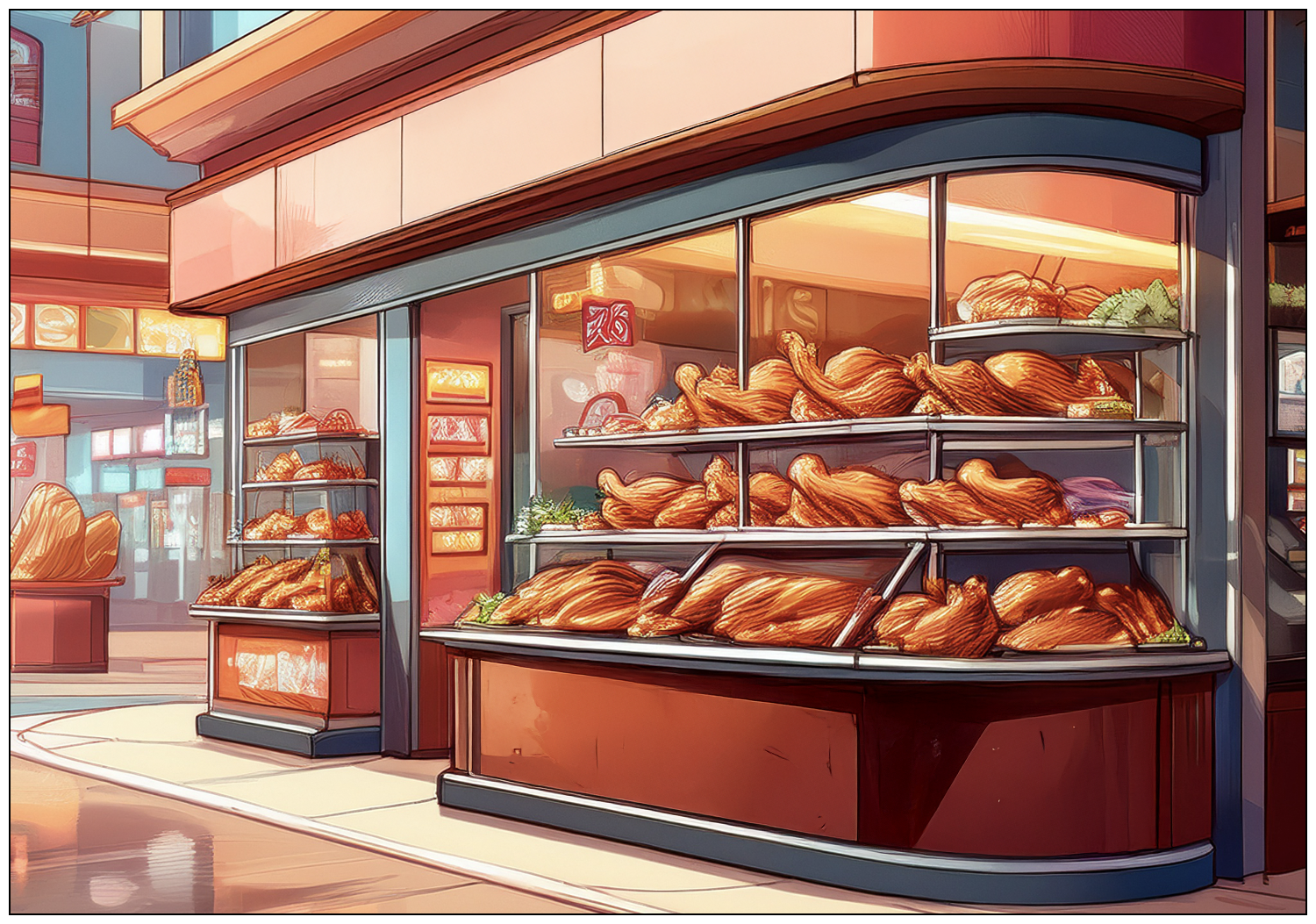
It has started to feel like our whole society is built on templates: housing, food businesses, entertainment, etc. Endlessly reproduced. Never so clearly as with the sudden emergence and widespread proliferation of the Hot Chicken Shop™. Or the countless new malls and food courts popping up in the repurposed ruins of post-industrial decay. Thousands of sleek modern storefronts with cute logos and band-random names, only barely concealing the near identical machinery and logistics behind the facades.

The people who make it work are fungible: workers, consumers, politicians, voters, renters, swapped in and out in regular cycles of varying durations, from seconds-long transactions to leases to elections. Until they can be completely replaced by machine algorithms in the name of “efficiency”. The new gentrification will see humans displaced by data centers.
This is all further exacerbated by social media, which consists of a wide range of generated/simulated realities, into which people are plugged in like widgets. All clamoring for validation and the subsequent dopamine hit it brings, and on the contrary either crumpling or raging at any criticism (fight or flight).
Zoom backgrounds and Instagram performativity: people playing at / simulating real life for other people’s consumption and their own validation. Labor, consumption, the messiness of actual life are external to this bid for attention in the absence of actual community.
“AI” (it’s not AI) is the logical endpoint: the ability to instantly and massively reproduce anything, to diversify the templates so they better simulate the plurality of real lived experience. Following Google’s idea (as expressed in their Selfish Ledger “thought experiment”) of “custom objects”, on a product search, I can imagine a consolidated marketplace (soon to be entirely Amazon) that generates custom websites — in real time — suited to the user’s aesthetic sensibilities.
Merely simulating a small business / boutique shop selling that product and those in its proximity (category/theme), including phony copy about the shop’s backstory and proprietors, complete with generated photos catering to cultural/political sensibilities as well. Where a “Black-owned” or “MBE” business is instantly simulated for one user, the same search generates some boutique owned by a folksy Midwestern grandma for another.
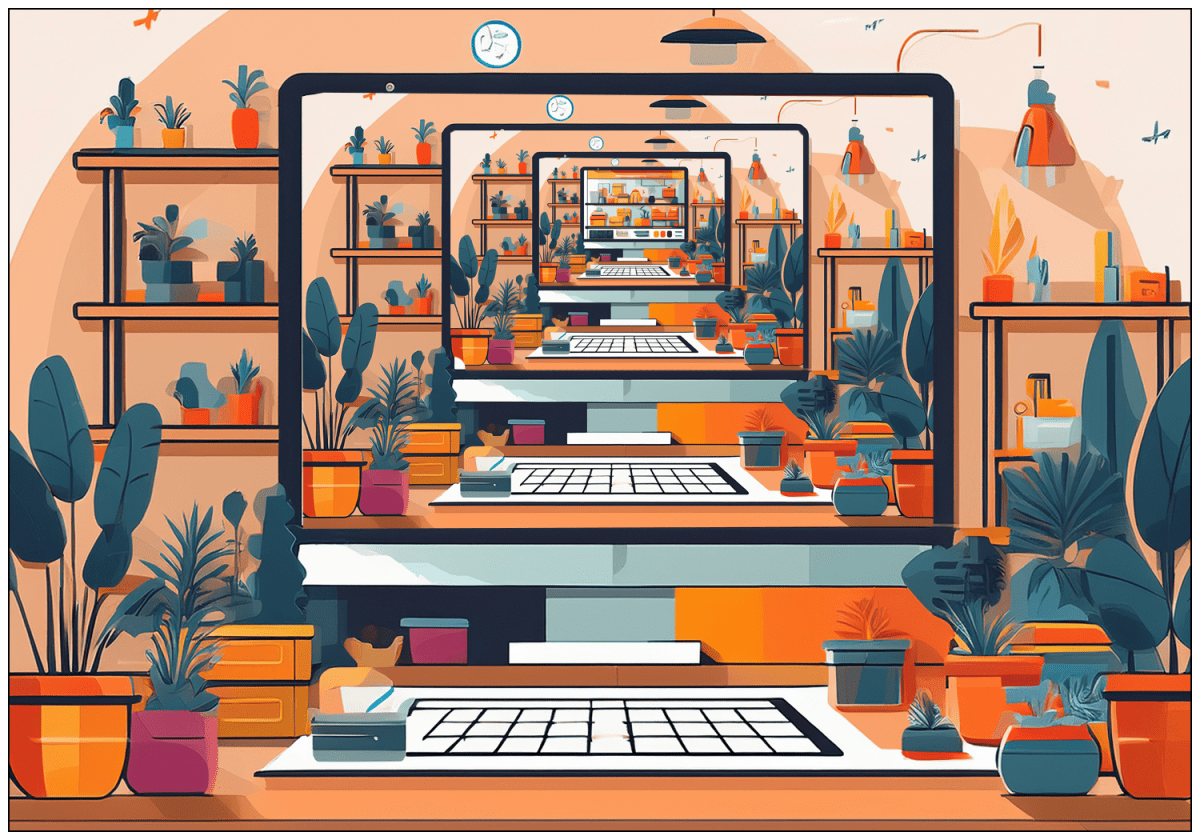
But there will be no actual inventory until a purchase is made, at which point the object is 3D printed or assembled by sweatshop labor from the global south and shipped within 2 days.
For certain large commodities, like houses, for those whose data profiles (prior purchases, current needs, income, and perceived suggestability) indicate a high likelihood of purchase, the websites can have even the images of these items AI generated, situated in an existing vacant lot within a shared developer inventory, and after negotiation and settlement custom built within days. This housing inventory — for the rapidly decreasing minority who can afford it — would be subject to a rapid cycle of construction and demolition in accordance with the market and the algorithm.
For poor, working class, black or brown people, immigrants, disabled, others, their marginalization is defined by their externalization from the “simulation”, exacerbated by a lack of control of the means of production or even subsistence.
The ledger and the archive work together to maintain and direct the inertia of the simulation. Black life in particular, where it can’t be (re)purposed through labor or consumption, remains an externality to be controlled, channeled, stored: in carceral systems rather than servers.
Where there are gaps in the simulation, due to capitalism’s internal contradictions, and ongoing processes of extraction and exploitation, additional “UI” layers — such as escapist entertainment, social media, VR — act as “patches” to keep us sufficiently engaged, instead of peering through the cracks as our material and political realities collapse.
Those of us who at least glimpse the contours of the simulation, and have both the wherewithal to resist and bolster ourselves against deprivation, are the “radicals” the system managers work to destroy or co-opt…
But the overlords in charge of the simulation may be overplaying their hand in the mad dash to technofascism, shattering even the pretense that everything will be okay as they openly steal the minority of resources they don’t already control.
And maybe, just maybe, people will be able to successfully organize across every manufactured division to break the simulation’s hold…