Category: Comics

  • After Eighty Years of White Supremacist Capitalist Mythology, it’s Time to Retire Batman Forever

    After Eighty Years of White Supremacist Capitalist Mythology, it’s Time to Retire Batman Forever

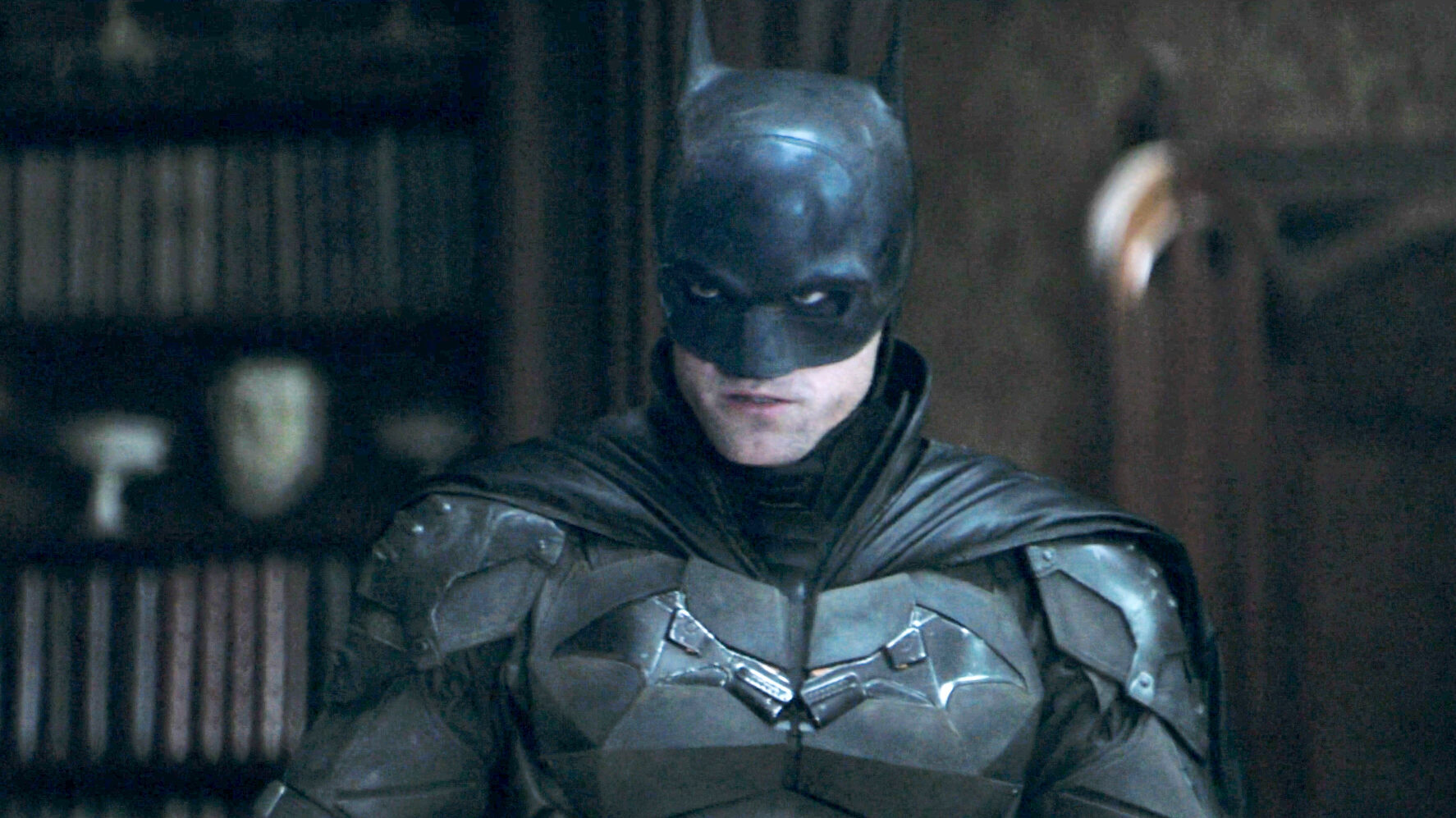
    Robert Pattinson as Batman

    Matt Reeves and Robert Pattinson’s latest incarnation makes eighteen “Batmen” to appear on the big screen, continuing the character’s 80+ year legacy, which began in Detective Comics in 1939. Over that span of time, the Batman canon has featured many stories, some of them interesting, but none of them ever straying too far from it’s god-awful foundation. While I’m sure most people are quite familiar with the character, it’s worth laying out the premise, just to see its folly in print.

    Bruce Wayne, the son of a wealthy family, is traumatized as a child when his parents, Martha and Thomas Wayne, are killed by a random burglar. The specific circumstances have been revised a little throughout the years, with different writers trying to make it about revenge (as with Nicholson’s Joker), or part of a larger conspiracy (as in TV’s Gotham). However, in all cases, it is this formative event which sets Batman on his vigilante trajectory, expressing his vengeance not just against his parents’ murderer, but against any and all instances of crime.

    Young Bruce Wayne mourning the death of his parents in the TV show Gotham.

    This premise is absurd on its face, for a number of reasons. First is that the Waynes were a wealthy family, and so the likelihood is vanishingly small that they would’ve ever walked through a dark alley after a night at the theater, when they could’ve just as easily summoned a private car. Where was Alfred? The Waynes’ butler, often reimagined as a former intelligence or military officer, would’ve been on call at the first sign of trouble.

    In the mythology of Batman, Gotham City seems to be a place of perpetual darkness and nearly ubiquitous violence, such that only the theater itself, Wayne manor, Wayne Enterprises corporate headquarters, and a few other locations are even safe to occupy. Even though Gotham is based on New York City, the inspiration is practically unrecognizable, except through the lens of white supremacy and elitism. New York is a huge city — five boroughs and hundreds of neighborhoods — with various levels and frequencies of crime, these corresponding directly to yawning disparities in health and wealth, precipitated by long histories of disinvestment, deeply racist city planning, and the geographic concentration of trauma.

    One man — Robert Moses — bears a disproportionate amount of responsibility for these conditions, and yet there is no equivalent or analogue in the DC imaginary. Instead, Gotham is a shallow, racist, classist caricature of New York’s disinvested neighborhoods — and usually populated Black and Brown people and/or immigrants, which racist writers like Frank Miller make more explicit.

    Robert Moses

    The caricature doesn’t grapple with the underlying reasons for its condition, and even more importantly, it reduces the real neighborhoods of New York to pathology, instead of recognizing the immense social and cultural richness and complexity that flourishes in resistance to these conditions. Gotham is devoid of culture, and there are only three classes — the wealthy, the poor, and the buffer class occupied by the police and other officers of the criminal punishment system.

    Where Gotham is presumably situated within the United States, it shares that country’s original sins of dispossession, genocide, and slavery and so its conditions necessarily sprout from that rotten foundation. As in the real world, the dynamics of power and concentrated wealth are mediated by capital. Inherent to the logic of capitalism is that billionaires like the Waynes are created by conditions of labor exploitation and environmental extraction, leaving people and the natural world as the wreckage, or waste product, of their ascent.

    To be more clear, the only way for billionaires exist, is through parasitic relationships — harm to one for the benefit of another. What this means is that people like the Waynes are complicit in the conditions that ultimately lead to their demise. It need not be so contrived as the Waynes causing direct harm to someone, and then that person getting revenge, because where wealth is concentrated, the human and environmental harms and consequences of capitalism are widely, if still disproportionately, distributed. There is no shortage of victims who might consciously or randomly rise up in retribution against the Waynes.

    Unlike the countless victims of Capital, Bruce Wayne is able to take it upon himself, by virtue of his inherited wealth — and through that access to near infinite resources — to get his own perverse form of justice. The comics, TV shows, and films seldom discuss what Bruce gets up to in the daytime, or what sort of industries comprise Wayne Enterprises, but one can reasonably assume that he carries on his family’s legacy of exploitation and extraction. Is Wayne enterprises directly complicit in the suffering of Gotham’s majorities, through the dumping of toxic wastes in poor communities, busting unions to prevent workers from achieving a reasonable standard of living, or divesting people of their homes through predatory lending and aggressive development?

    Wayne Enterprises

    Perhaps Thomas or Martha Wayne themselves are the missing analog to New York’s Robert Moses. Or perhaps they’re only indirectly complicit, through the funding the police that surveil, abuse, and murder average citizens, investments in fossil fuels or military weaponry, or the gross speculation of finance capitalism — ultimately leading to the same egregious conditions that make Gotham a terrible place to live.

    Professional asshole Jeff Bezos may be Bruce Wayne’s real-world analogue, in spite of his physical resemblance to Superman’s Lex Luthor. Perhaps like Bezos, Bruce Wayne’s extraordinary wealth is begotten from the exploitation of his workforce, and extraction of the natural world to produce and sell an endless supply of cheap junk. While, to my knowledge, Bezos does not go out at night dressed up in tights, cape, and a silly mask, to beat up people, he does provide the carceral state with the digital infrastructure and technology (e.g. Amazon Web Services, Ring cameras, Rekognition software) it needs for mass surveillance, under the false pretext that such things are necessary to protect us from crime. And like Batman, Bezos is prone to spectacle, whether it be built around leaked images of his penis, or the conceit of flying a penis-shaped rocket into outer space.

    Dickman, as it were.

    Jeff Bezos stars as Dickman. In theaters July 2023.

    Is it because corporate proxies allow Bruce Wayne some degree of deniability, that he is able to be simultaneously complicit in Gotham’s misery on the back end, and compound that suffering through the deployment of military grade munitions against the people who erupt from such conditions? Or is he simply the worst person in the world, fully aware of the harm his enterprises cause, and under the false pretext of vengeance, uses the power of the State and his own wealth to punish, dominate, incarcerate and kill the people of Gotham?

    Only at the peak of white supremacist capitalist mythology, and a deep ignorance of history and social dynamics, can a person like Bruce Wayne — as Batman — be conceived as a hero. So perhaps instead of constantly reimagining Batman for the page and the screen for each new — and ever shorter — generation, DC should cast this villain back into the abyss of the imagination.
  • 10 Tips on How to Include Black People in Media

    10 Tips on How to Include Black People in Media

    Diversity” and “Inclusion“. Buzzwords for the 21st Century, especially in “post-racial” America. But for all the mumbling and fumbling, the empty rhetoric and symbolic gestures, white media creators (and others from non-black majority countries) seem catastrophically inept at understanding what these words mean, or how to put them into meaningful action, especially as they apply to Black people.

    What I am about to say is nothing new, nothing original, nothing that hasn’t been said — probably better by countless others — but I felt inspired to join the chorus of voices holding media creators accountable for how they represent me and mine: on paper, on screen, and in every other medium.

    So here are my ten tips for white media creators seeking to be “include” Black people. It is by no means an exhaustive list.

    1. Blackness is not metaphorical.

    The X-Men have long been a stand-in for black people and black struggle.

    The Black experience involves real people and real struggles, not to be “sanitized” or reduced to symbolic representation, as in the “Civil Rights” struggle of the X-Men or slavery in Dragon Age. If you’re going to “borrow” (read: appropriate) our struggle, then at least include our likenesses from time to time.

    2. Blackness is not skin deep.

    Commander Shepard from Mass Effect can be customized to look black, but nothing about the Black experience informs her character.

    Merely palette-swapping racially or culturally “neutral” (read: vacuous) characters from  #F6DACD  to  #7E3617  does not count as “inclusion”. Blackness involves a vast, diverse, historically grounded, continuously lived experience all but inexorable from skin tone. Do some research, or better yet, hire some black creators.

    3. Blackness is not monolithic.

    Dear White People is the rare example of a show that demonstrates that Black people have a wide variety of perspectives, ideologies, conflicts, experiences.

    This may seem obvious, but…ALL BLACK PEOPLE ARE NOT THE SAME. See the above point about “vast and diverse”. We come in many skin tones, have thousands of different ethnicities, and countless different experiences along multiple axes of gender, class, sexuality, ability, religion, and…just being different people because that’s how people work. Even an egregious stereotype might be excusable if it doesn’t exist in isolation. Still probably better to avoid those.

    TLDR: Feature different kinds of black people.

    4. Blackness is not expendable.

    Darwin from X-Men: First Class fell victim to the “Black Dude Dies First” trope

    It is inconceivable to me, outside the context of pure malice, that I even need to bring up such an established trope. If you’re going to include black characters, maybe don’t kill them off first, or even second, unless you’ve heeded Point #3, and have plenty more to spare. Even then, maybe just don’t, at least not until they’ve had time to develop? Or, you know, unless your the majority of your cast is black. Including your hero.

    5. Blackness is not a punchline.

    Jules from Pulp Fiction was a “bad mother fucker”, and a bottomless well of meme-ification and white laughter

    The “Sassy Black Woman”. The “Mammy”. The “Smooth Pimp”. The “Bad Mother Fucker”. These and others have all been deployed at different times for the amusement of white audiences. There is nothing inherently wrong with these archetypes, provided that they are given some breadth, depth, and nuance. See Point #3 about blackness not being monolithic. Just as all black people aren’t the same, no black person is only one thing. Can we be funny? Absolutely. Humor for black people has been essential to our survival. Exploring why that is and has been might help with your character development.

    6. Blackness is not misery.

    12 Years a Slave is a prime example of Black suffering for white consumption.

    Black people have struggled. Continue to struggle. We also endure. Our endurance is one of the foundations of our pride. But we also laugh (see Point #5), learn, love, contemplate, question, explore, create, eat, sleep, shit, and fuck just like everyone else. Which is to say, we contain multitudes. Also, our struggle and our endurance don’t exist in a vacuum. Rather they are informed and shaped by the prevailing context of white supremacy. I know those are two words you probably hate seeing adjacent to one another, but the shit is real. Choose to address it head on, because at least you have that choice.

    7. Blackness is not violence.

    Though black people’s lives and experiences have historically and continue to be beset with violence, it is not inherent to our condition. See Points #2, #3, and #5. And despite the narrative of “black on black” violence, the simple truth is that violence most often occurs between members of the same group — any group — if only because there is a larger set of interactions of any kind between members of the same group. We do not present some unique and ever-present danger. We are no more prone to perpetrating violence than any other group. Which, frankly, is kind of amazing, given that we have been and remain the disproportionate victims of violence, by the state and its proxies.

    8. Blackness is not scarce.

    Black Joy!

    There are over a billion black people in the world — one-sixth of the world’s population. And that’s just by “official” counts, which may exclude any number of people who do or don’t identify as such. Which in itself speaks to Point #3, about how blackness is not monolithic, even in how it is defined. Black people make up anywhere from 11-13 percent of the United States, and yet you’ll hardly ever see either of these proportions (11-13 percent or one-sixth) reflected in the populations of most media properties.

    In spite of the huge set of everyday dangers that pretty much ensure these percentages seldom increase, black people are not in short supply. There is, nor has there ever been, any paucity of black resources to draw upon when building that imaginary world which looks suspiciously a lot like this world. For the record (and yes, there are records), we’ve always been around. In spite of white/European historians’ relentless attempts to erase us, or decouple us from our own history. Dwayne McDuffie’s Rule of Three can actually be broken with a shift in consciousness.

    9. Blackness is not a commodity.

    It’s only “dreadlocks” when white people do it.

    Black music. Black art of any and every kind. Black language. Black aesthetic. Black culture more broadly. The Black Experience (See Point #1). Each and all of these things have been and continue to be stolen, appropriated, decontextualized, remixed, and whitewashed for mainstream consumption. Which is to say they are stripped of their most fundamental element — black people ourselves — for the sake of white palatability. Or perceived white palatability. To be clear, brown skin fixed to a black aesthetic — clothing, voice, music, etc. — does not a black person make. See Points #2 and #3.

    More importantly, if the blackness in your properties, however it may manifest, does not promote, uplift, or enhance the lives of black people in some way – and positive representation has a greater impact than you might realize — then your property is not inclusive. It is appropriative for the sake of drawing in black dollars (or maybe white liberal dollars) or creating some sort of “feel good” image for the company — currency that can also be traded for…yes, dollars. This is the very definition of commodification.

    10. Blackness is not transparent.

    What’s beneath the “immoveable veil of black” is not available for your commodification.

    Taken literally, this is obvious. But perhaps what isn’t so obvious is that all the shades and nuances of the Black Experience are not accessible to you. No matter how many books you read, albums you listen to, films you watch, plays you attend, black friends you make (though by all means, yes, tap that resource if you have it, without demand or expectation), there are things about being black that you simply cannot comprehend—physically, intellectually, emotionally, or spiritually.

    This leaves you with one—also obvious—recourse. Recruit black people to work beside you. By which I mean hire them, because that work-for-free shit is over. Or, if you’re feeling particularly “magnanimous”, hand black people the reins and see where they lead you. I hear some guy named Ta-nehisi Coates is killing it on that Black Panther comic. And every other thing he touches, for that matter. Incidentally, he is not the only smart black person in the world. See Point #8.

    Conclusion: Black People are Human Beings

    In closing, it needs to be said that including diverse representations of black people in media has nothing to do with “political correctness”. It has little to do with fairness, either. This is not a zero-sum game by which black gain equals white loss.

    What it concerns, most significantly, is the acceptance of this proposal that Black Lives Matter. That Black People Matter. Black representations are a matter of survival. Of casting us as fully-realized human beings with thoughts, feelings, dreams, aspirations, complexity, agency — against a backdrop that explicitly shows and tells us (everyone) that the opposite is true.

    If we don’t matter, if we are seldom seen or heard, reduced to caricatures, or otherwise rendered less than fully human, it creates a void. Not just of our bodies or our voices, but of empathy and compassion toward us.

    The cost of this void, engraved in history and playing out in real time, is our very lives.

  • Sex Criminals and the Comic Subtleties of Anti-Black Racism

    Sex Criminals and the Comic Subtleties of Anti-Black Racism

    Sometimes it’s tucked away, hidden just beneath the tongue, or in that sly twist of the mouth…

    Anti-blackness is so pervasive, and so deeply entrenched in the global collective consciousness, that I think media creators aren’t even aware of how they present and perform it on a regular basis. That’s me giving them the benefit of the doubt, in spite of all the evidence that suggests it’s intentional.

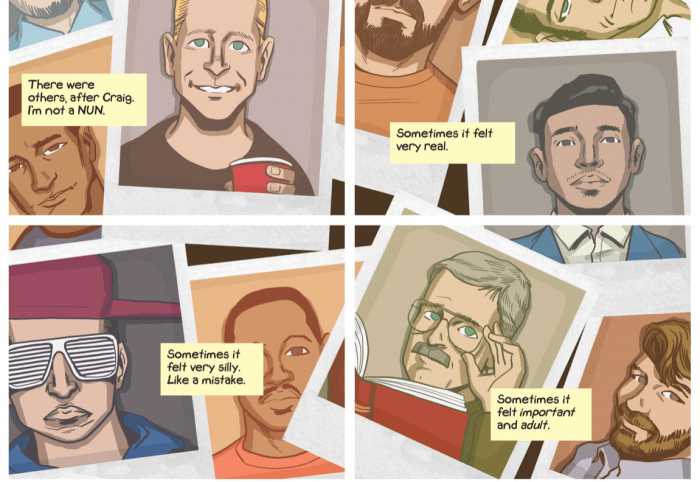
    The image below is a cropped page from Image Comics’ SEX CRIMINALS, by Matt Fraction and Chip Zdarsky. You can look up the premise of the book at the link above, but for this post, all you need to know is that the main character—a white woman named Suzie—is reflecting on her sexual history.

    SC-Panel

    Take note of the ethnicities of the men she slept with, and the commentary that goes along with it. When it comes to the black man, and what is presumably a white man appropriating a black cultural aesthetic (red cap, Kanye shades), she says:

    “It felt very silly. Like a mistake.”

    Really now.

    Even if it were just the white dude in the Kanye shades, the image would’ve still evoked anti-blackness, because what makes such a guy “silly” or a “mistake”, is undoubtedly his proximity to blackness. White people came up with the term “wigger” to describe such a person. Wiggers aren’t reviled because they’re cultural appropriators, borrowing from black culture as a fad, while not respecting black people or their experience. White disdain for the “wigger” does not stem from some sense of justice. White people dislike “wiggers” because of all the racial groups to mimic, they’re choosing what to them is the most reprehensible: black people. Because I mean, like dude, seriously, have some self-respect!

    You will not see the same revulsion expressed towards the white geek steeped in Japanese culture—because isn’t that so interesting, and isn’t he such a citizen of the world? Nevermind that his entry point was the desperate need to consume more anime and import video games, or in hopes of fulfilling some Asian bride fetish. Or how about the white girl who takes her Spanish classes seriously, deciding to study abroad in Spain, or Argentina—she was always so bright, wasn’t she? But the only proof you really need that white disdain for the wigger is anti-black, can be found in the word itself.

    Wigger. Portmanteau of white nigger.

    If it were just the white dude in the red hat, maybe it could be said I’m making a logical leap. That perhaps I’m being hypersensitive. But I don’t even have to make that leap, because Fraction and Zdarsky bothered to group the black dude and the wannabe under the same caption. And if you think it was mere coincidence that particular caption was superimposed upon those particular characters, just look at the neighboring caption:

    “Sometimes it felt important and adult.”

    Placed as it is over the images of two older white men, one holding a book as if to suggest an academic or someone equally “important”. There’s an inside joke in this panel, a subtle nod and an awkward chuckle, as we — some of us, anyway — acknowledge that the only way this white woman would’ve been romantically, or even just sexually involved with a black man, or a man who positions himself in cultural proximity to blackness, is through some flight of fancy.

    Because no one takes wiggers seriously. Certainly not any self-respecting white woman. Don’t be silly. And having sex with black dudes? Yeah, right. Not even to make daddy angry. Especially in Suzie’s case, since her father died when she was in high school. No, no, the only way that could’ve happened is by mistake.

    Believe me when I say that of all the ways black people could be represented in SEX CRIMINALS, the one place it wasn’t needed was amongst the Suzie’s sexual partners. In spite of all the rumors, mass advertising, the pining of black boys in the suburbs with no other choice, and the fears of white racists—enough to see whole towns burned to the ground—white pussy is not our holy grail.

    Still, Fraction and Zdarsky did spare a whole thought for including a black man on this page, and as anyone familiar with comics will tell you, every panel, every image, every line, every caption, every letter, is meticulously considered. So while I want to give these fellows the benefit of the doubt, I can’t help but imagine them laying out the storyboard for this page, and sharing a chuckle. Because jokes about black people—subtle, overt, spoken, illustrated, or told by a glance and a mutual nod—are just oh so hilarious.

    Now that we’re all in on the joke, let’s laugh together, shall we?

  • Mexican Superman: Forged in the Crucible of White Supremacy

    Mexican Superman: Forged in the Crucible of White Supremacy

    New Ms. Marvel Kamala Khan, the first Pakistani-American superhero
    Ms. Marvel—Kamala Khan—the first Pakistani-American superhero

    It’s been said many times, yet I feel it cannot be overstated, that speculative fiction more broadly and comic books specifically, need to evolve to be more inclusive of people of color, women, queer folks and other marginalized groups. I don’t mean token representation either. I mean they need to feature, on their front pages and in their leading roles, characters who are not cut from the straight white male mold. These characters should have their own books, be given the same time and attention as a Superman or a Batman.

    Speaking of these iconic characters, why couldn’t we have, say, a Black Batman or a Mexican Superman?

    Cue fanboy rage: “What are you on about? Superman is from Krypton! He can’t be Mexican!”

    Of course, but the point of this article is to invite you into a thought experiment about what really changes when we break superheroes out of the straight white male mold.

    Race & Ethnicity

    The obvious reason for more diversity and inclusion in comics is to allow marginalized people to better identify with the characters. For white fans, whether they are willing to accept it or not, the white default actually makes characters less interesting. A bold claim, I know, but bear with me. Superheroes, I think, are more interesting for being more human, for having trauma, hardship, and conflict. To the great extent that white folks – particularly cisgendered heterosexual men – have privilege and power, it further insulates them against the kinds of scenarios that give birth to heroes.

    Superman couldn’t actually be from Mexico, but it might make sense for him to have a brown affectation. He gets his power from the sun, right? Well, a “Mexican” Superman would also have more melanin in his skin, better enabling him to absorb energy from the sun.

    Also, would Superman stand by and watch as immigrants, particularly Mexicans, were discriminated against, treated as something less than human – “illegals” – while he is an immigrant. He would have to stand with them. But maybe they would be suspicious of his help because all too often there have been white people entering a situation under the pretext of “helping” only to exploit or cause further harm. Superman, even though he’s an immigrant, is able to adopt whiteness. Being anything else makes him more interesting and believable. Also, if he’s the “All-American” hero, he could be a symbol of America as a “nation of immigrants”.

    Mexican Superman! (Not Really…)
    Mexican Superman!
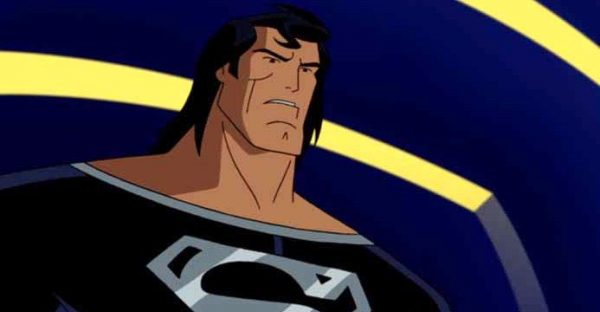
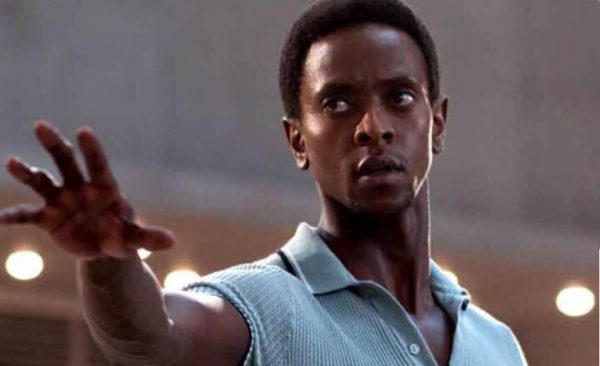
    (Okay, so it’s actually a Superman clone from the animated film Superman: Doomsday, voiced by Mexican-American actor Edward James Olmos, but hey, it’s as close as we’ve ever gotten.)

    And how about Batman? His whole trajectory as a troubled anti-hero began with — and is sustained by — the murder of his parents. But his background story is not that feasible. The Waynes were wealthy people. Why in the world would they be walking through a dark alley at night after a show? Isn’t it far more likely that they would’ve had a car waiting for them out front? And that, for their wealth, they would’ve been more careful, more suspicious, and frankly, smarter, to not go through a potentially dangerous area with their child? So it just doesn’t make any sense that Batman should come from a wealthy family.

    Batman, in his bid to punish the sort of criminals who killed his parents, becomes an extension of the police – though he operates outside the law. A Black Batman might be conflicted as he witnesses the abuses of the same institutions he represents — namely the police — given the excess of brutality cases and outright murders of black people. Or he might have to reflect more broadly on the connection between the Prison Industrial Complex and the New Jim Crow. Maybe on the one hand he’d want to punish criminals, but on the other he’d know intimately the sort of life conditions that drive a person to crime.

    Batman is a smart fellow. Why was he ever preoccupied with small-time criminals, rather than the greater cause? Wouldn’t he also target corporate criminals like Monsanto, who in real life take on the role of nasty super villains destroying the environment? Or creating the sort of wealth disparities that leads a guy like Joe Chill – the man who murdered Bruce Wayne’s parents – to want to steal from the wealthy in the first place. Was he hungry? Desperate? Mentally ill? Either way, in a world closer to real life, Chill would be a symptom of a larger problem. Wouldn’t black Batman want to take on the bigger crooks who siphon drugs into the country, their CIA co-conspirators, and the like?

    Batwing, an alternative Batman from DC Comics

    Meanwhile, Spider-Man is an example of how class makes a hero more interesting. It is the fact that he is an “everyman”, a regular guy, that makes him so endearing. While it wouldn’t provoke the same outcry as the Afro-Latinx Spider-Man Miles Morales, I would like to think that fans would take issue with any retcon of Spiderman that made him some rich kid from West Chester instead of a middle class kid from Brooklyn. Part of Spider-Man’s story is that he’s broke, and has to work at the Bugle just to make ends meet, to help his Aunt May after the death of Uncle Ben. How many children of color, due to economic disparities along racial lines, or the disproportionate numbers of fathers (or uncles) killed or imprisoned are facing a similar situation. It strengthens Spider-Man’s character development further if the writers opt to incorporate true-to-life struggles.

    This isn’t really about ethnicity so much as experience. For every superhero that subscribes to the white “default”, it makes him or her that much less complex, and that much less interesting. At a time before the institution of whiteness became so firmly entrenched, say when the Irish were still being discriminated against, or the Italians, Superman might’ve taken up their mantle, too, as a fellow immigrant. But in 2013, the Irish and Italians have been dissolved into whiteness.

    Miles Morales, the first Black and Latinx Spider-Man

    Gender & Sexuality

    What about a female Superman? It would be interesting in how it subverts ideas about gender and power. I know there is already a Superwoman and a Supergirl, but both were created as afterthoughts to the white male Superman, a response, an echo. So for the purposes of the post’s thought experiment, I will keep on using the term “female Superman”, so as not to confuse the issue.

    A female Superman wouldn’t sit around complacent while lawmakers passed legislation to control women’s bodies. She wouldn’t turn a blind eye – or worse, participate in the slut-shaming of a young girl who’s been raped. No, I’m pretty sure a female Superman would relate to that the experience of women more intimately, and dare a male legislator to tell her what she can and can’t do with her own body.

    Superman being female also opens up the potential for some seriously complex story lines. What if she were to get pregnant? Would she still be able to fend off nuclear warheads on a collision course for New York, or would she be more concerned with the life inside of her? Especially considering that Krypton is gone, and that she – and therefore her child – are the inheritors of its legacy. Sure the male Superman can – and has in some versions – have a child with a human woman, but just doesn’t have the same potential for inner conflict and personability.

    Supergirl by Charles of The Illuminate Darkness Experiment
    Supergirl by Charles of The Illuminate Darkness Experiment

    For now, let’s go back to the issue of child rearing. Imagine female Superman and Lois Lane, years into their relationship, discussing the issue of having a child. They might argue over who would be the one to bear the child. Lois might argue that she should be the one, because Superman too often puts her body into harm’s way. But Superman might counter with a point about inheritance. Krypton is gone, and with it, all of her people. But if she were to bear the child, to give birth to a biological Kryptonian, then the legacy could continue.

    This might be further compounded by the conflict around lawmakers trying to control women’s bodies. Certainly the governments and other power mongers around the world would have a vested interest in another Kryptonian coming into being. If there was any one female body they would want to control, it would be hers – and the child inside of it, for its potential as a weapon, or another axis of power. Maybe a few months into the pregnancy, Superman is having second thoughts, maybe realizing that Lois was right, and that her existence as the world’s foremost superhero puts her in too dangerous a position. Maybe, being with child, she would see the things differently, with even more concern, and decide that she doesn’t even want to bring a child into such a dangerous world.

    Imagine all the scurrying on the part of the lawmakers, arguing that the female Superman doesn’t have the “right” to terminate her pregnancy – not just for ideas about the “sanctity of life”, but because of all the potential for power that would be lost. It wouldn’t just be ideological, but political. And what would female Superman do as these petty little men scrambled to pass a “law” that says that she did not have sovereignty over her body? I’d like to see them try and enforce it.

    But maybe female Superman would, in spite of her feelings about continuing Krypton’s legacy, realize that it would be too dangerous to bring her biological child into the world. For how it would upset the power dynamics, and maybe for how it would change the debate over women’s reproductive rights. Maybe Superman would realize it was not even her place, as a child of Krypton, to meddle in such affairs. Here someone could argue that Superman shouldn’t have to be a woman to care about women’s issues. That it would be more radical if the male Superman were to champion women’s rights. I welcome that rebuttal.

    If Superman is a woman, someone might suggest “Lois Lane” – or whatever love interest – would have to be a man. Louis Lane? But why can’t the female Superman also be queer? For that matter, if we’re talking about a “female Superman”, we also need to parse sex and gender. A transgender Superman might have been assigned female at birth, only to later come into their identity as a (Super)man. The inverse also presents some fascinating possibilities.

    Superman has a dual identity as both the legendary hero and mild mannered reporter Clark Kent. If Superman, the hero, is more true to who the character really is, then Clark Kent is the disguise. He has to continuously move through the world wearing a persona, a body, that does not reflect who he is on the inside.

    What is the real life analogue for Superman’s dilemma? The lives of the many trans people throughout the world. What if our female Superman was born biologically male, and due to reigning social pressures has to conform to the dull, inauthentic male persona of Clark Kent? Only as Superman would she finally be able to take off the Kent costume and present herself as she truly is, both as a woman, and as a Kryptonian. Imagine the conversation with Ma and Pa Kent, who while perfectly able to grasp the idea of an alien adopted son with superpowers from another planet, just can’t, for their “traditional” sensibilities, wrap their minds around Clark’s gender identity conflict.

    Onward and Upward

    While these are all fun and provocative thought experiments, I’m not actually calling for a Mexican TransSuperman, or a black female Batman. But maybe this could be food for thought in the creation of new heroes.

    I don’t think that the reason that we have so many straight cis white male superheroes is because the writers simply don’t want to represent people of color or women or queer folks. I think it’s because people mostly write what they know, and what they don’t know, they make up. So more than anything, perhaps this article is yet another call for diversity within the comics industry. Women and people of color know their own experiences, and could infuse new heroes – or new incarnations of the old – with more color, more complexity, more nuance.