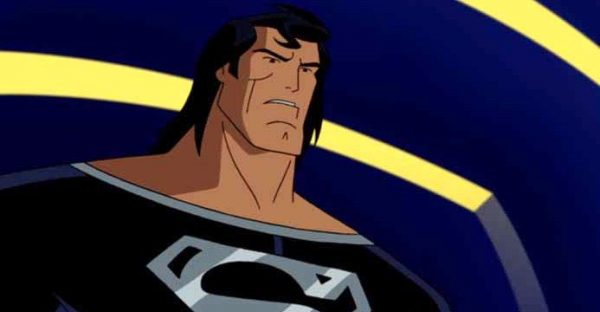
I spent a good portion of the morning reading the New York Magazine article, along with the individual accounts of the 35 women who were sexually assaulted or molested by Bill Cosby. I was struck by many thoughts, the first of which was that Cosby is an actual monster.
Thirty-five women.
Of an alleged forty-six—the others yet to come forward. May never come forward. It is a staggering number. But even if it were only one, Cosby would still be a monster.
What stood out to me was the similarity between the accounts, of Cosby preying on women who for various reasons were emotionally vulnerable. Or women who dared to have ambitions, which Cosby seemed to take as an invitation to exploit them. Women who looked up to him and trusted him as as a father figure.
An actual monster.
The same theme repeated itself. Cosby inviting the woman to dinner, or to a show. Cosby inviting them to a hotel room, or a dressing room. Cosby offering them a drink, or a pill—several times under the pretext that it was medicine for a headache or cold. And then groping them. Molesting them. Assaulting them.
Chelan Lasha
In his room, Cosby handed Lasha a blue pill — he said it was an antihistamine for her cold — and a double shot of Amaretto. […] Lasha says the comedian led her to the bedroom and gave her another shot of Amaretto. She lay down, and then he climbed in bed beside her. She remembers him humping her leg, grunting. Then she blacked out.
Maggie Shapiro
Cosby challenged Shapiro to a few pinball games, and then to a competition: whoever lost the next game would need to swallow a small pill. After Shapiro took the pill, she passed out. She woke up in bed, naked, with Cosby inside her.
Cosby handed Steuer a drink and insisted she perform an improv exercise, pretending she was a queen with oatmeal covering her face. She began to feel woozy. Her next memory is of Cosby standing above her — her clothes off — in a bathrobe.
So many of the stories are like this. But then there were the ones that, if possible, seemed to take Cosby’s monstrosity to another level—emphasizing his role as a predator.
He knew that Valentino’s 6-year-old son had recently died, and he told Valentino’s friend that he thought she could use some cheering up. Cosby offered to take them to the steam baths and then out. They accepted the invitation and met Cosby for dinner. “I was just sitting there, letting them talk,” Valentino says. “I was sitting there looking glum, not participating.” Cosby reached across the table and put a pill next to Valentino’s wine glass, and he told her to take it. It would make her feel better, he said. She swallowed the pill, and later another one. Cosby also pushed two pills on Valentino’s friend.
Who—what—other than an actual monster, would capitalize on someone mourning the death of her child, preying on her vulnerability to build trust, and then rape her? I would say this is the stuff of a comic book villain, except that even comic book writers—where they don’t know better than to use rape as a plot device—wouldn’t imagine someone so heinous.
Victoria Valentino
Several of the women, those who were assaulted decades ago, spoke about how they didn’t process what had happened to them as rape, because rape was the sort of thing that happened at knife or gunpoint in a dark alley. It seems incomprehensible now, but for these women at the time, date rape as a concept hadn’t yet gained any traction.
“I couldn’t put a name to it. I didn’t say accosted. I didn’t know what to call it. The difference between this and somebody else’s rape in the dark alley is that his face would be before me every week on TV.”
A line is still drawn between date rape and…let’s call it “alley rape”, under the pretext that only the latter is violent. But all rape is violent, whether the perpetrator uses a gun, a knife, or a quaalude. Or some psychological advantage—status, age, rank—that gives them power over the victim. Violence is by definition, “an unjust or unwarranted exertion of force or power”.
And sometimes, it wasn’t much different than a dark alley scenario. I imagine the perpetrator in the alley feels an incredible sense of entitlement, that his target—or women more broadly—owe him something. That he has some right to take something from them, because of his power, wealth, status, or just because he’s a man.
Moritz was getting ready to appear on the Tonight Show when someone opened the door of her dressing room. Cosby stepped inside and closed the door behind him. He stood above Moritz and unzipped his pants. He pushed his penis into her mouth. “It was automatic. It was like he did this with everyone that was on a show with him backstage.
An actual fucking monster.
Several of the women referred to their cognitive dissonance at being victimized by a man with such a wholesome image—a television father who was invited into millions of living rooms over more than a decade. This, in addition to his power as a Hollywood insider, prevented them from coming forward. Because who would believe them? And when this story first started trickling out ten years ago, many of us didn’t believe them, assuming it was some ploy to siphon money from Cosby, or for some inexplicable reason to smear his reputation.
All rape is violent, whether the perpetrator uses a gun, a knife, or a quaalude.
As I realized these accounts date back to the 60s, another thought came piercing through the haze. The truth of the matter is that these revelations haven’t tarnished the image of Cliff Huxtable, and changed him into a monster. Rather, the image of Cliff Huxtable was builtaround an actual monster. A monster playing his best role yet, as a beloved family icon and upstanding public figure.
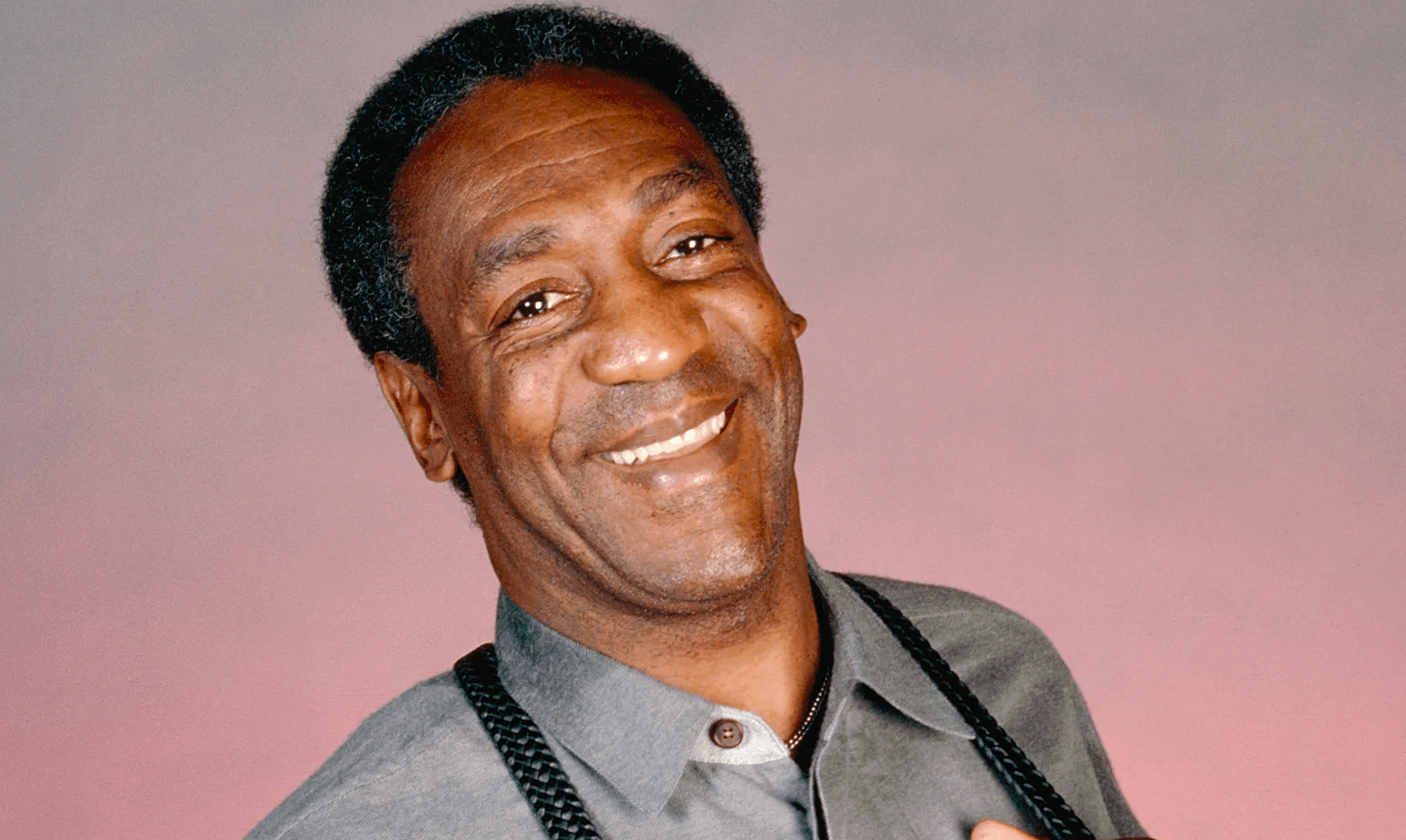
Bill Cosby as Cliff Huxtable
Bill Cosby has been playing a long con with the entire country for close to fifty years. To read these women’s stories makes it seem like it was all part of some grand game. In his arrogance, he has even gone so far as to tilt his hand on several occasions. “You have to be careful about drinking around me,” he said to a woman in the audience at a recent show in Ontario.
I started to wonder if the character of Cliff Huxtable, loving father at home, and at work an OB/GYN whose patients we seldom if ever meet, wasn’t some sort of sleazy, self-satisfied nod to his double life as lovable icon and rapist. Daring his audience to see him for what he was, just as he implicitly dared the survivors to come forward, smugly confident they would not.
These revelations haven’t tarnished the image of Cliff Huxtable, and changed him into a monster. Rather, the image of Cliff Huxtable was built around an actual monster.
Bill Cosby is only one man. One man who assaulted as many as 46 women. He does not exist in a vacuum, a single cancerous space completely isolated from Hollywood as an institution. How many other Cosbys are there—casual, matter-of-fact, entitled—committing sexual assault and disappearing survivors behind the curtains of their power and influence, and our culture of silence?
Then I came to the story of Jewel Allison, which pulled me from abstraction. Her encounter with Cosby was similar to many others. An invitation to his brownstone, a glass of wine, disorientation, followed by flashes of images indicating that something terrible had happened. But Ms. Allison’s account stood out to me for how her experience intersected with race.
“I had a few moments where I tried to come forward. I’ve picked up the phone more than once over the course of two decades. This is before the women started coming forward in large numbers. But I was just too scared, and I also had the extra burden of not really wanting to take an African-American man down. I’ve always been very closely involved in the Black community. And for me to come forward and basically destroy this very positive image of, as few as we have, of African-American men in America, it was just too difficult to do at that time.”
Like the other women, she felt coerced into silence, not by any overt threat, but by the symbolic threat of Cosby’s power as a celebrity, and the inevitable repercussions for her life and career. The average rape survivor is likely to face a backlash for coming forward, but to speak out against such a powerful figure is to risk the complete annihilation of her character, as a public spectacle.
But unlike the other women—most of whom were white—Ms. Allison also felt torn between her own personal agency and a sense of responsibility to a broader community. Part of the Black experience in the United States is often a feeling that everything you do is under scrutiny, not only a judgment of you as an individual, but that somehow your actions and character also say something about all Black people. This is not some baseless pathology, but something deeply rooted in how Black people are represented. Ms. Allison knew that to expose Cosby as a monster would also invite a searing indictment of Black Morality as a whole—which here in the U.S. is forever on trial.
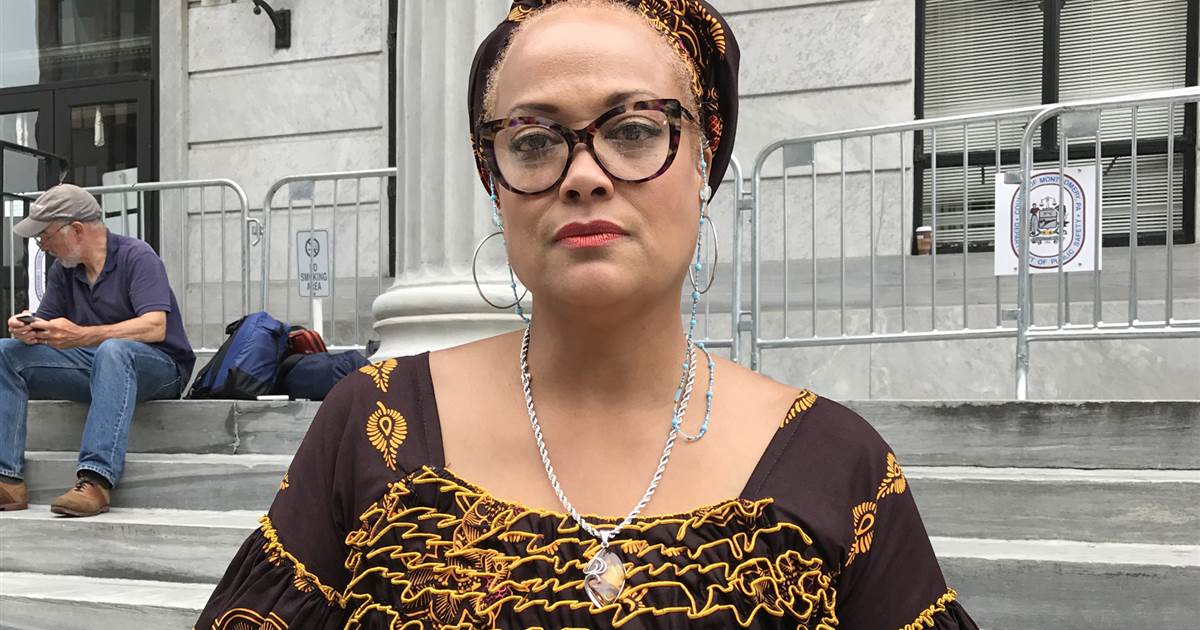
Jewel Allison
More specifically, and perhaps inconceivably to most, Ms. Allison felt some responsibility to Bill Cosby himself. She understood what it meant that he had achieved so much as a Black man in a racist country and industry, and couldn’t bring herself to be the one to possibly take it away from him. She understood that although Bill Cosby was a monster playing the role of a respectable, successful Black man, against the odds, his importance as a symbol to other Black Americans was great. It is difficult to even imagine anyone taking on that burden, of denying herself justice out of a deep-seated sense of moral obligation to her community.
It becomes even more difficult to stomach when you consider that Bill Cosby cultivated a secondary reputation as the self-appointed Redeemer of all Black People, the Beater of Black Brows. That this man could stand in front of college graduates, amongst others, and preach to them about values, while secretly being a career rapist, is beyond comprehension. It suggests Cosby fell for his own ruse, confusing the role he had been playing for decades, with the real monster he actually was. Or perhaps there was no confusion, and in the absence of Cliff Huxtable from television, the monster had to devise a new persona as a public moralist, in diametric opposition to his true self.
So imagine being Jewel Allison, and having to watch this man—her rapist—attack and condescend to the very community for which she was willing to sacrifice her own agency, and psychological well-being. I can imagine it felt like a second violation, a glare through the fourth wall, chiding her for not speaking up, and still daring her to do so. The symbol she sought to preserve in the collective consciousness of her community had become instead a toxin, eating away at it from the inside.
Jewel Allison’s story highlighted for me—again—the double burden of being a Black woman in the United States. While I can only imagine what she experienced—what any Black woman experiences—her story renewed my own sense of obligation as a Black man to keep my eyes and ears and heart open to those experiences. And to provide any support I can.
In the absence of Cliff Huxtable from television, the monster had to devise a new persona as a public moralist…
Bill Cosby is a monster, one that has finally been dragged out into the light, hopefully to face justice. But he is also a symbol, no longer of wholesome family values, but of an ugliness allowed to exist in plain sight, while we avert our gazes or attempt to explain it away. If there is anything positive to take away from all of this, it is the hope that it signals a paradigm shift in how we, as a society, address the culture of rape. How we listen to women—and men—who confide in us their pain and humiliation.
The response to Cosby’s monstrous exploits has been massive. Perhaps 10 years too late, it has become the cover story of a major magazine, and a trending topic on social media. By way of the #TheEmptyChair hashtag on Twitter, (referring to the image on the magazine cover, representing unnamed survivors) other women have felt empowered to tell their stories.
But it is not enough for those who have been survivors of sexual assault to tell their stories. It should not be their burden to bear alone. We—all of us—have to acknowledge, deconstruct, and ultimately dismantle the culture of rape so that fewer and fewer people even have these stories to tell.
We all have to remain vigilant, and listen. Even when there seems to only be silence.
Amongst the many rich and complex topics tackled by legendary science-fiction author Octavia E. Butler, few are more perennial than sexuality and the inherent moral questions it raises. Butler herself appears to take no moral position, simply presenting behaviors and situations that might be considered objectionable by some, and leaving it for them – be they readers or her characters – to discuss the implications.
This essay will present an examination of how Butler challenges sexual norms, from the incest taboo in the Patternist series, to interspecies sex in the Lilith’s Brood trilogy, to pedophilia and rape in Fledgling, and arguably all three of these in her short story Bloodchild. These stories show us how norms, particularly sexual ones, are flexible between worlds, cultures, and especially individuals. Her challenge to human moral hegemony is implicit, but there is also an acute self-awareness throughout her work that suggests she wanted to inspire discussion.
Interspecies Sex, Heteronormativity, and Ménage à trois
The Xenogenesis trilogy presents a world in which humanity has destroyed the Earth in an unnamed conflict, the means unknown except that they are absolute. However, due to the efforts of a benevolent alien species known as the Oankali, the remnants of humankind are salvaged, and the planet is entered into a slow restorative process.
The Oankali’s benevolence, however, is not without conditions. In order to rein in what they consider to be the cause of humanity’s destruction – that is, a biological predisposition towards hierarchical behavior – they use their biotechnology to sterilize us. As it turns out, the purpose of sterilization is not to prevent procreation, but to see it continue along the paths set by the Oankali, which involves their direct participation. In 1987’s Dawn, the first book of the series, Butler broaches the subject of interspecies sexual relations and crossbreeding.
The Oankali are masters of DNA manipulation, to the point that they can retain a complete memory of a being’s entire genetic makeup for use in duplicating them. The Oankali nature as well as their culture – including gender and sex roles – all revolve around assimilating the genetic traits of other species in order to strengthen their own gene pool. For the Oankali this is more practical than moral – a matter of evolution, even survival, for their species.
The Oankali have three sexes: male, female, and ooloi, this third being neither more male nor female, and in fact completely different from both. The ooloi are essential to Oankali reproduction, which involves all three sexes, and is otherwise impossible. The ooloi role is to extract gametes from both male and female and to induce fertilization within its own body before replacing the new zygote into the female and chemically stimulating the womb for bringing the new life to term.
In her essay Eugenicism: The Construction of Queer Space in the Works of Octavia Butler and Samuel Delany, Freda Fair discusses how Butler uses Oankali social constructions to flex rigid sexual and gender norms.
[Gender roles] are constructed in order to extend along a prescribed sociological trajectory that rests on the existence of a biologically attainable end. Thus, whether it is about pregnancy, menstrual cycles, and erections all have a locale inside of the normative sociological gender-sex trajectory of male and female… [Fair p. 78]
Fair acknowledges the disruption of the gender binary for the mere existence of a third, but also points out that how and where Oankali and humans enter “male” and “female” spaces is dictated by the ooloi. After all, it is the ooloi who receive sperm from the male, which is traditionally a female role, but perhaps with greater agency in that the sperm is actually withdrawn rather than deposited. The ooloi also withdraws the egg from the female, a process for which there is no analog in human sexuality, and renders male and female identical with respect to their “passive” role in the reproductive process.
Because sharing genes between species is endemic to Oankali evolution, the ooloi are capable of facilitating interspecies reproduction as well. The challenge to sexual norms is first introduced in Dawn, when main character Lilith Iyapo participates in sexual intercourse with Joseph, a human man, and Nikanj, an Oankali ooloi.
Nikanj freed one sensory arm from Joseph’s waist and extended it toward her. She stayed where she was for a moment longer, proving to herself that she was still in control of her behavior. Then she tore off her jacket and seized the ugly, ugly elephant’s trunk of an organ, letting it coil around her as she climbed onto the bed. She sandwiched Nikanj’s body between her own and Joseph’s, placing it for the first time in the ooloi position between two humans. For an instant, this frightened her. This was the way she might someday be made pregnant with an other-than-human child. [Dawn, p. 161]
The above circumstance clashes with our social norms on three distinct levels, each with a different degree of severity. The mildest conflict is the matter of sexual relations between three people. Threesomes, or ménage-a-trois if taken to the degree of full companionship, has found acceptance at various times up to the modern era, though usually in an “unofficial” capacity.
In other words, what people do in their private lives may differ greatly from their own account of their activities in the public sphere. Either way, three-way sexual relationships at the very least have often existed in opposition to the “romantic ideal” of sex as an expression of love between two people. It especially conflicts with institutional marriage, which has often throughout history and across cultural boundaries been a social imperative.
Within the context of science fiction, perhaps only the most conservative of readers would take issue with three-way sex in Dawn, were it between two men and a woman, or two women and a man. Three men or three women might be viewed with greater disdain for it then also being gay sex. Which brings us to the second clash with normativity.
If gay sex is so objectionable, even more so than a threesome, how are we to accept Butler’s concept of a third sex? Not male, not female, but…well, it would seem our rigid adherence to binaries leaves us without a term to apply to the situation. This is demonstrated through Lilith’s interaction with Jdhaya, the first Oankali she meets:
Lilith glanced at the humanoid body, wondering how humanlike it really was. “I don’t mean any offense,” she said, “but are you male or female?”
“It’s wrong to assume I must be a sex you’re familiar with,” it said, “but as it happens, I’m male.”
Good. “It” could become “he” again. Less awkward. [Dawn, p. 13]
Humans are most often viewed with respect to a sex and gender binary: males and masculinity versus females and femininity. Yet there are countless individuals of varying circumstance who find this polarity to be restrictive – socially, psychically, and even physically. Many people have, as a result of rational reflection, or intimate feeling, concluded that gender is fluid, and as such they may be plotted anywhere along the continuum between male and female. A person may be biologically female, but identify as male, or more commonly as a gender that exists between the two poles.
Those who fall under the umbrella term transgendered experience a distinct disparity between their own sense of their gender and their biological, i.e. sexual, manifestations. That is to say, those who are born biologically male or female strongly identify – physically and psychologically – as the other, or as neither, again existing somewhere along the continuum between the two. To be clear, this is not some mere schism between the biological and the psychological, but the very reality of the transgendered individual, one that happens to exist apart from those hedged in by the binary.
As with all things that conflict with social norms, the struggle of these individuals to be recognized for the sex and/or gender with which they personally identify, often makes them the target of reprehensible discrimination and abuse. Although recent years have seen more publicity and sincere dialogue around issues of sex and gender, these circumstances and how those they affect have been treated is hardly new. For that we can assume that even were the circumstances of Dawn to have come about in the 1800s, or were they to occur tomorrow, our reaction as a society would probably be much the same.
That being the case, it is no wonder at all that the humans of Dawn have a sort of knee-jerk rejection of the Oankali, and especially the ooloi, for their conceptually foreign gender roles and truly “alien” third sex. Were we as a society able to even accept those amongst our own species who do not fit within rigid sexual and gender “norms”, we might be more amenable to the ways of the Oankali. Alas, there is one more major point of contention between humans and Oankali in matters of sex and sexuality.
The interspecies sex taboo in human society gets smacked with the label “bestiality”, which contains all manner of assumptions about the differences between “man” and “beast”, and the presumed eminence of humankind above all other creatures. It is, by this pretext, beneath us to engage in sexual activity with other animals.
However, if we examine it objectively, separating out the socially conditioned revulsion attached to it, the real moral quandary inherent to sex with animals is that it may amount to rape. The real separation between humans and animals is a communication barrier. We cannot know their minds, and as such we cannot presume or even ascertain consent. Were this communication barrier to be removed, and with it perhaps the idea of human superiority, I imagine that the stigma towards bestiality would have to be reexamined.
The issue of interspecies sex as a matter of superiority also evokes a terrible historical precedent: the morality and legality of so-called miscegenation, a thoroughly racist concept defined as marriage, sex, or procreation between different racial groups. The imperative against interracial relations was perhaps most pronounced amongst Europeans, and indeed the term miscegenation most often applied specifically to relations between Europeans and other groups, not so much between two non-European races, or between two European ethnicities.
The reasons for this are clear. The social and pseudo-scientific consensus in Europe and its colonies around the world was that races demarcated the boundaries between species, or perhaps “sub-species”, there being three: Negroid (African), Mongoloid (Asian), and Caucasoid (European).
In some cases, miscegenation was not merely a social taboo, but seen as the equivalent to bestiality for the fact that other races – especially peoples of Africa – were regarded as less than human. It was not enough for non-Europeans to be seen as “other”, but implicit in that otherness was inferiority. Indeed, it was for their less-than-humanity that the enslavement of African people could even be justified. It was within that institution that human beings could be treated exactly like animals: used for labor, selectively bred for favorable outcomes, traded and sold as nothing more than property. So of course it would be prohibited for a “real” human being – i.e. a European – to lay with a mere animal.
Yet, for all the stigmas against miscegenation, slave-owners mating with the enslaved – often rape – was a common practice. There is an unconscionable paradox in how slavers could have sex with enslaved peoples in spite of their being viewed as animals, while actual bestiality remained forbidden.
This is not a defense of the practice of having sex with animals, but rather a challenge to an obvious hypocrisy. If the enslaved were mere animals, then by their own rules, the European slavers should not have taken to having sex with them. Of course the truth is that they were human beings, but social acknowledgment of that fact would cancel out the “less-than-human” justification for slavery.
More relevant to my analysis, however, is the idea of superiority and inferiority between species mentioned earlier. This human tendency towards hierarchical behavior – the Oankali consider it indivisible from human nature – is what lies at the heart of such despicable concepts as miscegenation, and perhaps why, instinctively, the humans in the Xenogenesis trilogy reject sexual integration with the Oankali.
It must create even more confusion for the humans who reject the Oankali “other” in being forced to acknowledge the latter’s superiority, demonstrated through their absolute control over the human population. In this way, if interspecies sex is to be viewed as bestiality, then the Oankali become analogous to the human, while the humans, whose ability to mate is strictly controlled by the Oankali, and procreation only possible through the ooloi due to sterilization, have been relegated to the role of beast.
Dawn presents a plurality of views and levels of acceptance of the Oankali and their integration of humans into their way of life. In a way the ooloi and the sexual conundrum they present for humanity serve as an open question – about normativity, about propriety, and even morality. There is an implicit challenge to human society, to examine and re-examine our understanding of sexuality, that we might find it more flexible than our social norms dictate.
Incest, Inbreeding, and Eugenics
The incest taboo is examined in the Patternist series, in which a god-like body-swapping telepath by the name of Doro aims to produce a superior race through thousands of years of eugenics. This necessarily involves a lot of inbreeding, with Doro himself often mating with his own children. The obvious stigma towards parent-child breeding becomes a bit muddier when we consider Doro is never in the physical body of the parent when mating with one of his children. In Mind of My Mind, main character Mary – a daughter of Doro – reflects on her feelings towards him:
I remember once when I was about six years old I was sitting on his lap frowning up into his latest face.
“Shouldn’t I call you ‘Daddy’?” I asked.
Until then, I had called him Doro, like everybody else did.
“I wouldn’t if I were you,” he said. And he smiled. “Later you won’t like it.” [Mind of My Mind, p. 17]
As Doro anticipated, he and Mary do engage in a regular sexual relationship, one that is only possible where Mary does not regard him as her father. Indeed he is only ever “Doro”, not “daddy”, and any thoughts to the contrary are lost along with the biological body Doro inhabited in order to conceive her. Still this raises the question of whether or not parentage is merely a biological reality, a social construct, or a combination of the two. More importantly, is the problem implied by the incest taboo a physical one or a moral one?
The incest taboo seems to exist in one form or another in cultures throughout the world, and therefore its origins are near impossible to determine. Whereas many taboos originate from practical concerns – for example the taboo of eating pork stemming from pigs carrying disease – the incest taboo cannot be so easily pinned down. Practical concerns about incest, to do with genetic disorders flourishing within small or isolated populations, were certainly not on the minds of people in the time of Sophocles, whose Oedipus Rex may be viewed as a critique of incest to the point of suggesting that it ultimately brings one’s doom:
Blind, who once had seeing eyes, Beggared, who once had riches, in strange guise, His staff groping before him, he shall crawl O’er unknown earth, and voices round him call: “Behold the brother-father of his own Children, the seed, the sower and the sown, Shame to his mother’s blood, and to his sire Son, murderer, incest-worker.” [Oedipus Rex, vv. 456-478]
In the case of Oedipus, there were no physical consequences to his having sexual relations with his mother, and there was no moral quandary so long as neither knew the other’s true identity. Sophocles, however, transmitting the norms of Greek culture at the time, made Oedipus’s incest a teleological problem, one that aside from any social or physical consequences invokes punishment from fate.
The situation between Mary and Doro in Mind of My Mind is a sort of gender reversal of the Oedipus story, what has sometimes been called an Electra complex. Generally, this complex is used to describe daughters with an affinity to men who resemble their fathers. But for Mary, perhaps because of the different socialization she receives as a part of Doro’s collective, it seems perfectly natural for her to have sexual relations with him. Even so she still must separate his identity as “Doro” from his identity as “daddy”.
The fact that he has different bodies is interesting because it makes us examine the multiple dimensions of sex: physical and emotional. On the one hand, the man she sleeps with does not have the same physical body as the one that gave birth to her, but he does have the same mind.
The practical concerns of incest around inheritable diseases or conditions are a non-issue given that procreation is not the purpose in this case. The moral concerns, once removed from the practical, become completely subjective and vary between individuals, groups and societies. They do not apply at all within Doro’s breeding collective.
On the contrary, the idea of inbreeding for the sake of preserving racial or sanguineous “purity” has been common for centuries, such as the “cousin marriages” of European royal families. Even the degree to which inbreeding or intermarriage is considered acceptable varies from place to place and culture to culture. In ancient China, for instance, patrilineal intermarriage was expressly forbidden, while matrilineal was permitted. Neither would be acceptable in ancient Rome or contemporary Western society, such as the United States where incest is legally prohibited.
Apart from social stigmas, looking to incest as a vehicle for the propagation of genetic disorders retains some practical legitimacy for human beings. The opposite is true for Doro and his brood, as he mates relatives in order to transmit favorable traits into future generations. While he is no geneticist, his immortality grants him the luxury of an eternity of trial and error.
The implicit question Butler raises here is whether or not incest could be acceptable once removed from any practical concerns, such as the propagation of negative genetic traits. And if we are to look at sex strictly as a means of procreation, then where inbreeding allows for the evolution of the species, would it not only be acceptable, but perhaps favorable?
Pedophilia, Rape, and the Age of Consent
Fledgling, Octavia Butler’s final novel, addresses the issue of pedophilia, or at least perceptions of it and the moral questions it raises. The story revolves around the relationship between humanity and the Ina, a humanoid species that evolved in parallel, and which forms the basis for the many vampire legends. Like vampires, the Ina have a master-slave relationship with humankind. They all live together in communes, with the humans providing food (by way of their blood), sex, and companionship. The arrangement is ostensibly mutual, except that the humans are enthralled to the Ina by way of some chemical influence exerted through the exchange of bodily fluids.
Main character Shori is a fifty-three year old Ina, who in spite of her age, retains the appearance of a prepubescent girl. One of her thralls a man in his twenties named Wright Hamlin, who is torn between his supernatural attraction to Shori and the sense that he is having sexual relations with a child.
I looked at him and saw that he was looking intently at me.
“It doesn’t hurt anymore,” he said. “It feels good. Which is weird. How do you do that?”
“I don’t know,” I told him. “You taste good.”
“Do I?” He lifted me, squeezed past the division between the seats to my side of the car, and put me on his lap.
“Let me bite you again,” I whispered.
He smiled. “If I do, what will you let me do?” [Fledgling, p. 11]
At this point in the novel, Wright has yet to become aware of Shori’s true age, but there is a subtle sense of awareness in how he lifts her and places her on his lap, as he might handle the child she appears to be. Yet only moments later he is asking sexually suggestive questions. If his awareness was in doubt, it becomes unambiguous a few paragraphs later:
“You’re way too young. Jailbait. Super jailbait.”[p. 12]
The truth, of course, is that Shori is much older than Wright, and that under normal circumstances their relationship might be looked upon with disdain of a different sort, though ultimately with no real moral or legal implications.
Sexual relationships between adults and children are stigmatized for the assumption that children are not emotionally mature enough to consent. The age of consent is a tricky one, however, as emotional maturity varies by individuals more than by age. And indeed, the legal age of consent also varies from country to country – as low as twelve and as high as eighteen.
However, the argument can be and has been made that maturity is a consequence of biology, and that it corresponds to a certain level of brain development. Recent studies show that the brain does not stop “maturing”, and with that a person doesn’t make truly “adult” decisions, until reaching their mid-20s:
Previous research has shown that most teens’ gray-matter structures – including those involved in decision-making – are less advanced than those of adults, as you would expect, until now no one had studied teens’ white matter, which works along with gray matter to produce decisions. The key part of white matter is called myelin, a fatty substance that coats the individual neural strands, or axons, that make up white matter. Myelination of axons begins during childhood and is completed at the end of adolescence, around the mid-20s. [Cloud 2009]
For this reason, if we tie the age of consent to biological development, it might be increased significantly. I anticipate that such a change in the law would not be well received anywhere in the world.
If the issue is consent, and if sex without consent is rape, then we must also examine the relationship between Shori and Wright in a different way. Shori’s supernatural nature has a seductive effect on Wright, and if we assume he has some revulsion to having sex with a child under normal circumstances, it can even be said that he is being compelled by Shori to act against his will. The question of consent, then, has less to do with adults and children, than with Ina dominion over humans. Is the sexual influence Shori exerts over Wright, then, tantamount to rape?
The Ina exert influence over their human companions – called symbionts – through biochemical exchange. As Shori’s father explains to her:
We addict them to a substance in our saliva – in our venom – that floods our mouths when we feed. I’ve heard it called a powerful hypnotic drug. It makes them highly suggestible and deeply attached to the source of the substance. They come to need it. [Fledgling, p. 79]
This exchange not only enthralls the human symbionts to the Ina, but makes them physically dependent. Ordinarily Ina outlive humans by centuries, but where one perishes prematurely, their symbionts must quickly be bonded with another, or risk dying themselves soon afterwards, from withdrawal.
While this relationship between Ina and human sounds rather one-way and predatory, the word “symbiont” suggests what it really is – a mutualistic symbiosis in which both gain considerable benefits. The Ina are able to feed, and their venom nearly doubles their companions’ life expectancy. Still, in spite of the mutual benefits, due to the catalyst to the symbiosis being an imposed biological imperative, the question of consent still remains. Where a human comes to accept their role as symbiont, is it really a choice, or are they essentially drugged into compliance?
When the story begins, Shori has lost most of her memory, and the first few chapters are spent with her relearning the ins and outs of human-Ina relations by way of her own connection to Wright Hamlin. As she recalls the true nature of the relationship, however, she offers Wright the choice of leaving her. She informs him that he does have the ability to do so at such an early stage, but that soon afterwards their separation would be impossible – and for Wright, fatal.
We come to understand that this is how most if not all Ina-human symbioses play out, that in spite of the biochemical tether, there must be some initial consent on the part of the human before the bond can be realized. So as to the question of whether or not Shori can be said to be raping Wright Hamlin, the answer would appear to be no, for how enthusiastically he agrees to remain as her symbiont.
Still, the ethical lines are blurry, because who is to say at which point a human becomes enthralled, and whether or not that initial consent is given without any influence from the Ina. Indeed Wright had already been subjected to Shori’s venom when he made his choice to stay with her.
Furthermore, these “consensual” symbioses do not preclude situations where Ina simply prey upon humans for their blood without forming a permanent bond with them, usually so as not to exhaust their own symbionts. It also does not stop Ina from using their influence to manipulate humans into serving their other interests, from keeping their existence a secret to protecting their communes.
Where the taking of blood, and with it a transmission of Ina venom, also includes sexual relations, but does not lead into a new symbiosis, it does seem to be a case of rape. The human victims, however, for what they receive in exchange – pleasure beyond anything they’ve ever experienced – is likely to disagree. This is trademark Butler, because here we find the moral conundrum, or rather the flexibility in our sexual norms explored between human and Ina. Again, Butler merely asks a question, but does not give any definitive answer, leaving the matter open to discussion.
Intersections and Gender Fluctuations
Bringing it all together is Bloodchild, which although only a short story, seems to exist at the intersection of sexual themes explored in Butler’s other works. It features the interspecies sex of Dawn, the issue of consent from Fledgling, and arguably from a social standpoint, the incest of Mind of My Mind. In addition, it introduces the concept of male pregnancy, automatically at odds with normative notions of human sexuality and gender roles.
The premise is that humans, having long fled hostile circumstances on Earth, settled on the world of the Tlic, a sentient race of caterpillar-like creatures. During the initial encounters, humans fought against the Tlic and were eventually subjugated and corralled in the way of farm animals. They were heavily drugged to dampen their will, which allowed the Tlic to use them as living incubators for their own young. Over time this relationship changed, however, with Tlic and humans entering into a consensual family dynamic, one son from each human family appointed to be the host – known as N’Tlic – for the single fertile female from each Tlic family.
Gan, the point of view character of the story, is the appointed host, chosen by T’Gatoi, a Tlic politician who oversees the Preserve, a closed human colony. T’Gatoi was a long time member of Gan’s shared family, having been hosted by Gan’s own father, and growing up with his mother. With respect to a traditional human family structure, T’Gatoi is the equivalent of Gan’s sister, and yet she chooses him to bear her young. She chooses him at a young age, and many of his formative years were spent preparing him for the task of becoming an N’Tlic.
However, once Gan witnesses a rather traumatic Tlic birth, he has second thoughts about his role, and even considers suicide as an alternative. In the end, however, he chooses to go forward with the pregnancy, for the fact that he loves and trusts T’Gatoi, but also to spare his sister, who would’ve been chosen in his absence.
Gan lays with T’Gatoi in a ritual that can only be regarded as sexual for the fact that it will eventually lead to T’lic reproduction, but also in Butler’s choice of imagery.
I undressed and laid down beside her. I knew what to do, what to expect. I had been told all my life. I felt the familiar sting, narcotic, mildly pleasant. Then the blind probing of the ovipositor. The puncture was painless, easy. So easy going in. She undulated slowly against me, her muscles forcing the egg from her body into mine. [Bloodchild, p. 53]
This scene clearly disrupts the traditional gendering of sexual intercourse, both in terms of the male and female roles and the expected outcome.
In the essay Would You Really Rather Die than Bear My Young? – the title being a question T’Gatoi asks Gan – author Elyce Rae Helford discusses how many attempts to challenge traditional gender roles fall flat, because they attempt to deny gender altogether, while still using the binary encoding of certain actions and activities as “masculine” and “feminine”. Critical theorist Alice Jardin calls this encoding process gynesis.
The undulating body of T’Gatoi, forcing the egg into Gan’s body, recalls human intercourse from both female and male positions: T’Gatoi’s action embodies both possession of the female egg and male penetration and ejaculation. [Helford, p. 264]
The sex scene from Bloodchild is an example of gynesis, but Helford suggests that a deeper reading presents a legitimate challenge to the encoding process, perhaps even destabilizing the binary altogether rather than merely reversing roles.
Her argument rests on the fact that there is little focus on the genders of Gan or T’Gatoi, or upon the role of the male Tlic, whose function, much like human males, is to fertilize the eggs. Tlic males, however, are short-lived and serve no additional role in the raising or protection of the child as is common amongst the males of other species, including humans. So here we have a complication instead of just a re-encoding, with different aspects of the traditional roles split between males and females and across species.
Beyond this, I would argue that Butler’s imagery also adds a symbolic dimension to the sexual dynamic between male and female, human and Tlic. Consider, for instance, that the very body of T’Gatoi is phallic, which corresponds to her occupying the traditionally “male” role of being the penetrator and impregnator. Yet one might also look at the very name of T’Gatoi’s race – Tlic – and see that it is an anagram for clit, which in spite of being a female organ, is still phallic, and is in fact the female equivalent to the penis. Was this intentional on Butler’s part, or perhaps something that surfaces on a more unconscious level?
Either way, Butler has created a sort of concentric juxtaposition of gender roles, wherein a female entity in the vague shape of a male organ invokes the name of its female counterpart only to fulfill a traditionally male role in sexual intercourse. All of this and perhaps Butler’s only true goal was a mind fuck.
Conclusion
The science fiction of Octavia E. Butler is known for its ability to, as Elyce Rae Helford puts it, “bridge the gap between ‘high’ and popular culture”. As readers we are never merely exploring a foreign galaxy or settling on an alien world. Earth is not merely being invaded by hostile alien forces, nor are our bodies simply host to malignant parasites. These are the tropes of popular science fiction. Butler grazes them to create a familiar framework, but always plumbs to new depths, using science fiction as a tool through which to ask implicit questions challenging our notions of normativity or propriety.
We often regard gender and sex and sexuality as rigid constructs, or perhaps we don’t view them as constructs at all, but rather an inseparable part of reality itself. There are always limits to which people are even willing to think about such charged issues. It is as if even thinking outside the norms, let alone issuing any sort of open challenge, is to participate in social deviancy.
People often fail to consider the subjectivity of norms, that under different circumstances – social or biological – that the behaviors we take for granted might be regarded as aberrant. Or more importantly that this is not merely a hypothetical or a thought experiment, but that people actually do live under different circumstances, and those behaviors we regard as aberrant are simply different, and only stray from the “norm” for the fact that they are in the demographic minority. Going even further, we fail to consider that differences are not so black and white – or straight and gay, or masculine and feminine – but exist within a spectrum, separated by degrees.
Even where there is “tolerance”, the implication is that there is still something wrong and only by one’s graciousness can there be any civility around it.
“I have no problem with gay people,” someone might say, “I just don’t agree with their lifestyle.” They do not realize, nor even consider, that sexuality is not a choice, but an inexorable aspect of being human.
Human. Perhaps therein lies the limitation. The Oankali in Lilith’s Brood attributed hierarchical behavior to our very natures and claimed that it was responsible for the “mass suicide” that destroyed most life on Earth. Given our enthusiastic willingness to destroy each other for our differences, this prospect sometimes seems more science than fiction.
I would argue, however, that these shortcomings of humanity are not genetic – such as could be weeded out by several generations of Oankali engineering – but memetic, meaning that they are rooted in the propagation of cultural rather than biological data. Those who study memetics say that our bigger human brains developed to accommodate memes, to better enable us to transmit them, and that in fact they, rather than genes, are the selfish driving force behind our unique sociobiological trajectory.
If that is true, then we do not need cosmic intervention from the Oankali, manipulation by the Ina, the eugenics of Doro, or to be corralled by the Tlic. We need to instead take a hint from the Oankali, only assimilating new memes instead of genes, in order to assure our preservation as a species. Namely we need to better cultivate an awareness of the fact that differences can co-exist, and in fact, must co-exist peacefully. We also need to more aggressively propagate very old memes such as compassion and humility, not just as abstract ideas, but as concrete practices.
Where do we begin if not with open and candid dialogue that acknowledges these degrees of difference between us, that recognizes the subjectivity of who or what is “other”, and how anyone should be treated because of it?
Freda Fair and Elyce Rae Helford might disagree with me that Ms. Butler did not have any agenda – political, social, or otherwise – in the crafting of her stories. I contend that these commentaries, these implicit challenges to the construction of social orders, naturally emerged out of the kind of person that Butler was – one who simply dared to think beyond what manifests as the “norm”. Butler, in the afterword to Bloodchild published in a 2005 collection, said:
Other people have done all the print interpretations of my work: “Butler seems to be saying…” “Obviously, Butler believes…” “Butler makes it clear that she feels…” Actually, I feel that what people bring to my work is at least as important to them as what I put into it.
Regardless of our different interpretations, I think that all readers of Butler come into alignment in our acknowledgement of what she brings to the discussion of sex and sexuality. We should be thankful that she decided to put her thoughts down on paper, that we might discuss them amongst ourselves and add some diversity to the meme pool. Thinking “differently” about issues of sexuality – flexing sexual norms – is not only purposive in the ongoing struggle to achieve sexual justice, but creates a pretext for our continued examination of what it even means to be human.
References
Butler, Octavia E. Mind of My Mind. New York: Grand Central Publishing, 1977. Print
Butler, Octavia E. Dawn. New York: Grand Central Publishing, 1987. Print
Butler, Octavia E. Fledgling. New York: Grand Central Publishing, 2007. Print
Butler, Octavia E. “Bloodchild.” Isaac Asimov’s Science Fiction Magazine June 1984: 34-54. Print.
Sophocles. Oedipus Rex. 429 B.C.
Fair, Freda. “Eugenicism – The Construction of Queer Space in the Works of Octavia Butler and Samuel Delany” Digital Commons at Macalester College, 2006. Print.
Helford, Elyce R. “Would You Really Rather Die than Bear My Young?: The Construction of Gender, Race, and Species in Octavia E. Butler’s Bloodchild” African American Review 28.2 (1994): 259-71. Web. 17 May 2011.
Cloud, John. “The Teen Brain: The More Mature, the More Reckless” Time.com. 02 Sept. 2009. Web. 07 Mar. 2011.
Ms. Marvel—Kamala Khan—the first Pakistani-American superhero
It’s been said many times, yet I feel it cannot be overstated, that speculative fiction more broadly and comic books specifically, need to evolve to be more inclusive of people of color, women, queer folks and other marginalized groups. I don’t mean token representation either. I mean they need to feature, on their front pages and in their leading roles, characters who are not cut from the straight white male mold. These characters should have their own books, be given the same time and attention as a Superman or a Batman.
Speaking of these iconic characters, why couldn’t we have, say, a Black Batman or a Mexican Superman?
Cue fanboy rage: “What are you on about? Superman is from Krypton! He can’t be Mexican!”
Of course, but the point of this article is to invite you into a thought experiment about what really changes when we break superheroes out of the straight white male mold.
Race & Ethnicity
The obvious reason for more diversity and inclusion in comics is to allow marginalized people to better identify with the characters. For white fans, whether they are willing to accept it or not, the white default actually makes characters less interesting. A bold claim, I know, but bear with me. Superheroes, I think, are more interesting for being more human, for having trauma, hardship, and conflict. To the great extent that white folks – particularly cisgendered heterosexual men – have privilege and power, it further insulates them against the kinds of scenarios that give birth to heroes.
Superman couldn’t actually be from Mexico, but it might make sense for him to have a brown affectation. He gets his power from the sun, right? Well, a “Mexican” Superman would also have more melanin in his skin, better enabling him to absorb energy from the sun.
Also, would Superman stand by and watch as immigrants, particularly Mexicans, were discriminated against, treated as something less than human – “illegals” – while he is an immigrant. He would have to stand with them. But maybe they would be suspicious of his help because all too often there have been white people entering a situation under the pretext of “helping” only to exploit or cause further harm. Superman, even though he’s an immigrant, is able to adopt whiteness. Being anything else makes him more interesting and believable. Also, if he’s the “All-American” hero, he could be a symbol of America as a “nation of immigrants”.
Mexican Superman! (Okay, so it’s actually a Superman clone from the animated film Superman: Doomsday, voiced by Mexican-American actor Edward James Olmos, but hey, it’s as close as we’ve ever gotten.)
And how about Batman? His whole trajectory as a troubled anti-hero began with — and is sustained by — the murder of his parents. But his background story is not that feasible. The Waynes were wealthy people. Why in the world would they be walking through a dark alley at night after a show? Isn’t it far more likely that they would’ve had a car waiting for them out front? And that, for their wealth, they would’ve been more careful, more suspicious, and frankly, smarter, to not go through a potentially dangerous area with their child? So it just doesn’t make any sense that Batman should come from a wealthy family.
Batman, in his bid to punish the sort of criminals who killed his parents, becomes an extension of the police – though he operates outside the law. A Black Batman might be conflicted as he witnesses the abuses of the same institutions he represents — namely the police — given the excess of brutality cases and outright murders of black people. Or he might have to reflect more broadly on the connection between the Prison Industrial Complex and the New Jim Crow. Maybe on the one hand he’d want to punish criminals, but on the other he’d know intimately the sort of life conditions that drive a person to crime.
Batman is a smart fellow. Why was he ever preoccupied with small-time criminals, rather than the greater cause? Wouldn’t he also target corporate criminals like Monsanto, who in real life take on the role of nasty super villains destroying the environment? Or creating the sort of wealth disparities that leads a guy like Joe Chill – the man who murdered Bruce Wayne’s parents – to want to steal from the wealthy in the first place. Was he hungry? Desperate? Mentally ill? Either way, in a world closer to real life, Chill would be a symptom of a larger problem. Wouldn’t black Batman want to take on the bigger crooks who siphon drugs into the country, their CIA co-conspirators, and the like?
Batwing, an alternative Batman from DC Comics
Meanwhile, Spider-Man is an example of how class makes a hero more interesting. It is the fact that he is an “everyman”, a regular guy, that makes him so endearing. While it wouldn’t provoke the same outcry as the Afro-Latinx Spider-Man Miles Morales, I would like to think that fans would take issue with any retcon of Spiderman that made him some rich kid from West Chester instead of a middle class kid from Brooklyn. Part of Spider-Man’s story is that he’s broke, and has to work at the Bugle just to make ends meet, to help his Aunt May after the death of Uncle Ben. How many children of color, due to economic disparities along racial lines, or the disproportionate numbers of fathers (or uncles) killed or imprisoned are facing a similar situation. It strengthens Spider-Man’s character development further if the writers opt to incorporate true-to-life struggles.
This isn’t really about ethnicity so much as experience. For every superhero that subscribes to the white “default”, it makes him or her that much less complex, and that much less interesting. At a time before the institution of whiteness became so firmly entrenched, say when the Irish were still being discriminated against, or the Italians, Superman might’ve taken up their mantle, too, as a fellow immigrant. But in 2013, the Irish and Italians have been dissolved into whiteness.
Miles Morales, the first Black and Latinx Spider-Man
Gender & Sexuality
What about a female Superman? It would be interesting in how it subverts ideas about gender and power. I know there is already a Superwoman and a Supergirl, but both were created as afterthoughts to the white male Superman, a response, an echo. So for the purposes of the post’s thought experiment, I will keep on using the term “female Superman”, so as not to confuse the issue.
A female Superman wouldn’t sit around complacent while lawmakers passed legislation to control women’s bodies. She wouldn’t turn a blind eye – or worse, participate in the slut-shaming of a young girl who’s been raped. No, I’m pretty sure a female Superman would relate to that the experience of women more intimately, and dare a male legislator to tell her what she can and can’t do with her own body.
Superman being female also opens up the potential for some seriously complex story lines. What if she were to get pregnant? Would she still be able to fend off nuclear warheads on a collision course for New York, or would she be more concerned with the life inside of her? Especially considering that Krypton is gone, and that she – and therefore her child – are the inheritors of its legacy. Sure the male Superman can – and has in some versions – have a child with a human woman, but just doesn’t have the same potential for inner conflict and personability.
For now, let’s go back to the issue of child rearing. Imagine female Superman and Lois Lane, years into their relationship, discussing the issue of having a child. They might argue over who would be the one to bear the child. Lois might argue that she should be the one, because Superman too often puts her body into harm’s way. But Superman might counter with a point about inheritance. Krypton is gone, and with it, all of her people. But if she were to bear the child, to give birth to a biological Kryptonian, then the legacy could continue.
This might be further compounded by the conflict around lawmakers trying to control women’s bodies. Certainly the governments and other power mongers around the world would have a vested interest in another Kryptonian coming into being. If there was any one female body they would want to control, it would be hers – and the child inside of it, for its potential as a weapon, or another axis of power. Maybe a few months into the pregnancy, Superman is having second thoughts, maybe realizing that Lois was right, and that her existence as the world’s foremost superhero puts her in too dangerous a position. Maybe, being with child, she would see the things differently, with even more concern, and decide that she doesn’t even want to bring a child into such a dangerous world.
Imagine all the scurrying on the part of the lawmakers, arguing that the female Superman doesn’t have the “right” to terminate her pregnancy – not just for ideas about the “sanctity of life”, but because of all the potential for power that would be lost. It wouldn’t just be ideological, but political. And what would female Superman do as these petty little men scrambled to pass a “law” that says that she did not have sovereignty over her body? I’d like to see them try and enforce it.
But maybe female Superman would, in spite of her feelings about continuing Krypton’s legacy, realize that it would be too dangerous to bring her biological child into the world. For how it would upset the power dynamics, and maybe for how it would change the debate over women’s reproductive rights. Maybe Superman would realize it was not even her place, as a child of Krypton, to meddle in such affairs. Here someone could argue that Superman shouldn’t have to be a woman to care about women’s issues. That it would be more radical if the male Superman were to champion women’s rights. I welcome that rebuttal.
If Superman is a woman, someone might suggest “Lois Lane” – or whatever love interest – would have to be a man. Louis Lane? But why can’t the female Superman also be queer? For that matter, if we’re talking about a “female Superman”, we also need to parse sex and gender. A transgender Superman might have been assigned female at birth, only to later come into their identity as a (Super)man. The inverse also presents some fascinating possibilities.
Superman has a dual identity as both the legendary hero and mild mannered reporter Clark Kent. If Superman, the hero, is more true to who the character really is, then Clark Kent is the disguise. He has to continuously move through the world wearing a persona, a body, that does not reflect who he is on the inside.
What is the real life analogue for Superman’s dilemma? The lives of the many trans people throughout the world. What if our female Superman was born biologically male, and due to reigning social pressures has to conform to the dull, inauthentic male persona of Clark Kent? Only as Superman would she finally be able to take off the Kent costume and present herself as she truly is, both as a woman, and as a Kryptonian. Imagine the conversation with Ma and Pa Kent, who while perfectly able to grasp the idea of an alien adopted son with superpowers from another planet, just can’t, for their “traditional” sensibilities, wrap their minds around Clark’s gender identity conflict.
Onward and Upward
While these are all fun and provocative thought experiments, I’m not actually calling for a Mexican TransSuperman, or a black female Batman. But maybe this could be food for thought in the creation of new heroes.
I don’t think that the reason that we have so many straight cis white male superheroes is because the writers simply don’t want to represent people of color or women or queer folks. I think it’s because people mostly write what they know, and what they don’t know, they make up. So more than anything, perhaps this article is yet another call for diversity within the comics industry. Women and people of color know their own experiences, and could infuse new heroes – or new incarnations of the old – with more color, more complexity, more nuance.
Broken Kingdoms, a fantasy novel by N.K. Jemisin, was a delight to read for many reasons, amongst them for having a woman of color as the lead character. When one considers the tropes of fantasy, they may think of Tolkien’s elves, dwarves, and dark lords. Few, unless they personally feel that inability to identify with the characters, would consider the absence of characters of color to be one of most common aspects of fantasy novels.
It is interesting that for all “darkness” figures into the thinking of fantasy authors, it is conspicuously absent from the features of the characters. The exceptions are perhaps the “dark lords” and such, who play off of the fact that darkness equates to evil in the white literary imagination. Tolkien himself even took it a step further, equating not only darkness with evil in the abstract, but designing his evil characters – goblins, trolls, and the like – with Africanesque features.
So, again, it was refreshing for the main character in a fantasy story to be a woman of color. Truly, for all the lack of protagonists of color in general, the absence is even more pronounced for women. It is as if “the darkness” obscures the authors’ ability to see the possibility for merit in such characters, or perhaps more mundanely, the prospect of profitability in the mainstream market.
One could say, and certainly it has been argued, that such exclusion is the product of experience, or lack thereof, that for fantasy authors – the vast majority of those who have been published being white men – people of color simply do not factor into their frame of reference. It is an argument with some validity I am sure, but it seems to falter when we consider the preponderance of ethnic fetishism, that is, the exoticification of the “other”.
For their distance from white beauty standards, black women are the most often excluded, while their Asian counterparts are more likely to be exotified. Still, it is more likely for a black woman to be fetishized for her blackness – and moreso any meaning ascribed to such a quality – than to be regarded for her personhood. This phenomenon is a reflection of Western culture as a whole, one that Jemisin in a suitable twist uses fantasy to illuminate. The protagonist, Oree, says:
Men praise parts of me endlessly – always the parts, mind you, never the whole. They love my long legs, my graceful neck, my storm of hair, my breasts (especially my breasts). Most of the men in Shadow were Amn, so they also commented on my smooth, near-black Maro skin, even though I told them there were half a million other women in the world with the same feature. [p. 24]
There it is in the first sentence, “always the parts, mind you, never the whole,” a commentary on how a person can be viewed in fragments, the imagination taking the pieces it wants while discarding the rest.
While this sort of objectification is common in general for men in their regard for women, it is particularly poignant in the case of women of color, who are often altogether invisible. Again keeping in mind their disqualification from the white beauty standard, even the “parts” viable for recognition in the imaginations of white men are limited.
To lend some weight to my analysis of Jemisin’s meaning here, in her world, the Amn race are analogous to Europeans, not only for their pale skin and angular features, but for their near world dominance – a hold they achieved, no less, through conquest and colonization. Indeed, Oree’s people, the Maro, were mostly annihilated in one fateful battle with the Amn.
The passage describes how these Amn – white – men lust over Oree’s dark skin, while at the same time demonstrating how Maro women in general are invisible to them. Only when dark skin can whet their sexual appetites does it receive any acknowledgment. And for that fetishism, the minds, the souls, the irruption of culture beneath the skin continue to go unnoticed. Jemisin and other authors of color, as well as more progressive-minded white authors, are the rebuttal to these tropes of fetishism and exclusion.
It is interesting to note that Oree’s invisibility was dangerous, for hidden beneath her dark skin is the very power to unmake the world. There may be a statement hidden here as well, because for all that black women are ignored outside of their sexual merits, black men by contrast are actively perceived as a threat in mainstream Western societies. Oree’s father was murdered for the threat he was deemed to present, while Oree herself remained beneath the radar.
Yet, of course Jemisin’s message probably is not that women of color, more than mere sexual beings, should also be recognized as a threat. Oree is a being as rich and multifaceted and complex as any other, one that should be recognized as an individual for all her merits and flaws – the latter never having anything to do with her skin color. She demonstrates artistic ability, wisdom, vulnerability, perseverance, and unfaltering love. And by the story’s end Jemisin shows that for all Oree’s capacity for destruction, she is more fundamentally a being of creation and preservation, through her art and by way of motherhood.
Perhaps the message then, is that the matrix of potential is far greater than what can be observed on the outside. Fetishism and exclusion – both in fantasy and real life – are equal in their disregard for this simple truth.
This post could also be entitled: “Uncharted 2 and Why I Can’t Enjoy Anything Anymore.“
Let me preface this rant by saying that Uncharted 2 is a remarkable game, on both technical and aesthetic levels. It is in fact the PS3’s “killer app” and is well-deserving of all of the accolades it has received thus far. I have been playing it for the past two weeks and I am still discovering little details that demonstrate both the level of skill and love for the craft that can go into a triple-A title. But perhaps it is for all those accolades and that demonstration of skill that I must call the game out on a several fronts.
I’ve had discussions with various people – particularly African-Americans – about video games where they expressed to me their problem with the prevalence of white protagonists. They felt a disconnect from the characters they were playing for this reason, felt they couldn’t “relate” to them. For a long time, whenever I had this conversation, I thought it was silly.
Afterall, there were plenty of ways/reasons to identify with a character outside of race/ethnicity. Most of these games were taking place on other worlds, where our racial categories did not exist. Even where themes of discrimination were visited, as in Chrono Cross, it was a problem between humans and some actual other race – like Elves or Metahumans. What did it matter that the heroes in these worlds happened to be blue-eyed blonde-haired ubermensch? I’m looking at you, Cloud Strife.
The following article is part of an independent study intended to examine and deconstruct the biases of the author (and undoubtedly many others) towards the practices within “Islam”. The quotations there acknowledge that such an umbrella term was made prominent by Westerners (i.e. non- practitioners) and is often mistakenly used to group many ideologies under one category, to the detriment of acknowledging the many differences between them. I will continue to use the term Islam to highlight the fact that this article may need to be subjected to further scrutiny to acknowledge that the assessments contained within do not apply universally to any group of people or ideologies. Aside from casting a negative light on a religion, my biases present the additional risk of stigmatizing the people who participate in it, and it is for that reason most of all that I am writing this article.
It should be understood in advance that I am writing as someone who is mostly secular in orientation, and a skeptic who feels a need to challenge anything that would be claimed as “truth”. That being the case, I must also put my own orientation to the test, to be willing to abandon my preconceptions about religion – particularly that it is necessarily any more misguided than scientism or any other secular schools of thought. It should also be noted that where I have any grievances towards Islam, it is not due to any exaltation of Western ideals. Instead my biases come out of my own personal ideals – such as a strong sense of justice – which while certainly shaded by Western ideology often fall outside of that context. That is to say, I am not making any qualitative comparisons between “Islam” and “the West”, because I am equally inclined to subject both to indictment.
So it must be said that my bias did not emerge out of some self-fulfilling prophecy that there was anything inherently wrong with Islam, as is often the case where the self must find fault with the “other” to maintain its integrity. Instead it emerged where Islam came into ideological conflict with my own ideals. Therefore Islam can easily be “redeemed” if by further examination I find that my preconceptions on the whole are incorrect. With all of this in mind, one of the few points of contention that I have with Islam is what I have perceived to be a great inequality between genders. I acknowledge right from the start that this preconception is based on the absolute minimum of information about Islam, some of it drawn from sensationalist pop-journalism, the rest from my own conjecture based on what I’ve observed. Focusing on two particular situations that appear to demonstrate gender inequality, I will gather more information, and attempt to either affirm or refute my preconceptions.
The first issue to be discussed is the practice of hijab – the concealment of women to varying degrees behind special types of clothing. My first “understanding” of this practice was that it was to hide women from the eyes of men who were not their husbands or family, to prevent any sort of infidelity. Implicit within the practice seemed to me to be this idea that if women dared to reveal their physical merits they would be advanced upon like meat for the wolves. More importantly, it seemed to imply that women did not have within themselves the fortitude to stave off these unwelcome advances, that due to some inherent absence of morality they would succumb to base desires.
Woman Practicing Hijab
In this way it seemed to me that Muslim men were “protecting” their women – not with regards to their honor or peace of mind – but as property. My preconceptions are strongly rooted in my own culture’s history of gender inequality and the resistance to it that has emerged and become prominent since the 1920s. It is because I have grown up in this climate of resistance, and because of my aforementioned sense of justice, that I have become suspicious of anything that can be perceived as gender-based oppression.
However, based on a few personal accounts from Muslim women that I’ve encountered, and a few articles I’ve read, I learned that there are a few reasons why these women choose hijab of their own free will. The first is that the women want to avoid the ogling of men and to be perceived with regard to their internal merits, as opposed to their physical characteristics. While this sounds practical, it still seemed to me to be somehow rooted in gender suppression. In her essay, Fumbling Towards Ecstasy, Yousra Y. Fazili gives an account of her life as a Muslim woman in America, and her decisions at different times in her life to wear or not wear hijab. In response to the practice of desexualization, she states:
Muslim women must be modest and unalluring so they are not seen as sex objects; This reasoning takes all responsibility away from men and places it on women. Men are not taught to have self-control, but women are repeatedly instructed to dress and behave modestly so as not to arouse a man. 1
If these values – for a woman to obscure her sexuality – have been built into Islam as a cultural mechanism, then it could still have a basis in the men’s imperative to control them. After all, the practice seems to have originated when the Prophet wanted to bar other men from flirting with his wives. Was this idea truly the result of divine revelation from Allah to Muhammad the Prophet, or of Muhammad the man protecting what he saw as belonging exclusively to him? Foremost of all things that make me skeptical towards messiahs or prophets is their humanness, which means that they are – divine purpose notwithstanding – fallible and can have their judgment affected by selfish whims.
This is not to say that Muhammad was not justified in not wanting other men to flirt with his wives, but to place it within the context of divine revelation and thereby make it applicable to women universally is where I’d say he went wrong. If the Qur’an truly was divinely inspired, then Muhammad should have known how to separate his own personal worldly concerns from those things that belonged in the holy text. And if there is even the remote possibility that the Prophet is fallible, then all other Muslim men can certainly be held to account, that is, they can be examined for their true reasons for wanting their women to cover. It sounds all well and good for women in the Islamic tradition to be taught to downplay their sexuality, and make it a matter of personal pride for them, while it also conveniently serves as a covert method of control for men.
The second reason I discovered that women themselves have adopted the practice of hijab is self- identification as a Muslim. With regards to self-identification through hijab, Fazili states:
“…I feel fundamentally Muslim, before I identify myself with a gender, a nationality, or an ethnicity. In fact, the love of Islam…grew to a point where I began to wear hijab – not because my parents forced it upon me, but because I saw it as a means to declare and claim a uniquely Muslim American identity.” 2
I can find no fault at all with this reasoning. In fact, I find it refreshing where people express their own unique cultural identities here in the United States, a place where we are indoctrinated with the delusion of the melting pot, and where so many disavow their heritage for the privileges that come with assimilation. I particularly advocate such actions for Muslims in post-9/11 America, for the added purpose of standing defiant in the face of growing prejudice. However, I should point out here that it never was necessarily the practice of hijab itself that spawned my grievances, but that it was reserved only for women. Muslim identity, as Fazili says, goes beyond gender or ethnicity, and therefore any practice exercising it should be conducted without regard to whether a practitioner is male or female.
For this reason I feel that there is one very simple thing that could be done which would reconcile the apparent gender-segregation of hijab with all of the ideals of humility and self-identification that it claims to represent. Cover the men as well. The argument could be (and has been) made that men – greatly more so than women – place a visual criteria on their choice of mate. By contrast, women are said to be more “emotional” or even “cerebral” in their decision making process, even to the point of ignoring physical chemistry. Personally I think this a complete fallacy, contingent upon the cultural paradigm that women must preserve their sanctity through desexualization or at least sexual reservation.
This paradigm itself stems from male dominance, because implicit within these ideals of chastity are that the woman can – and should – unbridle her sexuality wholeheartedly once she is married. Only once she has a man to officially “give herself” to, then she can finally become a sexual being. What a farce. Women can, should, and do engage their sexuality at any time they please – this freedom still allowing room for reservation and humility within or without the confines of religion. This also means acknowledging and accepting the role that physical chemistry plays in who they choose as a partner.
I understand that this point of view puts me completely at odds with more “traditional” schools of thought – in Islam, in the West, and in many other places. So I will concede for those who do not subscribe to my ideals of liberal sexuality that they may also choose to maintain the sanctification paradigm. For in a situation where all things are equal, there is nothing inherently wrong with sexual reservation. Sexual liberation, after all, does not necessitate wanton sexual activity.
For the case of Islam, the covering of the man would serve a more symbolic than practical purpose. Even if we say that women are not prone to ogling and therefore men do not need to cover, then they should cover just as a statement of gender equity. If hijab were adopted by men it would instantly and completely destroy the possibility of anyone using the practice as a platform from which to attack Islam on the grounds of gender inequality. There is absolutely no argument against male covering that would not be explicitly segregationist.
At this point, I still have yet to reconcile the purported ideals of gender equity in Islam with the real-life practices of the religion. It is here, then, that I must reiterate my earlier assertion that there really is no such thing as “Islam”, and that the many ideals and practices that fall under that umbrella are widely varying. This variation is due to the fact that the Qur’an has been subject to numerous interpretations with regards to many different issues – not the least of which is how it addresses the equality of the sexes.
With regards to hijab, there seems to be no consensus on whether or not it must be practiced at all, and great variation as to what degree it is practiced (i.e. hair covering, face-veiling, full head- to-toe dress). My argument, therefore, is not directed at “Islam” as an all-encompassing ideology and practice, but reserved for those who would enforce the practice of hijab as a religious or cultural mandate. For these people – if they would also argue against the suggestion of male covering – the practice is nothing more than gender suppression, any claims of a moral or spiritual ideal little more than a pretext.
I spent a good amount of time addressing the issue of hijab, not because it is the primary example of gender inequality in Islam, but because it is the most visible. If it were the only point of contention, then the implementation of male covering or the subjectivity of the practice between individual traditions would leave the argument with a very weak foundation. If it turns out that my other arguments are equally challengeable or that other seemingly unequal practices are as amenable to change and variation as hijab, then I will have little choice but to abandon my preconceptions.
The second circumstance in which I perceive gender inequality is the diminished role for women in the sociopolitical sphere. That is, it seems to be true that men are mostly the ones making the decisions that govern the greater society. They are the imams, the jurists, the caliphs, and the members of the ulama who interpret the Qur’an in order to establish Islamic law. If we are to understand Islamic society as indivisible between religion and politics, then it would seem that there is something inherent within Islam that dictates that men occupy the positions of greatest power. However, this interpretation of the facts may be based on a Western understanding of an individual’s relationship to society.
In contemporary Western society – particularly in America – there is a spirit of individualism that has come to supersede any tradition of family or community. This ideal of individualism and independent thought can at least be traced back as far as the very pretexts on which the country (and the colonies before it) was established. There was an emphasis on the right to think freely – i.e. differently from the perceived establishment – that rose necessarily in resistance to religious persecution. This individualism has become so accentuated as to cause a breakdown in social institutions such as ideological communities and even the family. The large families of old have been replaced by “nuclear families” – one or two parents with very few children who are almost completely separated from the greater family by both physical and emotional distance. This individualism also creates a distinct separation between the “self” and the “other”, and makes us highly inclined to find reasons to maintain that separation. It is through this lens that we view the rest of the world – and of particular importance to this article – how we view the so-called Islamic world.
The spirit of individualism in the West also creates a distinction between many socio-cultural phenomena that elsewhere blend into one another more fluidly along a continuum. There is a division in the West between the individual and the family, and an even stronger division between the family and the local community, as many of us don’t even bother to know our immediate neighbors. There is a stronger division still, between each individual and the greater society. Our individualism has left us with this sense that we are accountable only to ourselves, that we do not have to bend to cultural pressures, that we can engage society exclusively at the times and places we wish, while disregarding it otherwise.
This is most likely a consequence of there being so many distinctly different cultures co-existing within a relatively small space – a phenomenon that does not exist on the same scale anywhere else in the world. People do all sorts of different things that others may disapprove of – on an individual level or as a group sharing a certain set of cultural norms – but those others are not likely to take the offending individual to account. They may speak of it with disdainful whispers and contemptuous gazes, but keep their comments mostly to themselves or their groups. And in an atmosphere where we stress “tolerance” – a necessity where we exist in such close proximity to so many very different kinds of people – we are able to associate our many differences with cultural discrepancies. The fact that there are different cultures, and that we must be tolerant, almost become a license for people to do anything carte blanche. In the end we are accountable only to ourselves on one end and the government on the other, should our actions go so far as to present a threat to others.
This kind of cultural unaccountability does not exist in Islamic societies. There is a meshing of the individual with the family, the family with the local society, the local society with the greater society, and finally the greater society with the perceived “global community” or umma. People are accountable for their actions on every level of this system, with the Qur’an and Hadith running through it as the central current.
In many cultures throughout the world, women are relegated to the role of domestic custodian. This phenomenon is not unique to the West, or to the Middle East, or to the Far East. It seems to be true globally. The reasons for this are manifold. There is the obvious fact of patriarchy – that has shaped the dynamic between men and women virtually worldwide. Then there is the pseudo-psychological explanation that women are more “nurturing”, and therefore “better suited” to take care of children and see to the emotional well-being of the family. In actuality, there is nothing physically inherent in women that make them any more nurturing; this paradigm has arisen out of cultural norms.
There is also the biological explanation that since only women can get pregnant, and since pregnancy physically inhibits them from engaging in the more strenuous tasks often associated with men, it is only “natural” that they should remain close to the homestead and tend to the work there. While the vein of feminism running through Western societies would tell us to reject this idea, it is sensible and practical. Yet we must diverge from this way of thinking in our realization that women are not obligated to bear children, and some women are physically incapable of doing so. Therefore any cultural norms – whether practical or “moral” – that have arisen out of the fact of pregnancy cannot be said to be applicable universally to women.
The spirit of individualism that has emerged in Western society, and at the expense of the sense of family or community, does not exist in Middle Eastern societies, or by extension, societies that have taken on those values by way of Islam. The family is the fundamental unit of Islamic society, not the individual. That change in emphasis requires a change in how we perceive the roles of women in society. Where individualism is a dominant current, as it is in the West, we see a focus on the individual strength and independence of the modern woman. She exists for herself, not for the sake of any man, or out of any obligation (biological or cultural) that she produce or maintain a family. If she takes a husband and together they choose to raise a family, then her role as a mother is in some way mutually exclusive from her position as a woman in society. This distinction does not seem to exist at all in Islamic societies.
Where women do not seem to have as much of a voice in the public society, they have a stronger voice at home, as the homestead is their domain. Muslim women do not see this as a burden or an infringement upon their freedom or independence. It is not a role that they have fallen into as an “unfortunate” consequence of being the child-bearing sex, but a role that they have taken on with pride. In Islamic culture, where the family is the first level of accountability – before external social pressures or the political system – and where the demarcation of these “levels” is not so distinct, the woman – as custodian and governor of the household – can be seen as having a great deal of overall power and authority.
In conclusion, by examining the dynamics of Islamic society – and attempting to do so not through the lens of Western sensibilities – we can certainly illuminate the role of women within that society. Understanding that women’s roles in Islamic society are simply much different than they are in the West does not mean that there are not still many instances of inequality. What it does mean is that those things that we perceive to be examples of gender inequality due to our Western understanding of people (i.e. women’s) relationship to society may not be examples of anything of the sort.
Gender inequality, even where it takes on a distinctly “Islamic” character, is not specific to Islam as a religion, or Muslim society. Rather, it is a consequence of patriarchy – a phenomenon that knows no religious or cultural boundaries. How patriarchy manifests in any given society, the ways that people – particularly women – respond to it, are simply different. We must be careful not to presume that these differences are qualitative. Just because women are responding differently, and because they understand their relationship to the greater society differently, does not mean that they are any less active in their stance against inequality.
In the end, whatever women’s roles may be – in Islamic society or elsewhere – if they are truly content within their livelihoods, then who are we to judge their status? It may be that the need for people in the West to argue for Muslim women’s equality is merely a projection of their own need for equality here. The remnants of gender inequality that still exist within Western society are no longer so overtly manifest. Instead, they are of the more deeply rooted and institutionalized variety, the kind that would require a complete deconstruction and ground-zero renovation of our entire social structure to eliminate.
For this reason, I think that perhaps the Western feminism movement has reached a dead end, at least in the sense of affecting any immediate and obvious change to the female-male social dynamic. This may be why the Western woman – and by extension the justice-minded Western male – feels the need to carry on the fight elsewhere, and needs to see that the fight is actually making a difference. That this interventionist drive may stem from American imperialism is yet another possibility, but unfortunately it is a topic that exceeds the scope of this article. Still, it could be said that just as we overstepped our bounds the moment U.S. and British troops moved into Iraq, our Western feminism may have stepped too far outside its ideological boundaries in even thinking that Muslim women need or want its intervention.