Category: TV

  • 10 Tips on How to Include Black People in Media

    10 Tips on How to Include Black People in Media

    Diversity” and “Inclusion“. Buzzwords for the 21st Century, especially in “post-racial” America. But for all the mumbling and fumbling, the empty rhetoric and symbolic gestures, white media creators (and others from non-black majority countries) seem catastrophically inept at understanding what these words mean, or how to put them into meaningful action, especially as they apply to Black people.

    What I am about to say is nothing new, nothing original, nothing that hasn’t been said — probably better by countless others — but I felt inspired to join the chorus of voices holding media creators accountable for how they represent me and mine: on paper, on screen, and in every other medium.

    So here are my ten tips for white media creators seeking to be “include” Black people. It is by no means an exhaustive list.

    1. Blackness is not metaphorical.

    The X-Men have long been a stand-in for black people and black struggle.

    The Black experience involves real people and real struggles, not to be “sanitized” or reduced to symbolic representation, as in the “Civil Rights” struggle of the X-Men or slavery in Dragon Age. If you’re going to “borrow” (read: appropriate) our struggle, then at least include our likenesses from time to time.

    2. Blackness is not skin deep.

    Commander Shepard from Mass Effect can be customized to look black, but nothing about the Black experience informs her character.

    Merely palette-swapping racially or culturally “neutral” (read: vacuous) characters from  #F6DACD  to  #7E3617  does not count as “inclusion”. Blackness involves a vast, diverse, historically grounded, continuously lived experience all but inexorable from skin tone. Do some research, or better yet, hire some black creators.

    3. Blackness is not monolithic.

    Dear White People is the rare example of a show that demonstrates that Black people have a wide variety of perspectives, ideologies, conflicts, experiences.

    This may seem obvious, but…ALL BLACK PEOPLE ARE NOT THE SAME. See the above point about “vast and diverse”. We come in many skin tones, have thousands of different ethnicities, and countless different experiences along multiple axes of gender, class, sexuality, ability, religion, and…just being different people because that’s how people work. Even an egregious stereotype might be excusable if it doesn’t exist in isolation. Still probably better to avoid those.

    TLDR: Feature different kinds of black people.

    4. Blackness is not expendable.

    Darwin from X-Men: First Class fell victim to the “Black Dude Dies First” trope

    It is inconceivable to me, outside the context of pure malice, that I even need to bring up such an established trope. If you’re going to include black characters, maybe don’t kill them off first, or even second, unless you’ve heeded Point #3, and have plenty more to spare. Even then, maybe just don’t, at least not until they’ve had time to develop? Or, you know, unless your the majority of your cast is black. Including your hero.

    5. Blackness is not a punchline.

    Jules from Pulp Fiction was a “bad mother fucker”, and a bottomless well of meme-ification and white laughter

    The “Sassy Black Woman”. The “Mammy”. The “Smooth Pimp”. The “Bad Mother Fucker”. These and others have all been deployed at different times for the amusement of white audiences. There is nothing inherently wrong with these archetypes, provided that they are given some breadth, depth, and nuance. See Point #3 about blackness not being monolithic. Just as all black people aren’t the same, no black person is only one thing. Can we be funny? Absolutely. Humor for black people has been essential to our survival. Exploring why that is and has been might help with your character development.

    6. Blackness is not misery.

    12 Years a Slave is a prime example of Black suffering for white consumption.

    Black people have struggled. Continue to struggle. We also endure. Our endurance is one of the foundations of our pride. But we also laugh (see Point #5), learn, love, contemplate, question, explore, create, eat, sleep, shit, and fuck just like everyone else. Which is to say, we contain multitudes. Also, our struggle and our endurance don’t exist in a vacuum. Rather they are informed and shaped by the prevailing context of white supremacy. I know those are two words you probably hate seeing adjacent to one another, but the shit is real. Choose to address it head on, because at least you have that choice.

    7. Blackness is not violence.

    Though black people’s lives and experiences have historically and continue to be beset with violence, it is not inherent to our condition. See Points #2, #3, and #5. And despite the narrative of “black on black” violence, the simple truth is that violence most often occurs between members of the same group — any group — if only because there is a larger set of interactions of any kind between members of the same group. We do not present some unique and ever-present danger. We are no more prone to perpetrating violence than any other group. Which, frankly, is kind of amazing, given that we have been and remain the disproportionate victims of violence, by the state and its proxies.

    8. Blackness is not scarce.

    Black Joy!

    There are over a billion black people in the world — one-sixth of the world’s population. And that’s just by “official” counts, which may exclude any number of people who do or don’t identify as such. Which in itself speaks to Point #3, about how blackness is not monolithic, even in how it is defined. Black people make up anywhere from 11-13 percent of the United States, and yet you’ll hardly ever see either of these proportions (11-13 percent or one-sixth) reflected in the populations of most media properties.

    In spite of the huge set of everyday dangers that pretty much ensure these percentages seldom increase, black people are not in short supply. There is, nor has there ever been, any paucity of black resources to draw upon when building that imaginary world which looks suspiciously a lot like this world. For the record (and yes, there are records), we’ve always been around. In spite of white/European historians’ relentless attempts to erase us, or decouple us from our own history. Dwayne McDuffie’s Rule of Three can actually be broken with a shift in consciousness.

    9. Blackness is not a commodity.

    It’s only “dreadlocks” when white people do it.

    Black music. Black art of any and every kind. Black language. Black aesthetic. Black culture more broadly. The Black Experience (See Point #1). Each and all of these things have been and continue to be stolen, appropriated, decontextualized, remixed, and whitewashed for mainstream consumption. Which is to say they are stripped of their most fundamental element — black people ourselves — for the sake of white palatability. Or perceived white palatability. To be clear, brown skin fixed to a black aesthetic — clothing, voice, music, etc. — does not a black person make. See Points #2 and #3.

    More importantly, if the blackness in your properties, however it may manifest, does not promote, uplift, or enhance the lives of black people in some way – and positive representation has a greater impact than you might realize — then your property is not inclusive. It is appropriative for the sake of drawing in black dollars (or maybe white liberal dollars) or creating some sort of “feel good” image for the company — currency that can also be traded for…yes, dollars. This is the very definition of commodification.

    10. Blackness is not transparent.

    What’s beneath the “immoveable veil of black” is not available for your commodification.

    Taken literally, this is obvious. But perhaps what isn’t so obvious is that all the shades and nuances of the Black Experience are not accessible to you. No matter how many books you read, albums you listen to, films you watch, plays you attend, black friends you make (though by all means, yes, tap that resource if you have it, without demand or expectation), there are things about being black that you simply cannot comprehend—physically, intellectually, emotionally, or spiritually.

    This leaves you with one—also obvious—recourse. Recruit black people to work beside you. By which I mean hire them, because that work-for-free shit is over. Or, if you’re feeling particularly “magnanimous”, hand black people the reins and see where they lead you. I hear some guy named Ta-nehisi Coates is killing it on that Black Panther comic. And every other thing he touches, for that matter. Incidentally, he is not the only smart black person in the world. See Point #8.

    Conclusion: Black People are Human Beings

    In closing, it needs to be said that including diverse representations of black people in media has nothing to do with “political correctness”. It has little to do with fairness, either. This is not a zero-sum game by which black gain equals white loss.

    What it concerns, most significantly, is the acceptance of this proposal that Black Lives Matter. That Black People Matter. Black representations are a matter of survival. Of casting us as fully-realized human beings with thoughts, feelings, dreams, aspirations, complexity, agency — against a backdrop that explicitly shows and tells us (everyone) that the opposite is true.

    If we don’t matter, if we are seldom seen or heard, reduced to caricatures, or otherwise rendered less than fully human, it creates a void. Not just of our bodies or our voices, but of empathy and compassion toward us.

    The cost of this void, engraved in history and playing out in real time, is our very lives.
  • The Shortcomings of The Legend of Korra (Book 1: Air)

    As a huge fan of Avatar: The Last Airbender, I had high expectations for The Legend of Korra. And for the most part, the show delivered – certainly by virtue of its animation and in crafting a likeable (not to mention non-normative) protagonist in Korra.

    However, taken as a whole, the first season of Korra failed, because of what the creators seemed to be setting in motion – call it a promise of great things to come, even – and how they did not deliver on that promise by the season finale. I seem to be amongst a minority of fans who were dissatisfied with the ending, as some amongst the fandom claim to have “cried” at the resolution.

    Hm.

    Below I’ve broken down five plot points of the first season of Korra into “the setup” for those things suggested, hinted at, foreshadowed by the story – the unspoken promise, if you will, and “the delivery”, those things that were actually realized by the season finale. Mind you, with respect to the setup, it could simply be a case of me projecting “depth” or “meaning” upon the show that was never intended. But I choose to think that DiMartino and Konietzko do not graze these sort of things by chance.

    The Bender Supremacy

    The Setup

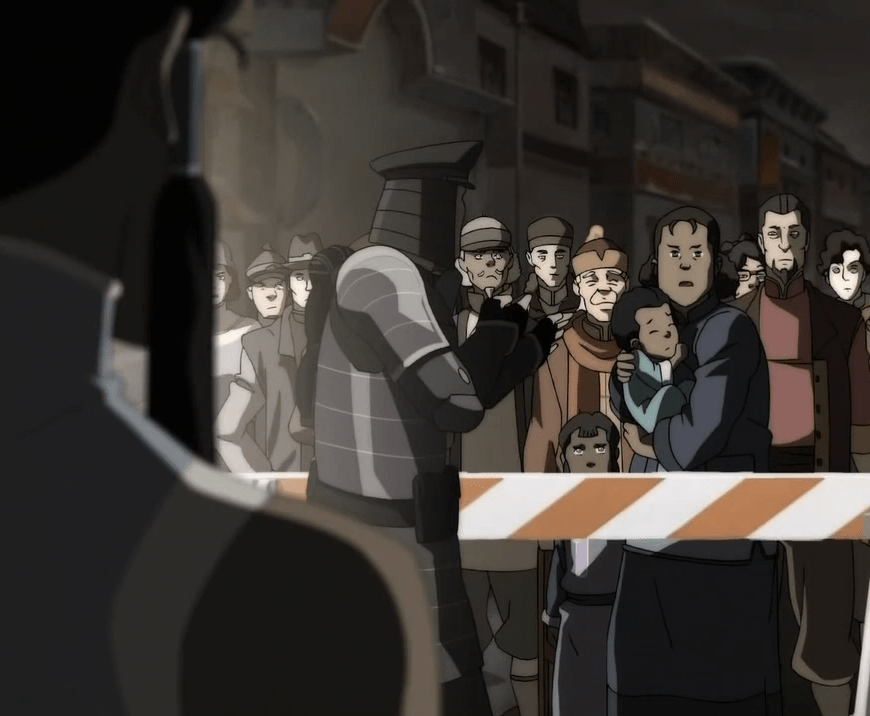
    There is a conflict between benders and non-benders, specifically around the power that benders wield, and often against non-benders, as in the case of the Triple Threat Triads. This was a great setup and it evoked themes of privilege and power that frequent the political landscape in the real world. This wasn’t just about a few bad benders misusing their powers, but practically about bending as an institution, one in which benders always have all the power.

    Triple Threat Triads extorting a non-bending shop owner
    Triple Threat Triads extorting a non-bending shop owner

    It wasn’t just the Triple Threat Triads, but the entire United Republic Council, and all 4 nations, are led by benders. Hell, even the delineation of nations – the Avatar world equivalent of ethnicity – was determined by bending, which is a bit strange given that so many people in each nation do not have any bending ability at all. And then, of course, there is the Avatar, the most powerful being on the planet, a real god-figure, by virtue of being the ultimate bender.

    The Delivery

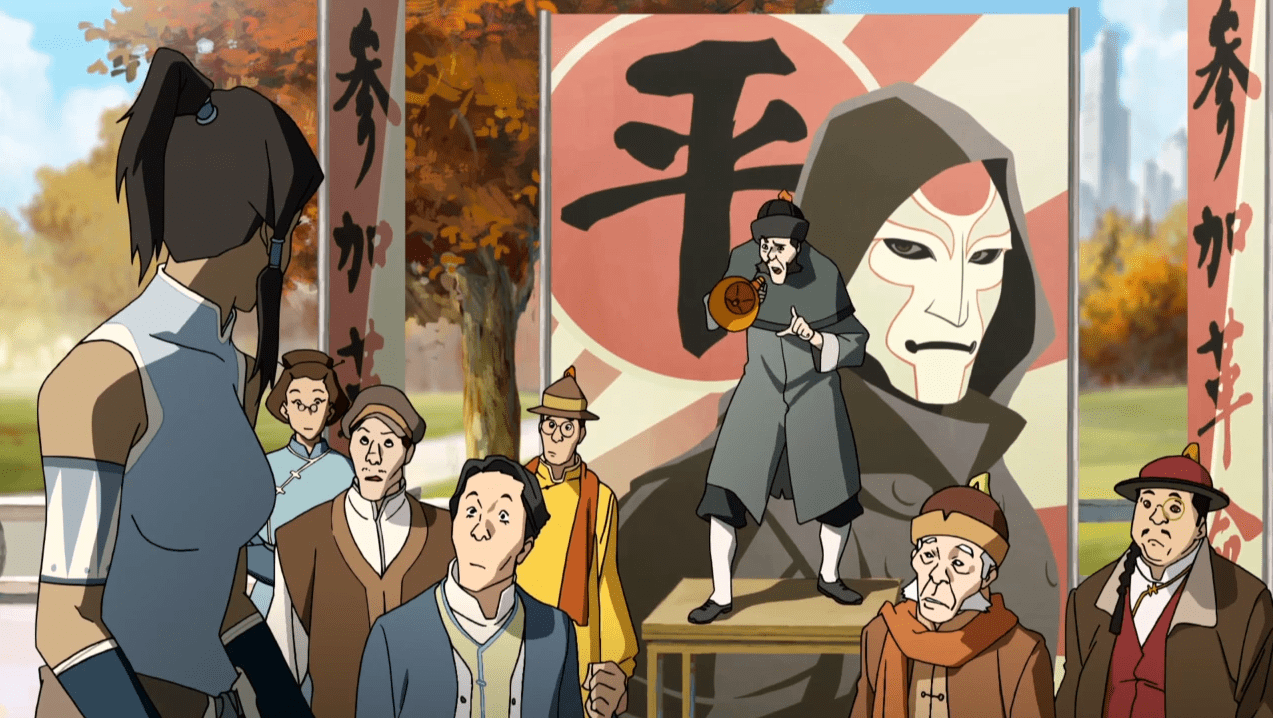
    Throughout the first season, Korra fights against the Equalists in order to…well, what, exactly? Maintain the power and privilege of the benders? When she first arrived in the city, she gave some Triad bullies a real ass-kicking, showing her interest in defending the weak. Yet she spends the entire rest of the season fighting against the non-benders’ (ostensibly “the weak” in the Avatar universe) one movement to garner some agency for themselves.

    To deny people the opportunity to fight and defend themselves against oppression under the pretext that they should rely upon you as their savior is oppressive in itself. It suggests that these people can’t do anything on their own. Or that the efforts that they have put in place are useless, or worse, a threat. And this seemed to be the point that the show was making in the first episode, through the tongue-in-cheek moment between Korra and the Equalist announcer.

    Korra called out on being an oppressor
    Korra called out on being an oppressor

    Granted, Amon was the Avatar-world equivalent of a “terrorist”, and his methods were debatably cruel. Though, when I consider the fact that he could’ve killed benders instead of merely taking their abilities away, I have reservations about applying that label to him. There is also a sort of hypocrisy in benders wielding their power and influence against non-benders at every turn, while being critical and aggressive towards the one example where the reverse is true – or at least where it seemed to be. More on that later.

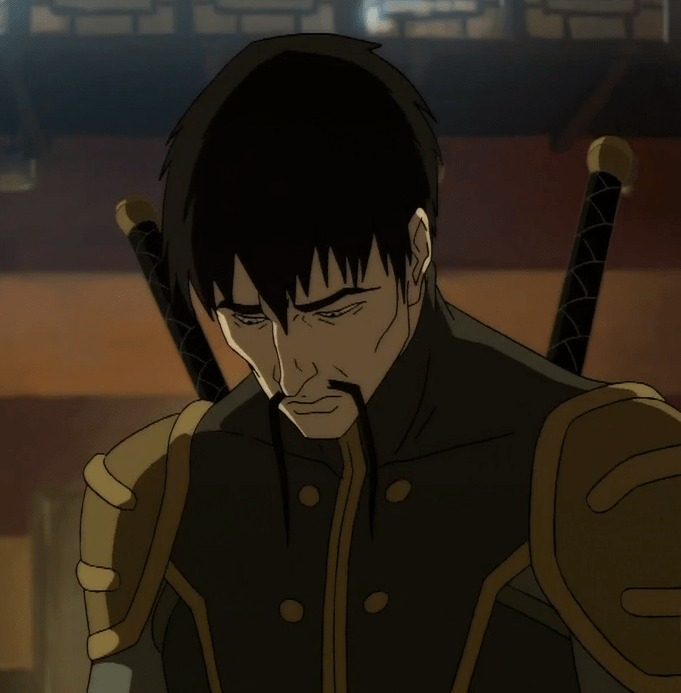
    Furthermore, while Korra and her bending allies were presented as the “right side” of the conflict, it was purely by virtue of her opposition to Amon’s extremism, not because she represented any peaceful alternative to solving the conflict. For that matter, there was no voice of reason speaking on behalf of the non-benders at all. Not one person, say, who saw fit to approach the all-bender council, or Korra, or call a meeting on their own, and offer a solution. Not for a lack of candidates, though.

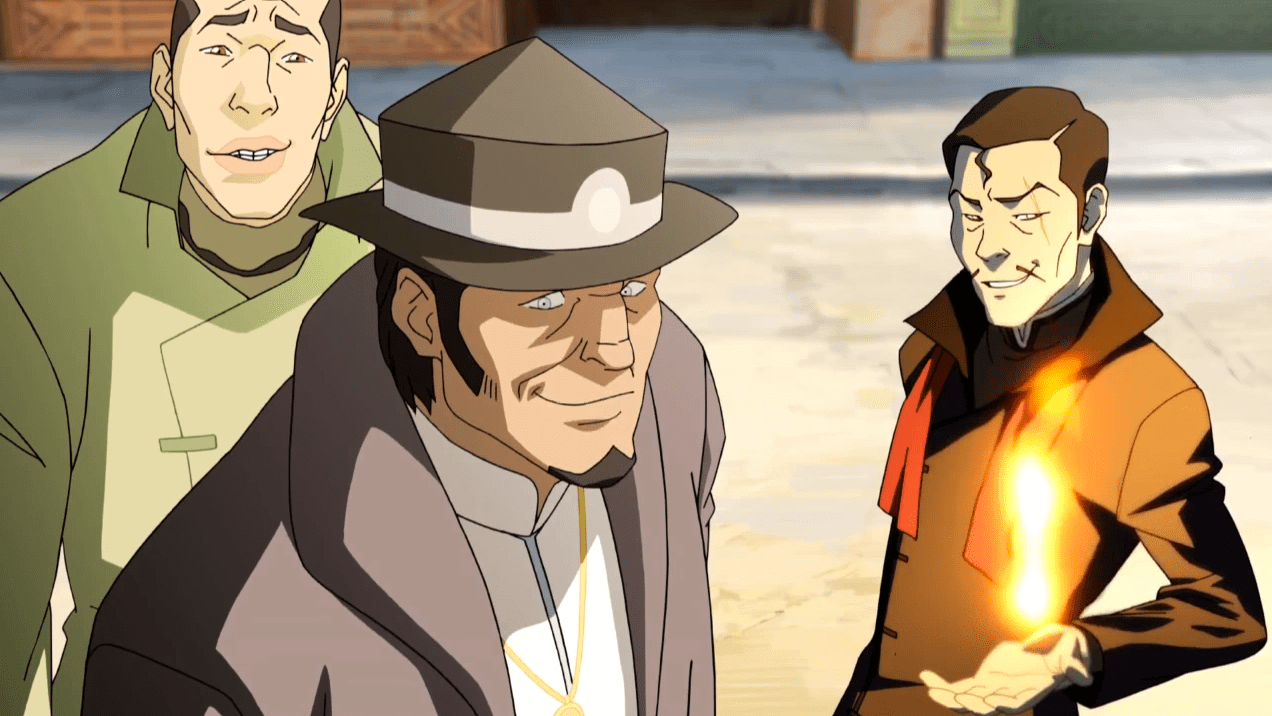
    Amon’s Lieutenant, a legitimate representative of non-benders
    Amon’s Lieutenant, a legitimate representative of non-benders

    By the end of the first season, all that happened was that the Equalist revolution was crushed, and with it, any discussion of equality between benders and non-benders, which you’ll recall from the setup was the main conflict of the show. There was never any discussion of Amon’s ends, rather only his means, thereby leaving the main arc of the show unresolved.

    The Meaning of “Balance”

    The Setup

    Korra is a bender, but her foremost role is to maintain “balance” in the world. And as one non-bending citizen pointed out to her, she’s “their avatar, too”. Korra scoffed at the idea that bending itself was oppressive, until she saw it being used overtly to oppress non-benders during the episode “When Extremes Meet”. The setup here was that Korra was coming to the realization that in spite of her opposition to Amon, non-benders really had legitimate grounds for complaint.

    “You’re our Avatar too!”
    “You’re our Avatar too!”

    The Delivery

    Korra, in spite of being the quintessential representative of the institution of bending, had a strong sense of right and wrong, and did on at least two occasions stand against benders on behalf of non-benders. However, she only acted in the most extreme cases, and failed to address the systemic power discrepancy inherent to the relationship between benders and non-benders.

    There is a parallel here with the tendency of real world people of privilege to only address the extreme “isms” (of race, gender, etc) without looking at the structures that give rise to those extremes in the first place. And so long as people of privilege aren’t carrying out extreme acts, they delude themselves into thinking they are free of responsibility for any power disparities. The extremists become for them the “proof” that they are not a part of the problem.

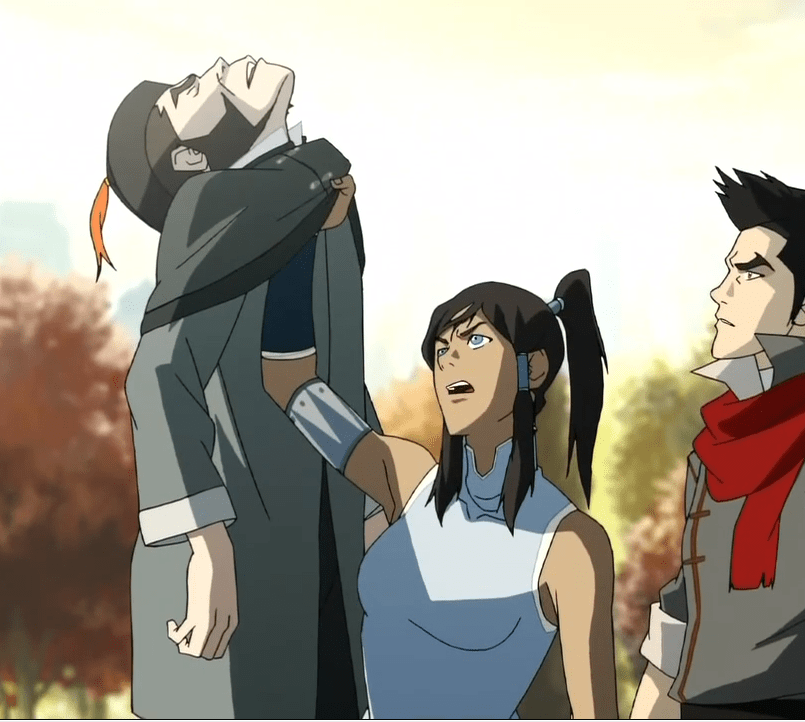
    For Korra, so long as she is not using her bending to hurt non-benders, she is in the clear. Or so she seems to think. And except where she blatantly uses her power to oppress non-benders, as she does when she silences and bullies the Equalist announcer. By the end of the first season, Korra has done nothing to address her own complicity within the oppression of non-benders, or the problem at large.

    On top of that, there is an implicit statement that underprivileged people shouldn’t have a hand in their own liberation, but instead wait for those in power to decide to act on their behalf.

    Korra manhandles the Equalist announcer
    Korra manhandles the Equalist announcer

    Amon: The Answer to the Avatar

    The Setup

    Amon was the one person in the world seemingly with the power to put Korra and all benders in check, to “equalize” the playing field between benders and non-benders.

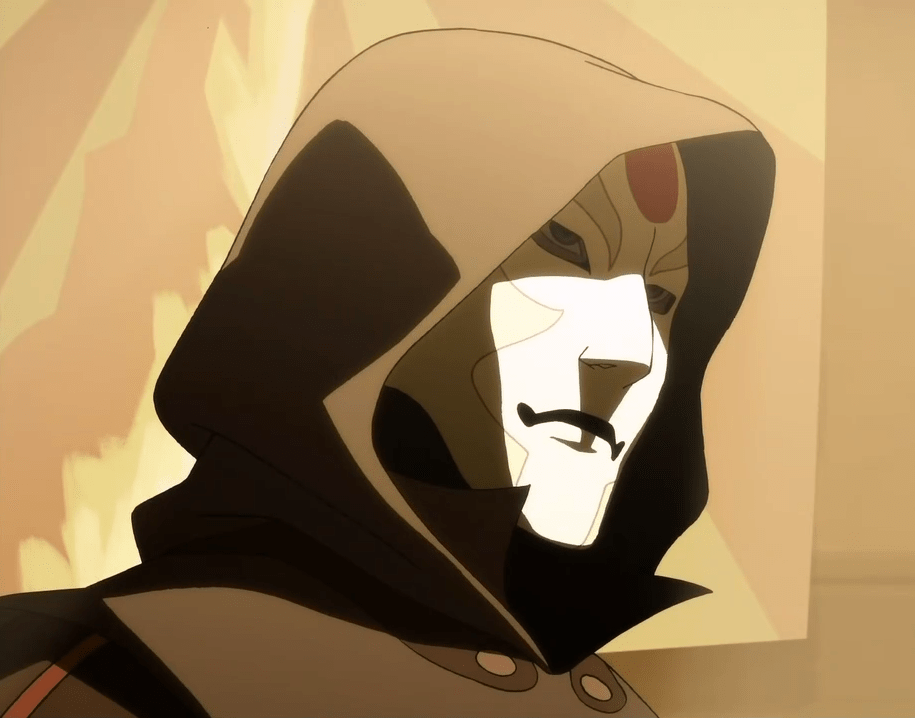
    Amon
    Amon

    He had so much promise due to his veiled identity, which set fans’ minds ablaze with possibilities for who Amon could be, and his true end game.

    The Delivery

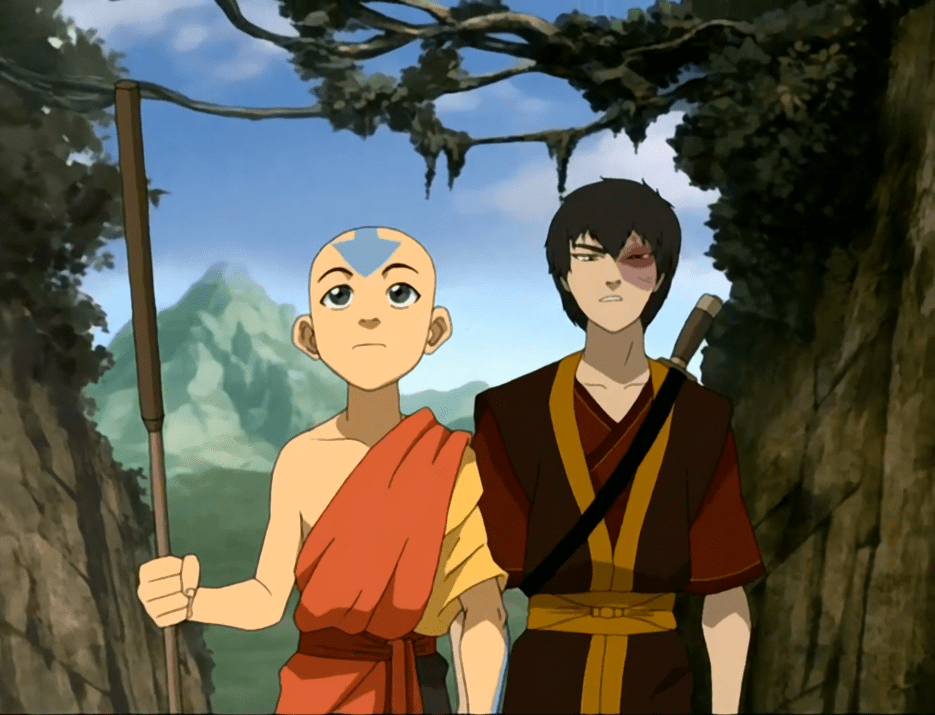
    Amon had so much potential. He had a righteous cause, but questionable methods, the hallmark of any great anti-hero. A non-bender with the power to challenge benders, up to the most powerful of them all, the Avatar. He had the means and the drive to resolve the conflict that the Avatar could or would not. He had the potential to be both Korra’s greatest adversary and a powerful ally, like Zuko was for Aang.

    His hidden identity created all sorts of opportunities, from connecting this series to Airbender, to him being a controversial character of some sort. He did end up being controversial, but in a rather dull way.

    Back when speculations ran wild over Amon’s identity, the more sober voices amongst the fandom urged us to accept the possibility that Amon was a new character, rather than one whose identity was an important plot point. That actually would have been fine, because Amon’s motives and abilities and extremism were all enough to make him a compelling character without riding the coattails of Airbender, or tying him to any other character in the show.

    But the creators not only decided instead to tie him to another character, but to one of the least interesting ones, and one in whom the audience was the least invested. Or was that just me? Tarrlok was at best a worthy side plot, but even then one that relied upon a past context that the show had to take the time to establish.

    If Yakone had been some character we had really gotten to know or care about, Tarrlok would’ve been more interesting by proxy. Tying Amon to Tarrlok and Yakone, neither of which were that interesting or well developed, seemed like a contrivance. I didn’t understand why, if there was going to be any tie to the past, and to Aang, it wouldn’t have been to a more familiar character. I mean, really, who the hell was Yakone? He could’ve been anyone for all he really mattered within the continuum of the Avatar universe.

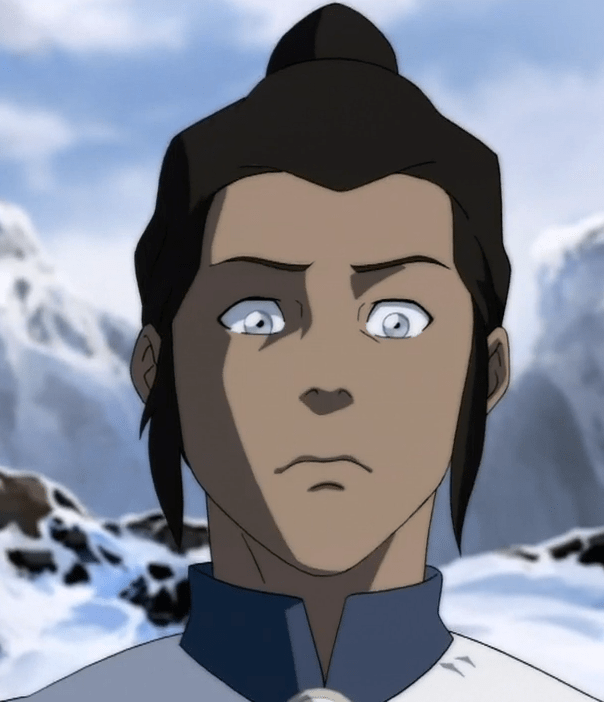
    The mere fact that Amon’s entire backstory had to be laid out in the second-to-last episode indicates that there had been little foundation laid for him throughout the season. It was just poor and last minute character development.

    Young Amon. Once known as…Noa-who now?
    Young Amon. Once known as…Noa-who now?

    Ultimately, Amon had little connection to the larger arc of the story, to Korra, to the Avatar in general, and as we find out, to his own cause. The fact that he was a bender again suggests that non-benders can’t have either power or agency of their own and must rely upon benders to “save” them. This is a real failure in plotting, character development, and in theme.

    The Trouble With Airbending

    The Setup

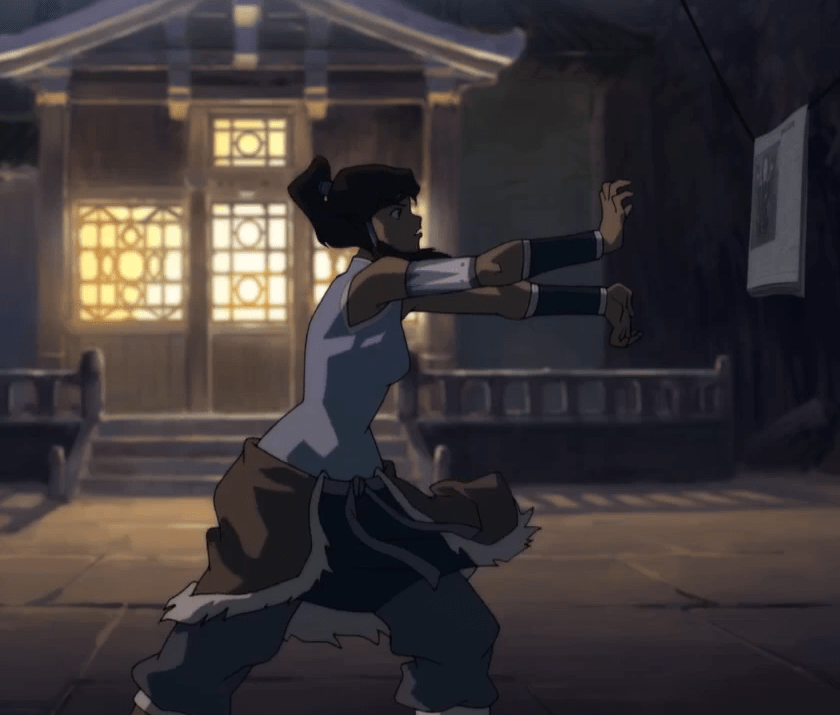
    Korra easily masters Water, Earth, and Fire, but struggles with Air, because it is the element most opposed to her personality.

    Korra fails to Airbend
    Korra fails to Airbend

    We saw the same thing with Aang and his struggle to master Earth. It would be particularly interesting to see hot-headed Korra learn the sort of patience and “go with the flow” mentality required to learn airbending.

    The Delivery

    Korra’s inability to master air was, at best, a tertiary side plot. While it could’ve – and should’ve – been a running theme throughout the season, we only ever caught glimpses of her failure or progress, such as the comic Air trial that Tenzin put her through early on, or when she randomly started executing Airbender moves during the Pro-bending match. There was no indication that her inability to master Air was connected to the larger arc of the show, which is especially bad given that there was such ample opportunity to do so. For example, as mentioned above, Korra’s approach to stopping the Equalist movement was to meet force with force, to overlook all the nuance of the conflict and just crush the rebellion. Certainly Amon’s extremism pushed her hand, but there was never even an inclination on her part to search for a more peaceable solution.

    Aang side-by-side with Zuko, his former adversary
    Aang side-by-side with Zuko, his former adversary

    Aang, foremost an Airbender, and Korra’s diametric opposite, would’ve immediately looked for that solution. He would’ve tried to evade the Equalists’ aggression and counter with kindness and diplomacy. While I did not expect Korra to suddenly invoke Aang (funny that she ends up literally doing that, though), I had hoped that she would’ve drawn from the personality required for Airbending to help her resolve the conflict. There would’ve been an easy parallel between both lessons: how to resolve a conflict without force, and how to Airbend, a technique that cannot be forced.

    Korra airbends for the first time
    Korra airbends for the first time

    And how does Korra ultimately manage to Airbend? Out of desperation, and having no other power to draw upon, she spontaneously just…does it. Nothing in the lore around Airbending connects it to feelings of desperation. The Avatar State, yes, so I could’ve seen her drawing upon that power as she feared for Mako’s life, but Airbending? No. It really didn’t make any sense. There was no connection between all of her struggles and progress with the art, and her ultimately being able to unleash the power. She practically “forced” the air out, which doesn’t match up with the show’s themes at all.

    Physical vs. Spiritual

    The Setup

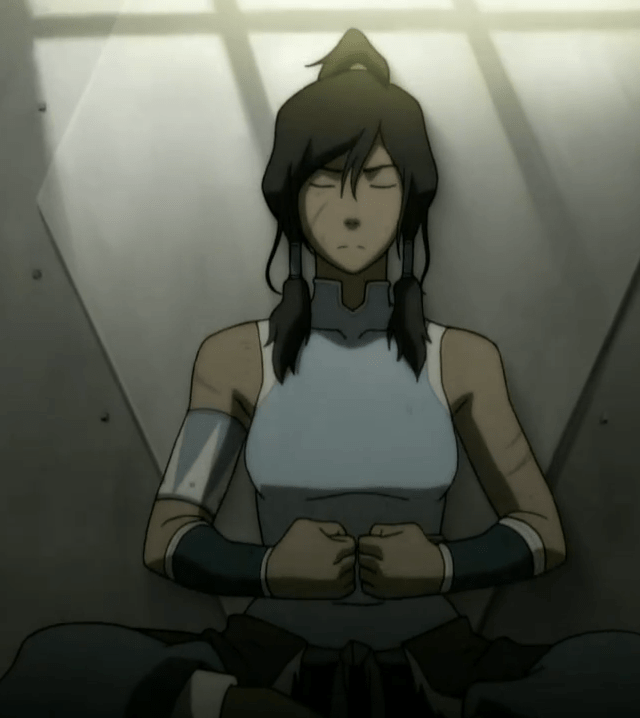
    Korra is a powerful physical bender, but unlike Aang, has no connection to the spiritual side. Again, being the Avatar is all about “balance” and so Korra learning to tap into her spiritual side was of critical importance to the show and to her characterization.

    Through her flashbacks of Aang, we see glimmers of a budding connection to the spirit world, but the question lingered of how it would be fully realized.

    Korra meditates on her past life
    Korra meditates on her past life

    The Delivery

    Finally, Korra had no connection to the spiritual side, being a purely physical bender. Like her trouble with Airbending, this dilemma could’ve been resolved by weaving it into the larger story arc. It also struck me as odd that one of Korra’s primary weaknesses was also an ability that her main protagonist claimed to have. As I mentioned in my theory about Amon’s identity, the opportunity was ripe for a plot tie-in to the spirit world. But it never happened. Not only didn’t it happen, but the potential in Amon’s connection to the spirit world was squandered as it turned out he was plain lying about it.

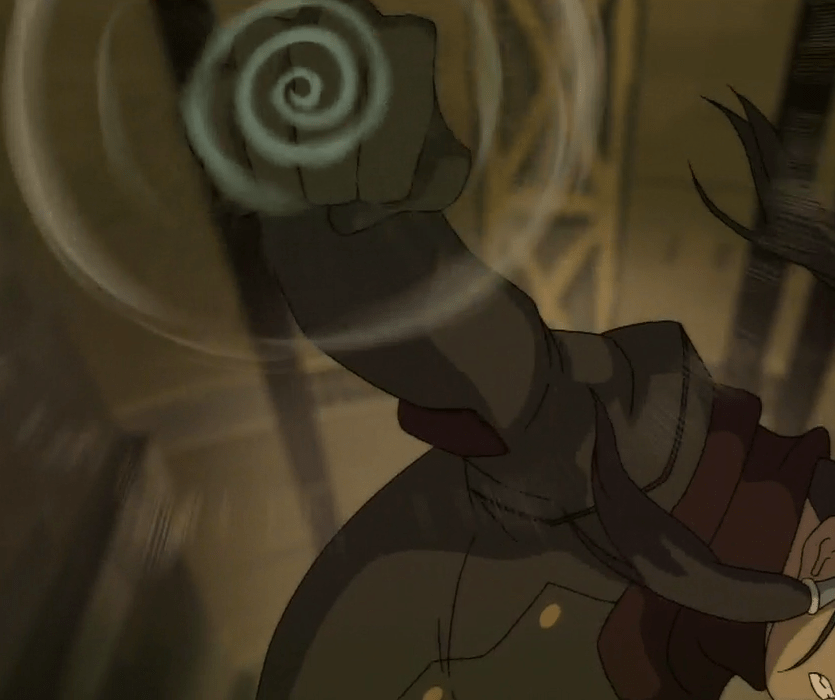
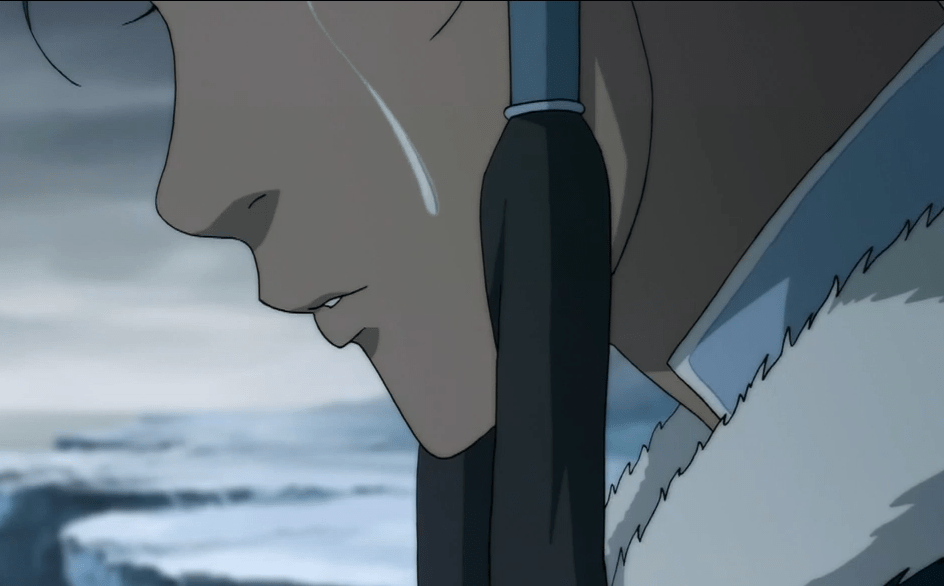
    And how does Korra finally connect to the spirit world? By running off in a bout of existential angst, crying alone, and somehow spontaneously summoning the spirit of Aang. What? All that build-up around the flashbacks, her learning the value of meditation, and none of that even comes into play? By “being emotional” – and I’m not even going to touch how that’s problematic around expectations for female characters – she suddenly develops an ability that had been completely closed off to her before?

    Korra tear-bends
    Korra tear-bends

    First of all, that doesn’t even make sense. Aang never made contact with the spirit world through “being emotional”. He meditated. Intense emotion did on the other hand invoke the Avatar State, but that’s not how it played out for Korra – even though there was an opportunity for it in the showdown against Amon as I mentioned earlier. Second, it wasn’t the first time Korra got emotional. She had numerous emotional outbursts, and at least one other distinct moment of feeling helpless and afraid – when she learned about Amon’s ability to take away bending. Why was it in this particular “emotional” moment that Aang came to her? It was pretty arbitrary, except for the fact that it was in the last 3 minutes of the season, and the conflict still needed a resolution.

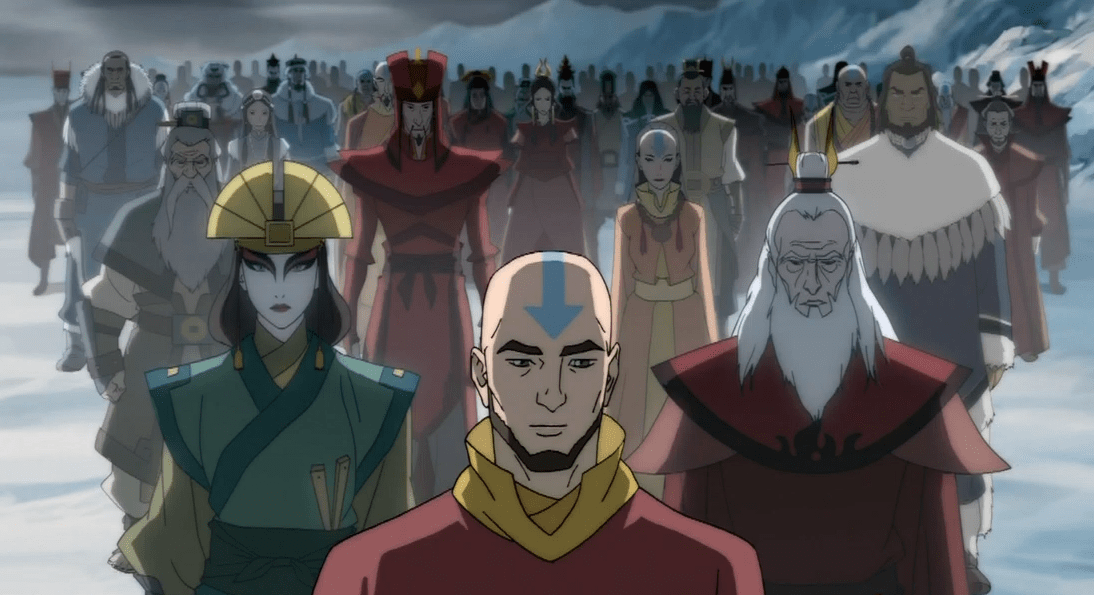
    Korra makes contact with her past lives
    Korra makes contact with her past lives

    And speaking of resolutions. Really, the entire crisis of benders having their powers taken away, not to mention the flipside of it – what that meant for the power dynamic between them and non-benders – was resolved in the final minute? Korra goes from being a zero on the spiritual scale to being able to evoke the Avatar State at will, and know enough about operating within that state to unlock everyone’s sealed bending abilities?

    Korra enters the Avatar state

    She accomplished in one emotional moment what it took Aang – who, mind you, was already spiritually inclined – nearly three entire seasons to learn. Ridiculous. Utterly ridiculous. And I’m sorry, but I do not buy that Korra is a shorter and more concise show, and therefore had to fit more story into a smaller space. Because Pro-bending? The Korra-Mako-Asami love triangle fiasco? All unnecessary sidetracks from the main arc, and little more than filler. I am not opposed to either plot element, but I do take issue with the main arc being crumpled like an accordion in order to make room for something that was mostly irrelevant.

    Conclusion

    If it isn’t clear by now, I was extremely disappointed in the first season of The Legend of Korra – or at least in its resolution. While I recognize that I had high expectations, those expectations are the result of Avatar: The Last Airbender being a stroke – many strokes – of sheer creative genius. What I wanted from Korra was nothing that Konietzko and DiMartino hadn’t already proved to me that they were capable of providing. And I honestly don’t think that my expectations were unreasonable.

    Even if one disagrees on one or multiple particular points, even the most out-of-their-mind-fanatical supporters of Korra have to recognize that something was missing. Maybe some of this will be addressed in the second season, but if the first was any indication, and the near-unanimous acclaim by fans suggests to the creators that they were, in fact, on the right track, then my new expectations are very low.

    The Legend of Korra hasn’t lost me yet, but unless it makes a dramatic turnaround from first season’s shortcomings, it will register as little more than a blip — albeit a gorgeously animated and musically scored blip — on the radar of good television.