Category: Writing

  • To All the Never Books: Writing Toward Infinite Possibility

    To All the Never Books: Writing Toward Infinite Possibility

    I have been working on my novel, UNTIL THE MONSTERS COME, on and off for 13 — thirteen! — years. Sometimes I mourn the fact that after all this time, I am still quite a ways from finishing it. I mourn that I can’t even commit to writing a little every day, that I often use up my creative energy in the planning, in the taking of “notes” about the book more than actually writing it.

    But then I realize that had I finished this book two, three, or even five years after I started, it would not be the book it will eventually become. Although I have struggled with the writing of it, I have not been idle, and what started as a weird thought experiment juxtaposing childish fantasy with real life violence is becoming a sprawling epic that incorporates Gnostic and Jungian themes, takes on issues of race and gender, and presents a number of complex philosophical arguments. The book that I would’ve completed back in 2008 or 2011 would not have been this book, and frankly, it would not have been as interesting (at least not to me), and probably not as good.
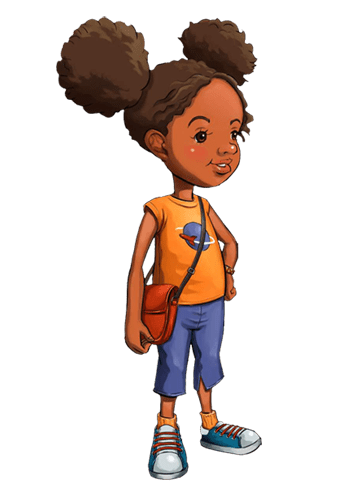
    Maddie Original Concept
    Maddie (Original Concept)
    Maddie (Current Concept)

    Then I got to thinking that whatever version of UTMC I end up completing — hopefully in the next few years — might be in some ways less than the book it could become if it stewed for another seventeen years. Writing this book has involved a constant process of incorporating new ideas as my life experience grows, as my priorities shift, as I start to see even more obscure connections between real life and the fantasy world I am creating. UTMC has become my “everything book”, but I often have to check the impulse to try and stuff into it every “cool idea” I think up. I have to resist the urge to make this book the one that touches on all the philosophical or theological questions that interest me, the social issues I consider important, the aesthetics with which I fall in love on any given day.

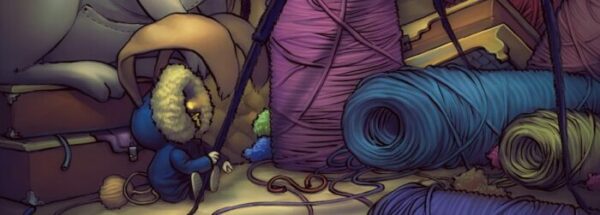
    “Poguri’s Awakening” — A scene that no longer exists in the current novel

    This impulse, I think, comes from the feeling of stagnation that has plagued me throughout my writing process, the fear that this book — whenever I finish it — will be the only book I am able to complete. So I’d better put it all on the table, all the things I care about, all of me into this one book. But of course, no book can ever be everything.

    So I find myself thinking about all the “Never Books”, the books I will never write, not because of stagnation, but because for any given project I have to draw the line somewhere and finish it. There are infinite variations of any book I might write, given enough time to ruminate and to appropriate any and everything that captures my attention, stirs my devotion, or inspires my revolt. Truly, what would UTMC become if I gave it another twenty years? Assuming, of course, that it needn’t actually take me that long!

    The difference between UNTIL THE MONSTERS COME today and “POGURI: THE LOST GRANIMAL” (the original title) from 2006 is one of such dramatic scale and scope that I can’t even think of a proper metaphor. They are just completely different books, and I have no interest at all in writing the old one. It would’ve been awful. But perhaps twenty years from now, as I look back upon the successes and failures of UTMC, I will have had so many ideas, learned and experienced so much more, that I will mourn the book it could’ve been.
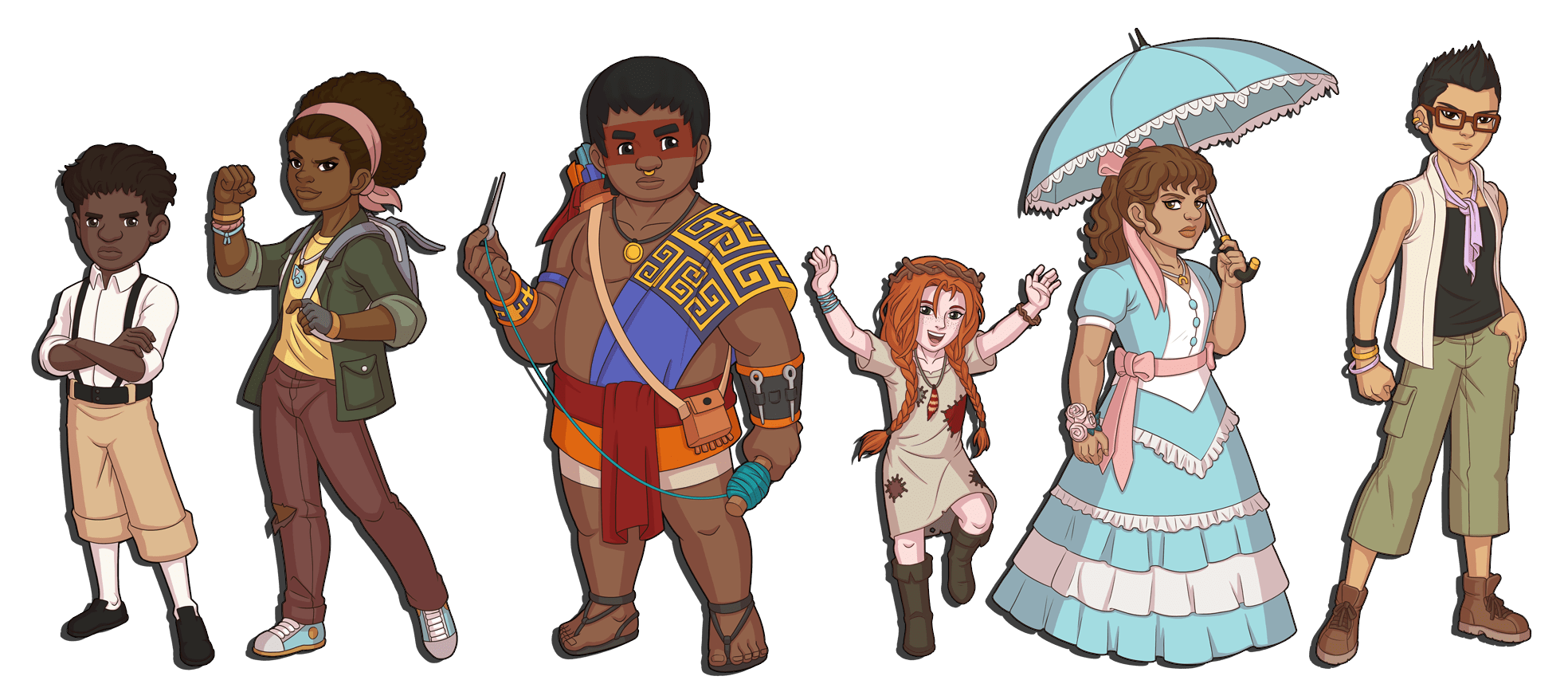
    The current iterations of the main characters in UNTIL THE MONSTERS COME

    Hopefully I won’t have the time or space to mourn, because all those ideas and experiences will find their way into the second and third books of a trilogy, inform my work as a teacher, inspire me to some form of activism, or make their way into some other creation that I cannot even foresee today.

    To all the Never Books, I choose to imagine that somewhere in the multiverse you will come into being. But here and now, you continue to inspire me toward infinite possibility.

  • Cultural Appropriation and the Writing of Other People’s Trauma

    Until the Monsters Come is a speculative fiction novel that I’ve been working on for the last six years, half of which takes place in the “real world”, or what I call the Wake, and the other in a parallel world called Nou.

    One of the main characters is an Indigenous Australian boy — Wiradjuri specifically – named Elan, living in New South Wales in the 1930s.  For the part of Elan’s story that takes place in the Wake, I am borrowing from accounts of the Stolen Generations, from first hand accounts taken from the landmark Bringing Them Home Report, released in 1997.

    Elan from UTMC (Early Concept)

    As I’ve continued writing, however, I’ve gotten to thinking about cultural appropriation in fiction, and I came across this article by Nisi Shawl, which talks about how to classify the appropriator – as either invader, tourist, or guest:

    Invaders arrive without warning, take whatever they want for use in whatever way they see fit. They destroy without thinking anything that appears to them to be valueless. They stay as long as they like, leave at their own convenience. Theirs is a position of entitlement without allegiance.

    Tourists are expected. They’re generally a nuisance, but at least they pay their way. They can be accommodated. Tourists may be ignorant, but they can be intelligent as well, and are therefore educable.

    Guests are invited. Their relationships with their hosts can become long-term commitments and are often reciprocal.

    I actually wrote to the Miss Shawl and she advised me to do some outreach to members of the “host culture” from which I am drawing:

    You are only an invited guest if someone at home in the culture in question invites you into it.  Doesn’t sound like that has happened here.  I am in no position to tell you if you are a tourist or invader.  Again, that is the call of those at home in the culture in question.  So I suggest you do some outreach along the same lines as you’ve done with me, but in that direction.  My only other helpful tip is that tourists engage in some form of exchange with their hosts, which is much less the case with invaders (though colonizers and exploiters offer unequal exchanges for the good they appropriate, too).

    I intend to take her advice, but the trouble is that I do not even know how to begin this process of reaching out.  It would be awfully strange for me to try to contact some random Indigenous Australian and ask questions about cultural appropriation.  The questioning itself would seem to me to foolishly ignore individual experiences and divergent perspectives, the existence of disparate groups beneath the umbrella term “Indigenous Australians”, and impose upon any given individual some responsibility to represent an entire group of people.

    I have searched the internet for online Indigenous communities with little success, many of them outdated or riddled with spammers.  Others are closed non-profit or community groups that I feel I would be rather self-important in approaching, as they are preoccupied with real concerns, and would not have time to respond to some random would-be author from the States.  There seem to be a few possible leads on Facebook, but I remain skeptical about who started those communities and for what purpose.  So I’ve decided to write this post as a way of putting my questions “out into the ether”, so to speak, for anyone to weigh in.

    I am not looking for permission to write my story.  Instead what I hope for is some feedback on the appropriateness of drawing from people’s real-life horror stories and placing them within a fiction novel.  Of course all fiction draws from real life, but I’m wondering if I’m crossing some line between simply re-telling the story and co-opting it for my own purposes.  People do it all the time with reckless abandon and without any concern for the sensibilities of the host culture.

    And I don’t want to do that.

    In my story, I am not delving too deeply into the particulars of Wiradjuri culture, but more the experience of a forceful distance created between Indigenous Australians and their families, livelihoods, and heritage, by this period of reprehensible government policy.  Where my fantasy elements overlap with Australian mythology, it is coincidental, as I am actually drawing more from the psychology of Carl Jung and Gnosticism.  However, there are common – maybe even perennial – themes that move through different cultures, and where I found synchronicity with Australian mythology I was thrilled at the coincidence, given that I had chosen an Indigenous protagonist.

    There is nothing particular to the Stolen Generations experience that I must use.  I am using those accounts without going into any of the lasting effects, the political ramifications, any of that, instead taking them in a vacuum as pure examples of human cruelty.  Still, I did choose an Indigenous Australian character for specific reasons.

    First is that the Stolen Generations story is one that is not too well known outside of Australia.  Second is that I am insistent that my protagonist be a character of color, not only for the fact of inadequate representation of people of color in fiction, but an intentional rebellion against Western sensibilities and standards for what makes a “worthy” or “identifiable” protagonist.

    I would be especially interested in corresponding with Wiradjuri people, given that I have chosen to make my protagonist a member of that particular group.  But truly, any serious feedback would be appreciated and taken under due consideration as I continue my writing.