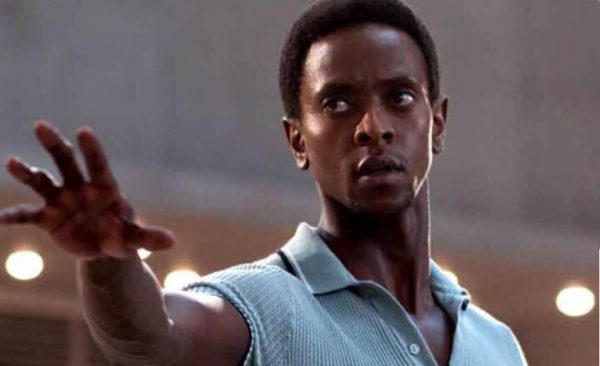
Matt Reeves and Robert Pattinson’s latest incarnation makes eighteen “Batmen” to appear on the big screen, continuing the character’s 80+ year legacy, which began in Detective Comics in 1939. Over that span of time, the Batman canon has featured many stories, some of them interesting, but none of them ever straying too far from it’s god-awful foundation. While I’m sure most people are quite familiar with the character, it’s worth laying out the premise, just to see its folly in print.
Bruce Wayne, the son of a wealthy family, is traumatized as a child when his parents, Martha and Thomas Wayne, are killed by a random burglar. The specific circumstances have been revised a little throughout the years, with different writers trying to make it about revenge (as with Nicholson’s Joker), or part of a larger conspiracy (as in TV’s Gotham). However, in all cases, it is this formative event which sets Batman on his vigilante trajectory, expressing his vengeance not just against his parents’ murderer, but against any and all instances of crime.
Young Bruce Wayne mourning the death of his parents in the TV show Gotham.
This premise is absurd on its face, for a number of reasons. First is that the Waynes were a wealthy family, and so the likelihood is vanishingly small that they would’ve ever walked through a dark alley after a night at the theater, when they could’ve just as easily summoned a private car. Where was Alfred? The Waynes’ butler, often reimagined as a former intelligence or military officer, would’ve been on call at the first sign of trouble.
In the mythology of Batman, Gotham City seems to be a place of perpetual darkness and nearly ubiquitous violence, such that only the theater itself, Wayne manor, Wayne Enterprises corporate headquarters, and a few other locations are even safe to occupy. Even though Gotham is based on New York City, the inspiration is practically unrecognizable, except through the lens of white supremacy and elitism. New York is a huge city — five boroughs and hundreds of neighborhoods — with various levels and frequencies of crime, these corresponding directly to yawning disparities in health and wealth, precipitated by long histories of disinvestment, deeply racist city planning, and the geographic concentration of trauma.
The caricature doesn’t grapple with the underlying reasons for its condition, and even more importantly, it reduces the real neighborhoods of New York to pathology, instead of recognizing the immense social and cultural richness and complexity that flourishes in resistance to these conditions. Gotham is devoid of culture, and there are only three classes — the wealthy, the poor, and the buffer class occupied by the police and other officers of the criminal punishment system.
Where Gotham is presumably situated within the United States, it shares that country’s original sins of dispossession, genocide, and slavery and so its conditions necessarily sprout from that rotten foundation. As in the real world, the dynamics of power and concentrated wealth are mediated by capital. Inherent to the logic of capitalism is that billionaires like the Waynes are created by conditions of labor exploitation and environmental extraction, leaving people and the natural world as the wreckage, or waste product, of their ascent.
To be more clear, the only way for billionaires exist, is through parasitic relationships — harm to one for the benefit of another. What this means is that people like the Waynes are complicit in the conditions that ultimately lead to their demise. It need not be so contrived as the Waynes causing direct harm to someone, and then that person getting revenge, because where wealth is concentrated, the human and environmental harms and consequences of capitalism are widely, if still disproportionately, distributed. There is no shortage of victims who might consciously or randomly rise up in retribution against the Waynes.
Unlike the countless victims of Capital, Bruce Wayne is able to take it upon himself, by virtue of his inherited wealth — and through that access to near infinite resources — to get his own perverse form of justice. The comics, TV shows, and films seldom discuss what Bruce gets up to in the daytime, or what sort of industries comprise Wayne Enterprises, but one can reasonably assume that he carries on his family’s legacy of exploitation and extraction. Is Wayne enterprises directly complicit in the suffering of Gotham’s majorities, through the dumping of toxic wastes in poor communities, busting unions to prevent workers from achieving a reasonable standard of living, or divesting people of their homes through predatory lending and aggressive development?
Wayne Enterprises
Perhaps Thomas or Martha Wayne themselves are the missing analog to New York’s Robert Moses. Or perhaps they’re only indirectly complicit, through the funding the police that surveil, abuse, and murder average citizens, investments in fossil fuels or military weaponry, or the gross speculation of finance capitalism — ultimately leading to the same egregious conditions that make Gotham a terrible place to live.
Professional asshole Jeff Bezos may be Bruce Wayne’s real-world analogue, in spite of his physical resemblance to Superman’s Lex Luthor. Perhaps like Bezos, Bruce Wayne’s extraordinary wealth is begotten from the exploitation of his workforce, and extraction of the natural world to produce and sell an endless supply of cheap junk. While, to my knowledge, Bezos does not go out at night dressed up in tights, cape, and a silly mask, to beat up people, he does provide the carceral state with the digital infrastructure and technology (e.g. Amazon Web Services, Ring cameras, Rekognition software) it needs for mass surveillance, under the false pretext that such things are necessary to protect us from crime. And like Batman, Bezos is prone to spectacle, whether it be built around leaked images of his penis, or the conceit of flying a penis-shaped rocket into outer space.
Dickman, as it were.
Jeff Bezos stars as Dickman. In theaters July 2023.
Is it because corporate proxies allow Bruce Wayne some degree of deniability, that he is able to be simultaneously complicit in Gotham’s misery on the back end, and compound that suffering through the deployment of military grade munitions against the people who erupt from such conditions? Or is he simply the worst person in the world, fully aware of the harm his enterprises cause, and under the false pretext of vengeance, uses the power of the State and his own wealth to punish, dominate, incarcerate and kill the people of Gotham?
Only at the peak of white supremacist capitalist mythology, and a deep ignorance of history and social dynamics, can a person like Bruce Wayne — as Batman — be conceived as a hero. So perhaps instead of constantly reimagining Batman for the page and the screen for each new — and ever shorter — generation, DC should cast this villain back into the abyss of the imagination.
It was in April of 2020 that I first heard about the North Philly Peace Park. The name came and went in a snatch of text conversation, but a convergence of life-changing circumstances would steer me back. The first was that the COVID-19 pandemic was starting to rage in Philly, calling into question mine and everyone’s relationship to work. The second was that over the previous few months, I had started dipping my toes into the Philly sustainability scene, feeling a calling to the work on a local level. And finally, the many inklings over the years that I wasn’t “cut out” to be a school teacher were starting to coalesce into a new identity as a school abolitionist.
For context, before I left the classroom for good in 2020, I had been teaching for eight years, and involved in other forms of education for the better part of a decade before that. In spite of the intractable problems of schools, and their hardy resilience against half-baked neoliberal reforms, I genuinely believed for most of my career that there was something we — or even I — could do as a teacher to improve the lived realities of my students. In my first semester of graduate school, I pondered the role of the teacher in an “education for liberation”.
In December 2019, I was in the midst of facilitating a Participatory Action Research (PAR) project with high school students, to investigate the local impacts of climate change, particularly with respect to community health. Looking into how it connected to the higher asthma rates for Black and Brown communities in Philadelphia, we learned about the urban heat island effect, and how historic disparities in health were drawn in red lines.
We would later apply for a grant to transform our school courtyard into a community green space, as a means of mitigating the disparities in heat, air quality, and access to healthy food. A combination of the pandemic and the inevitable bureaucratic quagmire brought the project to a standstill — though perhaps only temporarily as conversations have recently started to pick up again.
This was the start of my transition from school teacher to community educator and organizer, a journey that has allowed me to connect with so many incredible people and organizations throughout Philadelphia, in the orbit of land, food, and climate justice. Most significant of them all has been North Philly Peace Park.
If you aren’t familiar with the Peace Park, the gist is this: community members in the Sharswood neighborhood of North Philadelphia came together to clean up and restore health to a parcel of land, and convert it to a sustainable space for growing food and building community. They did not ask for “permission” from the owners — the Philadelphia Housing Authority — because no one should need permission to thrive. This early work set in motion a nine year struggle between the Park and PHA, for the very right to self-determination.
It is a struggle that has always been rooted in control of the land, from Indigenous dispossession, through the displacement of Black farmers in the South, into the present where many battles are being waged over the question of land sovereignty. As explained by mixed media artist and scholar Li Sumpter, a member of the Peace Park design and education teams, “this idea of reclaiming space and reclaiming land, of ownership and agency have always been a part of the Peace Park strategy of community building”.
In August 2020, I was able to connect with Tommy Joshua, the founder and executive director of the Peace Park. We had a wide-ranging conversation about education, land, food, and Black self-determination. He invited me to join a newly forming education team, which would be working to formalize the more organic, ad hoc educational programming that the Peace Park had been conducting with local children for years.
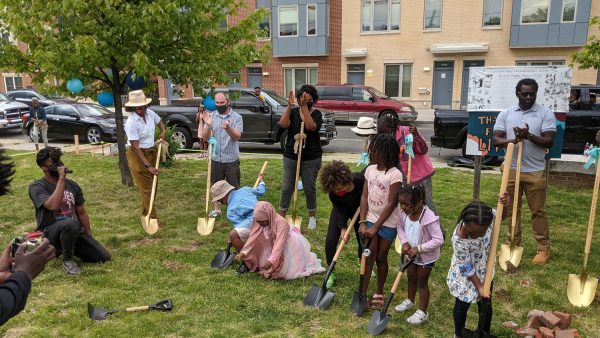
On Saturday, May 15th, I joined North Philly Peace Park staff, volunteers, and Sharswood community members — generations of Black people, from infants to elders — for the groundbreaking of the Sala Keturah STEM Pavilion: a stunning fusion of Afrofuturist aesthetic and sustainable design, which will serve as the centerpiece for a full-block ecocampus.
Design mockup for the Sala Keturah STEM Pavilion
The pavilion is part of a larger project to model Black self-determination in Philadelphia through agriculture, design, education, wellness, and cooperative economics. Maya Thomas, lead planner in the building of the pavilion, sees the Peace Park as a case study, providing a pathway for Black communities like Sharswood to push back against gentrification. She says that where people feel helpless in the face of relentless redevelopment, the Peace Park offers a “competing ideal”, an alternative that genuinely meets the needs of the community.
From the electric enthusiasm of the young people as they drilled their shovels into the earth, to Thomas’s tears of joy, it was clear that the event also represented the breaking of a tide, the crossing of a threshold from dreams to realization. The event was filled with joy and camaraderie, the Park vibrating with the creative energy and the will to see the dream fulfilled.
The theme of the groundbreaking ceremony was tracing the continuity of Black struggle, resistance, and resilience. Community elder Mama Gail guided the attendees in calling Black ancestors into the space, while also inviting us to dream the future into being. In the words of lead architect Nyasha Felder, the pavilion will “function as a time capsule, by retaining the cultural significance of place making through the lens of Black radical space.”
Groundbreaking of the Sala Keturah Pavilion at North Philly Peace Park
Fifty years ago, community activist, educator, and scholar John Elliott Churchville started the Freedom School on Ridge Avenue, a mere three blocks from North Philly Peace Park. His mission, from 1964 to 1978, was Black self-determination, which he recognized as incompatible with education provided by the State. Churchville honed his vision through the lens of revolutionary nationalism, an ideological current that finds one of its most coherent manifestations today in North Philly Peace Park.
Philly school teacher and Peace Park education team member Nzinga Hill wants to cultivate “intellectually sound, spiritually grounded, culturally knowledgeable liberators”, that these young people need to be “uncompromising”, steeped in Black thought, Black struggle, and Black scholarship. It is a vision I share, having struggled myself with navigating predominantly white spaces, trying to glean some hint of what Black liberation might look like. Faced with an utter void in Western and white scholarship, I turned to the wisdom inherent in years of Black resistance, Indigenous struggle, each grounded in a care and respect for the Earth — working to synthesize what I’m calling a Red, Black, and Green ecology of learning. The Civil Rights and Black Power movements are always discussed in the past tense, but they should rather be understood as part of a continuum. Emblematic of that continuity, Dr. John Churchville himself was among the guests for the groundbreaking of the Sala Keturah Pavilion.
Philly is a “city of neighborhoods”, really a city of blocks, such that we often aren’t aware of the greatness taking place right under our noses. There have been a few times out at the Park when I’ve been approached by local residents asking me what it’s all about. It was striking to me that even people who lived within walking distance were unaware of this vital space where they were free to harvest food directly from the land, or from the numerous food giveaways. This resourceful space where Black people were creating natural balms and tinctures, art, crafts, and other products, during monthly Green Wall Street gatherings. This magical space, where Black people were coming together for conversations about strategies, logistics, and the very contours of self-determination. This space which has become a convergence point for the ingenuity and creativity of so many people, from educators and activists to artists and architects, to beautiful Black children seeking a place to be their essential selves, wild and free.
Also. Y’all. Did I mention that there’s bee hives and a solar smart cube?
All the things that North Philly Peace Park is, and will become, are part of a continuum of collective dreaming, striving, and will toward self-determination: the heart of all Black struggle. The life of Black people in this country has always been defined by the tension between our demand for sovereignty, and the violent refusal by the State at every juncture to entertain the mere idea. From the murder of Octavius Catto, situated at the center of a relentless campaign of anti-Black violence against our attempts to vote, to the institutionalized violence of the police, carceral system and the courts, any whiff of Black mobility or agency is met with full-throttled resistance by the State and its proxies.
Reemerging into the public consciousness, due to revelations of the egregious violence toward Black people even after death, is the history of the MOVE organization, and the military-style campaign launched against them on May 13, 1985. It is the only example in U.S. history of a city government dropping a bomb on its own citizens. It is a story of police intervening against the fire department to facilitate the destruction of an entire city block, and shooting at people who tried to escape the flames. It is a story of grotesque violence, profane cruelty, and an utter contempt for Black life.
Pertinent here is what the MOVE organization was before this redefining incident, and what they have continued to be in the aftermath: a collective of Black people who chose to divest from white supremacist, patriarchal, ecologically devastating, capitalist system. Black people who chose to educate and care for their own children, rather than remanding them to state control. Black people who chose to eat and sustain themselves through their own labor, rather than the mediated exchange of the money economy. Black people who embodied self-determination.
And how did the state respond? With a bomb, and ten thousand bullets. Because the viability of our political and economic system depends on Black subordination.
North Philly Peace Park occupies the same continuum as MOVE, in the ongoing struggle for Black self-determination. The Park was also the victim of state violence, when the police raided the buildings they were renovating, under the false pretext of drug activity. While what happened at the Park was incommensurate in scale, historical impact, and the deep, reverberating trauma experienced by MOVE, it was a reminder of how any attempts by Black people to be self-determined will be met with fierce resistance by the state.
It was the strength and support of the Sharswood community which saw the Peace Park emerge on the other side in an even better position. The Park has since been given control over the land and buildings at the site, and the necessary permissions to move ahead with the construction of the pavilion — itself a representation of continuity, being inspired by the Oshun temples of Nigeria and the shotgun houses of the Black South.
Felder says that even though there is much to learn from the past, “when it comes to responding to our current needs, we have to innovate, we have to create something for the now, and for the future.” The pavilion, adds Sumpter, will create a space for Black people “to design, to dream, as we see fit for our futures.”
As I reflect on my own tumultuous journey from teacher to organizer, I realize it could’ve easily been derailed, and sent crashing into any number of dead ends, had it not passed through North Philly Peace Park. What I’m hoping to contribute to an already brilliant and dynamic project of Black self-determination is a framework emerging from my graduate research into the history of education, enclosure, and Black, Brown, and Indigenous resistance to state violence. In line with the values of the Park, which ground our work in land sovereignty, I imagine young people, elders, and everyone in between, learning, growing, and building together.
North Philly Peace Park represents a radical vision for Black self-determination, one that we hope can be replicated throughout the city. In line with the very meaning of the word “radical”, our work starts at the roots — both literal and historical — tracing the continuity of Black struggle and Black resilience, to branch out toward countless possibilities for peaceful, thriving, self-determined Black futures.
The biggest problem with conspiracy theories is that they divert attention away from the actual conspiracies playing out in plain sight, albeit obscured by the labyrinthine mechanisms of capital. While people are worrying about pedophilic sex cults, tracking chips hidden in vaccines, or musicians using human sacrifice to accumulate fame, there are less arcane and far worse things taking place.
There is also an interesting dynamic wherein certain figures are situated at one of two extreme poles in popular discourse: as maniacal supervillains or selfless philanthropists. Usually, neither is an accurate characterization, and the truth lies somewhere along the spectrum, though seldom in the “middle”. This polarization also overlooks the ways in which these figures might sit at both poles simultaneously, to accumulate both capital and power. It is probably obvious by now, if the title didn’t already give it away, that I am talking about Bill Gates.
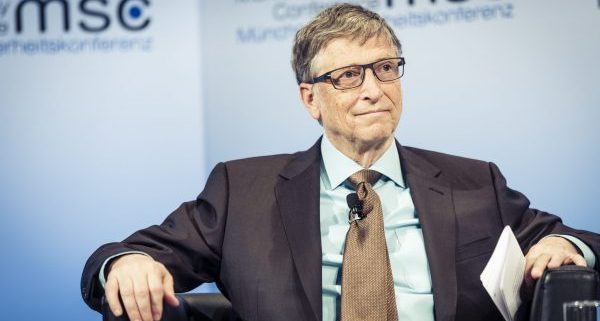
Bill Gates at the Munich Security Conference in 2017
What I want to propose is that the actual Gates agenda, far from facilitating the rise of the lizardmen, depopulating the world, or tracking everyone with microchips, is more…basic. Pretty much everything he does can be be viewed through the lens of accumulating profit and control, and his primary means is by situating himself as a gatekeeper.
It is easy to get carried away, finding connections between things that aren’t really correlated, all to support a narrative you already believe. So in the spirit of transparency, and to open my analysis to critique, I will admit that I have an intense animosity toward Bill Gates, and that this animosity informs the context of my interpretations. I almost reflexively assume the worst of him, and “the worst” almost always bears out, in spite of paltry evidence to the contrary. My hostility toward Gates is founded upon his status as an ultra-wealthy person, because I understand that such wealth is always based on the exploitation of people and the natural world. There is literally no wealthy person on Earth who earned their wealth through a strict conversion of their own intellectual or physical labor into material assets. At multiple (countless) junctures along the trajectory of their ascension, both temporally and spatially, someone was exploited, or something was extracted, under threat or actualization of violence.
From that foundation, I also take issue with Gates frequently injecting himself into spaces where he does not belong and where he is not welcome, both because he has no real knowledge or expertise in these areas, and because there is always some ulterior motive, again toward profit or control. Such is the case with his relentless attempts to influence education reform or alleviate poverty in Africa.
More than his generosity, what Gates’s “philanthropy” reveals is his cynicism and his arrogance. These traits are mutually reinforcing, because on the one hand, Gates does not trust in the capabilities of other people, and on the other he thinks himself to be uniquely capable. In my hometown of Philadelphia, Gates is best known — besides his status as one of the world’s wealthiest men — as a driving force behind education “reform”, physically manifest in the “School of the Future”, a public high school which was supposed to model Gates’s theory that technology could solve all problems.
School of the Future in Philadelphia, PA
Like most schools, Future is both a product and a reproducer of the broader society. The experiment, to outfit a school with enough technology to meet the vaunted goal of 1:1, hoping that would somehow reconcile deep historical and systemic inequities for the mostly-Black student population, was an epic failure. Today, the school is the same many others in Philly, doing next to nothing to change the material conditions of young people, nor much at all to alter their prospects. This in spite of the noble efforts of individual teachers, who in their relative isolation can only hope to reduce harm. “School of the Future”, in retrospect, was a rather ironic name, because rather than some gleaming exemplar of “reform”, it represents another reproduction of the relations of domination within the city and country at large.
Gates’s cynicism and arrogance, blended in equal parts with white liberal racism, create a cocktail of paternalism by which he sees himself as the savior of the “darker nations”, be they Black children in Philadelphia, Africans dying from malaria, or farmers in the two-thirds world dispossessed by a changing climate.
He is the physical embodiment and ideological convergence — an avatar — of white supremacist patriarchy. Yet due to his vast sphere of influence, namely his accomplices in mass media, he has been able to style himself as a philanthropist icon. Under the pretext of generosity he is able to deflect critique, and valid lines of inquiry get drowned out in the cacophony of conspiracy theory.
So, in case it wasn’t clear, I don’t like Bill Gates, and I am skeptical of everything he does. In spite of all that, I think the case I want to make here — inklings of a specific and rather grotesque agenda — will stand on the merits.
Earlier this year, Gates published a book about how to avoid climate disaster, the culmination of many public comments he’s made on the subject over the years. That a man who is not a scientist, environmental or otherwise, nor working in any of the sectors actively problem-solving around climate change, would publish a book claiming to know the “solutions” is sheer hubris. The arguments he makes are generic, easily cherry-picked from any number of articles published on the subject for the past ten years. Yet none of his solutions point toward what every climate scientist and activist knows is necessary: pumping the brakes on the runaway extractivism of capitalist production. By framing the discussion in terms of surface level actions, rather than root causes, Gates is able to maintain his guise as a concerned citizen and caring philanthropist. But the sleight of hand is revealed when we investigate what he gets up to when he thinks no one is looking.
Recently, it was discovered that Gates has been secretly — through proxies — buying up acres upon acres of farmland. To what end? It’s a question that many have been asking.
The principal danger of private farmland owners like Bill Gates is not their professed support of sustainable agriculture often found in philanthropic work – it’s the monopolistic role they play in determining our food systems and land use patterns.
In his new book, Gates talks about how smallholder farmers stand to bear the brunt of the devastation caused by climate change, while being those who contribute the least. We have already seen these consequences play out, driving civil conflict and desperate migrations. It was one of the lesser known variables contributing to the war in Syria, and one of the underlying reasons why Central American migrants made the perilous march north. In all his tender concern for smallholders, Gates writes:
And we need new seeds and other innovations to help the world’s poorest people— many of whom are smallholder farmers—adapt to a warmer climate.
In the mind of Gates and other technocrats, it will be innovation that saves us from all manner of crises. These “innovations”, invariably, will be developed behind proprietary firewalls, where for-profit corporations decide how and where they will be deployed based on market logic — that is, who has the means to pay. What Gates does not talk about in his book is how he has positioned himself as a gatekeeper between the smallholder farmers and the “innovations” that might protect their livelihoods, and also between people and their ability to produce food at all in a “post-climate” world.
Gates has successfully accelerated the transfer of research and seeds from scientific research institutions to commodity-based corporations, centralizing and facilitating the pirating of intellectual property and seed monopolies through intellectual property laws and seed regulations.
Monopoly capitalism is kind of Gates’s “thing”. There is a clear through-line of monopoly control extending from his war against open source to his behind-the-scenes battle to keep the COVID-19 vaccine distribution under the command of corporations.
Gates has been tacitly and explicitly defending the legitimacy of knowledge monopolies since his first Gerald Ford–era missives against open-source software hobbyists. He was on the side of these monopolies during the miserable depths of the 1990s African AIDS crisis. He’s still there today, defending the status quo and running effective interference for those profiting by the billions from their control of Covid-19 vaccines.
The depredations of Gates described so far are merely the facts. The conspiracy comes when we consider these three things — control of farmland, seeds, and vaccine distribution — altogether against the backdrop of looming climate catastrophe, pandemics, and world hunger. All three exist in a close relationship with one another, and stem from the same rotten core of capitalism and white supremacy.
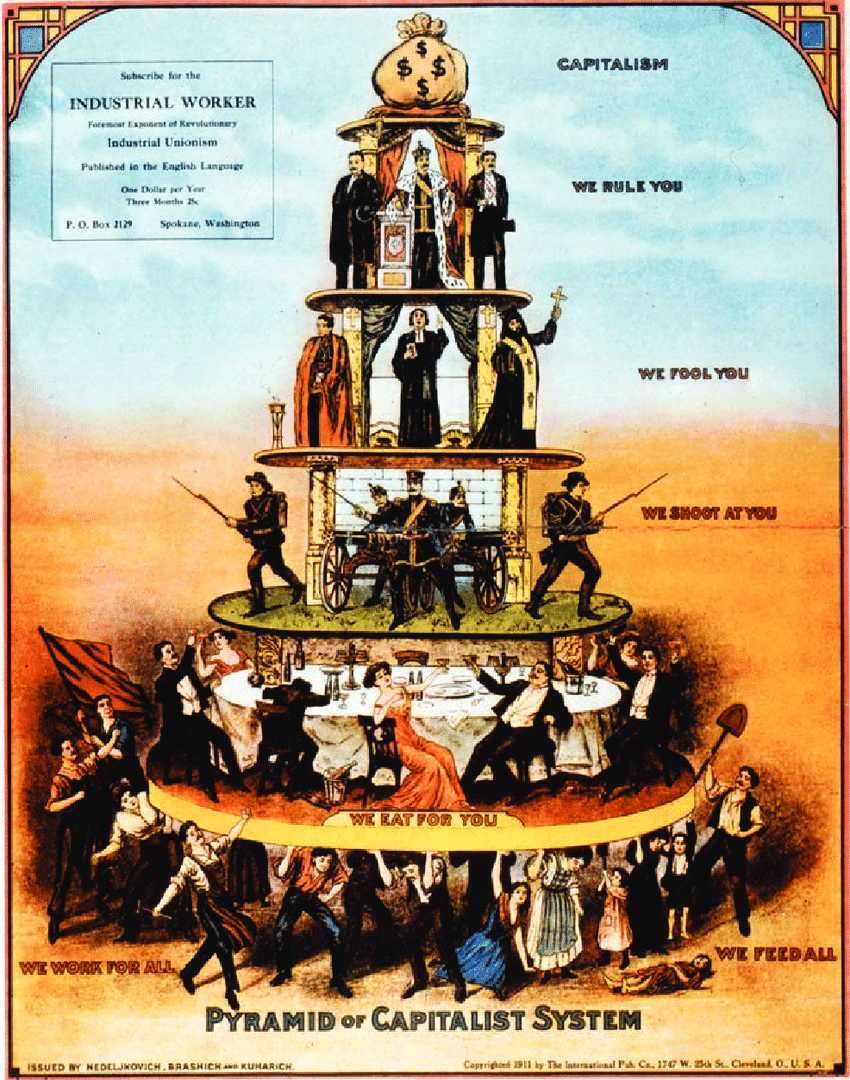
The Pyramid of Capitalism System by “Nedeljkovich, Brashich, & Kuharich” (1911)
Climate change drives ecosystems change and the displacement of various animal species, which in turn increases potential contacts between these animals and humans, and the opportunity for zoonotic transfer. The destruction of the natural world through extraction, including arable farmland, and the increasing trend of privatization contributes both to global warming and hunger. People driven off of their farms — by climate change, by land theft, by “market forces” and “trade agreements” which privilege the movement of capital — migrate to survive, and end up being used as fodder in the culture wars. There are more connections still.
Gates’s public persona, the one that publishes condescending books about how to stop climate change, and wastes no opportunity to discuss his plans to “give away” his money, hides a bad actor whose cynicism and arrogance informs any number of nefarious activities. Why would Bill Gates hide the fact that he is buying up wide swaths of farmland? What follows is conjecture, but I believe it proceeds from a rational observation of the facts at hand.
Gates understands that his “wealth” is fictional, a wager placed by our economic system that he can and will continue to generate value. It consists of numbers on a network of computers, and only a relatively small percentage translates to anything material. Through this lens, his magnanimous decision to “give away” his wealth appears rather vacuous.
Given that he has been speaking publicly about climate change for years, Gates clearly understands the threat it presents, not just to people and the planet, but to the fragile economic conditions that sustain the illusion of his wealth. In a world beset by extreme weather, mass migrations, famine, war, and pandemics — all leading to widespread death in a real four-horseman scenario, the bets placed on Gates, Bezos, Musk and their ilk, will amount to scratch. What might be the sources of wealth — real, material wealth — in an apocalyptic world? Seeds to grow food. Arable farmland in which to plant them. And control over the technology to stave off rampaging viruses.
Four Horsemen of the Apocalypse by Viktor Vasnetsov
That Gates is positioning himself and others in his class to maintain monopoly control over these vital resources would appear to be a genuine full-blown conspiracy. Even as he writes books laying out the “solutions we have and the breakthroughs we need”, his cynicism prevents him from actually believing any of it. Not only does he have no faith in people to muster the collective will to prevent climate catastrophe, he has neither faith in corporations to abandon their centuries-long commitment to extraction and exploitation, nor in his own ability to “innovate” a way out. In light of this, he would seem to be preparing for inevitable disaster, and in his arrogance, would situate himself as an arbiter of life and death.
Unlike the delusional plutocrats who believe they can wait out the catastrophe in underground bunkers with finite supplies of food, or the whimsical ones who dream of viable colonies on Mars, Gates is a shrewd pragmatist. It is my sense that while he is not the smartest man, he is smart enough to know his own limitations. And like most wealthy men, he has learned how to capitalize on the talents and labor of others. It is likely the council of these others that gives structure to his conspiracy. And it is these others who have also helped construct around him an illusion of ingenuity, coated in a patina of good will. The entire project is a rather fragile deception, which crumbles beneath any serious scrutiny.
And that is the end to which I write this post. To throw another stone from outside the glass house. To get a few more people to peer behind the curtain and see the wizard for what he truly is: a self-righteous fraud who pantomimes nobility while actively restraining our collective ability to find a way through crisis, or to build collective resilience in the dangerous new world he helped create.
*UPDATE 4/28/2021* Shortly after I wrote this piece, calling for more attention to Gates’ machinations, he gave an interview to Sky News in which he doubled-down on his monopolistic position toward COVID vaccine distribution. That interview, in turn, solicited a ton of negative media coverage. It feels almost serendipitous. While I hope this inspires more scrutiny and a few more cracks in his facade, memories are short, the news cycle turns at light speed, and there is no shortage of mainstream media outlets willing to sacrifice their integrity to fend off any enemies at the Gates.
A question I’ve always disliked when meeting people in professional or even casual spaces is: “What do you do?” Because where should I start? Like all of us, I wear many hats: I’m a graduate student, an orchard intern, an aspiring community educator, a writer, a life partner, a brother, son, and uncle, among other things. But the subtext of that question, of course, is “What do you do that has use or exchange value within our capitalist economy?”
My answer to that is: “Who cares? And why do you even wanna know?” To me, and probably to many of us, that answer is far less important to our everyday lives. Why should my economic value be separate from my value to family or community?
As a school teacher, I eventually came to the realization that what I was doing in the classroom was fundamentally disconnected from the material concerns of my students. Like many, I bought into the mythology of schooling as an investment into some undefined future, where all these “standards” and “competencies” would eventually “pay dividends”. The perennial question, “Mister, why we gotta learn this?” led to any number of contrived answers on my part, until eventually it became: “You don’t. It actually doesn’t matter at all.” This became especially clear at my last school, where students were forced to choose between coming to class or doing things that were more essential, like raising their own kids, caring for family, or working to survive.
We attempted a participatory action research (PAR) project around the local impacts of climate change, and I was very intentional about helping students make connections to their lives here and now, rather than polar bears standing on shrinking ice caps hundreds of miles away, ten years from now. We made connections between redlining and urban heat islands, between disinvestment and environmental racism, between higher temperatures and increased asthma rates. Yet still, on a good day, I saw maybe 20% of my students. Not because they didn’t care, but because the system demanded they spend their time elsewhere, for more immediate returns on their labor.
Sustainability can’t simply mean a “green” continuation of the current system — cleaner, more efficient ways to squeeze out just a bit more: labor, energy, resources, blood. It’s not enough to “reduce our carbon footprint” or get to “net zero”, some neutral zone where harm and repair cancel each other out. Our work needs to be net-positive: to be about healing, regeneration, reparations — of centuries of harm done to people, communities, and the planet — and replacing systems of oppression and extraction with collective lifeways that uplift and liberate all of us.
This has to start with those who have borne the largest share of the burden: Indigenous, Black, Brown, and immigrant communities — dispossessed of land, exploited for labor, and forcefully situated at the nexus of environmental racism, state violence, and carceral control. And let’s not forget the poor white folx: ground up by the mechanisms of production and spit back out with chronic illnesses like black lung, or endemic hatred, for the very same people with whom they should find common cause.
The moment demands a mass mobilization of people and collective will. Which means bridging gaps: in knowledge, resources, understanding, and empathy. In our conversations, and in our work around sustainability, we have to integrate those things which support and affirm our rights to healthy, dignified lives, so we even have the capacity to take on something so grandiose as “saving the planet”.
Last count, Philly has around 40,000 vacant lots. How much additional acreage controlled by universities — ever more gobbled up through gentrification and the false promise of “opportunity zones” — could be committed to projects that restore people and planet? Imagine the opportunities for real, life-affirming education, jobs, and food, at a time where access to all three have been severely crippled by the COVID-19 pandemic.
I don’t want a student to ever again ask me “Why we gotta learn this?” Because I am determined that any work we do, and whatever we’re learning together, be firmly intertwined with the experience of prosperous living. Not just for ourselves, but for our communities and the environments in which we’re all situated. Not just in the moment, or in the short term, but forever.
This, to me, is real “education for sustainability”.
At the end of last year, I published an article in the journal Transcontinental Human Trajectories, my first “official” publication. It is mostly a personal narrative — and I do mean personal — but it also lays out much of my educational philosophy, and sketches my initial trajectory from a school teacher to more of an activist. Although I didn’t use the term “school abolitionist” at the time, you can see the first inklings of that identity starting to crystallize. The abstract is below, and you can click here to read the full article.
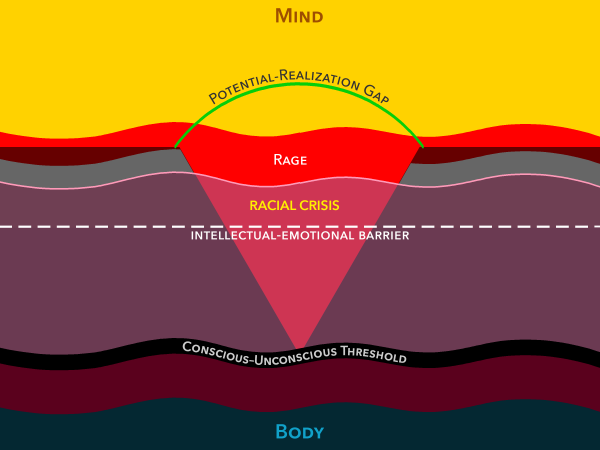
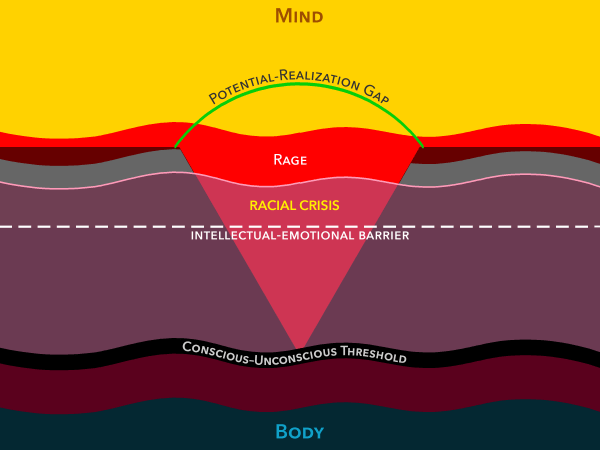
In this personal essay, I discuss how shifts in my positionality as an educator changed the dynamics of power between me and my students, how the threshold between informal education and the School marked a clear delineation of power that placed us on opposite sides. My journey as an educator paralleled my personal journey as a Black man in the United States, during which I had to navigate the troubled intersection between race and disability. Along the way I became aware of a “potential-realization gap” — internalized as a hovering sense of inadequacy, and externalized as a deep disillusionment with people and the world.
Where once race had operated on my consciousness from the margins, certain experiences forced me to contend with my identity in ways I had been able to avoid before, in part due to a stark divide between mind and body. With racial consciousness came indignation, manifest in my orientation as a teacher activist, and which I imposed upon my students as the imperative for their — but not my own — liberation. Wading through toxic environments, spaces of collective trauma and bureaucratic rot, any attempts to make change were usually met with fierce resistance.
This disconnect, between mind and body, theory and praxis, school and community, reality and my ideals — exacerbated by racial trauma and ADHD — tore a jagged fissure through my career. Lost in all of this were the young people I was ostensibly fighting for, yet for so long failed to recognize as agents in their own liberation. I had sought in vain the pedagogical method, the repositioning, the creative freedom — something — that would allow me to reconcile the disparities.
But it wasn’t until I approached the decision to leave schools in favor of community education, that I discovered participatory action research (PAR), and with it the need to ground my own work, and that of my charges, in identity, history, shared struggle, and building community. In PAR, I discovered the possibility for collective liberation — a means for bridging the gap within myself, and between myself and the communities I serve.
As a person who prides himself on being critical — perhaps even to an excessive degree — I definitely support dissent and debate. But I also recognize that positions don’t emerge from the ether, without the weight of history and political power behind them. Opposing positions do not enter into some neutral “marketplace of ideas” uninformed by context. Rather, the context, as shaped by history and hegemony, dictates that any two positions will not “compete” on equal terms. For example, in the national “debate” over gay marriage, the weight of public opinion was for many years levied against it.
That a national debate wasn’t even possible for centuries before that, clearly indicates that the two positions — in favor and opposed — did not enter the debate on equal terms. Eventually, as public opinion shifted, and the basic civil rights of queer folx were recognized as worthy of defense, this lead to the legalization of gay marriage nationally. Even then, this didn’t really stop the “debate”, and there continue to be court cases over the rights of queer families, as private businesses deny them service on religious grounds, or states deny them the right to adopt children.
What is vital to understand in this example is that queer folx are and always have been an oppressed class in the United States. This means that any “debate” concerning their rights does not take place in some culturally and politically neutral space. Where the power of the state, reinforced by the cultural norms of the dominant classes are weighted against any group of people, it is often their voices, their perspectives, their rights, which are silenced and suppressed. We do not need any continued “debate” on people’s dignity or sovereignty or safety. Hegemony and counter-hegemony do not exist on equal terms.
Free Speech vs. Cancel Culture
In reading about this debate between “free speech” and “cancel culture”, as mediated by the Harper’s open letter, and the many different responses to it, I feel that there are a few critical points being left out of the discussion. First, it is important to distinguish “call out culture” from “cancel culture”. The former is about raising the issue of accountability, while the latter is about what the consequences should be once a person is held accountable. It seems to me that the two “sides” of this debate are confusing and/or conflating these two concepts.
Where the internet has allowed for a more equitable exchange of ideas (in theory), giving marginalized or oppressed people a platform they lacked before, people in positions of power and privilege can be “called out” for their abuse, and where this calling out is amplified by many voices, there may be in turn a public reckoning — from which “cancellation” is one possible outcome. The signatories and defenders of the Harper’s letter are clearly arguing against “cancel culture” — that is, what they see as the disproportionate punishment of people for expressing certain views, which also has a chilling effect on people expressing those views at all. While I think this can be reasonably seen as a suppression of free speech, punching down should not be granted the same liberty as punching up. The force of justice must back those who are subordinate to Power, just as Power is backed by the force of hegemony and the State.
Those arguing against the Harper’s open letter, most notably the response published by The Objective, are defending the right of people, particularly the marginalized and oppressed, to call out others, which is in itself a defense of their free speech. But there is some nuance to discuss here, with respect to opposing positions not emerging into a neutral space, free of context, or divorced from relationships of power.
As Anthony DiMaggio discusses in CounterPunch, the argument of the Harper’s letter is being made either in bad faith, or with a complete ignorance of or disregard for history and politics in the United States.
We live in a period when the rise of neoliberal capitalism and untrammeled corporate power have cheapened “public” political discourse to serve the interests of plutocratic wealth and power, while assaulting notions of the common good and the public health.
DiMaggio goes on to argue how this power dynamic has historically been heavily weighted against those on the “left” of the political spectrum, particularly in the Academy, where discourses around “professionalism” dictate that all legitimate scholarship remain within a certain ideological “center”, silencing voices on the margins.
This constraining of ideas to the “median” seems to be rooted in white USAmerican norms of white upper/middle class “decorum”, specifically the pressure to avoid conflict, or rather, to avoid any public appearance of conflict. Settle the lawsuits out of court, sign a non-disclosure agreement, don’t talk religion or politics at the dinner table, leave race out of it, and for goodness sakes, put those rainbow flags away, and keep any discussion of sexuality behind closed doors. This is far more complicated than I have time or space to discuss here, but put simply, those who benefit from the status quo (and those who aspire to) — by virtue of social, economic, or political power and privilege — would really quite like it, if the rest of you wouldn’t much mind, if we could just keep things “civil”. A premium is placed on preserving the appearance, not just of civility, but of the fundamental “goodness” of those in power.
Muddying the Waters
The debate becomes confusing and downright bizarre, as the defenders of the status quo scramble, stumble, and fall all over each other in an attempt to keep up appearances, to maintain their claims to a moral superiority. In our current political moment, the Black Lives Matter movement approaches mainstream legitimacy — this only after the murder of George Floyd, a particularly egregious visualization of the Black oppression, suffering, and death which the “mainstream” could no longer ignore or wish away.
The dam finally broke, and countless white people scrambled to make it known that they were nothing like the murderous police officer, that they condemned and disavowed him, and that they had always valued Black lives. To prove it, they would post statements of support on social media, donate to Black causes, march in the streets, and most importantly, put on a performance of punishing those who did not do the same. These include the unapologetic racists, but also those who merely did not express their support publicly, who held the same positions as many of these new defenders of black lives, just minutes before they saw the video of George Floyd being murdered.
These white “woke” people — liberals invested in the performance of superior morality — have co-opted critical discourse and perverted it into some profane purity test of who can be the most symbolically “good” while doing much of nothing to change the reality of the situation. Where they trip and fall all over themselves in their performance of “wokeness”, cherry picking the language away from the substance, they obscure and invalidate the underlying logic of criticality, as advanced by people of color and other marginalized groups (see: critical race theory, queer theory, etc), undermining the very causes for which they claim to stand.
(As a brief aside, I find it extremely frustrating that the term “woke” — Black American vernacular meaning sociopolitical awareness — has been so co-opted and abused as to become a pejorative against white liberals.)
In the name of this fake purity, they’ll risk actual damage to vulnerable communities. I spoke about this in my critique of the Ralph Northam blackface scandal. Democrats (white liberals), in order to stake some imaginary moral high ground, were on the verge of losing the whole governorship of Virginia, which might have lead to policies that actually harmed black people. These are the same people, you’ll remember, who wore Kente cloth stoles in a misguided show of solidarity. Without irony — or self-awareness it would seem — they knelt for nine minutes, basically embodying the white police officer who killed George Floyd, rather than Floyd himself. Their obliviousness and ham-handed pandering might be funny if only these weren’t the same people who hold black lives in their hands as they make decisions for the rest of the country.
This whole conflict, supposedly between “free speech” and “cancel culture” has become so circular and recursive as to completely pollute the waters of reasoned debate. Take this article by Conor Friedersdorf in the Atlantic, which, at its core seems to be arguing against a narrow view or set of norms, outside of which people meet with disproportionate retribution (i.e. some damage to their reputation or livelihood). Friedersdorf’s argument doesn’t seem to be so much against cancel culture, as it is against its perceived excesses. Navigating this threshold between what makes the personal and professional consequences proportionate to the harm is extremely difficult, mediated as it is by the complex interplay of culture and the dynamics of power, each of which themselves are informed by long histories. Hardly anyone is evaluating a single act — or even a series of actions — within all of this context.
As part of his argument, Friedersdorf cites an New York Times opinion piece by Chad Sanders, in which Sanders makes demands of his friends to hold their own friends and loved ones accountable for various offenses. To be clear, Friedersdorf is critiquing Sanders, who is critiquing his associates, on the grounds that they should be critiquing their friends and family. Friedersdorf characterizes Sanders as using “cult tactics”, seeing him as trying to force other people to behave within very specific parameters. Ironically, what Friedersdorf does in order to make his point, is to take one small part Sanders’ article and divorce it from the larger context, confining it within his own narrow parameters.
Chad Sanders is black. This matters because his article is actually about his frustrations with white friends and colleagues, who in their outpouring of “support”, their expressions of “love”, were not providing him with what he needed or even wanted from them. He is arguing, like I am here, that much of this “support” is performative, a clarion call to the Arbiters of Virtue — the “black friends” of the world — to remind him/them/us that they are the “good” white people. The same dynamic plays out with all kinds of privileged “allies” of marginalized/oppressed people, and how they perform their allegiances.
Friedersdorf couldn’t be concerned with this context, perhaps because it would require too much work for him to navigate the dynamics of power at play, to parse issues of free speech and autonomy from how those things are leveraged by those with power against those without. Sanders’ white friends and colleagues are under no obligation, will not be under any particular pressure,to take his advice. Actual cults are entirely about power: who has it (the cult leader), and who doesn’t (the members). Sanders, as a Black man in America, even at this moment of national reckoning, has absolutely zero power over his white friends and colleagues. Friedersdorf conveniently ignores this dynamic because it better suits his argument to do so. In the process, he uses his power and platform to essentially invalidate Sanders’ entire argument. Is that the “free speech” he is defending then? The freedom to decontextualize and disregard the speech of others?
Friedersdorf also discusses the case of a bookstore called Tattered Cover, which released a statement explaining why they hadn’t come out publicly in support of Black Lives Matter, attributing it to a longstanding policy of political neutrality. This resulted in a backlash, summed up in the statement of author Carmen Maria Machado, who canceled a scheduled engagement at the bookstore, saying that “choosing neutrality in matters of oppression only reinforces structural violence”. The bookstore would later release a second statement, definitively in support of Black Lives Matter, and apologize for “violating the trust” of the community.
For Friedersdorf, this is madness, the bookstore committing “self-flagellation” for no useful purpose, other than “unanimity” — that is, the absolutism of a particular point of view, which he perceives as a threat to solidarity in itself. This is one of the rare times where I find myself in the “middle” of two opposing points of view. While I agree that being neutral within an oppressive dynamic is the same as being complicit, I don’t think this means everyone always has to speak up on behalf of the oppressed in every conceivable situation. Especially not where it isn’t solicited and where one’s action or inaction doesn’t really make a difference.
Does every business need to issue a statement in support of black lives? I don’t think so, especially where it is only symbolic and performative, not backed by any meaningful effort to change the material or social reality for black people. Tattered Cover’s mistake was in making any statement at all. They could’ve quietly donated to black causes, hired some new black employees, featured black books, without any additional performance. If someone wanted to call them out for not making a statement, they could’ve simply pointed to their actual support for black people, in contrast to so many other businesses’ symbolic gesturing. This is the essence of Chad Sanders’s argument.
Prior to the release of the Harper’s letter, Yascha Mounk, one of the signatories, also wrote an opinion piece for the Atlantic, in which he criticized the apparent trend of “innocent” workers and businesses being punished for offenses that violate what he calls a “zero tolerance policy on racism”. The examples he cites are indeed extreme, and speak to the sort of confusing recursion I mentioned earlier. In one case, a group of white executives fire a Mexican employee after another white person, outside of work, allegedly tricks him into flashing a hand sign that other white people (white supremacists) have repurposed to represent “white power”. In this instance, white people caused harm to a person of color (took away his livelihood) in order to, as Mounk says, “signal their good intentions”. This signaling isn’t done toward, or on behalf of people of color, but to other similarly performative white people, as if there’s a competition for who can be the most “woke”, and through that, the most “good”.
Mounk also brings up the case of David Shor, a data analyst who was allegedly fired, not for violating the “zero tolerance policy”, but for merely highlighting the work of someone else who was perceived as having done so. That person — Princeton professor Omar Wasow — came under fire for publishing a paper which argued that non-violent protest yielded better electoral returns than violent protest. Wasow was criticized perhaps for the timing of the release of his study, from which it was inferred that he was not in support of the Black Lives Matter protests. This is a bit of a leap in itself, and for Shor to be fired merely for tweeting a summary of Wasow’s posts — thereby similarly positioning him in perceived opposition to BLM — is indeed absurd. One problem with Mounk’s argument, however, is that in the two cases mentioned above, the employers in question either denied or did not comment on whether these were the reasons for the terminations. The larger problem with Mounk’s argument, which also finds expression in the Harper’s letter, is that these extreme cases are anomalous, and there isn’t any observable trend of “innocent” people being terminated for minor offenses in accordance with a “zero tolerance policy on racism”.
The Harper’s letter cites six nonspecific examples to justify their argument. It’s possible to guess what incidents the signatories might be referring to, and it’s likely that if they listed specific examples, most wouldn’t hold water. But the instances they reference are not part of a new trend at all…
The Non-Power of Cancellation
Earlier, I made the claim that people on both sides of this “debate” are conflating two different concepts: calling out and canceling. To explain that further, I need to return to Friedersdorf’s article. In it he mentions another case, of a principal who is fired for making a statement against Black Lives Matter. Not an obviously racist statement, but criticizing what she saw as “coercion” in the Movement’s methods. She also made the fatal error of saying, in effect, that “Blue Lives Matter, too”.
What the principal did speaks to the critical error in the Harper’s piece, which is using false equivalence. As mentioned previously, in a conflict where two opposing sides do not enter on equal terms, the actions taken by both sides do not have the same social impact. In the conflict between black people and police, there is an enormous power differential to be considered — that is, the police have the power and often wield it against black people. Actions taken by black people against police, nearly the entirety of which are non-violent, cannot be compared, let alone equated to police violence. “Blue lives” aren’t even at stake in this conflict.
At the same time, while I vehemently disagree with the principal’s stance, I also do not think she should have been fired for that statement alone. She absolutely should have been called out and corrected. I also think she should’ve been subjected to some sort of professional “audit”, because if she holds these problematic views of Black Lives Matter, she is likely engaging in poor judgment in other situations of greater importance, given her position of power in the lives of black students. Firing her outright wasn’t about holding her accountable so much as it was about the district signaling that they are on the “right” side of the issue, that they have the moral high ground.
Alternatively, where an “audit” revealed that this principal’s statement was not representative of her views of black people in general, or were not reflected in how she treats black students under her care, this could’ve been an important “teachable moment”. This could’ve been an opportunity for the whole school to receive training on racial justice, or the pretext for bringing about other meaningful changes. Instead, the district chose to maintain the appearance of goodness, and in the process likely drove others with problematic views into hiding, where they may continue to do harm, under the cover of performative wokeness.
This example also reveals the difference between “call out culture” and “cancel culture”. Again, the former exposes the need for accountability, while the latter is about the actual consequences. But it is more nuanced than even this, once we again factor in the dynamics of power. Unlike the examples Friedersdorf and Mounk provide — “extreme” for the very fact that they are so rare — most instances of cancel culture are ultimately ineffective attempts by those without power to bring retribution for abuses committed by those in power. And it is because of the power differential that these attempts are ineffective.
J.K. Rowling, one of the signatories to the Harper’s letter, has been “called out” on numerous occasions for transphobic statements, or defenses of aggressively transmisogynist people. Despite the many calls for her to be “cancelled”, however, she has remained a best-selling author, and a billionaire, with no lasting stain on her reputation, or impact to her livelihood. This says nothing about whether or not she deserves such retribution, but everything about the power of those in a subordinate social position to hold those in power to account. In spite of the pearl-clutching concerns of the Harper’s letter signatories, “cancel culture” — and even this name oversells its reach and its impact — rarely has any lasting effect on the free speech of the powerful and/or prominent voices like the signatories themselves.
Journalist Zaid Jilani (another signatory to the Harper’s letter), speaking on the YouTube Program Rising, pointed to fact that some of the signatories to the Objective counter-letter had to do so anonymously. For Jilani, that they could not take their position publicly without fear of retaliation, is exactly the sort of thing that the Harper’s letter was speaking against. However, this is yet another failure to understand the nuances of power. That the Harper’s letter signatories felt free to sign their letter openly, has everything to do with the fact that the letter upholds the liberal centrist hegemony, evidenced most strongly in its vague, milquetoast language, uncommitted to any serious position, and therefore not a threat to the existing order.
On the other hand, the signatories to the Objective letter, are speaking from the same subordinate position as people of color, queer folx, and other marginalized populations, who regularly have to suppress our speech. This for the fact that our very existence — nevermind any demands for change or accountability — is not only a direct challenge to the existing order, but to Power’s sense of moral superiority. Every day, every instance of where we point to the ways that the status quo is immoral, seems to be perceived by these types as a direct attack on their very identities as “good people”.
Chatterton Williams and the End Run Around Race
Given that I have written about him in the past, there was no way I could address this issue without discussing the author of the Harper’s Letter: Thomas Chatterton Williams. Rather than rehashing the argument against him I made a two years ago, I’ll just say that this is a man who has yet to truly cope with his trauma, even as the entire thrust of his career seems to be in response to it. That he finds himself in a position opposite the majority of critical black voices is directly related to the fact that he has now written two books lambasting some aspect of majority black culture.
It is directly related to his view of a uniquely black cultural product — hip hop — as incompatible with other cultural products, such as (mostly white) literature, which he regards as entirely separate, and superior. It may have been “books” which sustained him in his battle against hip-hop — a battle he won to hear him tell it — but books and hip hop were mere surrogates in theinternal conflict between his conception of own blackness versus that of many others. This conflict was no doubt founded upon Williams’ experience of being rejected by black people in some way, indeed the definitive crisis for tragic mulattoes everywhere.
A conflict thus slices the tender soul of our young hero: Live the unexamined life of thuggish hedonism and machismo, or cultivate self-discipline and become an intellectual like [his father]? Some version of this tension drives every scene in the book, as the battle between brains and “hip-hop” is restaged with plangent, tiring zeal.
For Williams, those other people’s conception of blackness is founded upon trauma and suffering, which he fervently rejects, as someone who claims to have experienced very little of it, and as the son of a man who “overcame” it. With the same sort of individualist thinking that characterizes white Americans at large, Williams disregards black people’s collective trauma and suffering, dismissing it as the discrete experiences of many individuals, who with just a small change in fortune, or by virtue of hard work, could’ve avoided it, or overcome it, as he and his father managed to do.
It seems as if Williams’s entire identity, his tenuous hold on his own blackness, depends on this premise. Because if blackness is defined by trauma and suffering, and he has not experienced these things, then it follows by his logic that he is not black, thereby validating his alienation. He does not seem to grasp that he has, in fact, experienced trauma and suffering, and that it is not these things that define black people’s collective identity, but our resilience. Williams saw the “battle” as being between himself (as represented by “15,000 books”) and other black people (represented by hip-hop), for the right to claim blackness. Really it should have been a collective struggle with other black people against white supremacy. In that he never even recognized the terms of the conflict, his defeat was so absolute, that he also failed to notice when he was converted into an agent in the continuing war against black people.
Because he has managed to cling to his own narrowly defined blackness, he is ironically even able to cite racism to defend himself from criticism, even where that criticism comes on behalf of other black people. At some point, another Twitter user — a white woman — critiqued Williams from a critical race perspective, arguing against his respectability politics, and in the process mentioned his “mixed-race”. Her critique was valid on the merits, but this was one of those times where a white person inserted themselves into an internal conflict between black people. His “mixed race” is actually important, in how it undoubtedly shaped his experiences with blackness and other black people. But that’s really not for a white person to point out, as this Twitter user later acknowledged. This brings up another murky dimension in the whole free speech debate: who should have a voice, and what they can rightfully say, within any given social or political context.
Williams responded by saying, “I believe in another era she would have simply called me ‘uppity.’”. What he evoked there was the historical dynamics of power between black and white people in the U.S., wherein any instance of black resistance, real or imagined, was regarded as black people not knowing their “place”. To be “uppity”, for white people, means a black person attempting to rise above their station, immutable though it may be due to racial inferiority. For Williams to take an argument based in critical race theory, and reject it not on the merits, but because of the race of the messenger, is stunningly hypocritical. This is yet another example of how the free speech vs. cancel-culture debate has become circular and recursive to the point of absurdity, transforming the discourse into an unnavigable slog through muddy waters.
Williams — who we must remember is the sole author of the Harper’s letter — has positioned himself more or less against most black people, in believing, against all evidence, that black oppression is individually experienced, rather than collective and systemic. This allows him to hold firm to the myth of a post-racial society, wherein his experience of blackness is as valid as any other. In fact, his experience is as valid as any other, but for Williams, it requires an invalidation of others’ experience: a rejection of those who rejected him.
His positioning has allowed him to accumulate some measure of prestige and validation — a salve, I imagine, for persisting wounds. But I think even he recognizes this validation as temporary and circumstantial, that he must “renew the contract” every so often by excoriating other black people — even if only implicitly — for reminding white society of our oppression, for challenging their deep sense of moral superiority. Williams, in redefining blackness as entirely divorced from trauma and suffering — in abject denial of history and our collective experience to the present day — serves as proof for his white friends and colleagues of their “goodness”.
The Rise of Cousin Miles
It would be so easy to label Williams an “Uncle Tom”, for his close proximity to and tireless defense of whiteness. But I think this overlooks the subtle complexities of what he’s been able to accomplish, and the historical evolution of Uncle Tom, as he moved on up from the House to the Board Room. Tom lived in constant fear of direct physical violence, bowing his head both to avoid the blows and to lower himself to a posture sufficiently subordinate to his white masters. As the machinery of white supremacy grew infinitely more complex, Tom did his best to understand it, to navigate it, to survive it long enough to pass on his knowledge on to the next generation.
Enter “Cousin Miles“, the mixed-race son of Uncle Tom, who for his integration into youth culture and the liberal pluralism of the modern era isn’t as blatantly self-hating as his father. But in the tension between his deep desire to fit in with the other black kids — tempered by the sting of their rejection — and the pressure to “succeed” from his father, within the narrow parameters of white supremacy, he is inevitably pulled toward the latter. With one foot in the white world, and with at least a whole toe in the black world, Cousin Miles is able to capitalize on his tragic mulatto identity to acquire limited status, wealth, or power.
Taking out a line of credit on on his RaceCard, he holds himself up as a paragon of New Blackness™, “clean” and “articulate”, the diametric opposite of the Angry Black Man® who continues to shout unintelligibly from the other side of the glass. Sustained by all the white liberal smiles and glad-hands he can stand, Miles ignores the itch of inauthenticity as they make another toast, not to him, but in tribute to their own tolerance.
Meanwhile, the rest of us continue to struggle, to find purpose and meaning and solidarity in that struggle, defining ourselves by what we can accomplish collectively, rather than by individual concessions earned through appeals to white moral superiority.
By now you’ve probably heard the story about Virginia governor Ralph Northam, and how a photo in his medical school yearbook — from 35 years ago— showed two people in costume: one in blackface, the other in a Klan robes. Northam made a public apology about it, then oddly walked back his apology, saying that he was neither of the people in the photo. At the same time, though, he admitted that he had that same year dressed up in blackface as Michael Jackson for some sort of contest. It was an odd admission to an offense that hadn’t even been discovered yet, but probably to get ahead of it, just in case someone dug up a picture of that event, too.
Virginia Governor Ralph Northam
Within moments came the chorus of condemning voices from Democrats, pundits, and activists from the “left” (whatever that really means these days) calling for Northam to resign. Resign. Listen, I am the the last person to defend anyone’s racism, be it obvious or subtle, as any of the 2-4 whole people who ever read my blog will attest. However, it does strike me as a bit extreme to demand that a person resign from a very powerful position because of something idiotic they did more than three decades ago. Why does the power of the position matter, you may ask. Because it has become an issue of political priorities.
Shortly after the Northam scandal broke, allegations of sexual assault surfaced about Lieutenant governor Justin Fairfax — who would succeed Northam if he resigned. These allegations, to me and I would imagine anyone, are far more serious than someone appearing in blackface. Not too long after that, Virginia attorney general Mark Herring — second in the line of succession to the governorship after Fairfax — admitted to also dressing up in blackface back in 1980. I guess blackface was all the rage in Virginia back in the 80s?
This rapid-fire sequence of breaking scandals created a crisis for Virginia, as calls rang out for all three men to resign. But herein lies an additional complication. If they were to do so, the man third in the line of succession is Virginia is the Speaker of the House of Delegates, Kirkland Cox. This is significant because Northam, Fairfax, and Herring are all Democrats, while Cox is a Republican. It brings into question the priorities of the Democratic party, because is it truly more important that these three men resign as penance for offenses committed or alleged, even if it means a complete shift in the balance of power in Virginia? Even if it means that the governorship will be taken over by a man with truly troubling political positions that have translated directly into his votes on policy?
Let’s for a minute say that, in the worst case, Northam is actually lying, and that he is the person in blackface. Or the person in the Klan robes. I’m actually not sure which would be worse. Both of these images evoke an American history — and present — that has been very harmful, and very painful for black people. A history that devalued, dehumanized, and diminished us. And in Virginia, of all places, pretty much the epicenter of American slavery. The symbolic power of the image is not lost on me, I assure you, but it is still only symbolic. I don’t say that to imply that symbols don’t matter, because they hold great power. I say that because as powerful as symbols are, they do not have the same impact as policy on the everyday lives of black people. The symbols of blackface and the KKK represent an American history during which national policy remanded us to the status of livestock, and after that, third-class citizens. At no time would anyone be able to argue that blackface minstrelsy was more damaging than Jim Crow. Or that dressing up as a Klansman was as harmful as government complicity in the murderous and destructive actions of actual Klansmen.
I am not saying any of this to defend Ralph Northam’s actions, even if his only offense was allowing such a hideous photo to be posted on his yearbook page. But this is bigger than Northam, and Fairfax, and Herring, because if all three men were to step down, Virginia would have a new governor, in Kirk Cox, who almost certainly would harm black people on a far more than symbolic level. A quick look at how he has voted on various issues reveals a man who is staunchly anti-choice, which is especially dangerous at a time when Roe vs. Wade is under regular attack, with perhaps the only thing holding it in place being Chief Justice John Roberts, suddenly the “moderate” voice on the court. I could write another whole blog post — and many articles have already been written — about the disproportionate impacts of anti-choice legislation on women of color, and massive disparities in reproductive health in general.
Kirk Cox, Speaker of the Virginia House of Delegates
Cox’s record also reveals a man who has supported voter suppression efforts — via voter ID laws — which are nakedly aimed at further disenfranchising black voters. You wanna talk about history? How about the fact that for most of American history black people were regarded as three-fifths of a person, our bodies counted toward representation in the House, and bolstering the power of slaveholders, while our actual voices remained silenced? How about the fact that for another hundred years after slavery, we were still not allowed to vote, and for years after that, we were terrorized and killed for daring to exercise that right once we had it? The current voter suppression efforts in states like Virginia are an extension of that same system of oppression and disenfranchisement. Are Democrats and other voices on the left really willing to cede power to a man who would undoubtedly continue that legacy?
This whole saga was started when the far-right publication Big League Politics dug up the old yearbook picture. Do you figure their motive was to call out Northam’s racism, or to cause the exact sort of chaos that Virginia is dealing with now? They probably couldn’t have anticipated that their effort might lead to a complete toppling of Democratic power in the VA executive branch, and allow a Republican to assume the governorship. Why should Democrats and left-wing commentators play right into their hands?
This whole Virginia drama is revealing something important about the current Democratic establishment, which has implications for both past and future, including the election of Donald Trump. Democrats are symbolic politicians, concerned more with the image of doing the right thing, than actually doing it. Where they effect policies that actually make a positive difference in people’s lives, it is usually reactive, a case of them “holding the line” against the worst abuses of the Republicans. They have rarely advanced bold legislation that challenges the status quo, and even when they have, they rarely maintain enough power, or enough solidarity among themselves to see it through. They are beholden to the same corporate interests as the GOP, support the same neoliberal hyper-capitalist policies at home, and imperialist policies abroad.
They have been so indistinguishable in substance from the GOP, insofar as their actual impact on regular people’s lives, that it didn’t seem much of a leap for those who supported Bernie Sanders in the 2016 Democratic Presidential primary to vote for Trump in the general election. Much like the poor whites in so-called “Trump Country”, many on the left knew they just didn’t want more of the “same”, the maintainers of a status quo that sees so many people struggling, jaded, and hopeless. Democrats’ inability to understand this, or perhaps refusal to act on it, is why Hillary Clinton lost, and why any middle-of-the-road Democrat is likely to lose if they are put up against Trump in 2020
Democrats are riding so stiff and proud on their high horses as they sneer down at Ralph Northam, but what has been more damaging to the black people they symbolically defend? A photo in a yearbook from 35 years ago, or 35 years of benign neglect at best, and at worse, complicity if not command over the institutions and systems which have caused great harm to our communities? Like the War on Drugs and mass incarceration. The Democrats’ near-unanimous insistence that Northam resign is nothing but a platitude to convince everyone that they are the “not racist” party, quite different from the anti-racist party, — which they most certainly are not.
Let’s take a look at some of the more prominent names calling for Northam’s resignation. Senator and 2020 Presidential candidate Kamala Harris has quite a troubling record with respect to criminal justice, during her tenure as California attorney general, upholding and reinforcing the sort of policies that have disproportionately impacted communities of color. Senator and 2020 candidate Cory Booker has in the past been a little too cozy with Big Pharma, and evenly recently appears to be an advocate for the expansion of charter schools, which has proven disastrous for public schools, mostly attended by students of color.
Hawaii house representative and 2020 candidate Tulsi Gabbard has a troublesome anti-LGBT history, and seems to be oddly chummy with right-wing leaders like Syria’sBashar Assad, Egypt’s Abdel Fattah el-Sisi and India’s Narendra Modi. Senator and 2020 candidate Kirsten Gillibrand made it a point to own up to her conservative past, which wasn’t all that long ago. And don’t even get me started on Hillary Clinton, the white queen of neoliberalism, whose moral duplicity, and overall weakness as a candidate helped usher in the Age of Trump.
With the new crop of Democratic lawmakers, like Alexandria Ocasio-Cortez, Rashida Tlaib, Ayanna Pressley, and Ilhan Omar, we see the potential for a party actually bringing about substantive change. With the unveiling of the Green New Deal resolution by Ocasio-Cortez and Ed Markey, we see the first whispers of massive, systemic change, in response to the some of the greatest problems we face as a country, and in the world: climate change, systemic racism, neoliberal destruction of the economy. These need to be the priorities of the Democratic party, and while the 2020 Presidential hopefuls have put their seal on approval on the Green New Deal resolution, it seems a gesture of convenience, of sensing the direction of the wind, of symbolism.
Meanwhile, Speaker of the House Nancy Pelosi has belittled or dismissed the Green New Deal resolution, while also reassuring her corporate friends in the health insurance industry that she has no intention of challenging their dominion. Still, she made sure to hop on the bandwagon calling for Northam’s resignation.
U.S. Speaker of the House Nancy Pelosi
These mainstream, centrist, milquetoast Democrats, regardless of their newly minted progressive stances, have made careers out of “compromising” with the Right, capitulating to corporate interests, merely “holding the line”, when the lives of Americans hung in the balance. On a policy level, they have either caused or allowed real, quantifiable, harm to black people in particular. These same Democrats hem and haw and hedge and hesitate over whether or not to impeach Donald Trump, a man with a long history of racism, and who is not only openly racist at present, but fuels the resurgence of white supremacy through his words and deeds. Yet they come out in force against Ralph Northam over a picture in a yearbook from 35 years ago.
It needs to be stated that Northam himself is one of the same middle-of-the-road Democrats I am criticizing here. He is no progressive hero. But he has, at least, like many of those calling for his resignation, held the line. He voted against the anti-choice and voter suppressing legislation supported by Kirk Cox. If we are going to talk about compromise, maybe the Democratic establishment needs to compromise in its hard-line sanctimony, its hypocritical moralism, especially if their current course will lead to a reversal of the progress they claim to stand for. The weight of such regression will, as it always has, be carried disproportionately by black people. The same black people Democrats continue to court for votes through empty rhetoric and symbolic gestures, rather than a serious commitment to systemic change on a policy level.
Recently I stumbled upon an op-ed in the LA Times, written by Thomas Chatteron Williams, and called My black privilege. Whenever someone puts the words “black” and “privilege” together I can anticipate what comes next: a rebuttal against the concept of white privilege, and with it some false equivalency around Affirmative Action. Chatterton’s post is a bit different in that he isn’t another John McWhorter or Thomas Sowell, black men who have made a name for themselves in denying the impact of racism, and being openly hostile towards other black people.
While Williams’s article is no less misguided, it seems to come from a place I can understand, even relate to, with respect to my relationship to blackness and black people. The article starts with a reference to an exchange where he felt his particular experiences as a black person were invalidated. This invalidation, I think, is at the heart of a certain isolation which leads Williams to his hyper-individualistic thinking which plagues the article, and probably informs much of his memoir, Losing My Cool. That much is conjecture, because I have not, and nor will I ever read the book. Chatterton’s worldview is so predictable as to make it unnecessary.
Before I get into my argument, let me be clear that it is not my intention or goal to shame Williams for his point of view, but to point out the inherent fallacy in his thinking, which itself stems from what I like to call the scourge of individualism. My tendency towards the polemic should not be taken as animosity towards Williams, but as a passion for the subject.
In the precipitating exchange, Williams was apparently told that:
People who care about people of color ought to focus their energies on continued systemic racism and forget about anything so nebulous and untrustworthy as observation. Like it or not, I was the victim of greater social forces. It did not matter that I had come to see my life as something of my own making — the evidence of my senses was useless.
There are two very important things happening in this paragraph. The first, and most important, is that this sociology professor — who wasn’t black — made the mistake of trying to tell a black person — Williams — what his experience should be. Regardless of their expertise, this was simply not their place. While we can’t be certain this is how it happened, it was at least how Williams felt after the exchange, and that is just as important. The second thing is that, aside from the professor’s apparent misstep, the underlying point was valid, though I think Williams’ feelings muddled his interpretation.
As someone who has had many in-depth conversations with sociologists about issues of race and power, I can be relatively certain that the professor’s point was not that “the evidence of [Williams’s] senses was useless” or that how he saw his own life was irrelevant. As any scholar of race in the U.S. will tell you, as any black person can tell you, our experiences are not a monolith. Williams’s experience was his own, and shaped his particular worldview. It wasn’t, however, representative of any shared black experience in the U.S.
And here lies the fundamental flaw with Williams’s whole argument: individualistic vs. systems thinking, which is the point the professor was probably trying to make. There has undoubtedly been one person, or ten, or even one thousand black people who have gone through their lives with little to no observable experience with racism, don’t consciously feel its impact, and for that manage to gain some degree of success or wealth or high quality of life. Their experiences do not invalidate the very real existence of systems that make such outcomes more unlikely for the rest of us. Systems that privilege white people at the expense of people of color.
This sort of individualistic thinking, which is at the heart of the myth of a U.S. meritocracy, is a product of the American Enlightenment. It was only by virtue of those philosophers’ privilege as white men in the 17th and 18th centuries that they could even reflect on such lofty ideals as individual sovereignty. I shouldn’t have to explain to anyone why black people at the time were not afforded the physical or mental space to entertain such thoughts. That this way of thinking persists into the present does not suggest that it is correct, so much as it indicates the outsized influence of the white perspective in shaping the narrative of the United States.
The enormous amount of data demonstrating the racial disparities that exist across every social, political, and economic domain — wealth, housing, criminal justice, education, physical and mental health, infant mortality, life expectancy, and the list goes on — greatly outweighs the experiences of a handful of individuals. If I have a huge sack full of berries, 99% of which are poisonous, and you happen to eat one of the few that isn’t, it would not be realistic — or safe — for you to conclude that the whole sack is edible. That’s a weird analogy, I know, but what’s important here is safety, because the kind of thinking what Williams is propagating here is actually dangerous.
Williams goes on to write:
My black father, born in 1937 in segregated Texas, is an exponentially more worldly man than my maternal white Protestant grandfather, whose racism always struck me more as a sad function of his provincialism or powerlessness than anything else.
The point here seems to be that his black father, in spite of the circumstances of his birth, managed to achieve more than his white grandfather. For Williams, both men’s outcomes had nothing to do with their race. This is a common argument. Bootstraps. Meritocracy. What you get out of life is what you put into it. So on and so on. Don’t complain about race. Don’t like your circumstances? This is America. You can do something about it if you work hard enough.
This is not entirely false. There is much a person can achieve through the strength of their will, in spite of their circumstances. But that does not negate the circumstances, nor does it mean that overcoming those circumstances is possible, to the same degree, for everyone. Whatever success the elder Williams was able to achieve cannot, in turn, be used as evidence that race is a non-factor in most black people’s life outcomes. Again, the data shows us different.
Another spin on this same argument is where white people talk about how difficult life was for their parent or grandparent or ancestor, that their race didn’t help them, that they too “made it” in spite of their circumstances. Yes, class oppression is a thing. But the structural obstacles placed before black people in the US are simply greater than those placed before white people, regardless but not independent of class. There is an intersection of race and class, and for black people these two things are inexorably linked, as they have been for our entire history in this country. What many people fail to understand about white privilege, is that it is the absence, or at least reduction, of certain structural obstacles to health, wealth, and a higher standard of living that people of color face.
Later, Williams says:
Like a piece of paper that is both red all over and green all over, for far too many Americans of all backgrounds, the idea of a simultaneously black and advantaged person is impossible to imagine. This mental inflexibility points to a seldom discussed but nonetheless very frustrating aspect of being African American: well-intentioned people will insist you are a victim whether you interpret your life in such a way or not.
No one who lives in the real world thinks this way. There are countless examples of black people who are black and advantaged. One would have to be delusional or contrarian to deny it. But again, these folks are the exceptions. And even with all of their advantage — mostly financial — these black people still face some of the same structural obstacles.
Serena Williams, perhaps the most prolific athlete in any sport since Michael Jordan, almost died because of how structural racism manifests in the healthcare system. NBA star Sterling Brown and NFL star Michael Bennett, were perhaps one impulsive decision away from being casualties of police brutality. Their individual advantages did not protect them from the systemic issues that plague the black experience in the U.S. There are countless examples.
Williams’s sense that his life was “something of his own making” does not mean the struggles faced by so many others were products of their own failures. The problem with his article starts at its very title: “My black privilege”. With the first word.My. Williams’s own. He seems to think that his personal, exceptional, individual experience says something about the plight black people in general. Privilege, within the context of race, is not some individual currency that each of us carry around, choosing how and when we spend it.
Privilege — white privilege — at its most basic, is the widespread, systemic, advantage white people have of not being discriminated against on the basis of their race, of not having a well-established history of such discrimination that continuously echoes into the present to impact their life outcomes. Whether or not they have felt it, or believe they have benefited from it, does not mean it is not there. Black privilege, within this same context, simply does not exist.
That is to say there are no social or economic or political advantages awarded to all black people on the basis of our blackness.
What Williams also fails to consider is how his own trajectory was informed maybe not by white privilege, but its encapsulating framework: white supremacy. One need only take a look at Williams to understand how this could be the case. He is a very light-skinned black man, one who could even pass for white.
Thomas Chatterton Williams
Given this, and his experiences, it is to Williams’s credit that he even so strongly identifies as black at all. And perhaps it is because of this identification that he may not grasp how he could’ve been the beneficiary of white privilege, or put another way: light-skinned privilege.
Unlike Thomas Chatterton Williams, no one would ever mistake Sterling Brown, Michael Bennett, Serena Williams, or any of countless other black people who have sharply felt the impact of racism on their lives as anything other than black. Williams, the writer, doesn’t seem to understand that his particular experience — no “less black” or less valid — does not represent the experiences of most black people. Again, look at the data. Just search JSTOR or any other scholarly archive for “racial disparities” and be crushed by the sheer enormity of the evidence.
It is…unsurprising to me that it would be another light-skinned man making this kind of argument, oblivious to, or in contrarian denial of how race impacts black people’s lives. John McWhorter, mentioned earlier, is perhaps the most egregious example, though I think his entire public persona is a fiction he has crafted for social and economic advantage.
I must mention here that I, too, am lighter skinned, though no one in this country would mistake me for white. And I, too, have gone through growing pains around identity and my particular connection, or lack thereof, to black culture and black people. At one point in my life, I disavowed my blackness, by which I mean that I rejected the racial classification as a “social construct”, not that I positioned myself apart from or in opposition to other black people. At least not intellectually. I did feel, however, a distance between myself, black people and black culture. This, I came to understand later, was due to the absence of opportunities for immersion, and a lack of education about black history and culture, these things in themselves a consequence of white supremacy.
When I first learned this idea about race as a social construct, I seemed to think that it could just as easily be deconstructed. I say “seemed”, because I have a hard time these days placing myself within the mind of my younger self. I was in college, awash in a sea of new ideas, and perhaps grappling with each of them in isolation, rather than understanding how they interlocked within various systems. I didn’t understand that the institution of race in the U.S. continued to exist in spite of my firm declaration that I would not, and therefore other black people should not, subscribe to this inferior status imposed upon us. I seemed to think that I actually had a say in it, which to my mind today — overwhelmed by the data — is patently absurd.
Williams was a philosophy major in college. While that doesn’t have to mean anything, I often find that people within that discipline, disproportionately informed by Western (white) sensibilities, are uniquely able to detach themselves from social and historical context, to explore what they might call the purity of ideas. While I am sure this is an interesting pursuit, it is so divorced from how reality is structured as to be delusional. There is a sort of oblivious playfulness to these philosophy types that would be enviable if it wasn’t so dangerous, especially as it applies to the persisting impact of race and racism on those of us who live in the real world.
For one to place themselves in some ideological bubble wherein their own individualistic experience somehow negates the experiences of many others is highly problematic. This is further compounded by the fact that those who support the status quo are always looking for the next black token to validate their assertions that systemic racism isn’t really a problem. And Williams, for his lighter skin, and likely ability to pass in certain situations, only elevates his position, and makes him more “credible” to a white establishment.
It seems clear to me, from his op-ed, and from the premise of his memoir, that Williams has had a difficult time locating himself within the black experience. I get it. He had a difficult time reconciling his own successes and quality of life with the narrative that life for black people is necessarily more fraught with danger and hardship. Sure, makes sense.
But it also seems that his entire trajectory is informed by his distance from black people and culture. He views his education, his love for literature, as existing in opposition to his experience with black culture. Indeed, it was by virtue of his hard work that he was able to “beat” hip-hop, which he views as inherently toxic. Anyone with any remotely authentic relationship with hip-hop knows that it, like any other culture, is not defined by its more problematic features.
I would bet that most of the literature in question was not written by black authors, and that none of it spoke to his particular experience as a light-skinned black man. Instead, it showed him that blackness was something he could embrace intellectually, while remaining unaffected by its ramifications for his quality of life. Great for him, I guess.
But the “privileges” he was afforded within his particular, individual life trajectory say very little about the greater collective black experience in the United States of America. The only black privilege, if we must consider one, is the honor of being a part of one of the richest, most artistic, brilliant, resilient, cultures the world has ever known. Truly, this is an advantage. But this advantage is not equivalent, nor exchangeable for the kind of social, economic, and political power inherent to whiteness.
Quantic Dream founder David Cage got in some trouble recently, with accusations of racism, misogyny, and homophobia being lofted at him by employees who accuse him of creating a toxic workplace. Cage, of course, denied these charges, and where there is documented proof of racist or sexist incidents involving his staff, he claims not to know about it. This is a bit difficult to believe, given that Cage actually has a pretty well-established history of racism, particularly anti-black racism, in his games.
Quantic Dream Founder David Cage
Terrence Wiggins over at Paste Magazine, already called Cage out on on some of these issues, and others I forgot or blocked out, well over a year ago. That this recent controversy has emerged as a “new” problem suggests that neither Cage, nor the gaming media at large, has been paying attention.
Fahrenheit
With Fahrenheit (also known as Indigo Prophecy), released in 2005, Cage started off light, though about as subtle as a brick through a window. All of the controllable (read: important) characters in the game were white, except for Sergeant Tyler Miles, a black police officer who the player controls for a brief period. While all of the other characters have reasonable character development, Tyler is more or less a black caricature, and an accessory to main character Carla Valenti. In scenes where you are not controlling him, it seems to be the player’s objective to prove Tyler’s incompetence, like when Lucas hides from him, under a table in plain sight. Or when Carla beats his ass at the gym. From Tyler’s dialogue to the way he walks, everything hints at the possibility that Cage had never actually met a black American, and had only ever seen them in racist Hollywood movies or blaxploitation films.
Unique to Tyler, too, is the fact that on two distinct occasions when the player gets to control Tyler, he is in the midst of, or just finished having sex with his girlfriend. At first glance, you might wonder how this constitutes racism, but it has to be considered within the long historical context of how black people are represented in film: in this case, black men as insatiable nymphomaniacs. There is a reason “BBC” is a common search term on pornography websites; it taps into a deeply ingrained stereotype — and well-documented white hysteria — about black men as sexual predators.
Heavy Rain
Quantic Dream’s next release, in 2010, was Heavy Rain, another quick-time-event police procedural game with a decidedly somber atmosphere. Cage seems to be a fan of melodrama. This time around there are no playable black characters, or really any black characters of note at all. This in itself is not racist, or uncommon, as there is no shortage of posts about the absence or misrepresentation of black characters in video games. On this very site, no less. What’s interesting about Heavy Rain is that its setting was inspired by Philadelphia — my beloved hometown — a city which demographically is about 50% Black.
Heavy Rain’s faithful portrayal of Philadelphia’s iconic row homes and murals
And yet, there is scarcely a brown face to be found anywhere in the city Cage created for Heavy Rain. He copied much of Philly aesthetic with fidelity, but at some point must’ve decided to reimagine the demographics such that black people barely exist, replaced with a majority white population with vaguely French accents.
Heavy Rain’s portrayal of a shopping area in Philly. Where are all the black people?
If you think this was merely some oversight, or just a limitation of graphics engine, or some other weak excuse, consider the lens through which Cage even visited Philadelphia in the first place.
So we took a plane to Philadelphia, hired this movie scout that worked on the movie Philadelphia. We asked him, “Could you take us to some poor houses and meet poor people?” The movie scout was surprised by the request.
What kind of weird, condescending, voyeuristic pretext is this? Who even says things like this in real life? I imagine Cage thinks that this request was “surprising” because who would “want” to see poor people, right? Zey are, how do you say in America? Gross? Oui!
And later, he describes his experience in detail. I have trimmed the excerpt for length, but it really is worthwhile to read the whole thing:
We saw despair. We saw violence. We saw fear. We saw poverty, in a way that no one in Europe could imagine takes place in the U.S. […] I remember one specific time where we went to this family, and the movie scout had arranged it a month before. But when we arrived, their ten-year-old daughter had died the day before in an accident. The family was there crying in the kitchen and we immediately said, “We’re going to go. Sorry.” And they said, “No. You came from France to take pictures of the house, please come in.” We didn’t want to say no, we couldn’t say no. And we were taking pictures of their house while they were crying about their daughter. This is something that stayed in my mind for all the years I spent writing, this moment of intense sadness, and depression, and death. I hope a little of this is in the final story.
There are several interesting things about Cage’s commentary here. He talks about “violence”, “fear”, and “poverty” as these novel things that he has barely heard of, and certainly never seen or experienced before. Indeed, “no one in Europe could imagine” the horrible state of things he witnessed in Philadelphia. I suppose Cage has never been to, read an article, or even seen a news report about the some of the banlieues in Paris (he’s from France), or economically depressed and socially marginalized communities anywhere else in the whole continent of Europe.
As is the case across the United States, Philadelphia’s low-income population is disproportionately black. There is no doubt in my mind that the people Cage met and photographed were also black. The “sadness, depression, and death” Cage claims to have seen — all the while missing the vibrancy, resilience, flourishing culture, art scene, and night life — certainly touches black Philadelphia in unequal proportions, too. The story of the family that lost a daughter “stayed in Cage’s mind” for years, and he hoped a little of it transferred into Heavy Rain. And yet, not even their likeness, or that of people like them, made the final cut.
Beyond: Two Souls
In 2013, Quantic Dream released Beyond: Two Souls, featuring the likeness of actors Willem Dafoe and Elliot Page. Worth mentioning is the fact that Cage used Page’s activist reputation to defend himself against accusations of homophobia, because surely Page wouldn’t agree to work with him if they were true? While Page did work on B:TS, he was also furious to discover that Cage and the development team had decided to leave a nude model of him within the assets of the game, in spite of the fact that his character doesn’t actually appear nude at any point. Even in his interactive shower scene. Why even was there an interactive shower scene?
Seriously, the player has to move the controller back and forth to make Jodie towel dry. It’s weird. I mention this here not to further damage Cage’s credibility, but because it relates to his overall deflection of his former employees’ accusations. I will come back to this point later.
In Beyond: Two Souls, main character Jodie Holmes (voiced by and designed in the likeness of Page) possesses a variety of psychic powers which enable her to perform any number of superhuman feats. Although she has her own personal conflict to deal with, she continuously finds herself inserted into other people’s and other nation’s affairs, mostly through her work as a US government agent. In a demonstration of the white savior complex rivaled by James Cameron’s Avatar or the KONY 2012 campaign, Jodie goes to Somalia to save the country from a ruthless warlord, only to be manipulated by her handlers into killing the country’s democratically elected president. This was actually a rare case in which a game pointed a finger US imperialism, and the CIA’s very real history of assassination and regime change. For that much, the developers deserve some credit. Still, it surely wouldn’t be a proper depiction of Africa without a child soldier for the white hero to rescue along the way.
Jodie comforts child soldier Salim in Beyond: Two Souls
In another segment, oddly titled “Navajo”, Jodie comes upon — you guessed it — a Navajo family living on a remote ranch. A common trope in entertainment media not written or overseen by indigenous people, is to relegate them to some frozen past, playing up the “mystical” aspects of their culture, while rarely taking on the long-term systemic issues that Native folks have had to deal with into the present. They are treated as human relics, only relevant to the present insofar as they can provide some peculiar insight or ancient wisdom.
The Navajo family members are the silliest sort of “noble savages” dressed up in a thin veneer of modernity. The Navajo culture is almost entirely ignored. At one point, Cage gives us a flashback of tepees burning, despite the fact that the Navajo never lived in tepees.
[…]
There’s even a moment where the boys take Jodie to a place “no white man’s ever been before” which, honestly, is just the worst sort of nonsense. As if the American government hasn’t been all over indigenous lands. No, in Cage’s bizarre vision of the American Indian, it’s all mysticism and horses and Jodie the white savior.
Jodie stays with a Navajo family in Beyond: Two Souls
Invited to stay for a few days and help out around the farm in exchange for room and board, it isn’t long before she dons the mantle of the white savior once more. The family has apparently been under siege by an evil entity known as Yé’iitsoh, a character lifted arbitrarily from Navajo creation mythology and then bastardized.
This entity has attacked the Navajo family every night, for generations. Five spirits protect the family from “Yé’iitsoh”, but none of the flesh and blood Navajo can figure out a way to stop it. Once again, all of indigenous America’s power and agency must be an artifact of another time, with B:TS consigning modern Native folk to incompetence, ignorance of their own history and culture, and ultimately, irrelevance. Because it is Jodie who figures out how to use some ancient talismans in some ancient ritual to save the family from Yé’iitsoh once and for all — though not without sacrificing the grandmother in the process. It is patently absurd, and indicative of the kind of “subtle racism” that runs throughout all of Cage’s games.
Detroit: Become Human
This brings us to the present, with Quantic Dream’s latest release, Detroit: Become Human. I need to disclaim from the start that I have not played — and likely will not — simply because I refuse to give any more money to this developer. If I borrow a copy from someone, perhaps I’ll have more to add here in an update.
Detroit: Become Human is, of course, set in Detroit. The reason Cage gives for choosing the setting is that given its history as a manufacturing city, its current decline might be reversed by the establishment of a new industry such as artificially intelligent androids. It’s a solid premise.
But can you guess the substance of my critique?
Detroit is — wait for it — over 80% black. Yet in the future the game imagines, black people are once again relegated to minor roles and are relatively absent with respect to the city’s actual demographics. What’s interesting, too, is that the proportion of black people in Detroit has only increased over the years.
Since 1910, the black population of Detroit has increased
Much like he did with Philadelphia in Heavy Rain, Cage seems to have made it a point to “unblacken” Detroit as much as possible. At least he has a more reasonable explanation in this case, because it is almost certain that any burgeoning industry in future-Detroit would displace the mostly black population, those who have remained in spite of the city’s decline, either out of necessity, or love for their city. But even if this was the case, why not make that gentrification and displacement part of the narrative? Because Androids? That’s a lazy excuse, and suggests an inability to write with complexity or nuance.
In an interview with Gamespot at E3 2016, Cage says that Detroit is “great, for its cultural background”, and then goes on to mention music and Motown, a decidedly black institution. Later he rambles on about the people he met, apparently having honed his lens to notice some of the positive things about Detroit, though he doesn’t say much of any substance.
“We met the people, and we were very surprised by the energy there, and the fact that there are people there who want to build something new here.”
What did they expect, then? More fear, violence, and despair, like they found in Philadelphia? It’s a strange interview, made all the more difficult to watch due to the interviewers’ boot-licking and complete failure to ask any deep questions.
Watch the entire interview, if you are so inclined. The quoted segment takes place at about 4:40.
Earlier, I mentioned Elliot Page’s ordeal with Quantic Dream. If you recall, in Cage’s mind, the mere fact that Page agreed to work on Beyond: Two Souls somehow vindicates him of any wrongdoing with respect to creating a toxic workplace, or charges of misogyny or homophobia. He called the accusations — not the alleged behavior, mind you — “ridiculous, absurd, and grotesque”.
He also said:
“You want to talk about homophobia?” he said. “I work with [Elliot] Page, who fights for LGBT rights. You want to talk about racism? I work with Jesse Williams, who fights for civil rights in the USA… Judge me by my work.”
Well, that’s exactly the purpose of this essay, Mr. Cage. Your work speaks volumes, and not in your defense.
Like with Page, he seems to think that merely working with Jesse Williams — who, yes, isn’t just any black man, but one who uses his platform to speak out against racism — means that Cage, by association, cannot be racist.
This is, of course, utter nonsense, because one’s mere proximity to a member of a marginalized group does not magically clear their mind of prejudice toward that group. Especially that of the implicit variety, as I think is mostly at work in Cage’s games. Proximity certainly helps, and working relationships more so, and if Cage actually recruited more people of color for his development team, he would grow as a developer, and be a lot less likely to commit these kinds of offenses.
I’m not sure what kind of compartmentalization took place in the development process, that is, how much of the world design Williams was privy to, but I wonder what he thought, or would’ve thought, of a visibly not-black Detroit. According to an interview with Waypoint, Williams lent his voice to the project “very early on”, before he even emerged as an activist.
Jesse Williams lends his voice and likeness to Detroit: Become Human as Markus
It is also worth noting that of all the black people that could’ve — and should’ve — been featured in Detroit: Become Human, Cage chose Williams, who is very light-skinned with blue eyes. I want to tread carefully here, because I am in no way suggesting that Williams is any “less black” for these reasons, and he certainly solidifies how and with whom he identifies through his activism. But there is a clear trend in Hollywood, the gaming industry, advertising, and other media to give preference to lighter skinned, more ethnically ambiguous black people, where we’re included at all.
It was an interesting decision to center Williams’s character, who in the context of the game does not have the actual man’s background, identity, politics, or platform. To a player unfamiliar with Williams, as I imagine many will be, the character’s blackness can be plausibly denied. Either implicitly — giving his race conscious consideration, or explicitly in arguing against his blackness as so many gamers do when it comes to ethnically ambiguous characters.
The recent accusations against Cage do not exist in a vacuum, or without precedent. Cage wants to be judged by his work, and indeed if one looks critically at his games, a theme emerges. People of color are reduced to caricatures, invoke harmful stereotypes, and should remain at the margins, if they appear at all. Even if that means literally erasing them from settings where they predominate. This is not the cross-burning of the past or the anger-marching racism so en vogue these days, but the more deeply entrenched racism underlying all of our media institutions.
Cage might be forgiven for simply being ignorant, if only I were able to believe that no one, ever, has brought these issues to his attention. But as he seems to be the kind of man who reads every review and critique of his work, tied as it must be to his self-worth, I think he has simply chosen to ignore them. Worse yet, when the issues drag him out into the spotlight, forcing him to come to terms, he deflects all accountability and uses what amounts to the “black friend” defense, or the…”I’ve worked with an actual woman” defense. Is that even a thing?
What’s sad is that David Cage is a talented developer, and I have, in spite of everything, enjoyed Quantic Dream’s games. But for someone so ambitious as to attempt social commentary, examine the human condition, and speculate on humanity’s future in video games, his massive blind spot about race and racism — or his willful ignorance — is a persisting blight that keeps him well-short of accomplishing any of these objectives.
“Diversity” and “Inclusion“. Buzzwords for the 21st Century, especially in “post-racial” America. But for all the mumbling and fumbling, the empty rhetoric and symbolic gestures, white media creators (and others from non-black majority countries) seem catastrophically inept at understanding what these words mean, or how to put them into meaningful action, especially as they apply to Black people.
What I am about to say is nothing new, nothing original, nothing that hasn’t been said — probably better by countless others — but I felt inspired to join the chorus of voices holding media creators accountable for how they represent me and mine: on paper, on screen, and in every other medium.
So here are my ten tips for white media creators seeking to be “include” Black people. It is by no means an exhaustive list.
1. Blackness is not metaphorical.
The X-Men have long been a stand-in for black people and black struggle.
The Black experience involves real people and real struggles, not to be “sanitized” or reduced to symbolic representation, as in the “Civil Rights” struggle of the X-Men or slavery in Dragon Age. If you’re going to “borrow” (read: appropriate) our struggle, then at least include our likenesses from time to time.
2. Blackness is not skin deep.
Commander Shepard from Mass Effect can be customized to look black, but nothing about the Black experience informs her character.
Merely palette-swapping racially or culturally “neutral” (read: vacuous) characters from #F6DACD to #7E3617 does not count as “inclusion”. Blackness involves a vast, diverse, historically grounded, continuously lived experience all but inexorable from skin tone. Do some research, or better yet, hire some black creators.
3. Blackness is not monolithic.
Dear White People is the rare example of a show that demonstrates that Black people have a wide variety of perspectives, ideologies, conflicts, experiences.
This may seem obvious, but…ALL BLACK PEOPLE ARE NOT THE SAME. See the above point about “vast and diverse”. We come in many skin tones, have thousands of different ethnicities, and countless different experiences along multiple axes of gender, class, sexuality, ability, religion, and…just being different people because that’s how people work. Even an egregious stereotype might be excusable if it doesn’t exist in isolation. Still probably better to avoid those.
TLDR: Feature different kinds of black people.
4. Blackness is not expendable.
Darwin from X-Men: First Class fell victim to the “Black Dude Dies First” trope
It is inconceivable to me, outside the context of pure malice, that I even need to bring up such an established trope. If you’re going to include black characters, maybe don’t kill them off first, or even second, unless you’ve heeded Point #3, and have plenty more to spare. Even then, maybe just don’t, at least not until they’ve had time to develop? Or, you know, unless your the majority of your cast is black. Including your hero.
5. Blackness is not a punchline.
Jules from Pulp Fiction was a “bad mother fucker”, and a bottomless well of meme-ification and white laughter
The “Sassy Black Woman”. The “Mammy”. The “Smooth Pimp”. The “Bad Mother Fucker”. These and others have all been deployed at different times for the amusement of white audiences. There is nothing inherently wrong with these archetypes, provided that they are given some breadth, depth, and nuance. See Point #3 about blackness not being monolithic. Just as all black people aren’t the same, no black person is only one thing. Can we be funny? Absolutely. Humor for black people has been essential to our survival. Exploring why that is and has been might help with your character development.
Black people have struggled. Continue to struggle. We also endure. Our endurance is one of the foundations of our pride. But we also laugh (see Point #5), learn, love, contemplate, question, explore, create, eat, sleep, shit, and fuck just like everyone else. Which is to say, we contain multitudes. Also, our struggle and our endurance don’t exist in a vacuum. Rather they are informed and shaped by the prevailing context of white supremacy. I know those are two words you probably hate seeing adjacent to one another, but the shit is real. Choose to address it head on, because at least you have that choice.
7. Blackness is not violence.
Though black people’s lives and experiences have historically and continue to be beset with violence, it is not inherent to our condition. See Points #2, #3, and #5. And despite the narrative of “black on black” violence, the simple truth is that violence most often occurs between members of the same group — any group — if only because there is a larger set of interactions of any kind between members of the same group. We do not present some unique and ever-present danger. We are no more prone to perpetrating violence than any other group. Which, frankly, is kind of amazing, given that we have been and remain the disproportionate victims of violence, by the state and its proxies.
8. Blackness is not scarce.
Black Joy!
There are over a billion black people in the world — one-sixth of the world’s population. And that’s just by “official” counts, which may exclude any number of people who do or don’t identify as such. Which in itself speaks to Point #3, about how blackness is not monolithic, even in how it is defined. Black people make up anywhere from 11-13 percent of the United States, and yet you’ll hardly ever see either of these proportions (11-13 percent or one-sixth) reflected in the populations of most media properties.
In spite of the huge set of everyday dangers that pretty much ensure these percentages seldom increase, black people are not in short supply. There is, nor has there ever been, any paucity of black resources to draw upon when building that imaginary world which looks suspiciously a lot like this world. For the record (and yes, there are records), we’ve always been around. In spite of white/European historians’ relentless attempts to erase us, or decouple us from our own history. Dwayne McDuffie’s Rule of Threecan actually be broken with a shift in consciousness.
9. Blackness is not a commodity.
It’s only “dreadlocks” when white people do it.
Black music. Black art of any and every kind. Black language. Black aesthetic. Black culture more broadly. The Black Experience (See Point #1). Each and all of these things have been and continue to be stolen, appropriated, decontextualized, remixed, and whitewashed for mainstream consumption. Which is to say they are stripped of their most fundamental element — black people ourselves — for the sake of white palatability. Or perceived white palatability. To be clear, brown skin fixed to a black aesthetic — clothing, voice, music, etc. — does not a black person make. See Points #2 and #3.
More importantly, if the blackness in your properties, however it may manifest, does not promote, uplift, or enhance the lives of black people in some way – and positive representation has a greater impact than you might realize — then your property is not inclusive. It is appropriative for the sake of drawing in black dollars (or maybe white liberal dollars) or creating some sort of “feel good” image for the company — currency that can also be traded for…yes, dollars. This is the very definition of commodification.
Taken literally, this is obvious. But perhaps what isn’t so obvious is that all the shades and nuances of the Black Experience are not accessible to you. No matter how many books you read, albums you listen to, films you watch, plays you attend, black friends you make (though by all means, yes, tap that resource if you have it, without demand or expectation), there are things about being black that you simply cannot comprehend—physically, intellectually, emotionally, or spiritually.
This leaves you with one—also obvious—recourse. Recruit black people to work beside you. By which I mean hire them, because that work-for-free shit is over. Or, if you’re feeling particularly “magnanimous”, hand black people the reins and see where they lead you. I hear some guy named Ta-nehisi Coates is killing it on that Black Panther comic. And every other thing he touches, for that matter. Incidentally, he is not the only smart black person in the world. See Point #8.
Conclusion: Black People are Human Beings
In closing, it needs to be said that including diverse representations of black people in media has nothing to do with “political correctness”. It has little to do with fairness, either. This is not a zero-sum game by which black gain equals white loss.
What it concerns, most significantly, is the acceptance of this proposal that Black Lives Matter. That Black People Matter. Black representations are a matter of survival. Of casting us as fully-realized human beings with thoughts, feelings, dreams, aspirations, complexity, agency — against a backdrop that explicitly shows and tells us (everyone) that the opposite is true.
If we don’t matter, if we are seldom seen or heard, reduced to caricatures, or otherwise rendered less than fully human, it creates a void. Not just of our bodies or our voices, but of empathy and compassion toward us.
The cost of this void, engraved in history and playing out in real time, is our very lives.