Half the work of abolition is dismantling existing structures and systems — slavery, prisons, schools, the state itself — while the other half is about building something to replace them. As a school abolitionist, I find common ground with all sorts of ideologues, from unschoolers to community educators to the keepers and preservers of indigenous knowledge.
Because I recognize the purpose of schools as engines of reproduction, my focus is less on institutions themselves than on a reorganization of society which prioritizes the needs of people over the accumulation of capital, which works with rather than extracting from the natural world, and which enables us to be in right relationship to each other.
This represents a critical divergence point between school abolition and the countless flavors of education reform, even those claiming a liberatory intent. One of these is “self-directed education“, which in spite of its recognition of the predations of schooling, offers little substance to replace the school models we agree should be abandoned. For the purposes of this essay, I will use “self-directed education” when discussing the practice, and “SDE” to refer to the so-called “movement” emerging from it.
I agree that young people should have choice and agency within their educational experience, but there is a simple truth that humans often take for granted, particularly those in Western societies in their preoccupation with individualism and “personal liberty”. Which is that we are meme machines, predisposed to copying, remixing, adapting what we learn from others. This means “self-direction” does not happen in a vacuum, that whatever young people choose, whatever their interests, these are each informed by their social and environmental contexts, and most often by their parents.
My primary point of contention with SDE has been my understanding that without explicit intervention by people (these need not always be adults) with more knowledge/experience of the world (and with that possibilities outside of existing systems), self-directed young people stand to inherit the ideologies, values, practices of the wider world. It is clear to me that they will not self-direct themselves to alternatives to capitalism, white supremacy, colonialism, because they have no frames of reference. Nor, for that matter, do most adults in our society.
An additional issue has to do with the creation of the child as a discrete class of people, as sites of social reproduction, rather than as contributing members of the family and society. Black “emancipation” and child labor laws created an imperative amongst the ruling elite for everyone else’s children to be “schooled”, interpellated into a subordinate position in relationship to capital — that is the owners’ capital accumulation.
In our “free” society, schooling became a replacement for the development of material and social skills young people once learned in community, through apprenticeship, through experience with the natural world. In order to maintain schooling as an institution, these young people’s needs are provided for by parents, by the state, other external agents, and further mediated by the mechanisms of production (i.e. the supply chain). This allows young people, especially the racially and/or economically privileged young people overrepresented in SDE spaces, to exist in a bubble wherein they can choose — or “self-direct” into — activities far removed from what’s essential to their survival.
When I contemplate the ideal of children with agency, as equal members of families, communities, society, I recall the story of Binoojiinh, a Michi Saagig Nishnaabeg child, as told by Leanne Simpson in her book As We Have Always Done.
In the story, Binoojiinh is tasked with collecting firewood for the family. Along the way, their natural curiosity leads them to discover the technique for tapping maple syrup, not by “self-direction”, but by learning from an expert — in this case, a squirrel, who they recognize as a member of their family. When they struggle to reproduce the technique, it is the belief and support of their family which encourages them to persist. At no time during Binoojiinh’s story, do they learn in isolation, or in ways external to their relationship and responsibility to family, community, and the land. The skill they ultimately acquire is not merely a passing interest, but of immediate material benefit.
I am moved and inspired by the idea of learning taking place organically, as the experience of living, in right relationship to family, land, community, and the planet. However, within a capitalist society, the mechanisms of production — also the mechanisms of extraction and exploitation — mediate a young person’s ability to learn in such ways.
Just as capitalism obscures the means and modes of production that provide for young people’s needs, so too is their impact on, their power within, and their responsibility for people and the planet, hidden from sight. When presented with the “choice” of whether to merely continue to “play”, or to build the skills and capacities for being active participants and contributors to community, they will almost always choose the former, because of how their privilege insulates them from the necessity of the latter.
That is, until such a time as those external mechanisms break down — as in the case of global pandemics, climate change, warfare, mass immigration, political turmoil enough to destabilize the state altogether. For the socially and economically privileged, these possibilities seem distant, and indeed they may be amongst the last to feel the impacts.
Meanwhile, poor, working class, Black, Brown, Indigenous — often operate purely in survival mode, because they don’t have the luxury of “self-direction”, a reality made clear to them by their proximity to collapse — due to manufactured scarcity, environmental racism, displacement, state violence. And yet these young people are no better prepared, because the precariousness of their daily lives forces them to hew closely to systems which barely and only intermittently provide for them, and because schools only prepare them to reproduce the same.
While there is value in refusing to participate in such a coercive institution as the school, there’s an old saying that you can’t be neutral on a moving train. Abolition implies both destruction and creation. While SDE offers an alternative to schooling, it presents no legitimate challenge to the broader society and the systems which schools reproduce, nor does it offer young people any of the skills, tools, or knowledges required to create something better.
SDE advocates cloak themselves in the trappings of liberation, using vague language which, like the fictional currency on which their delicate world depends, has no foundation or basis in material reality. They cherry-pick terms without fully grappling with the implications, or the enormous amount of work required. From the website for the “Alliance for Self-Directed Education”:
The landscape of Self-Directed Education encompasses parenting, living, community-building, deschooling, decolonization, disruption – as practices toward youth liberation. When we say youth liberation, we are talking about the liberation of all young people. As young people take back their original freedom of self-direction, a commitment emerges not just to the abolition of coercive educational practices, but of all systems and ways of being that seek to demean, diminish, and oppress people.
Decolonization? Abolition? Liberation? These words are merely co-opted as symbolic gestures — made in the abstract — toward the overlapping crises these same people will be last to experience. At the same time, its proponents invoke the identities of those most impacted, in a rhetorical nod to solidarity backed by none of the actual labor. SDE advocates claim to be a “movement”, yet offer young people and their families none of the actual tools or resources required for movement work. This makes SDE, as a “movement”, little more than a vanity project, and a dangerous one at that, for how it leaves room for the reproduction of the existing order under the pretense of liberatory practice.
In reality, SDE is not so much a movement as an idle position occupied mostly by people contemplating and re-evaluating their relationship to school, while doing nothing to push back against the existing order — white supremacist, individualist, extractivist, exploitative, capitalist, imperialist — five hundred years of sociopolitical inertia reinforced by a continuum of state violence. It is a fantasy, one that only certain people have the luxury of entertaining, and even then only temporarily, in the face of emergent and cascading crises.
There is no shortage of comparisons between the dual crises of COVID-19 and climate change. Many people see COVID, and the patchwork and highly inconsistent global response to it as analogous to and also predictive of how we might handle the climate crisis. Some trace their analysis, rightly, to the origin of both crises: the ravages of capitalism — the 500 year problem — which has caused systematic and persistent destruction for both people and planet. While I do not have much to contribute to the conversation by way of expertise or sophisticated analysis, recent experiences have brought to mind an interesting analogy, which may at least offer perspective on mustering the mass mobilization we know is necessary to stall, if not prevent climate catastrophe.
As the COVID-19 vaccines are being distributed at an increasing rate, there remains a significant portion of the population who are agnostic, or worse, completely refuse to be vaccinated. Putting aside the absurdity of vaccination being a political wedge issue, much like the challenge of getting people to wear masks, there is a fundamental misunderstanding among many people about the role they play in public health — that is to say, the health of other people. If you — anyone — choose not to wear a mask or to get a vaccine, because you do not feel you are at risk for COVID, you miss the point that you may in turn be a carrier for the virus and pass it onto someone who is higher risk, maybe even someone in your own family. We’ll never know how many of the 500+ thousand people who died were infected by those closest to them, but for anyone who has lost someone to the disease, it should inspire some reflection about how our own actions or inaction render us complicit in the spread.
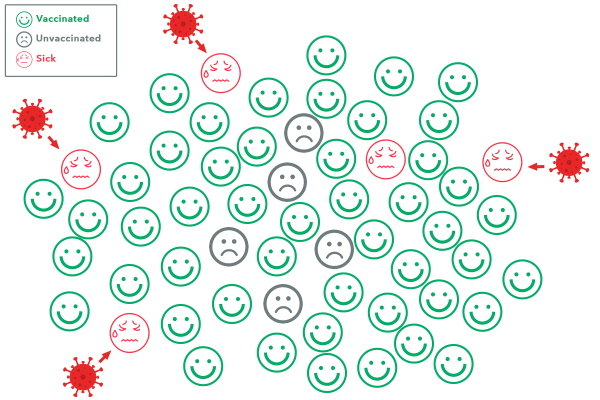
The hope now seems to be that if we can vaccinate a significant portion of the population, that everyone will be protected through “herd immunity“, the idea being that all the vaccinated people effectively form a barrier that prevents the virus from spreading so wildly. This only works, however, if a high percentage of the population is vaccinated. The threshold varies by pathogen, and we do not have enough data on COVID yet, but it stands to reason that the vast majority of people will need to be vaccinated.
Diagram of “herd immunity” shows how high percentage of vaccinated people insulate unvaccinated people against the virus
Even in that situation, people will still catch it, and some of these will die, but the global crisis will become manageable. There is a question of how much of a loss of life is considered within the parameters of a “managed” crisis, but that’s a topic for another day.
Just as vaccination has a society wide impact on health, so will the systems-change work we need to do in order to address climate change. And just like there are people who “do not believe” in COVID, or who refuse to be vaccinated, there are and will continue to be people who deny the realities of climate, and who refuse to make any changes to our social and economic systems in order to prevent its worst impacts. Even as evidence points to the climate crisis already being underway, as with the uncharacteristic snowstorms across the country, urban heat islands in cities, or the tornadoes that somehow got lost in Georgia on their way to Oklahoma.
The vaccine refusers and climate deniers — and by these I mean the regular citizens, not the ultrawealthy with a financial stake in denial — have one crucial thing in common. While both may be susceptible to conspiracy theory, or lack adequate education on either subject, or have been encapsulated by filter bubbles generated by Youtube or Facebook algorithms, none of these are the most important. The critical commonality instead is a deep — and justifiable — distrust of institutions.
Just as there are people unable or unwilling to get vaccinated, they may also be skeptical of systems change efforts around climate, or have some other barrier to engagement. This resistance is particularly powerful for people whose immediate needs are so urgent that adopting a systems lens, or looking ahead five or ten years is outside their capacity, or beyond the vanishing point.
It is important to note here that while some people in the United States are choosing not to get the COVID vaccine when it’s available, there are many countries around the world which simply do not have access to it. This, of course, is analogous to the reality of the U.S being as the second highest volume carbon emitter, at the same time as too many of its citizens choose to ignore the global impact, which will fall disproportionately on countries contributing much less to the problem.
Also important is the fact that the overwhelming bulk of the responsibility for carbon emissions and other forms of environmental degradation lies with industry. In spite of their attempts — echoing conservative talking points for the past half a century — to convince the general public that it’s an issue of “personal responsibility”. That the environmental costs of production — particularly waste and pollution — are externalized to vulnerable communities within the United States, is a microcosm for how the United States, in turn, exports that same waste to the two-thirds world.
So I am not writing this to join the chorus of people excoriating the vaccine avoiders and climate deniers. Because, in truth, I feel the blame lies with the institutions — governments and corporations mostly — which have betrayed the public trust, and grievously failed in any stated commitment to public health or well-being. Instead I want to make the case that as we attempt the greatest mobilization in human history to address the climate crisis, we — the big, global we — need to protect everyone, even the deniers, and more importantly, those who for whatever reason remain skeptical of our efforts, or lack the means or capacity to participate.
Whatever technologies, models, and organizational structures we develop, to orient ourselves toward social and economic justice, we must also make space for the unwilling and the unable to be independent, self-determined, and safe. This means insulating them against the violent death throes of our system of capitalism, white supremacy, and imperialism, as we replace it with something better. Many things better. Institutions and new relationships at the local, regional, national, and global levels that cultivate enough trust and build enough capacity for everyone to participate equitably. This could function much like “herd immunity”, while we do the more difficult work of education and rebuilding trust.
Maybe eventually we can get to a point where we are all willing — and able — to do our part, for each other, for all life, and for the planet we share.
At the end of last year, I published an article in the journal Transcontinental Human Trajectories, my first “official” publication. It is mostly a personal narrative — and I do mean personal — but it also lays out much of my educational philosophy, and sketches my initial trajectory from a school teacher to more of an activist. Although I didn’t use the term “school abolitionist” at the time, you can see the first inklings of that identity starting to crystallize. The abstract is below, and you can click here to read the full article.
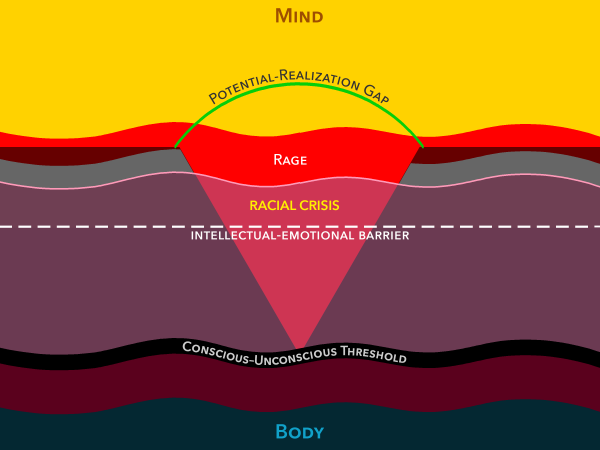
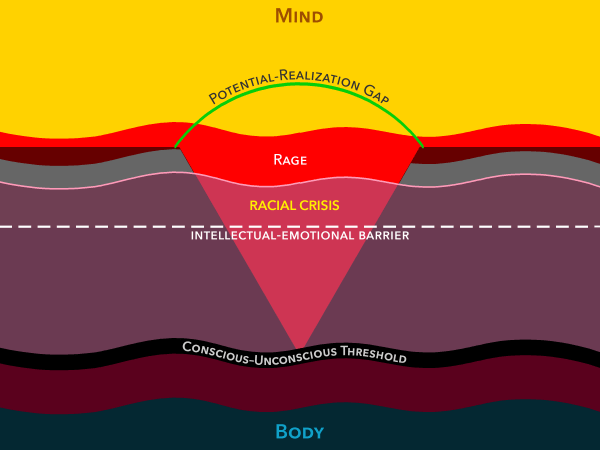
In this personal essay, I discuss how shifts in my positionality as an educator changed the dynamics of power between me and my students, how the threshold between informal education and the School marked a clear delineation of power that placed us on opposite sides. My journey as an educator paralleled my personal journey as a Black man in the United States, during which I had to navigate the troubled intersection between race and disability. Along the way I became aware of a “potential-realization gap” — internalized as a hovering sense of inadequacy, and externalized as a deep disillusionment with people and the world.
Where once race had operated on my consciousness from the margins, certain experiences forced me to contend with my identity in ways I had been able to avoid before, in part due to a stark divide between mind and body. With racial consciousness came indignation, manifest in my orientation as a teacher activist, and which I imposed upon my students as the imperative for their — but not my own — liberation. Wading through toxic environments, spaces of collective trauma and bureaucratic rot, any attempts to make change were usually met with fierce resistance.
This disconnect, between mind and body, theory and praxis, school and community, reality and my ideals — exacerbated by racial trauma and ADHD — tore a jagged fissure through my career. Lost in all of this were the young people I was ostensibly fighting for, yet for so long failed to recognize as agents in their own liberation. I had sought in vain the pedagogical method, the repositioning, the creative freedom — something — that would allow me to reconcile the disparities.
But it wasn’t until I approached the decision to leave schools in favor of community education, that I discovered participatory action research (PAR), and with it the need to ground my own work, and that of my charges, in identity, history, shared struggle, and building community. In PAR, I discovered the possibility for collective liberation — a means for bridging the gap within myself, and between myself and the communities I serve.
As a person who prides himself on being critical — perhaps even to an excessive degree — I definitely support dissent and debate. But I also recognize that positions don’t emerge from the ether, without the weight of history and political power behind them. Opposing positions do not enter into some neutral “marketplace of ideas” uninformed by context. Rather, the context, as shaped by history and hegemony, dictates that any two positions will not “compete” on equal terms. For example, in the national “debate” over gay marriage, the weight of public opinion was for many years levied against it.
That a national debate wasn’t even possible for centuries before that, clearly indicates that the two positions — in favor and opposed — did not enter the debate on equal terms. Eventually, as public opinion shifted, and the basic civil rights of queer folx were recognized as worthy of defense, this lead to the legalization of gay marriage nationally. Even then, this didn’t really stop the “debate”, and there continue to be court cases over the rights of queer families, as private businesses deny them service on religious grounds, or states deny them the right to adopt children.
What is vital to understand in this example is that queer folx are and always have been an oppressed class in the United States. This means that any “debate” concerning their rights does not take place in some culturally and politically neutral space. Where the power of the state, reinforced by the cultural norms of the dominant classes are weighted against any group of people, it is often their voices, their perspectives, their rights, which are silenced and suppressed. We do not need any continued “debate” on people’s dignity or sovereignty or safety. Hegemony and counter-hegemony do not exist on equal terms.
Free Speech vs. Cancel Culture
In reading about this debate between “free speech” and “cancel culture”, as mediated by the Harper’s open letter, and the many different responses to it, I feel that there are a few critical points being left out of the discussion. First, it is important to distinguish “call out culture” from “cancel culture”. The former is about raising the issue of accountability, while the latter is about what the consequences should be once a person is held accountable. It seems to me that the two “sides” of this debate are confusing and/or conflating these two concepts.
Where the internet has allowed for a more equitable exchange of ideas (in theory), giving marginalized or oppressed people a platform they lacked before, people in positions of power and privilege can be “called out” for their abuse, and where this calling out is amplified by many voices, there may be in turn a public reckoning — from which “cancellation” is one possible outcome. The signatories and defenders of the Harper’s letter are clearly arguing against “cancel culture” — that is, what they see as the disproportionate punishment of people for expressing certain views, which also has a chilling effect on people expressing those views at all. While I think this can be reasonably seen as a suppression of free speech, punching down should not be granted the same liberty as punching up. The force of justice must back those who are subordinate to Power, just as Power is backed by the force of hegemony and the State.
Those arguing against the Harper’s open letter, most notably the response published by The Objective, are defending the right of people, particularly the marginalized and oppressed, to call out others, which is in itself a defense of their free speech. But there is some nuance to discuss here, with respect to opposing positions not emerging into a neutral space, free of context, or divorced from relationships of power.
As Anthony DiMaggio discusses in CounterPunch, the argument of the Harper’s letter is being made either in bad faith, or with a complete ignorance of or disregard for history and politics in the United States.
We live in a period when the rise of neoliberal capitalism and untrammeled corporate power have cheapened “public” political discourse to serve the interests of plutocratic wealth and power, while assaulting notions of the common good and the public health.
DiMaggio goes on to argue how this power dynamic has historically been heavily weighted against those on the “left” of the political spectrum, particularly in the Academy, where discourses around “professionalism” dictate that all legitimate scholarship remain within a certain ideological “center”, silencing voices on the margins.
This constraining of ideas to the “median” seems to be rooted in white USAmerican norms of white upper/middle class “decorum”, specifically the pressure to avoid conflict, or rather, to avoid any public appearance of conflict. Settle the lawsuits out of court, sign a non-disclosure agreement, don’t talk religion or politics at the dinner table, leave race out of it, and for goodness sakes, put those rainbow flags away, and keep any discussion of sexuality behind closed doors. This is far more complicated than I have time or space to discuss here, but put simply, those who benefit from the status quo (and those who aspire to) — by virtue of social, economic, or political power and privilege — would really quite like it, if the rest of you wouldn’t much mind, if we could just keep things “civil”. A premium is placed on preserving the appearance, not just of civility, but of the fundamental “goodness” of those in power.
Muddying the Waters
The debate becomes confusing and downright bizarre, as the defenders of the status quo scramble, stumble, and fall all over each other in an attempt to keep up appearances, to maintain their claims to a moral superiority. In our current political moment, the Black Lives Matter movement approaches mainstream legitimacy — this only after the murder of George Floyd, a particularly egregious visualization of the Black oppression, suffering, and death which the “mainstream” could no longer ignore or wish away.
The dam finally broke, and countless white people scrambled to make it known that they were nothing like the murderous police officer, that they condemned and disavowed him, and that they had always valued Black lives. To prove it, they would post statements of support on social media, donate to Black causes, march in the streets, and most importantly, put on a performance of punishing those who did not do the same. These include the unapologetic racists, but also those who merely did not express their support publicly, who held the same positions as many of these new defenders of black lives, just minutes before they saw the video of George Floyd being murdered.
These white “woke” people — liberals invested in the performance of superior morality — have co-opted critical discourse and perverted it into some profane purity test of who can be the most symbolically “good” while doing much of nothing to change the reality of the situation. Where they trip and fall all over themselves in their performance of “wokeness”, cherry picking the language away from the substance, they obscure and invalidate the underlying logic of criticality, as advanced by people of color and other marginalized groups (see: critical race theory, queer theory, etc), undermining the very causes for which they claim to stand.
(As a brief aside, I find it extremely frustrating that the term “woke” — Black American vernacular meaning sociopolitical awareness — has been so co-opted and abused as to become a pejorative against white liberals.)
In the name of this fake purity, they’ll risk actual damage to vulnerable communities. I spoke about this in my critique of the Ralph Northam blackface scandal. Democrats (white liberals), in order to stake some imaginary moral high ground, were on the verge of losing the whole governorship of Virginia, which might have lead to policies that actually harmed black people. These are the same people, you’ll remember, who wore Kente cloth stoles in a misguided show of solidarity. Without irony — or self-awareness it would seem — they knelt for nine minutes, basically embodying the white police officer who killed George Floyd, rather than Floyd himself. Their obliviousness and ham-handed pandering might be funny if only these weren’t the same people who hold black lives in their hands as they make decisions for the rest of the country.
This whole conflict, supposedly between “free speech” and “cancel culture” has become so circular and recursive as to completely pollute the waters of reasoned debate. Take this article by Conor Friedersdorf in the Atlantic, which, at its core seems to be arguing against a narrow view or set of norms, outside of which people meet with disproportionate retribution (i.e. some damage to their reputation or livelihood). Friedersdorf’s argument doesn’t seem to be so much against cancel culture, as it is against its perceived excesses. Navigating this threshold between what makes the personal and professional consequences proportionate to the harm is extremely difficult, mediated as it is by the complex interplay of culture and the dynamics of power, each of which themselves are informed by long histories. Hardly anyone is evaluating a single act — or even a series of actions — within all of this context.
As part of his argument, Friedersdorf cites an New York Times opinion piece by Chad Sanders, in which Sanders makes demands of his friends to hold their own friends and loved ones accountable for various offenses. To be clear, Friedersdorf is critiquing Sanders, who is critiquing his associates, on the grounds that they should be critiquing their friends and family. Friedersdorf characterizes Sanders as using “cult tactics”, seeing him as trying to force other people to behave within very specific parameters. Ironically, what Friedersdorf does in order to make his point, is to take one small part Sanders’ article and divorce it from the larger context, confining it within his own narrow parameters.
Chad Sanders is black. This matters because his article is actually about his frustrations with white friends and colleagues, who in their outpouring of “support”, their expressions of “love”, were not providing him with what he needed or even wanted from them. He is arguing, like I am here, that much of this “support” is performative, a clarion call to the Arbiters of Virtue — the “black friends” of the world — to remind him/them/us that they are the “good” white people. The same dynamic plays out with all kinds of privileged “allies” of marginalized/oppressed people, and how they perform their allegiances.
Friedersdorf couldn’t be concerned with this context, perhaps because it would require too much work for him to navigate the dynamics of power at play, to parse issues of free speech and autonomy from how those things are leveraged by those with power against those without. Sanders’ white friends and colleagues are under no obligation, will not be under any particular pressure,to take his advice. Actual cults are entirely about power: who has it (the cult leader), and who doesn’t (the members). Sanders, as a Black man in America, even at this moment of national reckoning, has absolutely zero power over his white friends and colleagues. Friedersdorf conveniently ignores this dynamic because it better suits his argument to do so. In the process, he uses his power and platform to essentially invalidate Sanders’ entire argument. Is that the “free speech” he is defending then? The freedom to decontextualize and disregard the speech of others?
Friedersdorf also discusses the case of a bookstore called Tattered Cover, which released a statement explaining why they hadn’t come out publicly in support of Black Lives Matter, attributing it to a longstanding policy of political neutrality. This resulted in a backlash, summed up in the statement of author Carmen Maria Machado, who canceled a scheduled engagement at the bookstore, saying that “choosing neutrality in matters of oppression only reinforces structural violence”. The bookstore would later release a second statement, definitively in support of Black Lives Matter, and apologize for “violating the trust” of the community.
For Friedersdorf, this is madness, the bookstore committing “self-flagellation” for no useful purpose, other than “unanimity” — that is, the absolutism of a particular point of view, which he perceives as a threat to solidarity in itself. This is one of the rare times where I find myself in the “middle” of two opposing points of view. While I agree that being neutral within an oppressive dynamic is the same as being complicit, I don’t think this means everyone always has to speak up on behalf of the oppressed in every conceivable situation. Especially not where it isn’t solicited and where one’s action or inaction doesn’t really make a difference.
Does every business need to issue a statement in support of black lives? I don’t think so, especially where it is only symbolic and performative, not backed by any meaningful effort to change the material or social reality for black people. Tattered Cover’s mistake was in making any statement at all. They could’ve quietly donated to black causes, hired some new black employees, featured black books, without any additional performance. If someone wanted to call them out for not making a statement, they could’ve simply pointed to their actual support for black people, in contrast to so many other businesses’ symbolic gesturing. This is the essence of Chad Sanders’s argument.
Prior to the release of the Harper’s letter, Yascha Mounk, one of the signatories, also wrote an opinion piece for the Atlantic, in which he criticized the apparent trend of “innocent” workers and businesses being punished for offenses that violate what he calls a “zero tolerance policy on racism”. The examples he cites are indeed extreme, and speak to the sort of confusing recursion I mentioned earlier. In one case, a group of white executives fire a Mexican employee after another white person, outside of work, allegedly tricks him into flashing a hand sign that other white people (white supremacists) have repurposed to represent “white power”. In this instance, white people caused harm to a person of color (took away his livelihood) in order to, as Mounk says, “signal their good intentions”. This signaling isn’t done toward, or on behalf of people of color, but to other similarly performative white people, as if there’s a competition for who can be the most “woke”, and through that, the most “good”.
Mounk also brings up the case of David Shor, a data analyst who was allegedly fired, not for violating the “zero tolerance policy”, but for merely highlighting the work of someone else who was perceived as having done so. That person — Princeton professor Omar Wasow — came under fire for publishing a paper which argued that non-violent protest yielded better electoral returns than violent protest. Wasow was criticized perhaps for the timing of the release of his study, from which it was inferred that he was not in support of the Black Lives Matter protests. This is a bit of a leap in itself, and for Shor to be fired merely for tweeting a summary of Wasow’s posts — thereby similarly positioning him in perceived opposition to BLM — is indeed absurd. One problem with Mounk’s argument, however, is that in the two cases mentioned above, the employers in question either denied or did not comment on whether these were the reasons for the terminations. The larger problem with Mounk’s argument, which also finds expression in the Harper’s letter, is that these extreme cases are anomalous, and there isn’t any observable trend of “innocent” people being terminated for minor offenses in accordance with a “zero tolerance policy on racism”.
The Harper’s letter cites six nonspecific examples to justify their argument. It’s possible to guess what incidents the signatories might be referring to, and it’s likely that if they listed specific examples, most wouldn’t hold water. But the instances they reference are not part of a new trend at all…
The Non-Power of Cancellation
Earlier, I made the claim that people on both sides of this “debate” are conflating two different concepts: calling out and canceling. To explain that further, I need to return to Friedersdorf’s article. In it he mentions another case, of a principal who is fired for making a statement against Black Lives Matter. Not an obviously racist statement, but criticizing what she saw as “coercion” in the Movement’s methods. She also made the fatal error of saying, in effect, that “Blue Lives Matter, too”.
What the principal did speaks to the critical error in the Harper’s piece, which is using false equivalence. As mentioned previously, in a conflict where two opposing sides do not enter on equal terms, the actions taken by both sides do not have the same social impact. In the conflict between black people and police, there is an enormous power differential to be considered — that is, the police have the power and often wield it against black people. Actions taken by black people against police, nearly the entirety of which are non-violent, cannot be compared, let alone equated to police violence. “Blue lives” aren’t even at stake in this conflict.
At the same time, while I vehemently disagree with the principal’s stance, I also do not think she should have been fired for that statement alone. She absolutely should have been called out and corrected. I also think she should’ve been subjected to some sort of professional “audit”, because if she holds these problematic views of Black Lives Matter, she is likely engaging in poor judgment in other situations of greater importance, given her position of power in the lives of black students. Firing her outright wasn’t about holding her accountable so much as it was about the district signaling that they are on the “right” side of the issue, that they have the moral high ground.
Alternatively, where an “audit” revealed that this principal’s statement was not representative of her views of black people in general, or were not reflected in how she treats black students under her care, this could’ve been an important “teachable moment”. This could’ve been an opportunity for the whole school to receive training on racial justice, or the pretext for bringing about other meaningful changes. Instead, the district chose to maintain the appearance of goodness, and in the process likely drove others with problematic views into hiding, where they may continue to do harm, under the cover of performative wokeness.
This example also reveals the difference between “call out culture” and “cancel culture”. Again, the former exposes the need for accountability, while the latter is about the actual consequences. But it is more nuanced than even this, once we again factor in the dynamics of power. Unlike the examples Friedersdorf and Mounk provide — “extreme” for the very fact that they are so rare — most instances of cancel culture are ultimately ineffective attempts by those without power to bring retribution for abuses committed by those in power. And it is because of the power differential that these attempts are ineffective.
J.K. Rowling, one of the signatories to the Harper’s letter, has been “called out” on numerous occasions for transphobic statements, or defenses of aggressively transmisogynist people. Despite the many calls for her to be “cancelled”, however, she has remained a best-selling author, and a billionaire, with no lasting stain on her reputation, or impact to her livelihood. This says nothing about whether or not she deserves such retribution, but everything about the power of those in a subordinate social position to hold those in power to account. In spite of the pearl-clutching concerns of the Harper’s letter signatories, “cancel culture” — and even this name oversells its reach and its impact — rarely has any lasting effect on the free speech of the powerful and/or prominent voices like the signatories themselves.
Journalist Zaid Jilani (another signatory to the Harper’s letter), speaking on the YouTube Program Rising, pointed to fact that some of the signatories to the Objective counter-letter had to do so anonymously. For Jilani, that they could not take their position publicly without fear of retaliation, is exactly the sort of thing that the Harper’s letter was speaking against. However, this is yet another failure to understand the nuances of power. That the Harper’s letter signatories felt free to sign their letter openly, has everything to do with the fact that the letter upholds the liberal centrist hegemony, evidenced most strongly in its vague, milquetoast language, uncommitted to any serious position, and therefore not a threat to the existing order.
On the other hand, the signatories to the Objective letter, are speaking from the same subordinate position as people of color, queer folx, and other marginalized populations, who regularly have to suppress our speech. This for the fact that our very existence — nevermind any demands for change or accountability — is not only a direct challenge to the existing order, but to Power’s sense of moral superiority. Every day, every instance of where we point to the ways that the status quo is immoral, seems to be perceived by these types as a direct attack on their very identities as “good people”.
Chatterton Williams and the End Run Around Race
Given that I have written about him in the past, there was no way I could address this issue without discussing the author of the Harper’s Letter: Thomas Chatterton Williams. Rather than rehashing the argument against him I made a two years ago, I’ll just say that this is a man who has yet to truly cope with his trauma, even as the entire thrust of his career seems to be in response to it. That he finds himself in a position opposite the majority of critical black voices is directly related to the fact that he has now written two books lambasting some aspect of majority black culture.
It is directly related to his view of a uniquely black cultural product — hip hop — as incompatible with other cultural products, such as (mostly white) literature, which he regards as entirely separate, and superior. It may have been “books” which sustained him in his battle against hip-hop — a battle he won to hear him tell it — but books and hip hop were mere surrogates in theinternal conflict between his conception of own blackness versus that of many others. This conflict was no doubt founded upon Williams’ experience of being rejected by black people in some way, indeed the definitive crisis for tragic mulattoes everywhere.
A conflict thus slices the tender soul of our young hero: Live the unexamined life of thuggish hedonism and machismo, or cultivate self-discipline and become an intellectual like [his father]? Some version of this tension drives every scene in the book, as the battle between brains and “hip-hop” is restaged with plangent, tiring zeal.
For Williams, those other people’s conception of blackness is founded upon trauma and suffering, which he fervently rejects, as someone who claims to have experienced very little of it, and as the son of a man who “overcame” it. With the same sort of individualist thinking that characterizes white Americans at large, Williams disregards black people’s collective trauma and suffering, dismissing it as the discrete experiences of many individuals, who with just a small change in fortune, or by virtue of hard work, could’ve avoided it, or overcome it, as he and his father managed to do.
It seems as if Williams’s entire identity, his tenuous hold on his own blackness, depends on this premise. Because if blackness is defined by trauma and suffering, and he has not experienced these things, then it follows by his logic that he is not black, thereby validating his alienation. He does not seem to grasp that he has, in fact, experienced trauma and suffering, and that it is not these things that define black people’s collective identity, but our resilience. Williams saw the “battle” as being between himself (as represented by “15,000 books”) and other black people (represented by hip-hop), for the right to claim blackness. Really it should have been a collective struggle with other black people against white supremacy. In that he never even recognized the terms of the conflict, his defeat was so absolute, that he also failed to notice when he was converted into an agent in the continuing war against black people.
Because he has managed to cling to his own narrowly defined blackness, he is ironically even able to cite racism to defend himself from criticism, even where that criticism comes on behalf of other black people. At some point, another Twitter user — a white woman — critiqued Williams from a critical race perspective, arguing against his respectability politics, and in the process mentioned his “mixed-race”. Her critique was valid on the merits, but this was one of those times where a white person inserted themselves into an internal conflict between black people. His “mixed race” is actually important, in how it undoubtedly shaped his experiences with blackness and other black people. But that’s really not for a white person to point out, as this Twitter user later acknowledged. This brings up another murky dimension in the whole free speech debate: who should have a voice, and what they can rightfully say, within any given social or political context.
Williams responded by saying, “I believe in another era she would have simply called me ‘uppity.’”. What he evoked there was the historical dynamics of power between black and white people in the U.S., wherein any instance of black resistance, real or imagined, was regarded as black people not knowing their “place”. To be “uppity”, for white people, means a black person attempting to rise above their station, immutable though it may be due to racial inferiority. For Williams to take an argument based in critical race theory, and reject it not on the merits, but because of the race of the messenger, is stunningly hypocritical. This is yet another example of how the free speech vs. cancel-culture debate has become circular and recursive to the point of absurdity, transforming the discourse into an unnavigable slog through muddy waters.
Williams — who we must remember is the sole author of the Harper’s letter — has positioned himself more or less against most black people, in believing, against all evidence, that black oppression is individually experienced, rather than collective and systemic. This allows him to hold firm to the myth of a post-racial society, wherein his experience of blackness is as valid as any other. In fact, his experience is as valid as any other, but for Williams, it requires an invalidation of others’ experience: a rejection of those who rejected him.
His positioning has allowed him to accumulate some measure of prestige and validation — a salve, I imagine, for persisting wounds. But I think even he recognizes this validation as temporary and circumstantial, that he must “renew the contract” every so often by excoriating other black people — even if only implicitly — for reminding white society of our oppression, for challenging their deep sense of moral superiority. Williams, in redefining blackness as entirely divorced from trauma and suffering — in abject denial of history and our collective experience to the present day — serves as proof for his white friends and colleagues of their “goodness”.
The Rise of Cousin Miles
It would be so easy to label Williams an “Uncle Tom”, for his close proximity to and tireless defense of whiteness. But I think this overlooks the subtle complexities of what he’s been able to accomplish, and the historical evolution of Uncle Tom, as he moved on up from the House to the Board Room. Tom lived in constant fear of direct physical violence, bowing his head both to avoid the blows and to lower himself to a posture sufficiently subordinate to his white masters. As the machinery of white supremacy grew infinitely more complex, Tom did his best to understand it, to navigate it, to survive it long enough to pass on his knowledge on to the next generation.
Enter “Cousin Miles“, the mixed-race son of Uncle Tom, who for his integration into youth culture and the liberal pluralism of the modern era isn’t as blatantly self-hating as his father. But in the tension between his deep desire to fit in with the other black kids — tempered by the sting of their rejection — and the pressure to “succeed” from his father, within the narrow parameters of white supremacy, he is inevitably pulled toward the latter. With one foot in the white world, and with at least a whole toe in the black world, Cousin Miles is able to capitalize on his tragic mulatto identity to acquire limited status, wealth, or power.
Taking out a line of credit on on his RaceCard, he holds himself up as a paragon of New Blackness™, “clean” and “articulate”, the diametric opposite of the Angry Black Man® who continues to shout unintelligibly from the other side of the glass. Sustained by all the white liberal smiles and glad-hands he can stand, Miles ignores the itch of inauthenticity as they make another toast, not to him, but in tribute to their own tolerance.
Meanwhile, the rest of us continue to struggle, to find purpose and meaning and solidarity in that struggle, defining ourselves by what we can accomplish collectively, rather than by individual concessions earned through appeals to white moral superiority.
By now you’ve probably heard the story about Virginia governor Ralph Northam, and how a photo in his medical school yearbook — from 35 years ago— showed two people in costume: one in blackface, the other in a Klan robes. Northam made a public apology about it, then oddly walked back his apology, saying that he was neither of the people in the photo. At the same time, though, he admitted that he had that same year dressed up in blackface as Michael Jackson for some sort of contest. It was an odd admission to an offense that hadn’t even been discovered yet, but probably to get ahead of it, just in case someone dug up a picture of that event, too.
Virginia Governor Ralph Northam
Within moments came the chorus of condemning voices from Democrats, pundits, and activists from the “left” (whatever that really means these days) calling for Northam to resign. Resign. Listen, I am the the last person to defend anyone’s racism, be it obvious or subtle, as any of the 2-4 whole people who ever read my blog will attest. However, it does strike me as a bit extreme to demand that a person resign from a very powerful position because of something idiotic they did more than three decades ago. Why does the power of the position matter, you may ask. Because it has become an issue of political priorities.
Shortly after the Northam scandal broke, allegations of sexual assault surfaced about Lieutenant governor Justin Fairfax — who would succeed Northam if he resigned. These allegations, to me and I would imagine anyone, are far more serious than someone appearing in blackface. Not too long after that, Virginia attorney general Mark Herring — second in the line of succession to the governorship after Fairfax — admitted to also dressing up in blackface back in 1980. I guess blackface was all the rage in Virginia back in the 80s?
This rapid-fire sequence of breaking scandals created a crisis for Virginia, as calls rang out for all three men to resign. But herein lies an additional complication. If they were to do so, the man third in the line of succession is Virginia is the Speaker of the House of Delegates, Kirkland Cox. This is significant because Northam, Fairfax, and Herring are all Democrats, while Cox is a Republican. It brings into question the priorities of the Democratic party, because is it truly more important that these three men resign as penance for offenses committed or alleged, even if it means a complete shift in the balance of power in Virginia? Even if it means that the governorship will be taken over by a man with truly troubling political positions that have translated directly into his votes on policy?
Let’s for a minute say that, in the worst case, Northam is actually lying, and that he is the person in blackface. Or the person in the Klan robes. I’m actually not sure which would be worse. Both of these images evoke an American history — and present — that has been very harmful, and very painful for black people. A history that devalued, dehumanized, and diminished us. And in Virginia, of all places, pretty much the epicenter of American slavery. The symbolic power of the image is not lost on me, I assure you, but it is still only symbolic. I don’t say that to imply that symbols don’t matter, because they hold great power. I say that because as powerful as symbols are, they do not have the same impact as policy on the everyday lives of black people. The symbols of blackface and the KKK represent an American history during which national policy remanded us to the status of livestock, and after that, third-class citizens. At no time would anyone be able to argue that blackface minstrelsy was more damaging than Jim Crow. Or that dressing up as a Klansman was as harmful as government complicity in the murderous and destructive actions of actual Klansmen.
I am not saying any of this to defend Ralph Northam’s actions, even if his only offense was allowing such a hideous photo to be posted on his yearbook page. But this is bigger than Northam, and Fairfax, and Herring, because if all three men were to step down, Virginia would have a new governor, in Kirk Cox, who almost certainly would harm black people on a far more than symbolic level. A quick look at how he has voted on various issues reveals a man who is staunchly anti-choice, which is especially dangerous at a time when Roe vs. Wade is under regular attack, with perhaps the only thing holding it in place being Chief Justice John Roberts, suddenly the “moderate” voice on the court. I could write another whole blog post — and many articles have already been written — about the disproportionate impacts of anti-choice legislation on women of color, and massive disparities in reproductive health in general.
Kirk Cox, Speaker of the Virginia House of Delegates
Cox’s record also reveals a man who has supported voter suppression efforts — via voter ID laws — which are nakedly aimed at further disenfranchising black voters. You wanna talk about history? How about the fact that for most of American history black people were regarded as three-fifths of a person, our bodies counted toward representation in the House, and bolstering the power of slaveholders, while our actual voices remained silenced? How about the fact that for another hundred years after slavery, we were still not allowed to vote, and for years after that, we were terrorized and killed for daring to exercise that right once we had it? The current voter suppression efforts in states like Virginia are an extension of that same system of oppression and disenfranchisement. Are Democrats and other voices on the left really willing to cede power to a man who would undoubtedly continue that legacy?
This whole saga was started when the far-right publication Big League Politics dug up the old yearbook picture. Do you figure their motive was to call out Northam’s racism, or to cause the exact sort of chaos that Virginia is dealing with now? They probably couldn’t have anticipated that their effort might lead to a complete toppling of Democratic power in the VA executive branch, and allow a Republican to assume the governorship. Why should Democrats and left-wing commentators play right into their hands?
This whole Virginia drama is revealing something important about the current Democratic establishment, which has implications for both past and future, including the election of Donald Trump. Democrats are symbolic politicians, concerned more with the image of doing the right thing, than actually doing it. Where they effect policies that actually make a positive difference in people’s lives, it is usually reactive, a case of them “holding the line” against the worst abuses of the Republicans. They have rarely advanced bold legislation that challenges the status quo, and even when they have, they rarely maintain enough power, or enough solidarity among themselves to see it through. They are beholden to the same corporate interests as the GOP, support the same neoliberal hyper-capitalist policies at home, and imperialist policies abroad.
They have been so indistinguishable in substance from the GOP, insofar as their actual impact on regular people’s lives, that it didn’t seem much of a leap for those who supported Bernie Sanders in the 2016 Democratic Presidential primary to vote for Trump in the general election. Much like the poor whites in so-called “Trump Country”, many on the left knew they just didn’t want more of the “same”, the maintainers of a status quo that sees so many people struggling, jaded, and hopeless. Democrats’ inability to understand this, or perhaps refusal to act on it, is why Hillary Clinton lost, and why any middle-of-the-road Democrat is likely to lose if they are put up against Trump in 2020
Democrats are riding so stiff and proud on their high horses as they sneer down at Ralph Northam, but what has been more damaging to the black people they symbolically defend? A photo in a yearbook from 35 years ago, or 35 years of benign neglect at best, and at worse, complicity if not command over the institutions and systems which have caused great harm to our communities? Like the War on Drugs and mass incarceration. The Democrats’ near-unanimous insistence that Northam resign is nothing but a platitude to convince everyone that they are the “not racist” party, quite different from the anti-racist party, — which they most certainly are not.
Let’s take a look at some of the more prominent names calling for Northam’s resignation. Senator and 2020 Presidential candidate Kamala Harris has quite a troubling record with respect to criminal justice, during her tenure as California attorney general, upholding and reinforcing the sort of policies that have disproportionately impacted communities of color. Senator and 2020 candidate Cory Booker has in the past been a little too cozy with Big Pharma, and evenly recently appears to be an advocate for the expansion of charter schools, which has proven disastrous for public schools, mostly attended by students of color.
Hawaii house representative and 2020 candidate Tulsi Gabbard has a troublesome anti-LGBT history, and seems to be oddly chummy with right-wing leaders like Syria’sBashar Assad, Egypt’s Abdel Fattah el-Sisi and India’s Narendra Modi. Senator and 2020 candidate Kirsten Gillibrand made it a point to own up to her conservative past, which wasn’t all that long ago. And don’t even get me started on Hillary Clinton, the white queen of neoliberalism, whose moral duplicity, and overall weakness as a candidate helped usher in the Age of Trump.
With the new crop of Democratic lawmakers, like Alexandria Ocasio-Cortez, Rashida Tlaib, Ayanna Pressley, and Ilhan Omar, we see the potential for a party actually bringing about substantive change. With the unveiling of the Green New Deal resolution by Ocasio-Cortez and Ed Markey, we see the first whispers of massive, systemic change, in response to the some of the greatest problems we face as a country, and in the world: climate change, systemic racism, neoliberal destruction of the economy. These need to be the priorities of the Democratic party, and while the 2020 Presidential hopefuls have put their seal on approval on the Green New Deal resolution, it seems a gesture of convenience, of sensing the direction of the wind, of symbolism.
Meanwhile, Speaker of the House Nancy Pelosi has belittled or dismissed the Green New Deal resolution, while also reassuring her corporate friends in the health insurance industry that she has no intention of challenging their dominion. Still, she made sure to hop on the bandwagon calling for Northam’s resignation.
U.S. Speaker of the House Nancy Pelosi
These mainstream, centrist, milquetoast Democrats, regardless of their newly minted progressive stances, have made careers out of “compromising” with the Right, capitulating to corporate interests, merely “holding the line”, when the lives of Americans hung in the balance. On a policy level, they have either caused or allowed real, quantifiable, harm to black people in particular. These same Democrats hem and haw and hedge and hesitate over whether or not to impeach Donald Trump, a man with a long history of racism, and who is not only openly racist at present, but fuels the resurgence of white supremacy through his words and deeds. Yet they come out in force against Ralph Northam over a picture in a yearbook from 35 years ago.
It needs to be stated that Northam himself is one of the same middle-of-the-road Democrats I am criticizing here. He is no progressive hero. But he has, at least, like many of those calling for his resignation, held the line. He voted against the anti-choice and voter suppressing legislation supported by Kirk Cox. If we are going to talk about compromise, maybe the Democratic establishment needs to compromise in its hard-line sanctimony, its hypocritical moralism, especially if their current course will lead to a reversal of the progress they claim to stand for. The weight of such regression will, as it always has, be carried disproportionately by black people. The same black people Democrats continue to court for votes through empty rhetoric and symbolic gestures, rather than a serious commitment to systemic change on a policy level.
Recently I stumbled upon an op-ed in the LA Times, written by Thomas Chatteron Williams, and called My black privilege. Whenever someone puts the words “black” and “privilege” together I can anticipate what comes next: a rebuttal against the concept of white privilege, and with it some false equivalency around Affirmative Action. Chatterton’s post is a bit different in that he isn’t another John McWhorter or Thomas Sowell, black men who have made a name for themselves in denying the impact of racism, and being openly hostile towards other black people.
While Williams’s article is no less misguided, it seems to come from a place I can understand, even relate to, with respect to my relationship to blackness and black people. The article starts with a reference to an exchange where he felt his particular experiences as a black person were invalidated. This invalidation, I think, is at the heart of a certain isolation which leads Williams to his hyper-individualistic thinking which plagues the article, and probably informs much of his memoir, Losing My Cool. That much is conjecture, because I have not, and nor will I ever read the book. Chatterton’s worldview is so predictable as to make it unnecessary.
Before I get into my argument, let me be clear that it is not my intention or goal to shame Williams for his point of view, but to point out the inherent fallacy in his thinking, which itself stems from what I like to call the scourge of individualism. My tendency towards the polemic should not be taken as animosity towards Williams, but as a passion for the subject.
In the precipitating exchange, Williams was apparently told that:
People who care about people of color ought to focus their energies on continued systemic racism and forget about anything so nebulous and untrustworthy as observation. Like it or not, I was the victim of greater social forces. It did not matter that I had come to see my life as something of my own making — the evidence of my senses was useless.
There are two very important things happening in this paragraph. The first, and most important, is that this sociology professor — who wasn’t black — made the mistake of trying to tell a black person — Williams — what his experience should be. Regardless of their expertise, this was simply not their place. While we can’t be certain this is how it happened, it was at least how Williams felt after the exchange, and that is just as important. The second thing is that, aside from the professor’s apparent misstep, the underlying point was valid, though I think Williams’ feelings muddled his interpretation.
As someone who has had many in-depth conversations with sociologists about issues of race and power, I can be relatively certain that the professor’s point was not that “the evidence of [Williams’s] senses was useless” or that how he saw his own life was irrelevant. As any scholar of race in the U.S. will tell you, as any black person can tell you, our experiences are not a monolith. Williams’s experience was his own, and shaped his particular worldview. It wasn’t, however, representative of any shared black experience in the U.S.
And here lies the fundamental flaw with Williams’s whole argument: individualistic vs. systems thinking, which is the point the professor was probably trying to make. There has undoubtedly been one person, or ten, or even one thousand black people who have gone through their lives with little to no observable experience with racism, don’t consciously feel its impact, and for that manage to gain some degree of success or wealth or high quality of life. Their experiences do not invalidate the very real existence of systems that make such outcomes more unlikely for the rest of us. Systems that privilege white people at the expense of people of color.
This sort of individualistic thinking, which is at the heart of the myth of a U.S. meritocracy, is a product of the American Enlightenment. It was only by virtue of those philosophers’ privilege as white men in the 17th and 18th centuries that they could even reflect on such lofty ideals as individual sovereignty. I shouldn’t have to explain to anyone why black people at the time were not afforded the physical or mental space to entertain such thoughts. That this way of thinking persists into the present does not suggest that it is correct, so much as it indicates the outsized influence of the white perspective in shaping the narrative of the United States.
The enormous amount of data demonstrating the racial disparities that exist across every social, political, and economic domain — wealth, housing, criminal justice, education, physical and mental health, infant mortality, life expectancy, and the list goes on — greatly outweighs the experiences of a handful of individuals. If I have a huge sack full of berries, 99% of which are poisonous, and you happen to eat one of the few that isn’t, it would not be realistic — or safe — for you to conclude that the whole sack is edible. That’s a weird analogy, I know, but what’s important here is safety, because the kind of thinking what Williams is propagating here is actually dangerous.
Williams goes on to write:
My black father, born in 1937 in segregated Texas, is an exponentially more worldly man than my maternal white Protestant grandfather, whose racism always struck me more as a sad function of his provincialism or powerlessness than anything else.
The point here seems to be that his black father, in spite of the circumstances of his birth, managed to achieve more than his white grandfather. For Williams, both men’s outcomes had nothing to do with their race. This is a common argument. Bootstraps. Meritocracy. What you get out of life is what you put into it. So on and so on. Don’t complain about race. Don’t like your circumstances? This is America. You can do something about it if you work hard enough.
This is not entirely false. There is much a person can achieve through the strength of their will, in spite of their circumstances. But that does not negate the circumstances, nor does it mean that overcoming those circumstances is possible, to the same degree, for everyone. Whatever success the elder Williams was able to achieve cannot, in turn, be used as evidence that race is a non-factor in most black people’s life outcomes. Again, the data shows us different.
Another spin on this same argument is where white people talk about how difficult life was for their parent or grandparent or ancestor, that their race didn’t help them, that they too “made it” in spite of their circumstances. Yes, class oppression is a thing. But the structural obstacles placed before black people in the US are simply greater than those placed before white people, regardless but not independent of class. There is an intersection of race and class, and for black people these two things are inexorably linked, as they have been for our entire history in this country. What many people fail to understand about white privilege, is that it is the absence, or at least reduction, of certain structural obstacles to health, wealth, and a higher standard of living that people of color face.
Later, Williams says:
Like a piece of paper that is both red all over and green all over, for far too many Americans of all backgrounds, the idea of a simultaneously black and advantaged person is impossible to imagine. This mental inflexibility points to a seldom discussed but nonetheless very frustrating aspect of being African American: well-intentioned people will insist you are a victim whether you interpret your life in such a way or not.
No one who lives in the real world thinks this way. There are countless examples of black people who are black and advantaged. One would have to be delusional or contrarian to deny it. But again, these folks are the exceptions. And even with all of their advantage — mostly financial — these black people still face some of the same structural obstacles.
Serena Williams, perhaps the most prolific athlete in any sport since Michael Jordan, almost died because of how structural racism manifests in the healthcare system. NBA star Sterling Brown and NFL star Michael Bennett, were perhaps one impulsive decision away from being casualties of police brutality. Their individual advantages did not protect them from the systemic issues that plague the black experience in the U.S. There are countless examples.
Williams’s sense that his life was “something of his own making” does not mean the struggles faced by so many others were products of their own failures. The problem with his article starts at its very title: “My black privilege”. With the first word.My. Williams’s own. He seems to think that his personal, exceptional, individual experience says something about the plight black people in general. Privilege, within the context of race, is not some individual currency that each of us carry around, choosing how and when we spend it.
Privilege — white privilege — at its most basic, is the widespread, systemic, advantage white people have of not being discriminated against on the basis of their race, of not having a well-established history of such discrimination that continuously echoes into the present to impact their life outcomes. Whether or not they have felt it, or believe they have benefited from it, does not mean it is not there. Black privilege, within this same context, simply does not exist.
That is to say there are no social or economic or political advantages awarded to all black people on the basis of our blackness.
What Williams also fails to consider is how his own trajectory was informed maybe not by white privilege, but its encapsulating framework: white supremacy. One need only take a look at Williams to understand how this could be the case. He is a very light-skinned black man, one who could even pass for white.
Thomas Chatterton Williams
Given this, and his experiences, it is to Williams’s credit that he even so strongly identifies as black at all. And perhaps it is because of this identification that he may not grasp how he could’ve been the beneficiary of white privilege, or put another way: light-skinned privilege.
Unlike Thomas Chatterton Williams, no one would ever mistake Sterling Brown, Michael Bennett, Serena Williams, or any of countless other black people who have sharply felt the impact of racism on their lives as anything other than black. Williams, the writer, doesn’t seem to understand that his particular experience — no “less black” or less valid — does not represent the experiences of most black people. Again, look at the data. Just search JSTOR or any other scholarly archive for “racial disparities” and be crushed by the sheer enormity of the evidence.
It is…unsurprising to me that it would be another light-skinned man making this kind of argument, oblivious to, or in contrarian denial of how race impacts black people’s lives. John McWhorter, mentioned earlier, is perhaps the most egregious example, though I think his entire public persona is a fiction he has crafted for social and economic advantage.
I must mention here that I, too, am lighter skinned, though no one in this country would mistake me for white. And I, too, have gone through growing pains around identity and my particular connection, or lack thereof, to black culture and black people. At one point in my life, I disavowed my blackness, by which I mean that I rejected the racial classification as a “social construct”, not that I positioned myself apart from or in opposition to other black people. At least not intellectually. I did feel, however, a distance between myself, black people and black culture. This, I came to understand later, was due to the absence of opportunities for immersion, and a lack of education about black history and culture, these things in themselves a consequence of white supremacy.
When I first learned this idea about race as a social construct, I seemed to think that it could just as easily be deconstructed. I say “seemed”, because I have a hard time these days placing myself within the mind of my younger self. I was in college, awash in a sea of new ideas, and perhaps grappling with each of them in isolation, rather than understanding how they interlocked within various systems. I didn’t understand that the institution of race in the U.S. continued to exist in spite of my firm declaration that I would not, and therefore other black people should not, subscribe to this inferior status imposed upon us. I seemed to think that I actually had a say in it, which to my mind today — overwhelmed by the data — is patently absurd.
Williams was a philosophy major in college. While that doesn’t have to mean anything, I often find that people within that discipline, disproportionately informed by Western (white) sensibilities, are uniquely able to detach themselves from social and historical context, to explore what they might call the purity of ideas. While I am sure this is an interesting pursuit, it is so divorced from how reality is structured as to be delusional. There is a sort of oblivious playfulness to these philosophy types that would be enviable if it wasn’t so dangerous, especially as it applies to the persisting impact of race and racism on those of us who live in the real world.
For one to place themselves in some ideological bubble wherein their own individualistic experience somehow negates the experiences of many others is highly problematic. This is further compounded by the fact that those who support the status quo are always looking for the next black token to validate their assertions that systemic racism isn’t really a problem. And Williams, for his lighter skin, and likely ability to pass in certain situations, only elevates his position, and makes him more “credible” to a white establishment.
It seems clear to me, from his op-ed, and from the premise of his memoir, that Williams has had a difficult time locating himself within the black experience. I get it. He had a difficult time reconciling his own successes and quality of life with the narrative that life for black people is necessarily more fraught with danger and hardship. Sure, makes sense.
But it also seems that his entire trajectory is informed by his distance from black people and culture. He views his education, his love for literature, as existing in opposition to his experience with black culture. Indeed, it was by virtue of his hard work that he was able to “beat” hip-hop, which he views as inherently toxic. Anyone with any remotely authentic relationship with hip-hop knows that it, like any other culture, is not defined by its more problematic features.
I would bet that most of the literature in question was not written by black authors, and that none of it spoke to his particular experience as a light-skinned black man. Instead, it showed him that blackness was something he could embrace intellectually, while remaining unaffected by its ramifications for his quality of life. Great for him, I guess.
But the “privileges” he was afforded within his particular, individual life trajectory say very little about the greater collective black experience in the United States of America. The only black privilege, if we must consider one, is the honor of being a part of one of the richest, most artistic, brilliant, resilient, cultures the world has ever known. Truly, this is an advantage. But this advantage is not equivalent, nor exchangeable for the kind of social, economic, and political power inherent to whiteness.
It was sometime in 2012 that I began to deeply distrust Google. Because of what I saw as the trajectory of their business model, with respect to Big Data:
LEARN. PREDICT. STEER.
PHASE 1: LEARN — Google would collect as much data as it could on every person who used their services, and conceivably, every person on the planet. Contacts, locations, travel patterns, email, text messages, phone calls, consumer habits, interests, concerns, political ideologies, religious affiliations, family relationships, occupations, and so much more.
PHASE 2: PREDICT — With so much data collected, and through the use of complex algorithms and artificial intelligence, Google would anticipate the thoughts and actions of its users (and everyone else), and make convenient suggestions based on what it extrapolated their wants or needs to be in the moment.
PHASE 3: STEER — Deferring to the almighty power of the algorithm, Google would start to influence people’s actions, conceivably in directions that represented their own interests, motivations, ideologies, and so on.
This idea sprung fully formed from my mind after an experience with what was then called “Google Now”, and then evolved into the Google Assistant. One day, I walked to the corner store, and my phone prompted me with transit directions to my partner’s house. That corner was indeed where I would catch a trolley, but this “suggestion” unnerved me. I didn’t like the idea of this machine, or the company behind it, knowing enough about me as to predict what I would do next. Thus began a long process, with many relapses, to remove Google from my life.
It was an ambitious goal. Because Google was ubiquitous, pervasive, and in so many cases, offered the best tech solutions for various everyday “problems”. Problems, mind you, which really didn’t exist before Google made itself so indispensably convenient.
Then in May of 2018, a strange internal video leaked from Google. It was called The Selfish Ledger, made by members of the company’s experimental wing, “Google X” — afterward just X, a subsidiary of parent company, Alphabet.
There were many voices clamoring to comment on this provocative “thought experiment”, but I had a different take. As I watched the video, my anti-Google impulses went into overdrive.
“See! I knew it!”
It seemed to validate my theories about Google’s trajectory, in spite of the company’s official statement that the Selfish Ledger was a mere “thought experiment”. However, I felt something else, too. Maybe because of the music or images, or because it was talking about memetics — a major interest of mine — I was also highly engaged, even mesmerized.
As the narrator laid out his dystopian vision with a pleasant British accent, I felt vaguely placated and a sense of awe. I thought ahead to the world the video envisioned, and some part of me felt at peace in the thought of relinquishing control, of allowing some gentle overseer to guide me. Much of this had to do with the vulnerability that arises out of life being so difficult at times, but I think it also invoked something deeper and endemic to the human condition. The same impulse that pushes people toward religion, or toward the stars. Toward all things mysterious and greater than ourselves.
If I, as non-religious person, who was hyper-skeptical of Google and its designs, felt such a thing, I could only imagine how easy it would be for most people to slide into the sort of complacency envisioned by the video. Because Google, without question, made life easier. At some point, it even made phone calls on our behalf. There was a slippery slope between convenience and dependency.
The video had a disingenuous — and rather pretentious way — of talking about a process that has already been taking place for the whole of human history. The process that sets humans apart from all other animals. The “Lamarckian data” which might be mapped and understood to predict and steer human behavior is exactly what Richard Dawkins called memes. These “selfish replicators”, analogous to genes, exist independently of Google’s ability to track them, and are already passed on from one generation to the next. What the video called the Selfish Ledger, we already knew under a different name.
CULTURE.
Google was proposing they act as the custodians, the mediators, the purveyors of human culture — stored, analyzed, and transmitted as “data” — and conceivably modifying it along the way. Not just on the broad, collective level, but on a deep, hyper-personal, individual level. Where humans have long sought a total understanding and thereby a mastery over nature, Google would be the stewards of our nurture. Analogous to GMOs, perhaps we would become “CMOs” (culturally modified organisms), or maybe MMOs (memetically modified).
I thought about the implications of this corporate AI Overseer guiding thoughts, emotions, opinions, consumer habits, politics, public policy, among many other things, including the very modes of human interaction and our reasons for doing anything at all.
And to me, it sounded like:
PHASE 4: CONTROL — manipulate the thoughts and emotions, dictate the actions, drive the behaviors of users under the pretext of what’s best for them, and the world.
It sounded like a “benevolent” dictator, but one with far more insight into people’s thoughts and emotions on an individual and collective level than any human or their administration could ever manage.
It sounded like a god.
Not merely the kind Neil Gaiman postulated in his novel, American Gods, competing for our attention and brain space, but an actual force that actively and constantly intervened in our lives to determine their outcomes. A god that was functionally omnipotent, with respect to its power over human lives, and one that already was omnipresent.
It seemed particularly salient given the explanation of how our data would live independently of us as people, as the substrate with which this god molded the world and society. How it imagined future generations being born into a world already shaped and guided by data and algorithms and the artificial intelligence that made meaning of it all.
I briefly wandered down a philosophical rabbit hole, considering that this god had long existed in some other form, perhaps laying dormant in the collective unconscious, until humans and their technology gave it the means to manifest with agency in the physical world.
At some point, we had a choice as to how much of our personal information we offered up to the new god. Though it was neither as much choice as we would have liked, nor as much as Google led us to believe. Future generations would not have much choice at all, because the Infernal Machine had already started unwinding. Their input had little influence over the new direction of the world, driven as it was by the momentum of millions of data points from billions of people over many years.
The ideas presented in the video were both awe-inspiring, and terrifying, as one imagined a god must be.
The God That Google Made. Past tense. Because I am imagining a future where the Selfish Ledger has already become a reality. A future that looks back on all the omens that signaled the rise of this digital god, and our failure to do anything about it.
Or perhaps our inability to do anything, once a certain line was crossed. But where was the line? When we, as a society, shrugged at any revelation that our every thought and action was being tracked by private companies and used to manipulate us? Or was it when artificial intelligence algorithms started to function in ways their programmers did not predict or anticipate? There was a chilling irony in that. Or maybe with the advent of quantum computing, which allowed these digital minds to function at speeds and levels of efficiency that humans could barely comprehend, let alone control.
That future was not as far away as we thought, with respect to time or the ethical distance Google placed between “thought experiment” and company policy. The slide into complacency and dependency had already begun, and was accelerating at an exponential rate.
There were scattered and muted critiques from some technologists, and from anyone who ever regarded science fiction about artificial intelligence as cautionary tales. But by and large, the new god’s arrival was met with fanfare and devotion. While venom and bile was reserved for any who dared a more heretical interpretation of what the future held. A future that would inevitably see the proliferation of creepy robots*.
As I considered the many ways humans could and probably would be complicit in our own destruction, the quest to “Un-Google” my life continued…
_____________________
* Boston Dynamics, the robotics company behind “Atlas”, was owned by Google X until 2017.
I spent a good portion of the morning reading the New York Magazine article, along with the individual accounts of the 35 women who were sexually assaulted or molested by Bill Cosby. I was struck by many thoughts, the first of which was that Cosby is an actual monster.
Thirty-five women.
Of an alleged forty-six—the others yet to come forward. May never come forward. It is a staggering number. But even if it were only one, Cosby would still be a monster.
What stood out to me was the similarity between the accounts, of Cosby preying on women who for various reasons were emotionally vulnerable. Or women who dared to have ambitions, which Cosby seemed to take as an invitation to exploit them. Women who looked up to him and trusted him as as a father figure.
An actual monster.
The same theme repeated itself. Cosby inviting the woman to dinner, or to a show. Cosby inviting them to a hotel room, or a dressing room. Cosby offering them a drink, or a pill—several times under the pretext that it was medicine for a headache or cold. And then groping them. Molesting them. Assaulting them.
Chelan Lasha
In his room, Cosby handed Lasha a blue pill — he said it was an antihistamine for her cold — and a double shot of Amaretto. […] Lasha says the comedian led her to the bedroom and gave her another shot of Amaretto. She lay down, and then he climbed in bed beside her. She remembers him humping her leg, grunting. Then she blacked out.
Maggie Shapiro
Cosby challenged Shapiro to a few pinball games, and then to a competition: whoever lost the next game would need to swallow a small pill. After Shapiro took the pill, she passed out. She woke up in bed, naked, with Cosby inside her.
Cosby handed Steuer a drink and insisted she perform an improv exercise, pretending she was a queen with oatmeal covering her face. She began to feel woozy. Her next memory is of Cosby standing above her — her clothes off — in a bathrobe.
So many of the stories are like this. But then there were the ones that, if possible, seemed to take Cosby’s monstrosity to another level—emphasizing his role as a predator.
He knew that Valentino’s 6-year-old son had recently died, and he told Valentino’s friend that he thought she could use some cheering up. Cosby offered to take them to the steam baths and then out. They accepted the invitation and met Cosby for dinner. “I was just sitting there, letting them talk,” Valentino says. “I was sitting there looking glum, not participating.” Cosby reached across the table and put a pill next to Valentino’s wine glass, and he told her to take it. It would make her feel better, he said. She swallowed the pill, and later another one. Cosby also pushed two pills on Valentino’s friend.
Who—what—other than an actual monster, would capitalize on someone mourning the death of her child, preying on her vulnerability to build trust, and then rape her? I would say this is the stuff of a comic book villain, except that even comic book writers—where they don’t know better than to use rape as a plot device—wouldn’t imagine someone so heinous.
Victoria Valentino
Several of the women, those who were assaulted decades ago, spoke about how they didn’t process what had happened to them as rape, because rape was the sort of thing that happened at knife or gunpoint in a dark alley. It seems incomprehensible now, but for these women at the time, date rape as a concept hadn’t yet gained any traction.
“I couldn’t put a name to it. I didn’t say accosted. I didn’t know what to call it. The difference between this and somebody else’s rape in the dark alley is that his face would be before me every week on TV.”
A line is still drawn between date rape and…let’s call it “alley rape”, under the pretext that only the latter is violent. But all rape is violent, whether the perpetrator uses a gun, a knife, or a quaalude. Or some psychological advantage—status, age, rank—that gives them power over the victim. Violence is by definition, “an unjust or unwarranted exertion of force or power”.
And sometimes, it wasn’t much different than a dark alley scenario. I imagine the perpetrator in the alley feels an incredible sense of entitlement, that his target—or women more broadly—owe him something. That he has some right to take something from them, because of his power, wealth, status, or just because he’s a man.
Moritz was getting ready to appear on the Tonight Show when someone opened the door of her dressing room. Cosby stepped inside and closed the door behind him. He stood above Moritz and unzipped his pants. He pushed his penis into her mouth. “It was automatic. It was like he did this with everyone that was on a show with him backstage.
An actual fucking monster.
Several of the women referred to their cognitive dissonance at being victimized by a man with such a wholesome image—a television father who was invited into millions of living rooms over more than a decade. This, in addition to his power as a Hollywood insider, prevented them from coming forward. Because who would believe them? And when this story first started trickling out ten years ago, many of us didn’t believe them, assuming it was some ploy to siphon money from Cosby, or for some inexplicable reason to smear his reputation.
All rape is violent, whether the perpetrator uses a gun, a knife, or a quaalude.
As I realized these accounts date back to the 60s, another thought came piercing through the haze. The truth of the matter is that these revelations haven’t tarnished the image of Cliff Huxtable, and changed him into a monster. Rather, the image of Cliff Huxtable was builtaround an actual monster. A monster playing his best role yet, as a beloved family icon and upstanding public figure.
Bill Cosby as Cliff Huxtable
Bill Cosby has been playing a long con with the entire country for close to fifty years. To read these women’s stories makes it seem like it was all part of some grand game. In his arrogance, he has even gone so far as to tilt his hand on several occasions. “You have to be careful about drinking around me,” he said to a woman in the audience at a recent show in Ontario.
I started to wonder if the character of Cliff Huxtable, loving father at home, and at work an OB/GYN whose patients we seldom if ever meet, wasn’t some sort of sleazy, self-satisfied nod to his double life as lovable icon and rapist. Daring his audience to see him for what he was, just as he implicitly dared the survivors to come forward, smugly confident they would not.
These revelations haven’t tarnished the image of Cliff Huxtable, and changed him into a monster. Rather, the image of Cliff Huxtable was built around an actual monster.
Bill Cosby is only one man. One man who assaulted as many as 46 women. He does not exist in a vacuum, a single cancerous space completely isolated from Hollywood as an institution. How many other Cosbys are there—casual, matter-of-fact, entitled—committing sexual assault and disappearing survivors behind the curtains of their power and influence, and our culture of silence?
Then I came to the story of Jewel Allison, which pulled me from abstraction. Her encounter with Cosby was similar to many others. An invitation to his brownstone, a glass of wine, disorientation, followed by flashes of images indicating that something terrible had happened. But Ms. Allison’s account stood out to me for how her experience intersected with race.
“I had a few moments where I tried to come forward. I’ve picked up the phone more than once over the course of two decades. This is before the women started coming forward in large numbers. But I was just too scared, and I also had the extra burden of not really wanting to take an African-American man down. I’ve always been very closely involved in the Black community. And for me to come forward and basically destroy this very positive image of, as few as we have, of African-American men in America, it was just too difficult to do at that time.”
Like the other women, she felt coerced into silence, not by any overt threat, but by the symbolic threat of Cosby’s power as a celebrity, and the inevitable repercussions for her life and career. The average rape survivor is likely to face a backlash for coming forward, but to speak out against such a powerful figure is to risk the complete annihilation of her character, as a public spectacle.
But unlike the other women—most of whom were white—Ms. Allison also felt torn between her own personal agency and a sense of responsibility to a broader community. Part of the Black experience in the United States is often a feeling that everything you do is under scrutiny, not only a judgment of you as an individual, but that somehow your actions and character also say something about all Black people. This is not some baseless pathology, but something deeply rooted in how Black people are represented. Ms. Allison knew that to expose Cosby as a monster would also invite a searing indictment of Black Morality as a whole—which here in the U.S. is forever on trial.
Jewel Allison
More specifically, and perhaps inconceivably to most, Ms. Allison felt some responsibility to Bill Cosby himself. She understood what it meant that he had achieved so much as a Black man in a racist country and industry, and couldn’t bring herself to be the one to possibly take it away from him. She understood that although Bill Cosby was a monster playing the role of a respectable, successful Black man, against the odds, his importance as a symbol to other Black Americans was great. It is difficult to even imagine anyone taking on that burden, of denying herself justice out of a deep-seated sense of moral obligation to her community.
It becomes even more difficult to stomach when you consider that Bill Cosby cultivated a secondary reputation as the self-appointed Redeemer of all Black People, the Beater of Black Brows. That this man could stand in front of college graduates, amongst others, and preach to them about values, while secretly being a career rapist, is beyond comprehension. It suggests Cosby fell for his own ruse, confusing the role he had been playing for decades, with the real monster he actually was. Or perhaps there was no confusion, and in the absence of Cliff Huxtable from television, the monster had to devise a new persona as a public moralist, in diametric opposition to his true self.
So imagine being Jewel Allison, and having to watch this man—her rapist—attack and condescend to the very community for which she was willing to sacrifice her own agency, and psychological well-being. I can imagine it felt like a second violation, a glare through the fourth wall, chiding her for not speaking up, and still daring her to do so. The symbol she sought to preserve in the collective consciousness of her community had become instead a toxin, eating away at it from the inside.
Jewel Allison’s story highlighted for me—again—the double burden of being a Black woman in the United States. While I can only imagine what she experienced—what any Black woman experiences—her story renewed my own sense of obligation as a Black man to keep my eyes and ears and heart open to those experiences. And to provide any support I can.
In the absence of Cliff Huxtable from television, the monster had to devise a new persona as a public moralist…
Bill Cosby is a monster, one that has finally been dragged out into the light, hopefully to face justice. But he is also a symbol, no longer of wholesome family values, but of an ugliness allowed to exist in plain sight, while we avert our gazes or attempt to explain it away. If there is anything positive to take away from all of this, it is the hope that it signals a paradigm shift in how we, as a society, address the culture of rape. How we listen to women—and men—who confide in us their pain and humiliation.
The response to Cosby’s monstrous exploits has been massive. Perhaps 10 years too late, it has become the cover story of a major magazine, and a trending topic on social media. By way of the #TheEmptyChair hashtag on Twitter, (referring to the image on the magazine cover, representing unnamed survivors) other women have felt empowered to tell their stories.
But it is not enough for those who have been survivors of sexual assault to tell their stories. It should not be their burden to bear alone. We—all of us—have to acknowledge, deconstruct, and ultimately dismantle the culture of rape so that fewer and fewer people even have these stories to tell.
We all have to remain vigilant, and listen. Even when there seems to only be silence.
I was in a writer’s group meeting, critiquing the work of a fellow member, whose sci-fi novel-in-progress takes place some 100+ years in the future, where the U.S. no longer exists as such, though its legacy is still apparent. One of his main characters is a black woman, and for the mere fact that the writer is a white man, I have been particularly scrutinizing of how he depicts her. Artistic license means he can write her however he wants, but it’s been my goal to encourage him to draw from the actual experiences of black women projected into this imaginary future. After all, it is easy enough to create a phenotypic black woman and instill her with a white American affectation, which in sci-fi, as in reality, often reflects a veritable absence of culture.
In this future world, the writer explained, black people adopted Latin and Greek as second languages, after some academic initiative to teach inner city students the so-called “Classics”. I immediately objected on a number of grounds. First and foremost, it sounded like presumably white educators swooped down into the hood to offer black students the “gift” of their superior wisdom, which as in so many white savior fantasies completely robs black people of their agency. Having gotten to know this writer and his intentions in casting a black protagonist, I realized he merely did not see this theme for what it was, as probably most creators of white savior fantasies do not. He accepted the critique gracefully.
Scene from the film “Freedom Writers”
My second objection was to the choice of Latin and Greek as some medium for revolutionary literacy. One dead language, the other very localized, regardless of their significance to Western intellectual heritage, struck me as extremely impractical choices. This was especially jarring because black people in the U.S. tend to be, as a matter of necessity, a matter of survival, extremely pragmatic. Such an initiative, therefore, could’ve only been spearheaded by white people—well meaning white liberals, no doubt—which only reinforced my grievance around the lack of black agency.
My third objection came from my ideological position as an educator, feeling that both curriculum and content must be culturally relevant in order to be effective. In an imagined future world, why couldn’t it be Swahili, or any of the hundreds of other languages from Africa? Then I thought, coming back to black Americans’ severe practicality, the more obvious choice would be Mandarin. Because it is the language of nearly one-sixth of the entire world’s population, and the most widely spoken language on the planet—yes, more than both English and Spanish. Because it will inevitably become the next “globish” of international communication.
I thought of Black-Asian-American cultural conclaves, an exchange of language, culture, and ideas catching fire in Chinatowns across the country. I thought of black people, anticipating the full emergence of China as a dominant power, learning Mandarin as a means of better positioning themselves in a rapidly changing world, and giving themselves an essential tool of subversion against the next hierarchy that would see them remain at the bottom. I thought of black people manipulating Mandarin as they have English, code-switching between the traditional language and radical new permutations, both as a tactic of subversion, and because that’s just how we do.
Agency. Pragmatism. And for those, plausibility.
The other group members echoed each other that this idea was material for a story in its own right. I was inclined to agree, except that being so sharply focused on my current novel, I don’t really have the mental space to write that story. But something else soon occurred to me. That black people learning Mandarin en masse is indeed a story worth creating. Not in print, or digitally, but rendered unto reality.
As of now, Mandarin is not offered in most schools in the US—public or private—which suggests a rather glaring lack of foresight, or a disconnect between education and the state of world affairs. But education, when delivered well, has revolutionary potential. Were black students—regularly underserved, miseducated, deprived of resources and quality instructors, struggling daily against white supremacy, told implicitly and explicitly that their lives don’t matter, succumbing to stereotype threat, and for all these reasons consistently marked as under-performers by the skewed and inherently racist metrics of “achievement”—to be placed on the cutting edge, picking up Mandarin as a second (or third after Black Vernacular English) language, they might for once be poised to have a social advantage. It would be a strategic and highly practical long-term investment into these students’ future, and thereby the future of communities of color as a whole.
The economic benefits would be obvious, as China is the largest and one of the fastest growing economies on the world stage. But as revolutionary action mandates thinking outside of a market-centric model, Mandarin would not be taught just to enable black students to better navigate existing systems, but as I suggested earlier, to subvert them. I envision this new generation of black students speaking perfect Mandarin only to receive blank stares in return, communication blocked not by a language barrier, but a color barrier. Because fluency in the new language of power would not suddenly erase the anti-black racism running rampant worldwide—in few places as virulently as in China—the teaching of Mandarin would need to be coupled with explicit anti-capitalist ideals. It stands to reason that as China’s influence spreads, this anti-blackness current—with no significant counter—will only be reinforced. Much like the changing languages of the colonial masters did little to affect the status of enslaved Africans throughout the Americas, black people have no reason to assume that the rise of China signals any change in status for us.
A black boy being objectified in China for his skin and hair
Beyond allowing black people to have more mobility within a new power structure, fluency in Mandarin would serve the perhaps even more important purpose of allowing us to spread our own influence. Our revolutionary spirit, historically maligned, placated, or stamped out as a matter of policy, writ large to resonate with people around the world, much like hip-hop has become symbolic of resistance in places as disparate as Japan and Palestine. And speaking of music, imagine a new generation of Jazz, Blues, Hip-hop, Soul, weaving rhythmically back and forth between English and Chinese, amplifying our collective voice and creative genius. A proliferation of Black culture by our own hand, rather than through appropriation. Authentic global presence that would immediately render the harmful media misrepresentations—including the blackface minstrelsy that is all the rage around the world (especially in Asia)—obsolete, and out of touch with the new reality.
Blackface on South Korean Television
Right now this idea falls in the category of speculative fiction, if only just, because I personally do not have the resources, influence, logistical knowledge, or financial means—nevermind zero aptitude in Mandarin—to see it realized. Still, it is conceivable that such an initiative could be started, preferably on a local, community level first, rather than top-down from the Department of Education—or worse, the private sector.
As a speculative fiction writer, my realm of possibility is probably greater than most, but what do you think? Would teaching Mandarin to black kids improve their social, economic, and political prospects as they become adults in a world increasingly influenced by China? Or is it merely the stuff of hopeless idealism, with no plausible real world application?
Thomas Jefferson: Founding Father, White Supremacist
When you hear the name Thomas Jefferson, it is likely followed by “founding father”, “hero”, “patriot”, and other such reverent terms. Amongst the mildly critical—or anyone not in complete denial—you’ll hear it acknowledged that he was also a slaver, and that there were some inherent contradictions between this and the idea that “All men are created equal”. The more critical still may point out that he was also a rapist, in that his relationship with Sally Hemmings was a matter of obligation for her, as she was his “property”. Those truly willing to look at the man, that is the reality versus the myth, will point out that Jefferson was not even exceptional amongst his peers, for his time, or for what he purportedly accomplished. The Zinn Education Project, for example, points out how the Declaration of Independence was not some landmark achievement by Jefferson, but a sort of amalgam of pre-existing statements being made throughout the colonies. And not just a few. Historian Ray Raphael notes:
In 1997, Pauline Maier published American Scripture, where she uncovered 90 state and local “declarations of independence” that preceded the U.S. Declaration of Independence. The consequence of this historical tidbit is profound: Jefferson was not a lonely genius conjuring his notions from the ether; he was part of a nationwide political upheaval. Again, textbook writers have watered down the legend while missing the main point. Many now state that Jefferson was part of a five-man congressional committee, but they include no word of those 90 documents produced in less-famous chambers.
However, something few critics seem to note is how Thomas Jefferson should also be considered one of the Founding Fathers of white supremacy. Obviously he was a white supremacist in that he claimed enslaved Africans as property, but it goes beyond that. White supremacy is a multifaceted ideology that pervades every sector of Western culture and society – in the US, Europe, and the present and former colonies of both. It encompasses many ideas, all to do with the explicit or implicit claim that white people are superior to others in all domains, from beauty to intelligence to reasoning to creativity, and that this superiority is inherent, biological, immutable. And, all of these ideas, insofar as they have been put into print, may find their origins in a book published by Thomas Jefferson in 1785, called Notes on the State of Virginia.
While we’re discussing Jefferson’s singular achievements, we should take note that Notes was the only full-length book that Jefferson ever published in his lifetime. The book discusses a number of topics, but of interest here is Query XIV: Laws, wherein Jefferson discusses slavery, and in particular, the inferior nature of black people. I will excerpt the chapter in chunks and comment on each one, in part just to translate his antiquated English into a more modern vernacular.
I also aim to demonstrate that nearly every white supremacist idea, claim, or rationale, can be found in this one chapter, in this one book, again the only book that Jefferson ever published. While the things that Jefferson wrote are extremely—I mean truly, mind-blowingly—offensive, I find Notes almost humorous in how explicit, thorough, and in his mind “scientific”, he is in his reasoning. For what it illuminates about US history, and what it suggests about the ideological foundations of the country, I think Notes might be one of the most important books ever written.
It will probably be asked, Why not retain and incorporate the blacks into the state, and thus save the expence of supplying, by importation of white settlers, the vacancies they will leave? Deep rooted prejudices entertained by the whites; ten thousand recollections, by the blacks, of the injuries they have sustained; new provocations; the real distinctions which nature has made; and many other circumstances, will divide us into parties, and produce convulsions which will probably never end but in the extermination of the one or the other race. (p. 264)
Here Jefferson is considering the consequences of emancipation, and the argument to make black people citizens of the US afterwards, to continue the work they were already doing while enslaved. As the argument goes, the country would otherwise need to bring in more white settlers to fulfill the duties vacated by freed slaves. Jefferson argues that this is not a viable solution, because upon the emancipation of black people, the country would erupt into race war, one that would not end until either black people or white people were completely wiped out.
This fear, that black liberation somehow spells doom for white people, is one of the most powerful tenets of white supremacy, and perhaps its most justifying pretext, the one that convinces people who are otherwise sensible and moral to advocate for injustice. This fear did not go away in 1865 with the Emancipation Proclamation, at which time black people did not suddenly start vengefully murdering white people. It did not end in 1964 or 1968 with the passing of the Civil Rights Acts. It did not fade, and may have even undergone a resurgence, with the election of Barack Obama in 2008, which corresponded to a dramatic uptick in white supremacist activity.
To these objections, which are political, may be added others, which are physical and moral. The first difference which strikes us is that of colour. Whether the black of the negro resides in the reticular membrane between the skin and scarf-skin, or in the scarf-skin itself; whether it proceeds from the colour of the blood, the colour of the bile, or from that of some other secretion, the difference is fixed in nature, and is as real as if its seat and cause were better known to us. (pp. 264-265)
Beyond the tender concern for his country that white and black people would tear each other apart, Jefferson is suggesting that there are physical and moral reasons why black people should not be emancipated and cannot become citizens in any case. You see, because black people are so fundamentally different from white people, on a biological level. He ponders the source of these fundamental differences, waxing pseudo-scientific, about how the difference in color might be caused by differences in blood and other bodily fluids. And I mean, seriously, what in the hell is “scarf-skin”? Jefferson admits he has no idea about the reason for the color differences, but goes on to make arguments for white superiority because of it.
And is this difference of no importance? Is it not the foundation of a greater or less share of beauty in the two races? Are not the fine mixtures of red and white, the expressions of every passion by greater or less suffusions of colour in the one, preferable to that eternal monotony, which reigns in the countenances, that immoveable veil of black which covers all the emotions of the other race?
Add to these, flowing hair, a more elegant symmetry of form, their own judgment in favour of the whites, declared by their preference of them, as uniformly as is the preference of the [orangutan] for the black women over those of his own species. The circumstance of superior beauty, is thought worthy attention in the propagation of our horses, dogs, and other domestic animals; why not in that of man? Besides those of colour, figure, and hair, there are other physical distinctions proving a difference of race. (pp. 264-265)
One facet of white supremacy is that white people are inherently more beautiful than people of color, especially black people. This manifests in the systemic and institutionalized white beauty standards that we see in Hollywood, advertising, the hair and cosmetics industries, modeling, music, and popular culture. That is, that white/European features are the norm, the standard by which all other features are judged, and ultimately found lacking.
In this part of Notes Jefferson is actually saying that white skin is superior because it is better able to express emotion. Beyond the bit about beauty standards, this also evokes the idea that black people are difficult to understand or relate to, that their thoughts and emotions are inaccessible. This is not a small thing, because the ability to relate to other people is central to having compassion for them. Oh, and yes, Jefferson did indeed compare black people to orangutans. This comparison, between black people and apes, is one that echoes loudly into the present, from King Kong to Planet of the Apes.
Another important idea Jefferson advances is that of black people “preferring” white people, that is, finding them more beautiful. This evokes the widespread and deeply entrenched white fear of black men, specifically, having a particular desire for white women. It actually goes well beyond fear into a sort of mass hysteria, manifest countless times in US history, and often resulting in the killing of black men or the destruction of whole neighborhoods. The Atlanta Race Riot of 1906, The East St. Louis Massacre in 1917, the D.C. Race Riots of 1919, the burning of Greenwood in 1921, The Rosewood Massacre of 1923, the unjust imprisonment of the Scottsboro Boys in 1931, and the murder of Emmett Till in 1955 were all predicated upon some alleged trespass by black men against white women, most often false accusations of rape. Though in the case of East St. Louis, the anger stemmed from rumors of black men and white women merely socializing at labor meetings. Far from ending in the 1950s, there have been countless other cases well into the present day.
Lebron James and Giselle Bundchen
The April 2008 cover of Vogue magazine (shown above), featuring Lebron James and Giselle Bundchen, plays with this historical context for the sake of sensationalism. Although the main fuss was about the not-so-implicit and dehumanizing comparison between Lebron and King Kong, there is the additional subtext evoking black men in some way violating white women. These two things are hardly unrelated, as 1933 King Kong film has been widely analyzed as a metaphor for a black man stealing away a white woman. It is illuminating to trace this irrational fear at least as far back as the 1700s, and to see how it has persisted for hundreds of years.
Jefferson continues:
They have less hair on the face and body. They secrete less by the kidnies, and more by the glands of the skin, which gives them a very strong and disagreeable odour. This greater degree of transpiration renders them more tolerant of heat, and less so of cold, than the whites. Perhaps too a difference of structure in the pulmonary apparatus, which a late ingenious experimentalist has discovered to be the principal regulator of animal heat, may have disabled them from extricating, in the act of inspiration, so much of that fluid from the outer air, or obliged them in expiration, to part with more of it. (p. 265)
So…Jefferson thought that black people—inherently, universally, as a people—smelled bad. Just sit with that for a minute. He goes on to give a “scientific” explanation for why this is the case, even though he has absolutely no background or knowledge of human biology. Related is the “fact” that black people also, apparently, sweat a lot more than white people, because of some physical difference in their lungs. Even the KKK couldn’t make this stuff up.
They seem to require less sleep. A black, after hard labour through the day, will be induced by the slightest amusements to sit up till midnight, or later, though knowing he must be out with the first dawn of the morning. They are at least as brave, and more adventuresome. But this may perhaps proceed from a want of forethought, which prevents their seeing a danger till it be present. When present, they do not go through it with more coolness or steadiness than the whites. (p. 265)
According to Jefferson, black people require less sleep. Good thing, I suppose, since it predisposes them to working long hours in the fields. He goes on to talk about how black people stay up all night, amused by stupid, trivial things, even though they know they need to be up in the morning to work. These are other currents that run through white supremacy today, that on the one hand black people’s amusements (part of our culture) are trivial, and that we are irresponsible when it comes to professional responsibilities.
Jefferson then says that black people are as brave as white people, which might seem like a compliment at first, until he goes on to suggest that the reason for our bravery is a lack of forethought. So we’re not really brave, not the way conscious and reasoning white people are, but reckless and stupid. We don’t see danger until it’s immediate, and because of our lack of forethought, we don’t handle the danger rationally. You know, this must be why so many young black men are killed by police! We just can’t see danger until it’s too late!
They are more ardent after their female: but love seems with them to be more an eager desire, than a tender delicate mixture of sentiment and sensation. (p. 265)
Oh, I love this one. According to Jefferson, black men pursue black women with more passion than white men do white women. Because they’re just out of their mind with animal lust, unlike white people, who experience love as a combination of physical and emotional forces. Implicit here is the idea that black people are more like animals when it comes to relationships.
Their griefs are transient. Those numberless afflictions, which render it doubtful whether heaven has given life to us in mercy or in wrath, are less felt, and sooner forgotten with them. In general, their existence appears to participate more of sensation than reflection. (p. 265)
Apparently, when black people feel grief, it isn’t for very long. All the problems we face, we just don’t feel their effects as keenly as white people, and eventually forget about them. And isn’t that great? Because again, it predisposes black people to slavery, in that we don’t feel the indignity and dehumanization as deeply, or for very long. Far from being a character strength, though, the reason grief is so temporary is that black people do not take the time, and presumably lack the ability, to reflect on their situation.
To this must be ascribed their disposition to sleep when abstracted from their diversions, and unemployed in labour. An animal whose body is at rest, and who does not reflect, must be disposed to sleep of course. (pp. 265-266)
Another gem. When black people aren’t working, or participating in some foolishness, they’re sleeping. Why? Well, because they’re animals, of course. Because they lack that capacity for reflection that would otherwise keep the mind awake. Of course, says Jefferson. Of course. Meanwhile, white people are busy contemplating the wonders of the universe. Or secretions of the “scarf-skin”. Or something equally profound.
Comparing them by their faculties of memory, reason, and imagination, it appears to me, that in memory they are equal to the whites; in reason much inferior, as I think one could scarcely be found capable of tracing and comprehending the investigations of Euclid; and that in imagination they are dull, tasteless, and anomalous. (p. 266)
Would you look at that? Jefferson says black people have just as much memory as white people. But didn’t he just say that our grief is transient, and that we have no capacity for reflection? Nevermind. We’ve already established that contradictions are sort of Jefferson’s “thing”, so let’s move on. He says that black people are not as capable of reasoning as white people, and certainly we can’t understand math. This is an idea that continues into the present, via the self-fulfilling prophecy that black kids will do poorly in math, affirmed by the “achievement gap” on standardized tests.
In Jefferson’s time, I am sure it had nothing to do with the fact that enslaved Africans were not taught, nor allowed to learn math (or reading or any subject for that matter). Just like today I’m sure that black kids lower performance (in aggregate) in math has nothing to do with a lower quality of education, stereotype threat, or any of the other factors that actual scientists point to as the reason for the disparity. The sort of ideas at work in the minds of many educators—most of whom are white—come instead from books like The Bell Curve, in which the authors, much like Jefferson, suggest a biological reason for these differences in “achievement”. Notes was written in 1785. The Bell Curve was written in 1994. A lot can change in 200 years, huh?
It would be unfair to follow them to Africa for this investigation. We will consider them here, on the same stage with the whites, and where the facts are not apocryphal on which a judgment is to be formed. It will be right to make great allowances for the difference of condition, of education, of conversation, of the sphere in which they move. Many millions of them have been brought to, and born in America. Most of them indeed have been confined to tillage, to their own homes, and their own society: yet many have been so situated, that they might have availed themselves of the conversation of their masters; many have been brought up to the handicraft arts, and from that circumstance have always been associated with the whites. Some have been liberally educated, and all have lived in countries where the arts and sciences are cultivated to a considerable degree, and have had before their eyes samples of the best works from abroad. (p. 266)
Here Jefferson is saying that his assessment of black and white intellectual differences has to be done in the US, not in Africa, and by US standards. He is oblivious to, or perhaps just disregards, how these apparent differences could be informed by oppression. On the contrary, he argues that black people in the US, for their proximity to white people and society—by way of enslavement—had opportunity to listen to the conversations of white people, to learn to do arts and crafts (no one in Africa produced art, of course)—and some were even formally educated!. For all these reasons, enslaved black people had a great advantage over their counterparts in Africa, and so if he’s going to assess intellectual ability, he has to consider these advantages, and how in spite of them, black people are still inferior.
The Indians, with no advantages of this kind, will often carve figures on their pipes not destitute of design and merit. They will crayon out an animal, a plant, or a country, so as to prove the existence of a germ in their minds which only wants cultivation. They astonish you with strokes of the most sublime oratory; such as prove their reason and sentiment strong, their imagination glowing and elevated. But never yet could I find that a black had uttered a thought above the level of plain narration; never see even an elementary trait of painting or sculpture. (p. 266)
Jefferson talks about how Native Americans are quite capable of producing works of art, and of “astonishing” him with their linguistic abilities, and their capacity for reason. How their minds are just so ripe and eager for “cultivation”, presumably by white people. I dare say that Jefferson thought rather highly of Native Americans, in spite of contributing to their genocide. But perhaps what’s most important here is not his opinion of Native American ability, but him measuring it against that of black people, and again determining that black people are inferior.
This sort of juxtaposition is common. We see it in The Bell Curve, in which the authors sing the praises of Asian people and their abilities, to further emphasize black inferiority. This ties into the “model minority” stereotype, which is not only harmful to Asian people, especially marginalized groups (mostly from Southeast Asia), but builds on a widespread anti-black consensus. Since there were very few Asian folks in the US when Jefferson wrote Notes in 1785, his “model minority” was the Native Americans.
In music they are more generally gifted than the whites with accurate ears for tune and time, and they have been found capable of imagining a small catch. Whether they will be equal to the composition of a more extensive run of melody, or of complicated harmony, is yet to be proved. (p. 266)
Black people are musically talented? Now where have I heard that before? Oh, right, it is easily one of the most widespread and well-known stereotypes of black people anywhere. While it would seem to be a positive characterization, Jefferson reveals the white supremacist undertone. While black people can “imagine a small catch”—today we might phrase that as “having rhythm”—he doubts we are capable of producing anything sophisticated. This racist idea manifests in the white establishment’s persistent criticism of black music in every era (Jazz, Blues, Hip-Hop), up to the point where they co-opt black music for profit. Even then it does not necessarily become sophisticated or equivalent to white music.
Misery is often the parent of the most affecting touches in poetry. Among the blacks is misery enough, God knows, but no poetry. Love is the peculiar oestrum of the poet. Their love is ardent, but it kindles the senses only, not the imagination. (pp. 266-267)
According to Jefferson, misery has inspired some of the greatest poetry. But even though black people have experienced a great deal of misery—how magnanimous he is to acknowledge it—they are not capable of producing poetry of any merit. Love is another source of inspiration for poets, but if you recall, black people only know animal lust, not love, and so they also lack the imagination to produce poetry. It is a running theme in white supremacy, to question and challenge and ultimately disregard the value of black art, in literature as in music.
Religion indeed has produced a Phyllis [Wheatley]; but it could not produce a poet. The compositions published under her name are below the dignity of criticism. The heroes of the Dunciad are to her, as Hercules to the author of that poem. (p. 267)
As his example of black people’s inability to produce real literature, Jefferson uses Phyllis Wheatley, most famous today for being the first black woman in the US to be published, when she wrote Poems on Various Subjects, Religious and Moral in 1773. Jefferson gives her no credit for this, saying that her work is not even worth his time to critique, and indeed dismisses the idea that she is even a poet at all. He takes it a step further to say that in comparison, Alexander Pope’s Dunciad is as far superior to Wheatley’s work as Hercules is superior, presumably in strength, to Pope.
Also implicit in the statement “the compositions published under her name” is Jefferson’s question of whether or not Wheatley wrote her own poems at all. This was a common doubt at the time Wheatley wrote her book, and in fact, she had to be interviewed by eighteen prominent white men—including the Governor of Massachusetts, and the famous John Hancock—in order to verify that she was indeed smart enough to have written the poems herself. Even then, on the cover of Poems, the work was attributed to Wheatley as “Negro Servant of John Wheatley”. Her proximity to her white “master”, of course, explains how she might have been able to put two words together at all.
Jefferson goes on to apply the same sort of racist critique to another black artist, Ignatius Sancho, a composer, writer, and actor from England.
Ignatius Sancho has approached nearer to merit in composition; yet his letters do more honour to the heart than the head. They breathe the purest effusions of friendship and general philanthropy, and shew how great a degree of the latter may be compounded with strong religious zeal. He is often happy in the turn of his compliments, and his stile is easy and familiar, except when he affects a Shandean fabrication of words. But his imagination is wild and extravagant, escapes incessantly from every restraint of reason and taste, and, in the course of its vagaries, leaves a tract of thought as incoherent and eccentric, as is the course of a meteor through the sky. (p. 267)
In short, Sancho’s work comes from his emotions not any ability to think deeply on the subjects he writes about. He has some ability, unlike Wheatley, but at times he is laughable, like Tristram Shandy, a character in a humor novel. Incidentally, the author of that novel, Laurence Sterne, corresponded with Sancho by letter, and those letters became a prominent part of British abolitionist literature.
His subjects should often have led him to a process of sober reasoning: yet we find him always substituting sentiment for demonstration. Upon the whole, though we admit him to the first place among those of his own colour who have presented themselves to the public judgment, yet when we compare him with the writers of the race among whom he lived, and particularly with the epistolary class, in which he has taken his own stand, we are compelled to enroll him at the bottom of the column. This criticism supposes the letters published under his name to be genuine, and to have received amendment from no other hand; points which would not be of easy investigation. (p. 267)
And, of course, while Sancho stands tall amongst other black writers, when compared to white writers, he is at the very bottom. This evokes the white supremacist tradition of separating black art, or anything black people produce, from the broader category in which it belongs. Whether music, literature, or even science what we produce might be good, by inferior black standards, but not when compared to that of our white counterparts. It is the reason why black works are persistently outside the “mainstream”, which is of course, white.
What little praise Jefferson affords Sancho’s work comes with doubt as to whether or not he even wrote it at all. This sort of thing is not limited to the arts, either, as it was also the motive behind a 1991 “investigation” into Martin Luther King’s doctoral dissertation, claiming that he had plagiarized other people’s work. What other purpose could there be to attempt to discredit his scholarship over twenty years after his death? There is a cruel irony in the fact that Jefferson continuously questioned whether or not Wheatley and Sancho even wrote the works credited to them, while his authorship of the Declaration of Independence is taken as a given, even though historians have shown that none of the ideas expressed in that document were uniquely his own.
The improvement of the blacks in body and mind, in the first instance of their mixture with the whites, has been observed by every one, and proves that their inferiority is not the effect merely of their condition of life. (p. 267)
To reinforce the idea that black inferiority is a matter of biology, of inheritance, Jefferson says here that “everyone” has seen how those of mixed race—black and white—are physically (presumably he is referring to beauty here) and mentally superior to people who are only black. This, to Jefferson proves black inferiority has nothing to do with things like slavery, oppression, inequality, educational disparities, all together “their condition of life”, but rather it is a matter of biology. This is also the ideological undercurrent of colorism, even within communities of color, placing black people in an unofficial hierarchy wherein superiority scales with lightness of skin. While colorism is prominent amongst black people, it is actually a global phenomenon.
We know that among the Romans, about the Augustan age especially, the condition of their slaves was much more deplorable than that of the blacks on the continent of America. (p. 267)
Perhaps no other sentence in all of Notes on the State of Virginia better demonstrates Jefferson’s state of denial and his delusions about the conditions of slavery in the US, today pretty much unanimously recognized as the worst instance of slavery in human history. This denial is analogous to that of white people today, who much as Jefferson compares US slavery to Roman slavery, compare modern systemic racism to that of the Jim Crow era, or even to slavery. Yet another current that persists throughout the centuries long reign of white supremacy.
In this country the slaves multiply as fast as the free inhabitants. Their situation and manners place the commerce between the two sexes almost without restraint. (p. 268)
Jefferson reminds us here, again, that black people are consumed by animal lust. They have no restraint, and for that, they have a lot of children. The modern analogue is the false idea that emerges now and again that black women are having a bunch of kids to take advantage of the welfare system. Except that the black population in the US has hovered between 7% and 13% since the founding of the country, so clearly we aren’t having more children—or even as many children—as any other group. Regarding how the percentage of black people in the US never exceeds 13%, much of that also to do with higher infant mortality rates due to a plethora of socioeconomic factors, the disproportionate number of black people who are murdered, or die because of the institutional failure of the US healthcare system. But I digress…
[Roman] slaves were often their rarest artists. They excelled too in science, insomuch as to be usually employed as tutors to their master’s children. Epictetus, Terence, and Phaedrus, were slaves. But they were of the race of whites. It is not their condition then, but nature, which has produced the distinction. (p. 268)
Here Jefferson reminds us that slavery itself need not be an obstacle to people achieving greatness. No, the real obstacle for black people, is our blackness. Probably something to do with those secretions in the scarf-skin again. Or because we’re too busy lusting and reproducing. Or because we just don’t feel love, or understand reason. After all, these white slaves went on to do such great things in spite of their conditions. Which, according to Jefferson, were far worse than slavery here in the US.
Whether further observation will or will not verify the conjecture, that nature has been less bountiful to them in the endowments of the head, I believe that in those of the heart she will be found to have done them justice. That disposition to theft with which they have been branded, must be ascribed to their situation, and not to any depravity of the moral sense. The man, in whose favour no laws of property exist, probably feels himself less bound to respect those made in favour of others. (p. 269)
In his characteristically verbose way, Jefferson is saying that Mother Nature was not generous to black people when it came to providing intelligence or capacity for reason, but that she gave them their fair share of emotion. Then he writes, matter-of-factly, about how black people are predisposed to stealing! Another racist idea that has managed to carry into the present, with shop owners following black people around stores, or presuming that we stole something even after we’ve bought it, or doubting that we even have the money to buy anything at all. Here, at least, Jefferson suggests that it is not inherent, or a moral flaw, but a result of social conditions. He says that because black people didn’t own property, they didn’t respect the laws of private ownership. This is a reasonable conclusion, except that it depends upon his racist presumption that black people have some inherent intellectual or rational deficiency, for which they can’t grasp the concept of private property in the abstract.
When arguing for ourselves, we lay it down as a fundamental, that laws, to be just, must give a reciprocation of right: that, without this, they are mere arbitrary rules of conduct, founded in force, and not in conscience: and it is a problem which give to the master to solve, whether the religious precepts against the violation of property were not framed for him as well as his slave? (p. 269)
Jefferson writes that white people understand private property as a natural (inalienable, no doubt) right, affirmed by law. Without understanding it as a right, the laws become arbitrary and are upheld by force, rather than by the moral conscience of people and society. He goes on to suggest that this problem—of black people being thieves—falls to the slave master, who failed to teach them not to violate other people’s property. After all, black people cannot be expected to understand this principle on their own.
But the slaves of which Homer speaks were whites. Notwithstanding these considerations which must weaken their respect for the laws of property, we find among them numerous instances of the most rigid integrity, and as many as among their better instructed masters, of benevolence, gratitude, and unshaken fidelity. (p. 269)
Just when we think that Jefferson is considering a social/environmental explanation for his racist assessment of black people being inclined to theft, he returns to the biological argument, saying here that white slaves showed great moral character in spite of their circumstances, which black people do not.
The opinion, that they are inferior in the faculties of reason and imagination, must be hazarded with great diffidence. To justify a general conclusion, requires many observations, even where the subject may be submitted to the Anatomical knife, to Optical glasses, to analysis by fire, or by solvents. How much more then where it is a faculty, not a substance, we are examining; where it eludes the research of all the senses; where the conditions of its existence are various and variously combined; where the effects of those which are present or absent bid defiance to calculation; let me add too, as a circumstance of great tenderness, where our conclusion would degrade a whole race of men from the rank in the scale of beings which their Creator may perhaps have given them. (pp. 269-270)
More verbosity from the Father of Verbiage. Jefferson acknowledges that his ideas about black inferiority are his opinion (even though he throws around the word “proof” elsewhere), and that the only way to justify such an opinion would be to cut the subject (black people) open, closely examine them, burn them, or to use some sort of chemicals on them. Difficult as that might be in determining a physical inferiority, it would be even harder to prove a mental deficiency. Jefferson then says, with “great tenderness”, that the conclusion of such an examination might place black people at an even lower rank than God may have intended. So, no proof then? Right. But nothing so trivial as a lack of proof will stop Jefferson from believing that black people are inferior.
To our reproach it must be said, that though for a century and a half we have had under our eyes the races of black and of red men, they have never yet been viewed by us as subjects of natural history. Advance it therefore as a suspicion only, that the blacks, whether originally a distinct race, or made distinct by time and circumstances, are inferior to the whites in the endowments both of body and mind. (p. 270)
Jefferson’s “suspicions” here are echoed by James Watson, nobel laureate in biology, who is perhaps most famous for his deduction of the structure of DNA with Francis Crick, though they came to this conclusion based on the data collected by another scientist: Rosalind Franklin. Watson has also become a rather outspoken proponent of scientific racism, saying during an interview in 2007 that he was “gloomy about the prospect of Africa”, because “all our social policies are based on the fact that their intelligence is the same as ours – whereas all the testing says not really.”
James Watson: Nobel Laureate, Credit Thief, White Supremacist
Watson also said:
“There is no firm reason to anticipate that the intellectual capacities of peoples geographically separated in their evolution should prove to have evolved identically. Our wanting to reserve equal powers of reason as some universal heritage of humanity will not be enough to make it so.”
He would go on to be embroiled in other controversies around race and intelligence, also misogyny, which puts him in good company with good ol’ Thomas Jefferson. To cut Watson some slack, at least he, as far as we know, is neither a rapist, nor has he ever owned slaves. And most exonerating of all, he said “I have never thought of myself as a racist. I don’t see myself as a racist.” We should totally take him at his word, rather than ascribing his two completely incongruous streams of thought to white denial.
But getting back to Jefferson:
It is not against experience to suppose, that different species of the same genus, or varieties of the same species, may possess different qualifications. Will not a lover of natural history then, one who views the gradations in all the races of animals with the eye of philosophy, excuse an effort to keep those in the department of man as distinct as nature has formed them? This unfortunate difference of colour, and perhaps of faculty, is a powerful obstacle to the emancipation of these people. (p. 270)
Running with the idea that black and white people are different species, he asks that we allow him to recognize the distinctions that nature has imposed. It is unfortunate, he says, that black people are black, and stupid, because those things prevent any serious consideration of emancipating them.
Many of their advocates, while they wish to vindicate the liberty of human nature, are anxious also to preserve its dignity and beauty. Some of these, embarrassed by the question `What further is to be done with them?’ join themselves in opposition with those who are actuated by sordid avarice only. Among the Romans emancipation required but one effort. The slave, when made free, might mix with, without staining the blood of his master. But with us a second is necessary, unknown to history. When freed, he is to be removed beyond the reach of mixture. (p. 270)
According to Jefferson, the same people who support emancipation in theory, don’t support it in practice, because of anxiety that black liberation would taint the dignity and beauty of the human race—and here he means white people. Why exactly does Jefferson think that the emancipation of black people would degrade humanity? Well, miscegenation of course!
The Romans could free their slaves and have no concerns about mixing between the slave class and the ruling class, because everyone concerned was white. But in the US, says Jefferson, emancipating black people would require the additional step of relocating them somewhere that they could not mix with white people, if “dignity and beauty” are to be preserved. Jefferson is suggesting that the advocates of emancipation are hypocrites because unlike him, they claim to support emancipation, but will not commit to it, for the very same reasons he opposes it.
This reminds me—and probably suggests one origin—of the divide in racial opinions between white liberals and white conservatives. One group is all about black equality and liberation…in theory, and so long as they need not bear any consequences for it, while the other has been overtly against it, out of fear of those same consequences. How these “consequences” are defined have changed throughout the years, from concerns in the past about “racial purity” to concerns today perhaps about “social purity”. But the underlying ideology — white supremacy — has remained in tact.
Interestingly enough, it was only a few years later that TJ raped and impregnated Sally Hemmings, who bore several of his “illegitimate” children. If anyone takes issue with me calling Jefferson a rapist, consider that Jefferson was in his mid-forties at the time, and Hemmings was a teenager. That makes it at least statutory rape, but regarding consent there’s also the matter of Sally being his “property”, which means that she definitely had no choice in the matter. And hey, according to Jefferson, black people lack the capacity for reason or reflection, so…yeah. Rape.
To recap, in Notes on the State of Virginia, Thomas Jefferson claims, and purports to back his claims with “scientific” evidence that black people:
Upon liberation, would spark a race war, only ending with the annihilation of one side
Are uglier than white people
Cannot be understood or related to, because their dark skin hides their emotions
Desire white people more than other black people
Are comparable to apes
Smell bad
Are reckless and stupid, to the point of not recognizing danger
Are more lustful than white people, and do not understand real love
Don’t feel grief for long, because they lack the ability to reflect
Sleep when they’re not working or fooling around
Are inferior in reasoning and imagination
Are incapable of understanding math
Are intellectually inferior, inherently, regardless of social context
Are musically inclined, but lack the ability to produce anything sophisticated
Are incapable of producing poetry or prose with any literary merit
Might not even have written the few things credited to them
Are smarter and more beautiful whenever they’re mixed race (black and white)
Didn’t really have it that bad, all things considered
Reproduce quickly, because they lack restraint
Can’t blame slavery for their failings, because some white slaves did awesome things
Are naturally deficient in intellect, but have plenty of emotion
Are predisposed to being thieves, because they don’t get the concept of private property
Might just be a different species than white people
Shouldn’t be emancipated because they’re black, and stupid
If liberated, must also be moved far from white people, in order to preserve white racial purity
Wow. This—all of this—from one of the so-called Founding Fathers of the United States. Do you suppose it is even remotely possible that a man who played such a pivotal role in shaping law and public policy, didn’t transfer any of these ideas into the effort? Do you think it is possible that Jefferson conceived all these ideas in a vacuum, that he neither influenced his contemporaries, nor was influenced by them? The latter would somewhat vindicate Jefferson, in that much like the Declaration of Independence, his white supremacist ideas were not unique to him. Alas, he was the one who put these ideas to paper, in the only book he ever published in his life. Which probably means they were integral to his thinking at the time.
If Jefferson was black, maybe we could excuse his reprehensible ideas as those of an inferior mind, one incapable of reflection or reason, driven only by sensation. But this was a white man! Predisposed to great literary achievement, to hear him tell it. And no doubt he “reflected” and “reasoned” quite a bit, because it took him at least five years before he published Notes in 1785.
Anonymously. In Paris.
My purpose in writing this is two-fold. First is to completely disregard the idea that Thomas Jefferson was any sort of noble person, rare intellectual, or least of all, a hero. Unless we’re in the habit of lionizing white supremacist rapists. Actually, looking at the full spectrum of US history, we probably do that a lot, and need to stop immediately. And go back and revoke a number of hero badges while we’re at it.
The second is to make clear connections between Jefferson as one of the foundational ideologues of the United States, and the pervasive and enduring ideology of white supremacy. Whether we’re looking at the crackpot racist ideas of the Ku Klux Klan, the “scientific” racism of biologists and social scientists, or the more covert, unexamined, hidden prejudices towards black people interwoven into the cultural and historical fabric of the country, manifest in everything from media representations and the black hair industry, to white flight and police brutality, we can find an ideological seed in Notes on the State of Virginia. And that makes the book, perhaps more than anything else Jefferson wrote or contributed to —including the Declarationof Independence — one of the real founding documents of the United States.
If the most well-known of the “Founding Fathers” was a white supremacist—documented by his own hand—and that the ideas advanced in Notes have become thematic in how black people have been perceived throughout history and continue to be perceived in the present, is it really so difficult to understand claims that the United States is a white supremacist nation?