Category: Society & Culture

  • 12 Years A Slave: Black Suffering for White Consumption

    12 Years A Slave: Black Suffering for White Consumption

    12 Years A Slave, for those who have somehow missed all the buzz, is a film about Solomon Northrup, a free black man in the mid 1800s who was kidnapped in New York, taken away from his wife and kids, and enslaved in New Orleans for more than a decade. The film is based upon Northrup’s real-life account. Now, I have a general policy of not watching films about slavery, not because I’d rather turn a blind eye to history, but because I find them plain traumatic to watch. I went against this policy for 12 Years because of all of its critical acclaim, because it was adapted for screen by a black man (John Ridley), directed by another black man (Steve McQueen) and because it featured actors I have come to admire for their craft (Chiwetel Ejiofor, Adepero Oduye, Quvenzhané Wallis). Less than halfway through the film, I realized it was a mistake.

    12 Years A Slave is a film for white people. More specifically, white liberals. When I say that, I also mean that I firmly believe that no black person has any business watching the film. For the very reason I don’t watch films about slavery: it is traumatic. Of course many black folks have watched the film, and maybe they came out no worse for wear, or think they did, but I am more inclined to think that this sort of psychological trauma, rooted in the Diaspora’s beleaguered history in the United States, doesn’t always surface on the level of consciousness. Beyond that, the film doesn’t tell us anything that we didn’t already know. That the institution of slavery was brutal, inhuman, and one of few things in this world that can be considered unequivocally, objectively, and absolutely evil.

    12 Years A Slave is a film for white people.

    What does any black person stand to gain from sitting in a dark movie theater—more than likely surrounded by white people—and being psychologically assaulted for two hours? Will we then turn to those white audience members, or get together in groups with them later, and discuss how horrible it all was, how many tears they shed, and eventually breathe a collective sigh of relief that all that was in the past, and thank God that we’ve come so far? Yeah. No thanks. Fortunately for me, I was able to obtain a DVD screener copy, and watch it in the privacy and security of my own home, with my partner, a safe space where I could distill all the damage this film was heaping upon me.

    Solomon runs an errand while two men are lynched behind him

    What makes it worse, of course, is that this all more or less really happened—and worse things still—not just to Northrup, but to countless black people throughout the institution of slavery, for the better part of 400 years. I maintain that it simply isn’t possible, as a black person with any knowledge or sense of ownership of history, to watch these sorts of things and come away undamaged. My fellow Diasporans, if you must watch this film, for whatever reason, then I highly encourage you to wait until it is released on home video.

    What does any black person stand to gain from sitting in a dark movie theater—more than likely surrounded by white people—and being psychologically assaulted for two hours?

    Now, let me go back to what I said earlier, that 12 Years A Slave is a film for white people. What do I mean? Well, white America loves movies about slavery, whether its Amistad or Django. They’ll say they love it because it’s important to take an unflinching look at our history. That much is true. They’ll say they love it because of the “stellar performances” of Actor X, or the amazing cinematography. They’ll say they love it because it’s a story of triumph over adversity, or because of how those people survived in spite of all odds, and they must have had such courage and resilience “as a people” to have “overcome” such horror. Sure we did, but you know what? I really don’t need a white person to tell me that.

    The other reason white folks in general, and white liberals in particular, love movies about slavery is because they reinforce a certain narrative wherein black folks have overcome so much, and white society has changed so much, and we as a country (talking about the US here) have come so far. White people like to juxtapose the sheer brutality of slavery against the less visible, less conscious, more subversive systems of inequality today, thereby giving themselves license to downplay or dismiss the latter. After all, we’ve come so far, what is there really to complain about?

    This is not a new phenomenon. You could’ve heard some variation of the same conversation between the Emancipation and the institution of the Black Codes. Between the replacement of the Black Codes with Jim Crow laws. During the Civil Rights Movement when white liberals thought Martin Luther King was “asking for too much”. And now, when we speak of the persistence of institutionalized racism and systemic inequality, of white supremacy which is, in fact, the enduring legacy of slavery, we are dismissed as “angry” or “too radical” or in denial of, again, how far we’ve come.

    White people like to juxtapose the sheer brutality of slavery against the less visible, less conscious, more subversive systems of equality today, thereby giving themselves license to downplay or dismiss the latter. After all, we’ve come so far, what is there really to complain about?

    Addressing these things require white people to look inwards, to accept responsibility for their part in upholding a legacy, and that conflicts with their insistence that the worst is behind us, that even though they’re really very sorry it happened, they weren’t the ones who enslaved us, and for that matter we weren’t even the ones who were enslaved. Films about slavery allow modern white folks to cast slavers—long dead and no longer accountable—as the villains, as the epitome of evil, and more importantly, as the very thing that they are not, thereby absolving themselves of any responsibility. Perhaps they’ll feel guilt, because they should as a “good person”, but if you press them on the facts of slavery’s legacy, that guilt will quickly turn to resentment.

    This is especially true of white liberals in the North, and other “free” territories, who can cite the fact that at least their ancestors were on the right side of the thing, or maybe that they never owned slaves at all, or that abolitionism was an ideological current that ran through their family from the beginning. Regardless, 12 Years a Slave, and all films about slavery produced in Hollywood, only serve to empower white people to deny any sort of accountability for a system set up by their ancestors and from which they historically have benefited, and continue to benefit from today.

    Films about slavery allow modern white folks to cast slavers—long dead and no longer accountable—as the villains, as the epitome of evil, and more importantly, as the very thing that they are not, thereby absolving them of any responsibility.

    For more insight about how “black films”—that is, written/directed by black people, featuring mostly black actors, endorsed by black elites, and are ostensibly geared towards black audiences—are actually made, or perhaps later edited, for white consumption, I highly recommend Ishmael Reed’s op-ed, Fade to White, which discusses the film, Precious, and the hoops it had to jump through before it could be brought to the screen. While 12 Years doesn’t quite reach the same level of #BlackMiseryPorn as Precious, because it at least has the distinction of being based on a true story, many of Mr. Reed’s points apply here as well.

    So far I’ve spoken generally about slavery films and the role they play in white USAmerican society, and in the white collective consciousness. But I would like to discuss some of the particulars of 12 Years, and why I think that it—while deserving of some acclaim from a craft perspective—is not a film worth watching. A film that may even be harmful to watch, especially for black people in the United States.

    Pretty much everyone who goes to see the film already knows the premise. And the director wastes no time getting right to it. Northrup is kidnapped within the first 15 minutes or so, and the horrors of slavery begin in earnest. We learn a few things right away: that white folks, even in the north, were generally not to be trusted; that white folks in the south were mostly slurry-mouth brutes, and that slavery was a virtually impenetrable institution. The enslaved black folks, by and large, accept their roles as property, as servants, as complacent rape victims who, if they’re raped good enough, might even—in places like New Orleans, where 12 Years takes place—earn placée status. That is, a sort of concubine. Any thought, let alone any act, of dissent was met with a swift and vicious reprisal in all cases.

    Solomon is brutally beaten with a wooden paddle.

    Early in the film, three captured black men, including Northrup, are conferring about their predicament. Robert, played by Michael K. Williams, suggests that they fight. Abram, played by Dwight Henry, does not think that fighting is a viable option because most of the other slaves on the ships are just lowly niggers who have succumbed to their fate. An interesting dichotomy is presented here, between “free black man” and “nigger”, a sort of class differential that separates black people from each other, and in the eyes of some free black folks, excises the latter from the very humanity that they share with white folks. Solomon, at least, is relieved of this delusion very quickly.

    The enslaved black folks, by and large, accept their roles as property, as servants, as complacent rape victims who, if they’re raped good enough, might even—in places like New Orleans, where 12 Years takes place—earn placée status.

    By the end of the ship’s journey, Robert is dead—stabbed by a white man as he tried to defend a black woman from being raped, and then thrown overboard—while Abram runs eagerly to his master, who has come to reclaim him. He walks off-screen, leaving Solomon calling after him, and is not seen again for the rest of the film. I am placing a special emphasis on this scene, because I would like to revisit it later. But the message at this point in the film is clear: dissent leads to death, and submission is the only chance an enslaved person has to mitigate some of the cruelty.

    Abrams gratefully embraces his master for “freeing” him.

    Northrup wouldn’t make for a compelling protagonist, nor would the film be very interesting, if in spite of these lessons he didn’t at least try to rise above his circumstances. So there are a few times throughout the film—two, really—where he attempts to change his fate, first when he literally whips one of the overseers for trying to unfairly punish him, and second when he tries to get a letter to his family.

    After the first case, the “aggrieved” white man attempts to lynch Northrup, but is stopped and chased away by the head overseer. But the head overseer’s intervention is clearly to protect his boss’s investment, not a kindness or an act of nobility. Northrup is left hanging by his neck for hours, his feet barely touching the ground, as life on the plantation continues without interruption. To the film’s credit, it stretches this scene to an excruciating length, to the point where you start to wonder why you, as the viewer, should be forced to endure it anymore.

    Solomon hangs from a tree while life on the plantation continues like normal.

    Only when the plantation owner—William Ford—returns, is Solomon finally cut down from the tree. Ford then keeps vigil over him, rifle in hand, knowing that the “aggrieved” white man will eventually return to have his vengeance. Ford ultimately sells Northrup to another plantation owner named Edwin Epps, ostensibly to protect him, but also to settle his own debt to the man. This is the first instance, but not the last, where we see that the best hope for any black person to survive the circumstances is through the kindness of white people, even if those white people are responsible for their circumstances in the first place.

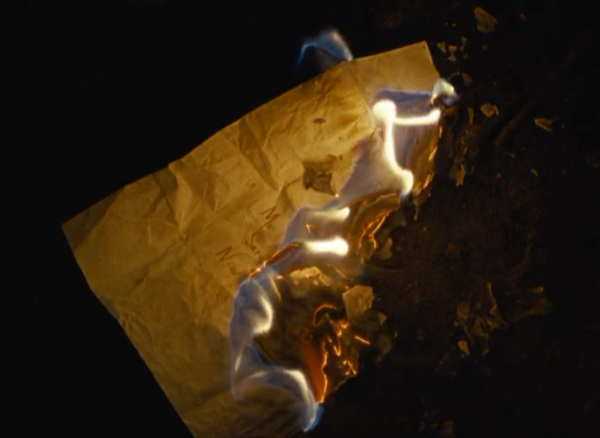
    In the second case, Northrup confides in a white indentured servant, a former overseer who drowned his guilt in alcohol and amassed a high debt. He offers to pay this man, with earnings made from playing fiddle at a nearby plantation party, to deliver a letter to his family. In predictable fashion, the white man—I mean, come on, he was an overseer!—betrays Solomon’s trust, and reveals the plan to Master Epps. Thinking on his feet, Northrup is able to talk his way out of the situation, thankfully not yet having given over the letter to be used as evidence against him. As he watches the letter burn, it seems all hope of escape turn to smoke and ash as well. Again we are reminded, along with Solomon, that white people are not to be trusted.
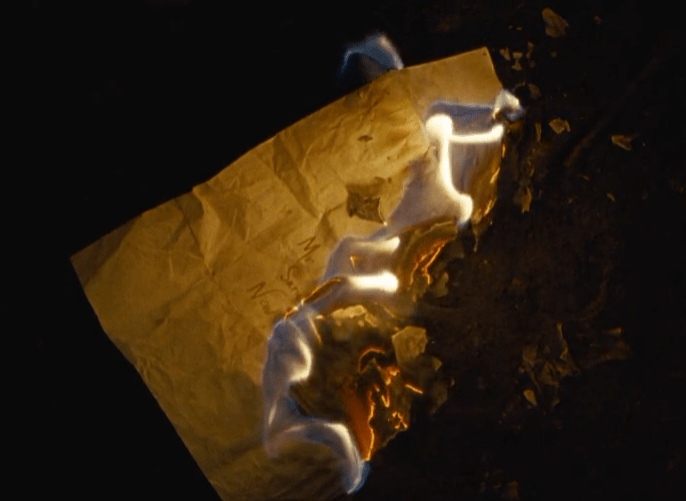
    Solomon burns the letter to his family.

    A side story in all of this, is that of Patsey, an enslaved woman who has earned the favor of Mr. Epps, by being twice as productive in the cotton fields as all of the men, and because Epps has taken to raping her on a regular basis. For this, she comes to Solomon one night, begging him to kill and bury her, because she lacks the will to commit suicide. Solomon refuses. Patsey is further punished for her own rape through regular abuse from Mrs. Epps, who can’t do much of anything to punish her husband for his infidelity. Mrs. Epps at one point throws a heavy liquor bottle, striking Patsey in the head.

    Another time she slices Patsey’s face with her fingernails. And later she starts denying Patsey soap to bathe, as a punishment, but also conceivably to make her less desirable to Mr. Epps. Unable to stand her own smell, Patsey sneaks off one day to get some soap from a nearby plantation, only to be accused of some other offense, and get whipped into unconsciousness. At first Mr. Epps leaves the whipping to Solomon, but because Solomon does so with a lighter hand, Epps takes over himself, spending the full of his drunken, jealous rage in lashing Patsey’s flesh to pulp.

    Patsey, after being whipped mercilessly by Edwin Epps.

    About three-quarters through the film, we are introduced to Samuel Bass, a carpenter from Canada, who speaks against slavery to Edwin Epps. By the end, this earns him enough trust for Solomon to confide in him, to tell him the truth of his origins, and to ask him to write a letter to friends in the North who might secure Solomon’s freedom. Shortly thereafter, the Northerners come to the rescue, and whisk Solomon away from the plantation, leaving Epps swearing that he will see justice for this wrong.

    During this sequence, Solomon runs into the arms of his friend Mr. Parker, a shopkeeper. It is a moving scene, if only because it signals an end to nearly two hours of psychological assault. But it’s also interesting in how it parallels the scene from the beginning of the film, where Abram runs and embraces the slave master. In the earlier scene, Solomon is left behind, calling after Abram. In the later scene, Patsey calls after Solomon. He remains long enough to embrace her, but ultimately has to leave her behind.

    Because of the intentional nature of film as a medium, it must be assumed that these scenes were designed to mirror each other. What does it mean, then, that where Solomon corresponds to Abram, the southern plantation owner corresponds to the northern shopkeeper? In both cases a black man runs into the arms of a white man, who is perceived to represent his salvation. Yet another instance of black people needing to rely upon the kindness of white people to improve their circumstances.

    Solomon gratefully embraces Mr. Parker for coming to free him.

    The “white savior” is a common trope, and one with a long history, from the lionization of Lincoln, to Atticus Finch in To Kill a Mockingbird, to white NGO activists in Africa, “saving” black folks from hunger, disease, or evil warlords. It is a trope, and by that I mean a fiction, created for white audiences, wherein they get to identify themselves with the “heroes”, as a counterbalance to guilt, to reaffirm their goodness, and to give them permission to distance themselves from the evils of their predecessors. In the process, it also denies black people any agency or any role in their own liberation. The official description of 12 Years A Slave, written by distributor Fox Searchlight, further illustrates that the film is meant for white audiences. It reads as follows (emphasis added):

    TWELVE YEARS A SLAVE is based on an incredible true story of one man’s fight for survival and freedom.  In the pre-Civil War United States, Solomon Northrup (Chiwetel Ejiofor), a free black man from upstate New York, is abducted and sold into slavery.  Facing cruelty (personified by a malevolent slave owner, portrayed by Michael Fassbender), as well as unexpected kindnesses, Solomon struggles not only to stay alive, but to retain his dignity.  In the twelfth year of his unforgettable odyssey, Solomon’s chance meeting with a Canadian abolitionist (Brad Pitt) will forever alter his life.

    First, in a movie about slavery, any kindness should be unexpected, so including that bit in the description is redundant. And any “kindness”, as such, short of complete liberation, is hardly worth mentioning, which also makes the description misleading. Where exactly do we see kindness in this film? Is it when William Ford gives Solomon a fiddle as a gift, to provide him “some joy over the years”? Is it when Ford cuts him down from the tree, or stands over him to prevent him from being murdered? Excuse me, but I should remind you, again, that none of this would’ve happened, and all could’ve been avoided, had Ford shown the only true kindness and bought Northrup’s freedom.

    The description of Northrup’s meeting with a “Canadian abolitionist” that “forever altered his life”, is perhaps the most misleading text of all. While Samuel Bass, the character played by Brad Pitt, is indeed a Canadian, he is not an abolitionist. That is, if we take “abolitionist” to mean a person who actively worked to undermine or dismantle the institution of slavery. Bass is a carpenter who was outspoken in his opposition to slavery, and who—let us praise him for his graciousness—actually saw black people as human beings.

    Here I would like to take a moment to show you a couple of the promotional posters for the film that were on display in Italy. Even though the film is about Solomon Northrup, about enslaved black people, and Chiwetel Ejiofor is the primary actor, these posters market the film to Italian audiences under the assumption that white actors like Fassbender and Pitt will draw a larger audience.

    Italian Promotional Posters for 12 Years a Slave

    I would like to juxtapose this marketing tactic with the official description of the film, which suggests that Samuel Bass “changes Northrup’s life forever”. Indeed, because Bass manages to contact Solomon’s friends in the North, which eventually leads to him being freed, his life is changed. But it needs to be mentioned here that Pitt is on screen for all of ten minutes total, in a film with a duration over two hours. And that really, it was the further intervention by Solomon’s associates in New York that led to his freedom.

    Solomon confides in Samuel Bass.

    Yet, to read the official description, and to look at the posters above, one might be led to believe that the role of Samuel Bass was greater than it was, maybe even that Pitt’s character formed a deep and meaningful relationship with Solomon Northrup. This, of course, is not an accident. Everything—every image used or cut, every word written—in filmmaking and marketing is meticulously intentional. The Fox Searchlight description, much like the film itself, was created in such a way as to appeal to white audiences, who need these examples of kindness to assuage the grief and guilt they necessarily feel from watching films about slavery. Acts of kindness like those of William Ford, or kind actors like Samuel Bass, remind white audiences that although slavery was such a terrible, terrible thing, there were some good white people, much like they are themselves. Without these things, the film would be plain unwatchable. For them.

    Finally, there is all the institutional praise: nominated for and winning multiple Golden Globe and BAFTA Awards, and waiting to find out which of its whopping nine Oscar nominations it will bring home. These awards, and the predominantly white organizations that distribute them, have often come under fire for excluding works created by and/or starring people of color. Even those relatively rare instances where awards were given to people of color, the choices have sometimes been contentious. As in the case of Denzel Washington, who became the second black man to win an Oscar, for his role in Training Day, a film which cast him as the villain, and ended with him being unceremoniously shot to death. There was also Halle Berry, who that very same year, became the first black woman to win the Oscar for best actress, for her role in Monster’s Ball, a film that saw her sexually ravaged by a racist white man.

    There are plenty of articles on these subjects, so I won’t go into depth, and merely say that in both films black people occupied roles that were palatable and indeed comfortable for white audiences. There is practically a requirement for black people in the US to be subservient or in some way deferential, to not be considered “angry”, or a threat. What better way to show a black woman’s deference to a white man on screen than to literally place her beneath him, and for him to dominate her sexually? What better way to deal with a black male threat than to gun him down like a dog in the street? These are the roles that the Academy decided were suitable to finally award black actors their prestigious awards. I say all of this, not at all intending to take anything away from the performances of black actors, directors, writers, etc. who by any metric would be considered excellent.

    What better way to show a black woman’s deference to a white man on screen than to literally place her beneath him, and for him to dominate her sexually? What better way to deal with a black male threat than to gun him down like a dog in the street?

    That brings us back to 12 Years A Slave, which is the answer to both questions raised above, even though they were mostly rhetorical. The single best way to portray black people’s deference to white people, the ultimate example of subservience in history is, of course, slavery. Now, the enslavement of black people was a real thing. It happened. Merely depicting it on screen is not really the issue. Unless you’re a voyeur like Quentin Tarantino, peering through the windows of history and culture, masturbating furiously, and then celebrating the outcome. No, the issue is which instances of slavery Hollywood chooses to put on screen, and afterwards shower with praise and awards nominations.

    12 Years A Slave is a safe film, because although the black man triumphs in the end, it isn’t before every attempt at dissent or to play a role in his own liberation is crushed beneath some white man’s heel. And, as I mentioned earlier, his liberation comes due to the kindness of “good white folks”, with whom white audiences can identify. In the case of Solomon Northrup, even in being liberated he remains deferential to the white heroes of the film.

    These are the sorts of roles that black people can fill to institutional acclaim, like Tom Robinson was deferential to “white justice” in Mockingbird, and eclipsed in significance by Atticus Finch and Boo Radley. On the other hand, you are not likely see books or films about figures like Nat Turner or Toussaint L’Ouverture or Malcolm X—who scared the hell out of white people—receive the same institutional acclaim. Oh, they went ahead and nominated Denzel for his portrayal of Malcolm, but of course he did not win it. In spite of being shot to death at the end of that film, too.

    Institutional acclaim, of course, comes from predominantly white institutions like the Academy of Motion Picture Arts and Sciences, which gives out the Oscars, the British Academy of Film and Television Arts (BAFTA), and the Hollywood Foreign Press Association, which gives out the Golden Globes. For this reason, a great amount of recognition from these organizations necessarily equates to a film being suitable—indeed highly favored—by white audiences.

    So to wrap things up, I would like to reiterate my main point: that 12 Years A Slave is a film for white people. And white people only. Now while I realize that it is a completely unrealistic expectation that black people won’t watch the film, given all of the recognition, the genuinely solid performances, and that the film is well-crafted, I hope to at least provide fair warning that this film was not made for us. That there is little for black folks to gain from watching it, unless there is some incentive for widespread rage and sorrow.

    While I can think of a few sociopolitical applications for rage and sorrow, I can say with certainty that they did not factor into any decision to write, direct, or distribute 12 Years A Slave. To those ends, a film about Nat Turner or the Haitian Revolution would have been a far better choice. Alas, because such films would not appeal to white audiences without significant historical revisionism, it may be awhile before we see them on-screen. Just ask Danny Glover how production on Toussaint is coming along.

    UPDATE (March 3rd, 2014): So, 12 Years A Slave won the Oscar for best picture. That in itself doesn’t necessarily validate my claims, but what I found interesting was the awards that the film was nominated for, and which ones it actually brought home. It won Best Picture, which goes to the production crew, that is the financiers of the film, including Steve McQueen, Brad Pitt, Dede Gardner, Jeremy Kleiner, and Anthony Katagaswas. Most fascinating was how the first person to the podium was Brad Pitt. A movie about enslaved black people, based on a book by a black author, adapted to screen by a black man, directed by another black man, principally starring black actors…and the first person to speak on its behalf is a white man. But I’m sure that was just a coincidence, simply a matter of seating order, and who happened to reach the stage first.

    Lupita Nyong’o also won the best supporting actress award for her portrayal of Patsey. Well-deserved with respect to her acting talent, but I would like to refer back to my earlier point about how these awards tend to be given to black folks only when they play roles that fit neatly within white people’s comfort zones for where black people belong in the social and historical hierarchy. Again, intending to take nothing away from Nyong’o, she won the award for a role in which she was brutalized and raped by a white man. Something I’m sure doesn’t correspond at all to Halle Berry winning the award for Monster’s Ball. Right?

    Then there was John Ridley, who won the award for Best Adapted Screenplay. I honestly had no idea who Ridley was before his name was attached to this film, but it turns out that he’s a pretty well-known public figure, a contributor for news outlets such as MSNBC and the Huffington Post. Then it came to my attention that in 2006, Ridley wrote an article for Esquire entitled The Manifesto of Ascendancy for the Modern American Nigger, in which he proceeds to offer up choice bits of internalized anti-black racism, presumably for white consumption, since no one with any love for black people could possibly write something so hateful.

    Ridley’s commentary is the sort that white pundits solicit when they need TheBlackOpinion™—that is, the alternative view called upon whenever black people present any kind of physical or ideological threat to white supremacy. Now, I would ask if you think it’s even remotely possible that Ridley’s views of Black Americans did not factor into his decision to adapt Northrup’s novel to the screen, and how he chose to adapt it? Or that his views were strictly confined to his own mind throughout the production of 12 Years A Slave, and were altogether unknown to everyone else in the production crew?

    Amongst the awards that 12 Years was nominated for, but did not win, were Best Actor (Chiwetel Ejiofor) and Best Director (Steve McQueen). Ejiofor, as Northrup, played the one role in the film where a black person attempted to rise above their circumstances. And ultimately triumphed. Perhaps because Northrup was not humbled into oblivion or killed at the end, his character exists in a space that white audiences find discomforting—even in spite of being fodder for white salvation—thereby disqualifying Ejiofor for the award. As for McQueen not winning Best Director, I think we need look no further than the title of the award itself. Director. That is, s/he who leads, presides over, controls, facilitates—verily a position of power with respect to a film’s production.

    But maybe I’m grasping at straws here, and the dynamics of race and power have absolutely nothing to do with the fact that McQueen is only the third black person in eighty-six years to be nominated for the award, and to not win it. To be clear, I’m saying that no black person has ever won the Oscar for Best Director. In case you’re wondering, though, the other two black nominees were John Singleton for Boyz in the Hood and Lee Daniels for Precious, two films that fit neatly within the white establishment’s comfort zone for how black people should be represented on the big screen: as violent criminals and beleaguered victims.

    That Daniels was also the director of The Butler, a film about a black man who spent a lifetime serving white people, and a producer on Monster’s Ball, probably isn’t a coincidence. That all three nominees were men invites further discussion about how gender intersects with race and power, especially given how the Academy has chosen thus far to recognize black women: as rape victims, sexual conquests, servants, magical negroes, “angry black bitches”, and victims awaiting white salvation.

    But maybe I’m grasping at straws here, and the dynamics of race and power have absolutely nothing to do with the fact that McQueen is only the third black person in eighty-six years to be nominated for the award, and to not win it.

    If in light of all of this, if you remain unconvinced that 12 Years a Slave is a film for white people, or more broadly that all film narratives featuring black people in Hollywood are measured against some standard for white palatability, then I concede the point. Because clearly the film was made for you, too, regardless of whatever race or ethnicity you claim.
  • Flexuality: Elastic Sexual Norms in the Work of Octavia Butler

    Flexuality: Elastic Sexual Norms in the Work of Octavia Butler

    Amongst the many rich and complex topics tackled by legendary science-fiction author Octavia E. Butler, few are more perennial than sexuality and the inherent moral questions it raises. Butler herself appears to take no moral position, simply presenting behaviors and situations that might be considered objectionable by some, and leaving it for them – be they readers or her characters – to discuss the implications.

    This essay will present an examination of how Butler challenges sexual norms, from the incest taboo in the Patternist series, to interspecies sex in the Lilith’s Brood trilogy, to pedophilia and rape in Fledgling, and arguably all three of these in her short story Bloodchild. These stories show us how norms, particularly sexual ones, are flexible between worlds, cultures, and especially individuals.  Her challenge to human moral hegemony is implicit, but there is also an acute self-awareness throughout her work that suggests she wanted to inspire discussion.

    Interspecies Sex, Heteronormativity, and Ménage à trois

    The Xenogenesis trilogy presents a world in which humanity has destroyed the Earth in an unnamed conflict, the means unknown except that they are absolute.  However, due to the efforts of a benevolent alien species known as the Oankali, the remnants of humankind are salvaged, and the planet is entered into a slow restorative process.

    The Oankali’s benevolence, however, is not without conditions.  In order to rein in what they consider to be the cause of humanity’s destruction – that is, a biological predisposition towards hierarchical behavior – they use their biotechnology to sterilize us.  As it turns out, the purpose of sterilization is not to prevent procreation, but to see it continue along the paths set by the Oankali, which involves their direct participation.  In 1987’s Dawn, the first book of the series, Butler broaches the subject of interspecies sexual relations and crossbreeding.

    The Oankali are masters of DNA manipulation, to the point that they can retain a complete memory of a being’s entire genetic makeup for use in duplicating them.  The Oankali nature as well as their culture – including gender and sex roles – all revolve around assimilating the genetic traits of other species in order to strengthen their own gene pool.  For the Oankali this is more practical than moral – a matter of evolution, even survival, for their species.

    The Oankali have three sexes: male, female, and ooloi, this third being neither more male nor female, and in fact completely different from both.  The ooloi are essential to Oankali reproduction, which involves all three sexes, and is otherwise impossible.  The ooloi role is to extract gametes from both male and female and to induce fertilization within its own body before replacing the new zygote into the female and chemically stimulating the womb for bringing the new life to term.

    In her essay Eugenicism: The Construction of Queer Space in the Works of Octavia Butler and Samuel Delany, Freda Fair discusses how Butler uses Oankali social constructions to flex rigid sexual and gender norms.

    [Gender roles] are constructed in order to extend along a prescribed sociological trajectory that rests on the existence of a biologically attainable end. Thus, whether it is about pregnancy, menstrual cycles, and erections all have a locale inside of the normative sociological gender-sex trajectory of male and female… [Fair p. 78]

    Fair acknowledges the disruption of the gender binary for the mere existence of a third, but also points out that how and where Oankali and humans enter “male” and “female” spaces is dictated by the ooloi.  After all, it is the ooloi who receive sperm from the male, which is traditionally a female role, but perhaps with greater agency in that the sperm is actually withdrawn rather than deposited.  The ooloi also withdraws the egg from the female, a process for which there is no analog in human sexuality, and renders male and female identical with respect to their “passive” role in the reproductive process.

    Because sharing genes between species is endemic to Oankali evolution, the ooloi are capable of facilitating interspecies reproduction as well.  The challenge to sexual norms is first introduced in Dawn, when main character Lilith Iyapo participates in sexual intercourse with Joseph, a human man, and Nikanj, an Oankali ooloi.

    Nikanj freed one sensory arm from Joseph’s waist and extended it toward her.  She stayed where she was for a moment longer, proving to herself that she was still in control of her behavior.  Then she tore off her jacket and seized the ugly, ugly elephant’s trunk of an organ, letting it coil around her as she climbed onto the bed.  She sandwiched Nikanj’s body between her own and Joseph’s, placing it for the first time in the ooloi position between two humans.  For an instant, this frightened her.  This was the way she might someday be made pregnant with an other-than-human child. [Dawn, p. 161]

    The above circumstance clashes with our social norms on three distinct levels, each with a different degree of severity.  The mildest conflict is the matter of sexual relations between three people.  Threesomes, or ménage-a-trois if taken to the degree of full companionship, has found acceptance at various times up to the modern era, though usually in an “unofficial” capacity.

    In other words, what people do in their private lives may differ greatly from their own account of their activities in the public sphere.  Either way, three-way sexual relationships at the very least have often existed in opposition to the “romantic ideal” of sex as an expression of love between two people.  It especially conflicts with institutional marriage, which has often throughout history and across cultural boundaries been a social imperative.

    Within the context of science fiction, perhaps only the most conservative of readers would take issue with three-way sex in Dawn, were it between two men and a woman, or two women and a man.  Three men or three women might be viewed with greater disdain for it then also being gay sex.  Which brings us to the second clash with normativity.

    If gay sex is so objectionable, even more so than a threesome, how are we to accept Butler’s concept of a third sex?  Not male, not female, but…well, it would seem our rigid adherence to binaries leaves us without a term to apply to the situation.  This is demonstrated through Lilith’s interaction with Jdhaya, the first Oankali she meets:

    Lilith glanced at the humanoid body, wondering how humanlike it really was. “I don’t mean any offense,” she said, “but are you male or female?”

    “It’s wrong to assume I must be a sex you’re familiar with,” it said, “but as it happens, I’m male.”

    Good. “It” could become “he” again. Less awkward. [Dawn, p. 13]

    Humans are most often viewed with respect to a sex and gender binary: males and masculinity versus females and femininity.  Yet there are countless individuals of varying circumstance who find this polarity to be restrictive – socially, psychically, and even physically.  Many people have, as a result of rational reflection, or intimate feeling, concluded that gender is fluid, and as such they may be plotted anywhere along the continuum between male and female.  A person may be biologically female, but identify as male, or more commonly as a gender that exists between the two poles.

    Those who fall under the umbrella term transgendered experience a distinct disparity between their own sense of their gender and their biological, i.e. sexual, manifestations.  That is to say, those who are born biologically male or female strongly identify – physically and psychologically – as the other, or as neither, again existing somewhere along the continuum between the two.  To be clear, this is not some mere schism between the biological and the psychological, but the very reality of the transgendered individual, one that happens to exist apart from those hedged in by the binary.

    As with all things that conflict with social norms, the struggle of these individuals to be recognized for the sex and/or gender with which they personally identify, often makes them the target of reprehensible discrimination and abuse.  Although recent years have seen more publicity and sincere dialogue around issues of sex and gender, these circumstances and how those they affect have been treated is hardly new.  For that we can assume that even were the circumstances of Dawn to have come about in the 1800s, or were they to occur tomorrow, our reaction as a society would probably be much the same.

    That being the case, it is no wonder at all that the humans of Dawn have a sort of knee-jerk rejection of the Oankali, and especially the ooloi, for their conceptually foreign gender roles and truly “alien” third sex.  Were we as a society able to even accept those amongst our own species who do not fit within rigid sexual and gender “norms”, we might be more amenable to the ways of the Oankali.  Alas, there is one more major point of contention between humans and Oankali in matters of sex and sexuality.

    The interspecies sex taboo in human society gets smacked with the label “bestiality”, which contains all manner of assumptions about the differences between “man” and “beast”, and the presumed eminence of humankind above all other creatures.  It is, by this pretext, beneath us to engage in sexual activity with other animals.

    However, if we examine it objectively, separating out the socially conditioned revulsion attached to it, the real moral quandary inherent to sex with animals is that it may amount to rape.  The real separation between humans and animals is a communication barrier.  We cannot know their minds, and as such we cannot presume or even ascertain consent.  Were this communication barrier to be removed, and with it perhaps the idea of human superiority, I imagine that the stigma towards bestiality would have to be reexamined.

    The issue of interspecies sex as a matter of superiority also evokes a terrible historical precedent: the morality and legality of so-called miscegenation, a thoroughly racist concept defined as marriage, sex, or procreation between different racial groups.  The imperative against interracial relations was perhaps most pronounced amongst Europeans, and indeed the term miscegenation most often applied specifically to relations between Europeans and other groups, not so much between two non-European races, or between two European ethnicities.

    The reasons for this are clear.  The social and pseudo-scientific consensus in Europe and its colonies around the world was that races demarcated the boundaries between species, or perhaps “sub-species”, there being three: Negroid (African), Mongoloid (Asian), and Caucasoid (European).

    In some cases, miscegenation was not merely a social taboo, but seen as the equivalent to bestiality for the fact that other races – especially peoples of Africa – were regarded as less than human.  It was not enough for non-Europeans to be seen as “other”, but implicit in that otherness was inferiority.  Indeed, it was for their less-than-humanity that the enslavement of African people could even be justified.  It was within that institution that human beings could be treated exactly like animals: used for labor, selectively bred for favorable outcomes, traded and sold as nothing more than property.  So of course it would be prohibited for a “real” human being – i.e. a European – to lay with a mere animal.

    Yet, for all the stigmas against miscegenation, slave-owners mating with the enslaved – often rape – was a common practice.  There is an unconscionable paradox in how slavers could have sex with enslaved peoples in spite of their being viewed as animals, while actual bestiality remained forbidden.

    This is not a defense of the practice of having sex with animals, but rather a challenge to an obvious hypocrisy.  If the enslaved were mere animals, then by their own rules, the European slavers should not have taken to having sex with them.  Of course the truth is that they were human beings, but social acknowledgment of that fact would cancel out the “less-than-human” justification for slavery.

    More relevant to my analysis, however, is the idea of superiority and inferiority between species mentioned earlier.  This human tendency towards hierarchical behavior – the Oankali consider it indivisible from human nature – is what lies at the heart of such despicable concepts as miscegenation, and perhaps why, instinctively, the humans in the Xenogenesis trilogy reject sexual integration with the Oankali.

    It must create even more confusion for the humans who reject the Oankali “other” in being forced to acknowledge the latter’s superiority, demonstrated through their absolute control over the human population.  In this way, if interspecies sex is to be viewed as bestiality, then the Oankali become analogous to the human, while the humans, whose ability to mate is strictly controlled by the Oankali, and procreation only possible through the ooloi due to sterilization, have been relegated to the role of beast.

    Dawn presents a plurality of views and levels of acceptance of the Oankali and their integration of humans into their way of life.  In a way the ooloi and the sexual conundrum they present for humanity serve as an open question – about normativity, about propriety, and even morality.  There is an implicit challenge to human society, to examine and re-examine our understanding of sexuality, that we might find it more flexible than our social norms dictate.

    Incest, Inbreeding, and Eugenics

    The incest taboo is examined in the Patternist series, in which a god-like body-swapping telepath by the name of Doro aims to produce a superior race through thousands of years of eugenics.  This necessarily involves a lot of inbreeding, with Doro himself often mating with his own children.  The obvious stigma towards parent-child breeding becomes a bit muddier when we consider Doro is never in the physical body of the parent when mating with one of his children.  In Mind of My Mind, main character Mary – a daughter of Doro – reflects on her feelings towards him:

    I remember once when I was about six years old I was sitting on his lap frowning up into his latest face.

    “Shouldn’t I call you ‘Daddy’?” I asked.

    Until then, I had called him Doro, like everybody else did.

    “I wouldn’t if I were you,” he said.  And he smiled.  “Later you won’t like it.” [Mind of My Mind, p. 17]

    As Doro anticipated, he and Mary do engage in a regular sexual relationship, one that is only possible where Mary does not regard him as her father. Indeed he is only ever “Doro”, not “daddy”, and any thoughts to the contrary are lost along with the biological body Doro inhabited in order to conceive her.  Still this raises the question of whether or not parentage is merely a biological reality, a social construct, or a combination of the two.  More importantly, is the problem implied by the incest taboo a physical one or a moral one?

    The incest taboo seems to exist in one form or another in cultures throughout the world, and therefore its origins are near impossible to determine. Whereas many taboos originate from practical concerns – for example the taboo of eating pork stemming from pigs carrying disease – the incest taboo cannot be so easily pinned down.  Practical concerns about incest, to do with genetic disorders flourishing within small or isolated populations, were certainly not on the minds of people in the time of Sophocles, whose Oedipus Rex may be viewed as a critique of incest to the point of suggesting that it ultimately brings one’s doom:

    Blind, who once had seeing eyes,
    Beggared, who once had riches, in strange guise,
    His staff groping before him, he shall crawl
    O’er unknown earth, and voices round him call:
    “Behold the brother-father of his own
    Children, the seed, the sower and the sown,
    Shame to his mother’s blood, and to his sire
    Son, murderer, incest-worker.”
    [Oedipus Rex, vv. 456-478]

    In the case of Oedipus, there were no physical consequences to his having sexual relations with his mother, and there was no moral quandary so long as neither knew the other’s true identity.  Sophocles, however, transmitting the norms of Greek culture at the time, made Oedipus’s incest a teleological problem, one that aside from any social or physical consequences invokes punishment from fate.

    The situation between Mary and Doro in Mind of My Mind is a sort of gender reversal of the Oedipus story, what has sometimes been called an Electra complex.  Generally, this complex is used to describe daughters with an affinity to men who resemble their fathers.  But for Mary, perhaps because of the different socialization she receives as a part of Doro’s collective, it seems perfectly natural for her to have sexual relations with him.  Even so she still must separate his identity as “Doro” from his identity as “daddy”.

    The fact that he has different bodies is interesting because it makes us examine the multiple dimensions of sex: physical and emotional.  On the one hand, the man she sleeps with does not have the same physical body as the one that gave birth to her, but he does have the same mind.

    The practical concerns of incest around inheritable diseases or conditions are a non-issue given that procreation is not the purpose in this case.  The moral concerns, once removed from the practical, become completely subjective and vary between individuals, groups and societies.  They do not apply at all within Doro’s breeding collective.

    On the contrary, the idea of inbreeding for the sake of preserving racial or sanguineous “purity” has been common for centuries, such as the “cousin marriages” of European royal families.  Even the degree to which inbreeding or intermarriage is considered acceptable varies from place to place and culture to culture.  In ancient China, for instance, patrilineal intermarriage was expressly forbidden, while matrilineal was permitted.  Neither would be acceptable in ancient Rome or contemporary Western society, such as the United States where incest is legally prohibited.

    Apart from social stigmas, looking to incest as a vehicle for the propagation of genetic disorders retains some practical legitimacy for human beings.  The opposite is true for Doro and his brood, as he mates relatives in order to transmit favorable traits into future generations.  While he is no geneticist, his immortality grants him the luxury of an eternity of trial and error.

    The implicit question Butler raises here is whether or not incest could be acceptable once removed from any practical concerns, such as the propagation of negative genetic traits.  And if we are to look at sex strictly as a means of procreation, then where inbreeding allows for the evolution of the species, would it not only be acceptable, but perhaps favorable?

    Pedophilia, Rape, and the Age of Consent

    Fledgling, Octavia Butler’s final novel, addresses the issue of pedophilia, or at least perceptions of it and the moral questions it raises.  The story revolves around the relationship between humanity and the Ina, a humanoid species that evolved in parallel, and which forms the basis for the many vampire legends.  Like vampires, the Ina have a master-slave relationship with humankind.  They all live together in communes, with the humans providing food (by way of their blood), sex, and companionship. The arrangement is ostensibly mutual, except that the humans are enthralled to the Ina by way of some chemical influence exerted through the exchange of bodily fluids.

    Main character Shori is a fifty-three year old Ina, who in spite of her age, retains the appearance of a prepubescent girl.  One of her thralls a man in his twenties named Wright Hamlin, who is torn between his supernatural attraction to Shori and the sense that he is having sexual relations with a child.

    I looked at him and saw that he was looking intently at me.

    “It doesn’t hurt anymore,” he said.  “It feels good.  Which is weird.  How do you do that?”

    “I don’t know,” I told him. “You taste good.”

    “Do I?” He lifted me, squeezed past the division between the seats to my side of the car, and put me on his lap.

    “Let me bite you again,” I whispered.

    He smiled. “If I do, what will you let me do?” [Fledgling, p. 11]

    At this point in the novel, Wright has yet to become aware of Shori’s true age, but there is a subtle sense of awareness in how he lifts her and places her on his lap, as he might handle the child she appears to be.  Yet only moments later he is asking sexually suggestive questions.  If his awareness was in doubt, it becomes unambiguous a few paragraphs later:

    “You’re way too young. Jailbait. Super jailbait.”[p. 12]

    The truth, of course, is that Shori is much older than Wright, and that under normal circumstances their relationship might be looked upon with disdain of a different sort, though ultimately with no real moral or legal implications.

    Sexual relationships between adults and children are stigmatized for the assumption that children are not emotionally mature enough to consent.  The age of consent is a tricky one, however, as emotional maturity varies by individuals more than by age.  And indeed, the legal age of consent also varies from country to country – as low as twelve and as high as eighteen.

    However, the argument can be and has been made that maturity is a consequence of biology, and that it corresponds to a certain level of brain development.  Recent studies show that the brain does not stop “maturing”, and with that a person doesn’t make truly “adult” decisions, until reaching their mid-20s:

    Previous research has shown that most teens’ gray-matter structures – including those involved in decision-making – are less advanced than those of adults, as you would expect, until now no one had studied teens’ white matter, which works along with gray matter to produce decisions. The key part of white matter is called myelin, a fatty substance that coats the individual neural strands, or axons, that make up white matter. Myelination of axons begins during childhood and is completed at the end of adolescence, around the mid-20s. [Cloud 2009]

    For this reason, if we tie the age of consent to biological development, it might be increased significantly.  I anticipate that such a change in the law would not be well received anywhere in the world.

    If the issue is consent, and if sex without consent is rape, then we must also examine the relationship between Shori and Wright in a different way.  Shori’s supernatural nature has a seductive effect on Wright, and if we assume he has some revulsion to having sex with a child under normal circumstances, it can even be said that he is being compelled by Shori to act against his will.  The question of consent, then, has less to do with adults and children, than with Ina dominion over humans.  Is the sexual influence Shori exerts over Wright, then, tantamount to rape?

    The Ina exert influence over their human companions – called symbionts – through biochemical exchange.  As Shori’s father explains to her:

    We addict them to a substance in our saliva – in our venom – that floods our mouths when we feed. I’ve heard it called a powerful hypnotic drug. It makes them highly suggestible and deeply attached to the source of the substance. They come to need it. [Fledgling, p. 79]

    This exchange not only enthralls the human symbionts to the Ina, but makes them physically dependent.  Ordinarily Ina outlive humans by centuries, but where one perishes prematurely, their symbionts must quickly be bonded with another, or risk dying themselves soon afterwards, from withdrawal.

    While this relationship between Ina and human sounds rather one-way and predatory, the word “symbiont” suggests what it really is – a mutualistic symbiosis in which both gain considerable benefits. The Ina are able to feed, and their venom nearly doubles their companions’ life expectancy.  Still, in spite of the mutual benefits, due to the catalyst to the symbiosis being an imposed biological imperative, the question of consent still remains.  Where a human comes to accept their role as symbiont, is it really a choice, or are they essentially drugged into compliance?

    When the story begins, Shori has lost most of her memory, and the first few chapters are spent with her relearning the ins and outs of human-Ina relations by way of her own connection to Wright Hamlin.  As she recalls the true nature of the relationship, however, she offers Wright the choice of leaving her.  She informs him that he does have the ability to do so at such an early stage, but that soon afterwards their separation would be impossible – and for Wright, fatal.

    We come to understand that this is how most if not all Ina-human symbioses play out, that in spite of the biochemical tether, there must be some initial consent on the part of the human before the bond can be realized.  So as to the question of whether or not Shori can be said to be raping Wright Hamlin, the answer would appear to be no, for how enthusiastically he agrees to remain as her symbiont.

    Still, the ethical lines are blurry, because who is to say at which point a human becomes enthralled, and whether or not that initial consent is given without any influence from the Ina.  Indeed Wright had already been subjected to Shori’s venom when he made his choice to stay with her.

    Furthermore, these “consensual” symbioses do not preclude situations where Ina simply prey upon humans for their blood without forming a permanent bond with them, usually so as not to exhaust their own symbionts.  It also does not stop Ina from using their influence to manipulate humans into serving their other interests, from keeping their existence a secret to protecting their communes.

    Where the taking of blood, and with it a transmission of Ina venom, also includes sexual relations, but does not lead into a new symbiosis, it does seem to be a case of rape.  The human victims, however, for what they receive in exchange – pleasure beyond anything they’ve ever experienced – is likely to disagree. This is trademark Butler, because here we find the moral conundrum, or rather the flexibility in our sexual norms explored between human and Ina.  Again, Butler merely asks a question, but does not give any definitive answer, leaving the matter open to discussion.

    Intersections and Gender Fluctuations

    Bringing it all together is Bloodchild, which although only a short story, seems to exist at the intersection of sexual themes explored in Butler’s other works.  It features the interspecies sex of Dawn, the issue of consent from Fledgling, and arguably from a social standpoint, the incest of Mind of My Mind. In addition, it introduces the concept of male pregnancy, automatically at odds with normative notions of human sexuality and gender roles.

    The premise is that humans, having long fled hostile circumstances on Earth, settled on the world of the Tlic, a sentient race of caterpillar-like creatures.  During the initial encounters, humans fought against the Tlic and were eventually subjugated and corralled in the way of farm animals.  They were heavily drugged to dampen their will, which allowed the Tlic to use them as living incubators for their own young.  Over time this relationship changed, however, with Tlic and humans entering into a consensual family dynamic, one son from each human family appointed to be the host – known as N’Tlic – for the single fertile female from each Tlic family.

    Gan, the point of view character of the story, is the appointed host, chosen by T’Gatoi, a Tlic politician who oversees the Preserve, a closed human colony.  T’Gatoi was a long time member of Gan’s shared family, having been hosted by Gan’s own father, and growing up with his mother. With respect to a traditional human family structure, T’Gatoi is the equivalent of Gan’s sister, and yet she chooses him to bear her young.  She chooses him at a young age, and many of his formative years were spent preparing him for the task of becoming an N’Tlic.

    However, once Gan witnesses a rather traumatic Tlic birth, he has second thoughts about his role, and even considers suicide as an alternative.  In the end, however, he chooses to go forward with the pregnancy, for the fact that he loves and trusts T’Gatoi, but also to spare his sister, who would’ve been chosen in his absence.

    Gan lays with T’Gatoi in a ritual that can only be regarded as sexual for the fact that it will eventually lead to T’lic reproduction, but also in Butler’s choice of imagery.

    I undressed and laid down beside her. I knew what to do, what to expect. I had been told all my life. I felt the familiar sting, narcotic, mildly pleasant. Then the blind probing of the ovipositor. The puncture was painless, easy. So easy going in. She undulated slowly against me, her muscles forcing the egg from her body into mine. [Bloodchild, p. 53]

    This scene clearly disrupts the traditional gendering of sexual intercourse, both in terms of the male and female roles and the expected outcome.

    In the essay Would You Really Rather Die than Bear My Young? – the title being a question T’Gatoi asks Gan – author Elyce Rae Helford discusses how many attempts to challenge traditional gender roles fall flat, because they attempt to deny gender altogether, while still using the binary encoding of certain actions and activities as “masculine” and “feminine”.  Critical theorist Alice Jardin calls this encoding process gynesis.

    The undulating body of T’Gatoi, forcing the egg into Gan’s body, recalls human intercourse from both female and male positions: T’Gatoi’s action embodies both possession of the female egg and male penetration and ejaculation. [Helford, p. 264]

    The sex scene from Bloodchild is an example of gynesis, but Helford suggests that a deeper reading presents a legitimate challenge to the encoding process, perhaps even destabilizing the binary altogether rather than merely reversing roles.

    Her argument rests on the fact that there is little focus on the genders of Gan or T’Gatoi, or upon the role of the male Tlic, whose function, much like human males, is to fertilize the eggs.  Tlic males, however, are short-lived and serve no additional role in the raising or protection of the child as is common amongst the males of other species, including humans.  So here we have a complication instead of just a re-encoding, with different aspects of the traditional roles split between males and females and across species.

    Beyond this, I would argue that Butler’s imagery also adds a symbolic dimension to the sexual dynamic between male and female, human and Tlic. Consider, for instance, that the very body of T’Gatoi is phallic, which corresponds to her occupying the traditionally “male” role of being the penetrator and impregnator. Yet one might also look at the very name of T’Gatoi’s race – Tlic – and see that it is an anagram for clit, which in spite of being a female organ, is still phallic, and is in fact the female equivalent to the penis.  Was this intentional on Butler’s part, or perhaps something that surfaces on a more unconscious level?

    Either way, Butler has created a sort of concentric juxtaposition of gender roles, wherein a female entity in the vague shape of a male organ invokes the name of its female counterpart only to fulfill a traditionally male role in sexual intercourse.  All of this and perhaps Butler’s only true goal was a mind fuck.

    Conclusion

    The science fiction of Octavia E. Butler is known for its ability to, as Elyce Rae Helford puts it, “bridge the gap between ‘high’ and popular culture”.  As readers we are never merely exploring a foreign galaxy or settling on an alien world. Earth is not merely being invaded by hostile alien forces, nor are our bodies simply host to malignant parasites. These are the tropes of popular science fiction.  Butler grazes them to create a familiar framework, but always plumbs to new depths, using science fiction as a tool through which to ask implicit questions challenging our notions of normativity or propriety.

    We often regard gender and sex and sexuality as rigid constructs, or perhaps we don’t view them as constructs at all, but rather an inseparable part of reality itself.  There are always limits to which people are even willing to think about such charged issues.  It is as if even thinking outside the norms, let alone issuing any sort of open challenge, is to participate in social deviancy.

    People often fail to consider the subjectivity of norms, that under different circumstances – social or biological – that the behaviors we take for granted might be regarded as aberrant.  Or more importantly that this is not merely a hypothetical or a thought experiment, but that people actually do live under different circumstances, and those behaviors we regard as aberrant are simply different, and only stray from the “norm” for the fact that they are in the demographic minority.  Going even further, we fail to consider that differences are not so black and white – or straight and gay, or masculine and feminine – but exist within a spectrum, separated by degrees.

    Even where there is “tolerance”, the implication is that there is still something wrong and only by one’s graciousness can there be any civility around it.

    “I have no problem with gay people,” someone might say, “I just don’t agree with their lifestyle.” They do not realize, nor even consider, that sexuality is not a choice, but an inexorable aspect of being human.

    Human.  Perhaps therein lies the limitation. The Oankali in Lilith’s Brood attributed hierarchical behavior to our very natures and claimed that it was responsible for the “mass suicide” that destroyed most life on Earth.  Given our enthusiastic willingness to destroy each other for our differences, this prospect sometimes seems more science than fiction.

    I would argue, however, that these shortcomings of humanity are not genetic – such as could be weeded out by several generations of Oankali engineering – but memetic, meaning that they are rooted in the propagation of cultural rather than biological data.  Those who study memetics say that our bigger human brains developed to accommodate memes, to better enable us to transmit them, and that in fact they, rather than genes, are the selfish driving force behind our unique sociobiological trajectory.

    If that is true, then we do not need cosmic intervention from the Oankali, manipulation by the Ina, the eugenics of Doro, or to be corralled by the Tlic.  We need to instead take a hint from the Oankali, only assimilating new memes instead of genes, in order to assure our preservation as a species. Namely we need to better cultivate an awareness of the fact that differences can co-exist, and in fact, must co-exist peacefully.  We also need to more aggressively propagate very old memes such as compassion and humility, not just as abstract ideas, but as concrete practices.

    Where do we begin if not with open and candid dialogue that acknowledges these degrees of difference between us, that recognizes the subjectivity of who or what is “other”, and how anyone should be treated because of it?

    Freda Fair and Elyce Rae Helford might disagree with me that Ms. Butler did not have any agenda – political, social, or otherwise – in the crafting of her stories. I contend that these commentaries, these implicit challenges to the construction of social orders, naturally emerged out of the kind of person that Butler was – one who simply dared to think beyond what manifests as the “norm”.  Butler, in the afterword to Bloodchild published in a 2005 collection, said:

    Other people have done all the print interpretations of my work: “Butler seems to be saying…” “Obviously, Butler believes…” “Butler makes it clear that she feels…” Actually, I feel that what people bring to my work is at least as important to them as what I put into it.

    Regardless of our different interpretations, I think that all readers of Butler come into alignment in our acknowledgement of what she brings to the discussion of sex and sexuality.  We should be thankful that she decided to put her thoughts down on paper, that we might discuss them amongst ourselves and add some diversity to the meme pool. Thinking “differently” about issues of sexuality – flexing sexual norms – is not only purposive in the ongoing struggle to achieve sexual justice, but creates a pretext for our continued examination of what it even means to be human.

    References

    1. Butler, Octavia E.  Mind of My Mind.  New York: Grand Central Publishing, 1977. Print
    2. Butler, Octavia E.  Dawn.  New York: Grand Central Publishing, 1987. Print
    3. Butler, Octavia E.  Fledgling.  New York: Grand Central Publishing, 2007. Print
    4. Butler, Octavia E. “Bloodchild.” Isaac Asimov’s Science Fiction Magazine June 1984: 34-54. Print.
    5. Sophocles.  Oedipus Rex.  429 B.C.
    6. Fair, Freda.  “Eugenicism – The Construction of Queer Space in the Works of Octavia Butler and Samuel Delany”  Digital Commons at Macalester College, 2006. Print.
    7. Helford, Elyce R. “Would You Really Rather Die than Bear My Young?: The Construction of Gender, Race, and Species in Octavia E. Butler’s Bloodchild” African American Review 28.2 (1994): 259-71. Web. 17 May 2011.
    8. Cloud, John. “The Teen Brain: The More Mature, the More Reckless” Time.com. 02 Sept. 2009. Web. 07 Mar. 2011.
  • Those who cannot remember the past…

    Those who cannot remember the past…

    …are condemned to repeat it:

    The following passage is from The Principle of the Mercantile System, written in 1776 by Adam Smith, who ironically, has become a sort of symbol of the same type of “free market” capitalists who Smith seems to be criticizing here. More striking than any of that, though, is how much this passage so precisely reflects our current situation. The emphasis is my own, to highlight the similarities.

    A great empire has been established for the sole purpose of raising up a nation of customers who should be obliged to buy from the shops of our different producers, all the goods with which these could supply them. For the sake of that little enhancement of price which this monopoly might afford our producers, the home-consumers have been burdened with the whole expense of maintaining and defending that empire.

    For this purpose, and for this purpose only, in the two last wars, more than two hundred millions have been spent, and a new debt of more than a hundred and seventy millions has been contracted over and above all that had been expended for the same purpose in former wars.

    The interest of this debt alone is not only greater than the whole extraordinary profit, which, it ever could be pretended, was made by the monopoly of the colony trade, but than the whole value of that trade, or than the whole value of the goods, which at an average have been annually exported to the colonies.

    It cannot be very difficult to determine who have been the contrivers of this whole mercantile system; not the consumers, we may believe, whose interest has been entirely neglected; but the producers, whose interest has been so carefully attended to; and among this latter class our merchants and manufacturers have been by far the principal architects.

  • Indian Killer and the Skewering of White Liberals

    Indian Killer, a novel by Sherman Alexie, is a mystery thriller in which the Seattle area is terrorized by an unknown murderer.  Because of the killer’s calling card – scalping the victims – and due to the fact that all of the victims are white men, many people in the area suspect that the killer is Indian.  Fears and racial tensions further escalate when a six-year boy is kidnapped right from his family home.  Attacks on Indians by white people lead to retaliatory attacks, and before long the situation is out of control.

    Matters are further exacerbated by the ramblings of a conservative talk show host from the mold of Rush Limbaugh or Glenn Beck – the one gives the killer the name “Indian Killer”.  It is a strange moniker for its ambiguity, able to be interpreted as a killer who is an Indian, or one who kills Indians.  And indeed, the situation taken as a whole, beyond just the actions of the killer, encompasses both interpretations.

    Alexie writes the story in the tradition of all good mysteries, leaving the reader suspecting just about anyone and everyone as a possible suspect, giving them motive and opportunity.  Yet the end gives the reader no conclusive evidence as to the killer’s identity, and it is even suggested, with elements of magical realism, that the killer is something other than human.

    Yet the identity of the killer is not even the point.  More than a thriller, the book is a social commentary, one pointing at the bubbling racial tensions in ostensibly liberal and harmonious Seattle, such that a single event could unravel the social order.

    As Alexie has been known to do in his other work, he points a finger at the self-satisfying ramblings of white liberals, who for all they may understand intellectually, lack any real personal understanding of the Indian condition, or of the fact that there may not even be any such monolithic condition.

    One such character, a college professor named Dr. Mather, who has studied Indians in depth, and even lived on a reservation for three months, makes the following assessment about the Indian Killer:

    “The Indian Killer,” began Dr. Mather, “is an inevitable creation of capitalism.  A capitalistic society will necessarily create an underclass of powerless workers and an overclass of powerful elite. As the economic and social distance between the worker and elite increases, the possibility of an underclass revolution increases proportionally.  The Indian Killer is, in fact, a revolutionary construct.” [p. 245]

    His assessment draws the ire of student Marie Polatkin, who already takes issue with white men presuming to know so much about Indians for all they’ve read about them in books – books, she points out, mostly written by other white men.

    While the professor does well to cite the classic Marxist argument regarding the relationship between a generic and hypothetical proletariat and bourgeoisie, he does not take into consideration the specifics of individual or group experiences.

    While such revolutions have occurred, and broadly speaking, for the reasons suggested, there are countless micro-dynamics that unfold within the greater conflict.  To look only at the surface, at the seemingly universal aspects of revolution, is to ignore the specific factors leading up to it.  In the case of the Indians, it also ignores history, as for the most part, for the unprecedented devastation visited upon them by European colonists, they did not and have not responded in accordance to the Marxist framework.

    The professor’s windy exposition also fails to consider one obvious fact: that the killer is an individual, one who could be killing for any reason at all, such as mental illness or revenge.  Most importantly, the professor’s assessment – and it resonates with the presumptions of the white population of Seattle at large – is contingent upon the killer being Indian at all.

    This presumption is entirely racist, not only for fingering an Indian as the killer without any evidence, but in suggesting that for the mere fact of the killer’s ethnicity that he/she should behave in a certain manner.  Furthermore, even if he could otherwise confirm that the killer was Indian, he cannot with any certainty say that he or she would be motivated by forces conceived of within a European social context.

    For me this brings back to mind the ambiguity of the book’s title.  Are we supposed to be following the story of a killer who is allegedly Indian, or the wider circumstances that continue to “kill” Indians?

    Perhaps the real Indian Killer is not the man or woman scalping random white men, but the society that, as the novel’s blurb reads: “colonizes and marginalizes a group of people while failing to value or understand it”.

  • Beauty and Self-Hatred: A Reading of Sherman Alexie’s Flight

    In the novel Flight, by Sherman Alexie, there is a visible current in which the author establishes the white person aesthetic as “beautiful”, in contrast to the “ugliness” of Indians.  As it is common in American (U.S.) society for whiteness and white people to be held aloft as the standard by which all else be judged, this current became clear to me almost immediately.

    The main character is a half-Indian, half-white teenager named “Zits” – a nickname he adopts for the fact that he has a severe case of acne.  The character defines himself by his worst physical quality, but also his “Indian-ness”, in spite of his blended heritage.  That Indian-ness and ugliness should be mutually inclusive, at least in the narrator’s mind, is established early in the story.

    I’m ashamed of … being tall.  And skinny.  And ugly.  I’m ashamed that I look like a bag of zits tied to a broomstick.  […]I wonder if being Indian causes acne.  […] I’ve inherited his [my father’s] ruined complexion and black hair and big Indian nose. (p. 4)

    This self-identification with Indian-ness and ugliness is juxtaposed against the other side of his heritage, which he regards as beautiful.  We are first exposed to the “white is beautiful” theme as Zits speaks of his mother and mourns the fact that he did not inherit her qualities.

    She was a white woman.  Irish I guess.  I have a photograph of her, too, and she is gorgeous.  My eyes are green, like hers, but I’m not pretty.  I wish I looked more like her. (p. 5)

    Throughout the story, Zits has the unusual opportunity to occupy the bodies and circumstances of other people throughout time.  The pretext for this “time-jumping” is that he experience the universality of human brutality, but the equally ubiquitous – if only less common – instances of compassion.  But there is a subtext tucked within this main premise wherein the character also has the opportunity to be “beautiful” by inhabiting the bodies of white people.  The first is Hank Storm, an FBI agent who serves on the front lines of some sort of shadow war against Native Americans.  When Zits first notices his new body, he thinks:

    And so they had to take my zitty teenage Indian mug and replace it with a handsome white guy’s face.  Yes, I am looking at a very handsome white guy in the mirror.  His hair is blond.  His eyes are blue.  His skin is clear. (p. 40)

    Here we notice two things: first, that Hank Storm has blond hair and blue eyes, two qualities that are quintessentially “white”, those regarded as pristinely beautiful for the fact that they belong almost exclusively to white people.  Second, the man has clear skin, another way the narrator notices how different – that is, how beautiful – this white man is compared to himself.

    Later, while Zits is still occupying Hank’s body, we meet his wife, who again is clearly described as a white woman, and also the most beautiful woman he has ever seen.

    I can’t believe this woman is my wife.  She is beautiful.  Black hair, blue eyes, pale skin.  She is maybe the most beautiful woman I have ever seen in person. (p. 58)

    For their prevalence, it is my impression that Alexie is drawing intentional parallels between white and beautiful, Indian and ugly.  Also for the emphasis he places on features that are unmistakably white versus those that could also belong to people of a different race.

    During another time-jump he inhabits a pilot named Jimmy – who also has pale skin, blond hair, and blue eyes.  Jimmy has relationships with two women, one of which is his wife, and the other a younger acquaintance.  Zits describes the mistress, Helda, as:

    Red hair, green eyes.  And she’s pretty.  Very short and very curvy.  Cheerleader curvy. (p. 115)

    There is a connection drawn between Helda and Zits’ own mother, who had earlier was identified as white – specifically, Irish.  Helda’s features automatically speak to her whiteness even were the connection to the mother not made, as red hair and green eyes are second only to blond and blue in identifying a person as white.  Both are described as beautiful.  In contrast, Zits describes the wife – Linda – as:

    …older, gray-haired, a little bit pretty and a little bit chubby.  Her brown eyes are huge. (p. 117)

    Linda’s race is left ambiguous, although for Jimmy and Helda’s ultra-whiteness, the reader might assume that she is white as well.  I get the sense that the ambiguity is intentional, because Alexie does not miss any other opportunity to identify a character by ethnicity.  Linda has features that could belong to any other race or ethnicity, and perhaps for those features she can only qualify as “a little bit pretty”, not for the overwhelming beauty of Helda or the other quintessentially white women in the book.

    One of the last instances of tethering beauty to whiteness comes towards the end of the book, as Zits finds himself back in his own body, just seconds before he made the lethal choice that set the book in motion – to shoot and kill random strangers in a bank, and to be shot in the head himself.  Visiting this choice a second time, he takes a particular interest in a woman and her son.

    He is maybe five years old.  He has blue eyes and blond hair.  He’s wearing good shoes. A  jean jacket.  Khaki pants.  Blue shirt.  He’s beautiful.  A beautiful little man. (p. 158)

    Again the emphasis on blond hair and blue eyes.  Alexie even verges on hyperbole by saying beautiful twice, and by making the child’s clothes blond and blue – Khaki pants, blue shirt – as if to punctuate the statement that white is beautiful.  If there is beauty in compassion and ugliness in brutality, then perhaps this child is also the punctuation on Zits’ decision not to carry out mass murder a second time.

    Throughout the text, Zits makes it clear that he regards himself as ugly, in contrast to the beauty of the many white people he encounters.  When in his final time-jump he occupies the body of an Indian man – and not just any Indian man, but his own father – we are again presented with an unappealing physical image.

    Not only do we know him to possess the features that Zits regards as ugly in himself, but Alexie adds an extra veneer, of dirtiness – the man is homeless, drunk, and has vomited on himself – and bloodiness – he is ill, vomiting up blood.  He meets a couple of strangers, a couple who are, at least ostensibly, of the white liberal ilk that in spite of the most benign of intentions (they call the homeless man an ambulance and the woman even goes so far as to say he is important to them) try to smother all the nuance of racial and social dynamics beneath a pretext of compassion.  Alexie shows us the kind of rage the white liberal attitude can provoke, but instead of recognizing it as justifiable, he paints this man as ugly both inside and out, the point being not merely to cast Indian as ugly and white as beautiful, but to identify this current as one of self-hatred.

    Self-hatred is explicitly named on page 137 – “Maybe I can defeat her with my rage and self-hatred”, as an answer to a white woman’s display of compassion towards him – and again on page 156 as Zits’ father affirms his own father’s low opinion of him, repeating “I ain’t worth shit!” over and over again.  It is the same self-hatred and rage that underlies Zits’ predisposition at the start of the book, and ultimately his violent actions that set the story in motion.

    But in the end, Zits makes the “beautiful” choice and rather than killing the people at the bank, turns himself in to the police.  He is in turn offered a chance at redemption, but more importantly a chance to love and find beauty in himself.

    This shift in self-image and potential – a word Zits sneers at early in the story – is punctuated by his new foster mother telling him that he is handsome, and showing him how to remove the acne from his face.  The story ends with Zits insisting that his foster mother refer to him as Michael, his real name.

    Where I am left wondering, however, is in how redemption and self-love are still necessarily facilitated by white people and via whiteness.  It is the white cop, his white brother, and white sister-in-law, who foster Zits and who offer him not only to wash away those physical traits that he identifies as ugly, but also to participate in the quintessentially “American” – that is, white – experience, living with them and going to baseball games.

    A psychologist early in the book tells Zits that he’s “never learned how to be a fully realized human being”, something she connects to mainstream U.S. (white) culture, things like wearing a tie and having newly shined shoes.  Zits, while strongly identifying as Indian, rejects these norms, but at the end of the story seems to embrace them.  It is interesting too how he distinguishes between Indian-ness and American-ness, the latter interchangeable with whiteness for all that it seems to be inclusive of people of color in the United States – which is to say, not very inclusive at all.

    A baseball game!  Jesus, how American.  Next thing you know, Dave and the firefighter and I will be playing catch in the backyard.  (p. 176)

    In Flight, Alexie seems to be asking whether or not self-hatred can be neutralized through assimilation – that is, can Zits’s hatred of his own Indian-ness be dissolved into a claiming of his whiteness?  Indeed whiteness itself is a product of assimilation, with Irish, Italian, German, and other European ethnicities blending within the “melting pot” to create a new racial paradigm.  Alexie clearly recognizes the construct of whiteness – an institution that transcends individuals – identifying it explicitly when Zits occupies the body of his own father:

    Jesus, I wonder if this homeless guy understands the difference between white and whiteness.  And then I wonder if I should be so condescending, considering I am this homeless guy. (p. 136)

    Yet in spite of this clear acknowledgement of whiteness, at the same time Zits becomes Michael he embraces his white foster family and their “American” cultural norms.  It seems Zits is on the verge of the same assimilation.  Should, then, his father have accepted the compassion of the white liberals rather than demanding their respect?

    Could there be salvation or redemption in assimilation?  Just who is redeemed in such a situation – the person of color who by default is excluded from the mainstream American experience only to be invited in by the sheer grace of white people?  Or is the redemption for the white people themselves who seek to alleviate the guilt they possess for how their own institutionalized supremacy has caused such exclusion?  Alexie may be hinting at this question, if not its answer, on page 177:

    [Officer Dave] is trying to save me.  And he’s smiling about it.  I guess that’s okay.  Maybe I can save him, too. (p. 177)

    Is Alexie’s message, then, a more saccharine one, that through some sort of joint effort people of pallor and people of color can come together and redeem each other or their collective society?  I sincerely doubt it. I think Mr. Alexie, known for his wit and subversiveness, is taking aim and laughing at the idea.

  • Jihad, Violence, and Misrepresentation of Islam in Global Conflict

    The following article is the second part of an independent study intended to examine and deconstruct some of the major biases towards the practices and ideologies within the Islamic tradition. The first part discussed the role of women in Islam, which from a uninformed Western perspective appears to be one of lower status and oppression, but upon closer examination takes on an entirely different character. In similar fashion, this article aims to examine how Islam as a religion gives license – if it does so at all – to the many violent activities that have taken place in its name. This is a question that burned in every Westerner’s mind after the tragic events in the United States on September 11th, 2001, and then became even more urgent in the wake of other terrorist attacks around the world. Muslim apologists all around the world answered the call, and stepped forward to defend their religion against hatred, prejudice, misinformation, as well as against those “within” who would misrepresent it to the world.

    Qur'an
    Qur’an

    In that Islam as a blanket term accounts for the religion, politics, philosophy, moral values, lifestyles, and practices of 1.2 billion people, it would be plain absurd to assume that the actions of a violent few represented the entire global community. If it represented even a tenth, the world would be a far more hostile place.

    However, even in accepting the apologists’ arguments, that Islam was essentially a peaceful religion, and it was only through a myopic and agenda-driven misinterpretation of the holy texts that the “Islamist” perspective emerged, there was still a problem. It seemed to me that all around the world, where there were “insurgencies” or other forms of violent conflict, at least one side was Muslim. The separatists in Chechnya, the Abu Sayyaf in the Philippines, the Jemaah Islamiyah in Indonesia, the Moroccan Islamic Combatant Group in Spain, and last but not least, Osama bin Laden and Al Qaeda – active in multiple places.

    If Islam is a peaceful religion, I asked myself, then how are so many violent excursions perpetrated by Muslims? A very obvious rebuttal would be that for every such crime not committed by Muslim terrorists, they may have in turn been committed by Christian terrorists, being as though Christians constitute the religious majority worldwide. This possibility suggests many things. One scenario is that due to the sheer number of Muslims worldwide, that these so-called insurgents are Muslim is just a matter of probability. If 1 in 5 people in the world are Muslim, and the insurgents represent far less than even a thousandth of one percent, there is a good chance that they would fall under the umbrella of Islam.

    A second possibility is that where these kinds of crimes are perpetrated by Christians, they do not seem to cite their religion as any sort of reason for their actions – at least not in the same way as Muslim terrorists, who would call their actions a military jihad – which in Islam refers to a struggle against those who would persecute, oppress, or destroy the religion. Finally, a third possibility is that if the mass media is guided mostly by Jewish and Christian interests, then the role of Islam in various terrorist or separatist acts may be overplayed. Since virtually no one will accept the idea that Islam’s role in terrorism is a matter of mere probability, I will examine the latter two scenarios in order to come to a satisfactory conclusion.

    First we must gain a greater understanding of this term “jihad”, which seems to be at the center of Islamist rhetoric and the rhetoric of an increasingly anti-Islamic Western media. Second we will examine three specific cases of where Islam appears to have played a role in the actions of separatists and terrorists worldwide, and to what extent it was involved as a motivational factor for these actions.

    Perhaps we will find that much like with violent antagonists who happen to be Christian, the religion of the so-called Islamists is merely a general fact of their existence, not actually relevant to their actions. And where this is the case, perhaps we will also find that the Western media has completely distorted and misrepresented the facts, in order to play off of a growing enmity towards Islam for the sake of sensationalism or anti-Islamic political agendas.

    On the other hand, we may find that for all the image advocacy of Muslim apologists, there is indeed a violent character to the religion, one that most Muslims – fortunately – ignore or re-interpret into a place of lesser prominence. So to begin, what is this thing called jihad? From Arabic to English it is often translated as “striving” or “struggle”.

    Jihad and Qur’anic Interpretation

    Unlike what the Western media would have us believe, the word Jihad in no way means or even implies a “holy war”. Before we go any further, there is a certain understanding that must be gained with regards to how we look at Islam, or more specifically its most sacred text, the Qur’an. For this we will turn to a beautiful analogy given by David Dakake in Islam, Fundamentalism, and the Betrayal of Tradition (henceforth “Betrayal”):

    If we were to use an image to illustrate the Qur’anic revelation, it would be that of an individual standing upon a mountain at night as lightning flashes on him and in a valley below. As this individual looks out upon the landscape shrouded in darkness, he would see…sudden illuminations of different portions of the mountain and the valley, but there would not appear to be any immediate relationship between these different illuminated regions… [A] relationship does exist…but that relationship is not explicit. It is hidden amid the darkness.

    The idea here is that unlike the Bible, there is no chronological continuity within the Qur’an. Its different passages appear to have been transcribed in the order that Mohammed received revelations from God, which were specific to the different situations that he and his followers encountered in the early years of the religion. More importantly, this lack of continuity means that to the untrained or willfully ignorant eye, the various passages can be read completely outside of the context within which they were written. This combined with a certain disparity in meaning between the original Arabic and the English translation can be plain disastrous for someone not trained properly in the reading of the holy text. These poorly versed ideologues include both the Islamists and the Western observers who have already made up their mind that Islam is a violent religion, and seek confirmation in the Qur’an, which inevitably becomes a self- fulfilling prophecy.

    An example of this is presented in Betrayal where a Qur’anic passage states that Christians and Jews should not be taken as awliya’. The Arabic word here is often translated as “friend”, which is accurate within certain contexts. In this case, such a translation would confer upon the passage a hostile or at least uncivil meaning. Yet even if we accept this meaning, a mandate not to befriend someone is not also automatically a justification for making an enemy out of them. Such an interpretation would negate the whole range of neutral relationships that exist between friends and enemies. Therefore this passage provides no Qur’anic support for terrorism, nor does it give the detractors of Islam their “proof” that it is a violent religion. However, in the specific context of this passage, awliya’ does not mean “friend” at all.

    At the time this passage was written, the early Muslims – under Mohammed – were being persecuted by the pagans of Mecca, who regarded them as a threat. Since the Muslim community was small and far weaker militarily than the Meccans, they were inclined to turn to the Christian and Jewish tribes in Medina for protection. As it happens, awliya’ can also mean – and in this passage does mean “guardians”. The intention here, as it is most commonly interpreted by Muslim scholars, was to get the young Muslim community to rely upon its own strength, and faith in God and the Prophet to guide them through these difficult times. To turn to Christians or Jews was to compromise the strength or rightness of Islam, and therefore it was not allowed. Those who turned to Christians or Jews, it was said, were no longer Muslim, but Christians or Jews instead. But as it states nowhere in the Qur’an that Christians or Jews are to be holistically regarded as enemies – and on the contrary there are passages specifically obligating Muslims to protect the “People of the Book” and their institutions – the aforementioned passage becomes even less useful as justification for violence.

    Now that we understand a little better how easy it can be to misinterpret the Qur’an, either by improper translation or contextualization, we can turn back to the concept of jihad. The more prominent, more important, and as it is called “greater” jihad in Islam – yet which is never mentioned within popular journalism – refers to an internal struggle. It is the same kind of struggle that the Christians refer to as resisting sin, i.e. fighting temptation, doubt, disbelief, or detraction. The greater jihad is about holding fast against any ideas and practices that run contrary to the Prophet’s revelations and teachings (Qur’an and Hadith) and the examples set by how he lived his life (Sunnah). This concept of jihad has absolutely zero manifestation in the physical world, meaning that it has nothing to do with military action.

    However, there is also the “lesser jihad”, which does indeed refer to taking offensive action against certain others. These others, however – unlike Islamic separatists and Western propagandizers would have us believe – are not merely non-Muslims, but those who threaten Muslims physically (e.g. through invasion or conquest), and those who would prevent Muslims from practicing their religion and lifestyles freely or try to lead them away from their faith. Still, even in this lesser jihad, the first counter-offensive is said to be ideological – or the enemy “fought with the tongue”. In other words, lesser jihad, while under certain circumstances giving license for military action, still mandates an attempt at diplomacy. In any case, the offensive must be initiated by the other, and so jihad is then a defensive action.

    The only justification for Muslims to attack when they are not themselves directly provoked, is when other Muslims – considered part of the ummah or global community – are threatened. It is for this reason that groups like Al Qaeda are able to recruit and send so-called mujahideen to other locations – under the pretext of fighting for the rights or freedoms of Muslims there. However, for reasons that will be discussed later, these initiatives are far from the proper execution of lesser jihad. So here we have a word – jihad – which is rich with meaning, either as a spiritual battle within the self, or a verbal or physical battle with external forces in order to preserve the integrity of Islam and the security of its adherents. For a word so rich, to make it interchangeable with a blatantly violent term like “holy war” is reckless, irresponsible, and rife with prejudices or hidden agendas. Now let us look beneath the surface of some of these agendas to determine if jihad does indeed apply, and for that matter, what role Islam as a religion plays in the given conflicts.

    Chechnya

    Chechen Soldier
    Chechen Soldier

    The first case we shall examine is that of the Chechen separatists in the Northern Caucasus Mountains – a territory officially controlled by the Russian government. During the time of the Soviet Union, that which was recognized as one entity was actually an alliance of several republics with a somewhat shared ideology. For reasons varying from ethnic distributions to quasi-nationalist identity, soft borders were drawn within the collective to distinguish the disparate groups within this collective. But when the Soviet Union collapsed in 1991, these borders became widely accepted as the lines of demarcation between 15 new independently sovereign nation states.

    The Chechen Republic, however, was not one of these 15, which led to two wars of independence – one in 1994, and the other in 1999. The first ended in a cease-fire, which led to Chechnya’s establishment as an independent republic – albeit not globally recognized – and in an ironic twist, the second was lost, resulting in it being reincorporated as a subject of Russia. As of today there is still some unrest between the Russians and the Chechens, but upon the establishment of a pro-Moscow regime, most of the insurgency has died down.

    Now what role did Islam play in this conflict? At a glance it would seem to have been almost irrelevant. The Chechens desired independence not on the basis of any Muslim identity in opposition to the Russian Orthodox, but on the basis of self-identification as a separate ethnic and linguistic group which manifested as nationalism even where there wasn’t a recognized state. As is the case in many political conflicts, different principles and aspects of a religion are taken to justify the cause of one side or the other.

    This does not mean that the religion itself necessarily advocates the cause itself, the struggle, or the methods employed. As Anatol Lieven says in his book Chechnya: Tombstone of Russian Power, Muslim identity for the Chechens was just a fact of life, an integrated aspect of their culture like any other. Its role in the conflict against the Russians was far less significant than the aforementioned spirit of nationalism. Yet at the same time it did become just something else for the Chechens to use to distinguish themselves from the Russians, and for that matter, from all non- Chechens.

    Islam is held to as something that makes the Chechens different from the Russians, and – in so far as they are convinced that they are better Muslims than any of the other supposedly Muslim peoples of the Caucasus – superior to their other neighbors. (Lieven 355)

    So if Islam is secondary to Chechen nationalism as far as a motivating force behind their rebellion, and their Muslim identity does not exist in any clearly manifest opposition to the Russian Orthodox, why is the fact of their Muslim identity so well-publicized in discussions of the conflict?

    The answer seems to be that upon the launch of the global “war on terrorism” – spearheaded by the United States – a media frenzy ensued which sought to characterize the perceived enemies on the basis of some common trait, to categorize them in a way that placed them in some clear opposition to America and its allies. This common trait, due to many – but hardly all – of the perceived enemies claiming it for themselves, became Islam. The problem with categories, though, is that they form the basis for sweeping generalizations, and how individuals and particular groups fit within them is often not examined.

    Perhaps for the Russians – who even prior to 9/11 had initiated a propaganda campaign against the Chechen separatists – the Americans’ crusade against “radical Islam” gave them a reason to dump the Chechens into the Islamist classification simply because of their opposition and the mere fact of their identity as Muslims. Whether or not the Chechens subscribed to the ideologies of more insidious extremists – which they appear not to – was hardly the point.

    The intention [of branding the Chechen separatists as “Muslim fundamentalists”] has generally been threefold: to appeal to Western audiences with the line that the war has been a sort of Western crusade against a common Islamic enemy; to argue that the Chechens are too ‘primitive’ to have developed a modern nationalism and sense of national identity, and to suggest that as a simple, primitive people, they have been misled by religious propaganda into acting contrary to their own best interests. (Lieven 357)

    Yet, in spite of this, it should be noted that the Chechens mere identification as Muslims became just cause for many would-be mujahideen to mobilize in the name of jihad and fight in the Chechen wars. The Chechens of course were not likely to turn down the help, but at the same time, this does not mean that they allied with Islamist terrorists on any other front. After all, their fight was strictly with the Russians, and on the basis of national sovereignty, not any opposition between Islam and the “West” or any other conceivable faction.

    The Philippines

    The second case to be examined is that of the separatists in the Philippines, namely the Islamist groups the Abu Sayyaf Group (ASG) and the Moro Islamic Liberation Front (MILF). From the start, just in identifying these two groups, we discover a distinct separation with regards to their motives, and methods – and even an ideological opposition between them. This immediately makes any sweeping classification such as “Muslim fundamentalists” subject to examination.

    Moro Islamic Liberation Front
    Moro Islamic Liberation Front

    Between the two groups, the ASG is better identified as an Islamist group, based on their stated goals and the means by which they seek to achieve them. While their stated objective is the formation of an independent Islamic state in Mindanao – much like the MILF – except with the added intention of making that state exclusivist. Towards that end, their particular spin on Islam involves violent attacks against Filipino Christians in the region. Furthermore, they see their objective as only one part of a global initiative to establish Islam as the world’s dominant religion – something that in their view can only be achieved through armed conflict. As such, they have claimed responsibility for numerous terrorist attacks, quite disproportionate to their rather small membership. Their perspective and excessive aggression actually puts them on the extreme fringe even amongst other militant Islamist groups. If their objectives and methods were not enough to place them in the same camp as Osama bin Laden and other such radicals, there is the fact of a direct connection between the two.

    The founder of the ASG, Ustadz Abdurajak Janjalani, met bin Laden in Afghanistan. He was recruited for the purpose of creating a staging point for Al Qaeda in the Philippines, as an alternative to bin Laden’s base of operations in Afghanistan, which was starting to feel pressure from the outside. Still, even this connection does not help in drawing a line between Islam and terrorist activity, because much like with bin Laden’s own relationship to the rest of the “Muslim World”, the views of Abu Sayyaf do not correspond to the majority of people in Mindanao. Furthermore, as evidence has shown, the goals of the ASG are becoming less and less about Islam – if it ever had anything to do with it – and more about the potential gains of the individuals involved.

    For the past three years the ASG has been effectively devoid of any unified command structure, essentially operating as a loose collection of bandits and warlords motivated less by ideology and self-defined religious piousness than pure financial gain and greed. (Lumbard, et. al 21)

    As stated earlier, the Moro Islamic Liberation Front – another group labeled as radical Islamists – are not allied with the ASG or on the whole aligned with their objectives. The MILF, similar to the ASG, wish to establish an independent Muslim state – but not as part of any agenda to establish Islamic global dominance or to destroy other religious groups. More than anything, the members of MILF wish to succeed on the basis of their identity as Moros – an ethnic group separate from the Filipino majority.

    While Islam is certainly a characteristic of that identity, it does not exist in any true opposition to the Christianity of the Filipino majority. For this reason the MILF’s desired state does not necessitate religious exclusivism, nor do the MILF engage in any sort of attacks due to their opponents being Christian. Much like the Chechens, the fact of the Moros being Muslim and that they are involved in armed conflict against the Western- allied Philippines government, merely gives license to them being classified as Islamists. However, at the very least, in their opposition to the terrorist methods of groups like Abu Sayyaf, the Moro Islamic Liberation Front should be given separate consideration. More importantly, their objectives on behalf of their identity as Moros should be separated from their identity as Muslims.

    Osama bin Laden and Al-Qaeda

    Osama bin Laden
    Osama bin Laden

    The final case – and of course there can hardly be an essay discussing Islamist terrorism without mentioning him – will examine the motives of Osama bin Laden and the members of his Al-Qaeda network. When bin Laden’s name is mentioned, the most likely terms you will hear associated with him are “terrorist”, “Islamic fundamentalist”, and “anti-Western”. His name was known amongst political commentators and military strategists for his role in the Afghan war against the Soviets, and perhaps there was a slight buzz in the public consciousness after the embassy bombing in Somalia.

    However, it was not until he claimed responsibility for the attacks against the United States on September 11th, 2001 that he became a household name all across the globe. Yet, for all of his notoriety, how much do we – the general public – really even know about bin Laden? What are his ultimate objectives? What in his ideology places him at in such vehement opposition to the United States and its allies? And what does Islam have to do with any of it?

    According to interviews and video recordings, Osama bin Laden sees himself as an executor of God’s will. Yet this only seems to work in cases where God’s will is as believed by bin Laden himself and his fellow ideologues. At the risk of blatant apostasy, he cannot claim to be receiving any true transmission from Allah, as that would make him a prophet, and central to Islamic belief is that Mohammed was the seal, and that no other prophets would follow him. Therefore, “God’s will” becomes a mere mechanism through which bin Laden appeals to other Muslims, who like he does, have some reason for mobilizing for armed struggle.

    What needs to be recognized, however, is that these reasons have less to do with Islam as an ideology and practice – indeed as a religion – than it does with political objectives. So as not to misrepresent the issues here, it should be noted that Islam has and does create a sort of ideological gap between itself and many aspects of so-called Western culture, much as it does between itself and Far Eastern culture, or any other culture removed from its sphere of influence. The separate roles of men and women in society and the relationship between religion and government are just a few examples. This gap, however, does not in any way necessitate violence between Muslims and any other group of people.

    As we have seen in the other scenarios, conflicts between Muslims and others are often founded upon situations that have little to do with religion and more to do with nationalism, ethnocentrism, or desires for independence. These isms are not in any way specific to Muslims or really at all related to Islam as a religion. Of course, for Muslims, there is no distinct separation between Islam and culture – the former often the backbone of the latter – and so can appear to be the basis for opposition. Osama bin Laden understands this relationship between Islam and culture, and exploits it to great effect.

    The disparate ethnic groups and nationalities from which bin Laden draws his support sometimes have as little in common as their self-identification as Muslims and some grievance against a perceived “Western” enemy. Under different circumstances, some of these groups may even have been in opposition to one another for different reasons. But if bin Laden knows anything, it’s rhetoric, and it is his clever manipulation of words that brings people together under the auspices of a unified cause, regardless of individual reasons for participation.

    He (Allah) said “Stand by your brother be he oppressor or oppressed.” When asked how were they to stand by him if he were the oppressor, He answered them, saying “by giving him guidance and counsel.” They should all unite in the fight against polytheism and they should pool all their resources and their energy to fight the Americans and the Zionists and those with them. They should, however, avoid side fronts and rise over the small problems for these are less detrimental. Their fight should be directed against unbelief and unbelievers (bin Laden in 1998 interview)

    In the above quote we see an example of how bin Laden shifts to the back burner any ideological splits between Muslims for the purpose of uniting against a perceived common enemy – in this case Jewish people and Americans. He cites decontextualized Qur’anic verses and speaks in broad terms, as being any more specific would better reveal the clear split between mainstream Islamic ideals of peace and bin Laden’s own agenda of violent aggression.

    As far as bin Laden’s objectives are concerned, there seems to be no all-encompassing “end game”. He has several different objectives, all of which involve an oppositional relationship with the “West”, but they are as disparate as the people from whom he draws his support. In order to understand these objectives it helps to understand a bit of bin Laden’s background – most significantly the influence of the Muslim Brotherhood and one of its chief ideologues, Sayid Qutb.

    Qutb, after a visit to the United States, felt as though American ideals and American values were in direct moral opposition to his understanding of Islam, and thereby, how societies should operate. This opposition became a more pressing issue for Qutb – an Egyptian – as he saw the increasing influence this culture was having on his country by way of its pro-Western and secularist government. The connection between bin Laden and Qutb came by way of the latter’s brother, Mohammed Qutb, another member of the brotherhood who felt the same crisis of consciousness between his world and the West.

    Osama bin Laden, by way of the same ideology, appears to want nothing less than the complete elimination of American/Western influence on the Middle East, whether by ideological transmission or physical presence in the region. However, as massive and complex entities as culture and ideology are not so simple to “purify”, bin Laden’s objectives appear to place him in the midst of a battle with no foreseeable conclusion. The conflict between “Islam” – here signifying regions and peoples with a Muslim majority – and the “West”, apart from the ideological dichotomy, is mostly an extension of European colonialism. Although most of the Europeans’ physical presence has been withdrawn, many of their ideals and the systems they put in place remain.

    By way of this residual influence, the stain of colonialism has created a lingering resentment in the hearts and minds of Arabs, Persians, and others in the region. This resentment only becomes more pronounced in places and situations where Western powers strong-arm Muslims in their own territories, as in the case in the Israeli-Palestinian conflict and the current U.S.-led war in Iraq. It is not so difficult for bin Laden, then, to use this resentment, and the actuality of a Western offensive against Muslim people, to rally support against this common enemy.

    However, in spite of the language of rhetoricians on both sides, none of these conflicts is the eighth crusade, and therefore it is also not a conflict between Islam and Christianity, or Islam and any other belief system. Islam is merely a characteristic of the people involved in a struggle that is quintessentially political.

    A Curiously Western Slant

    Lastly, in examining how Islam has been misrepresented as a violent religion, we need to be aware of how Western media contributes to this image. We have to be careful of slanted misinformation, espoused to promote an agenda, as in the book Endgame by two former U.S. military generals, Thomas McInerney and Paul Vallely. On the one hand, the book states that the vast majority of Muslims are “peaceable people”, which would appear to align it with the defense of Muslim apologists. Yet in the same chapter, the authors state the following:

    Militant Islam has often been at war with the West – from the time of Mohammed, when Islam conquered Christian North Africa, to the end of the seventeenth century… Radical Islam is seeking to breathe new life into the history of Islamic jihad – a history of warfare against all nonbelievers. (McInerney and Vallely 164)

    And later:

    A pan-Islamic state [the goal of Radical Islam] would…lead to the restoration of a great Islamic empire – creating that time when the Prophet and his successors swept through the world. (ibid 165)

    So here we have a sentence – no, a word – that suggests that Islam is a benign religion, while in the same breath the authors attribute “radical Islam” to the Prophet Mohammed himself and broadly to over a thousand years of Islamic history. In this blatant contradiction, where do we see the strongest push? Will readers even remember that the authors said the majority of Muslims are “peaceable”? Or will they remember this completely fallacious assertion that Islam throughout its long history has been inherently violent and intent on the destruction, conversion, or suppression of the “West” and all “infidels”?

    The idea of Muslims as peaceable here seems only to be present to deflect the inevitable accusations of anti-Islamic prejudice. It is exactly this kind of literary trickery that allows the biases against Islam to perpetuate. Just as that peaceable Muslim majority is relegated a place of little significance in the authors’ broader perspective, so too are they mostly ignored when the United States wages its “War on Terrorism”. This fictitious war, although it has named many targets, has invariably taken place on the soil of Muslim countries, where most of the people killed have been this peaceable majority.

    Conclusion

    The role of Islam in violent conflict worldwide is not universal. For some people in some situations it becomes a way of distinguishing them from their enemy. For others it becomes the mantle for a fight against injustice, but no different than the use of Christian or Buddhist or Jewish principles for the same reason. For yet others it becomes a veneer – a façade – for agendas that are political in nature, but that just so happen to involve Muslim people.

    In most cases, the fact that people are Muslim is just that – a fact, a characteristic – one that has little to do with their goals or methods. Therefore we can say with certainty that there is no particularly violent character to Islam as a religion, but that like any other broad ideology and practice, it can be used as a tool by which to justify action – violent or non-violent, social or political, religious or secular.

  • Women, Islam, and the Paternalism of White Feminists

    The following article is part of an independent study intended to examine and deconstruct the biases of the author (and undoubtedly many others) towards the practices within “Islam”. The quotations there acknowledge that such an umbrella term was made prominent by Westerners (i.e. non- practitioners) and is often mistakenly used to group many ideologies under one category, to the detriment of acknowledging the many differences between them. I will continue to use the term Islam to highlight the fact that this article may need to be subjected to further scrutiny to acknowledge that the assessments contained within do not apply universally to any group of people or ideologies. Aside from casting a negative light on a religion, my biases present the additional risk of stigmatizing the people who participate in it, and it is for that reason most of all that I am writing this article.

    It should be understood in advance that I am writing as someone who is mostly secular in orientation, and a skeptic who feels a need to challenge anything that would be claimed as “truth”. That being the case, I must also put my own orientation to the test, to be willing to abandon my preconceptions about religion – particularly that it is necessarily any more misguided than scientism or any other secular schools of thought. It should also be noted that where I have any grievances towards Islam, it is not due to any exaltation of Western ideals. Instead my biases come out of my own personal ideals – such as a strong sense of justice – which while certainly shaded by Western ideology often fall outside of that context. That is to say, I am not making any qualitative comparisons between “Islam” and “the West”, because I am equally inclined to subject both to indictment.

    So it must be said that my bias did not emerge out of some self-fulfilling prophecy that there was anything inherently wrong with Islam, as is often the case where the self must find fault with the “other” to maintain its integrity. Instead it emerged where Islam came into ideological conflict with my own ideals. Therefore Islam can easily be “redeemed” if by further examination I find that my preconceptions on the whole are incorrect. With all of this in mind, one of the few points of contention that I have with Islam is what I have perceived to be a great inequality between genders. I acknowledge right from the start that this preconception is based on the absolute minimum of information about Islam, some of it drawn from sensationalist pop-journalism, the rest from my own conjecture based on what I’ve observed. Focusing on two particular situations that appear to demonstrate gender inequality, I will gather more information, and attempt to either affirm or refute my preconceptions.

    The first issue to be discussed is the practice of hijab – the concealment of women to varying degrees behind special types of clothing. My first “understanding” of this practice was that it was to hide women from the eyes of men who were not their husbands or family, to prevent any sort of infidelity. Implicit within the practice seemed to me to be this idea that if women dared to reveal their physical merits they would be advanced upon like meat for the wolves. More importantly, it seemed to imply that women did not have within themselves the fortitude to stave off these unwelcome advances, that due to some inherent absence of morality they would succumb to base desires.

    In this way it seemed to me that Muslim men were “protecting” their women – not with regards to their honor or peace of mind – but as property. My preconceptions are strongly rooted in my own culture’s history of gender inequality and the resistance to it that has emerged and become prominent since the 1920s. It is because I have grown up in this climate of resistance, and because of my aforementioned sense of justice, that I have become suspicious of anything that can be perceived as gender-based oppression.

    However, based on a few personal accounts from Muslim women that I’ve encountered, and a few articles I’ve read, I learned that there are a few reasons why these women choose hijab of their own free will. The first is that the women want to avoid the ogling of men and to be perceived with regard to their internal merits, as opposed to their physical characteristics. While this sounds practical, it still seemed to me to be somehow rooted in gender suppression. In her essay, Fumbling Towards Ecstasy, Yousra Y. Fazili gives an account of her life as a Muslim woman in America, and her decisions at different times in her life to wear or not wear hijab. In response to the practice of desexualization, she states:

    Muslim women must be modest and unalluring so they are not seen as sex objects; This reasoning takes all responsibility away from men and places it on women. Men are not taught to have self-control, but women are repeatedly instructed to dress and behave modestly so as not to arouse a man. 1

    If these values – for a woman to obscure her sexuality – have been built into Islam as a cultural mechanism, then it could still have a basis in the men’s imperative to control them. After all, the practice seems to have originated when the Prophet wanted to bar other men from flirting with his wives. Was this idea truly the result of divine revelation from Allah to Muhammad the Prophet, or of Muhammad the man protecting what he saw as belonging exclusively to him? Foremost of all things that make me skeptical towards messiahs or prophets is their humanness, which means that they are – divine purpose notwithstanding – fallible and can have their judgment affected by selfish whims.

    This is not to say that Muhammad was not justified in not wanting other men to flirt with his wives, but to place it within the context of divine revelation and thereby make it applicable to women universally is where I’d say he went wrong. If the Qur’an truly was divinely inspired, then Muhammad should have known how to separate his own personal worldly concerns from those things that belonged in the holy text. And if there is even the remote possibility that the Prophet is fallible, then all other Muslim men can certainly be held to account, that is, they can be examined for their true reasons for wanting their women to cover. It sounds all well and good for women in the Islamic tradition to be taught to downplay their sexuality, and make it a matter of personal pride for them, while it also conveniently serves as a covert method of control for men.

    The second reason I discovered that women themselves have adopted the practice of hijab is self- identification as a Muslim. With regards to self-identification through hijab, Fazili states:

    “…I feel fundamentally Muslim, before I identify myself with a gender, a nationality, or an ethnicity. In fact, the love of Islam…grew to a point where I began to wear hijab – not because my parents forced it upon me, but because I saw it as a means to declare and claim a uniquely Muslim American identity.” 2

    I can find no fault at all with this reasoning. In fact, I find it refreshing where people express their own unique cultural identities here in the United States, a place where we are indoctrinated with the delusion of the melting pot, and where so many disavow their heritage for the privileges that come with assimilation. I particularly advocate such actions for Muslims in post-9/11 America, for the added purpose of standing defiant in the face of growing prejudice. However, I should point out here that it never was necessarily the practice of hijab itself that spawned my grievances, but that it was reserved only for women. Muslim identity, as Fazili says, goes beyond gender or ethnicity, and therefore any practice exercising it should be conducted without regard to whether a practitioner is male or female.

    For this reason I feel that there is one very simple thing that could be done which would reconcile the apparent gender-segregation of hijab with all of the ideals of humility and self-identification that it claims to represent. Cover the men as well. The argument could be (and has been) made that men – greatly more so than women – place a visual criteria on their choice of mate. By contrast, women are said to be more “emotional” or even “cerebral” in their decision making process, even to the point of ignoring physical chemistry. Personally I think this a complete fallacy, contingent upon the cultural paradigm that women must preserve their sanctity through desexualization or at least sexual reservation.

    This paradigm itself stems from male dominance, because implicit within these ideals of chastity are that the woman can – and should – unbridle her sexuality wholeheartedly once she is married. Only once she has a man to officially “give herself” to, then she can finally become a sexual being. What a farce. Women can, should, and do engage their sexuality at any time they please – this freedom still allowing room for reservation and humility within or without the confines of religion. This also means acknowledging and accepting the role that physical chemistry plays in who they choose as a partner.

    I understand that this point of view puts me completely at odds with more “traditional” schools of thought – in Islam, in the West, and in many other places. So I will concede for those who do not subscribe to my ideals of liberal sexuality that they may also choose to maintain the sanctification paradigm. For in a situation where all things are equal, there is nothing inherently wrong with sexual reservation. Sexual liberation, after all, does not necessitate wanton sexual activity.

    For the case of Islam, the covering of the man would serve a more symbolic than practical purpose. Even if we say that women are not prone to ogling and therefore men do not need to cover, then they should cover just as a statement of gender equity. If hijab were adopted by men it would instantly and completely destroy the possibility of anyone using the practice as a platform from which to attack Islam on the grounds of gender inequality. There is absolutely no argument against male covering that would not be explicitly segregationist.

    At this point, I still have yet to reconcile the purported ideals of gender equity in Islam with the real-life practices of the religion. It is here, then, that I must reiterate my earlier assertion that there really is no such thing as “Islam”, and that the many ideals and practices that fall under that umbrella are widely varying. This variation is due to the fact that the Qur’an has been subject to numerous interpretations with regards to many different issues – not the least of which is how it addresses the equality of the sexes.

    With regards to hijab, there seems to be no consensus on whether or not it must be practiced at all, and great variation as to what degree it is practiced (i.e. hair covering, face-veiling, full head- to-toe dress). My argument, therefore, is not directed at “Islam” as an all-encompassing ideology and practice, but reserved for those who would enforce the practice of hijab as a religious or cultural mandate. For these people – if they would also argue against the suggestion of male covering – the practice is nothing more than gender suppression, any claims of a moral or spiritual ideal little more than a pretext.

    I spent a good amount of time addressing the issue of hijab, not because it is the primary example of gender inequality in Islam, but because it is the most visible. If it were the only point of contention, then the implementation of male covering or the subjectivity of the practice between individual traditions would leave the argument with a very weak foundation. If it turns out that my other arguments are equally challengeable or that other seemingly unequal practices are as amenable to change and variation as hijab, then I will have little choice but to abandon my preconceptions.

    The second circumstance in which I perceive gender inequality is the diminished role for women in the sociopolitical sphere. That is, it seems to be true that men are mostly the ones making the decisions that govern the greater society. They are the imams, the jurists, the caliphs, and the members of the ulama who interpret the Qur’an in order to establish Islamic law. If we are to understand Islamic society as indivisible between religion and politics, then it would seem that there is something inherent within Islam that dictates that men occupy the positions of greatest power. However, this interpretation of the facts may be based on a Western understanding of an individual’s relationship to society.

    In contemporary Western society – particularly in America – there is a spirit of individualism that has come to supersede any tradition of family or community. This ideal of individualism and independent thought can at least be traced back as far as the very pretexts on which the country (and the colonies before it) was established. There was an emphasis on the right to think freely – i.e. differently from the perceived establishment – that rose necessarily in resistance to religious persecution. This individualism has become so accentuated as to cause a breakdown in social institutions such as ideological communities and even the family. The large families of old have been replaced by “nuclear families” – one or two parents with very few children who are almost completely separated from the greater family by both physical and emotional distance. This individualism also creates a distinct separation between the “self” and the “other”, and makes us highly inclined to find reasons to maintain that separation. It is through this lens that we view the rest of the world – and of particular importance to this article – how we view the so-called Islamic world.

    The spirit of individualism in the West also creates a distinction between many socio-cultural phenomena that elsewhere blend into one another more fluidly along a continuum. There is a division in the West between the individual and the family, and an even stronger division between the family and the local community, as many of us don’t even bother to know our immediate neighbors. There is a stronger division still, between each individual and the greater society. Our individualism has left us with this sense that we are accountable only to ourselves, that we do not have to bend to cultural pressures, that we can engage society exclusively at the times and places we wish, while disregarding it otherwise.

    This is most likely a consequence of there being so many distinctly different cultures co-existing within a relatively small space – a phenomenon that does not exist on the same scale anywhere else in the world. People do all sorts of different things that others may disapprove of – on an individual level or as a group sharing a certain set of cultural norms – but those others are not likely to take the offending individual to account. They may speak of it with disdainful whispers and contemptuous gazes, but keep their comments mostly to themselves or their groups. And in an atmosphere where we stress “tolerance” – a necessity where we exist in such close proximity to so many very different kinds of people – we are able to associate our many differences with cultural discrepancies. The fact that there are different cultures, and that we must be tolerant, almost become a license for people to do anything carte blanche. In the end we are accountable only to ourselves on one end and the government on the other, should our actions go so far as to present a threat to others.

    This kind of cultural unaccountability does not exist in Islamic societies. There is a meshing of the individual with the family, the family with the local society, the local society with the greater society, and finally the greater society with the perceived “global community” or umma. People are accountable for their actions on every level of this system, with the Qur’an and Hadith running through it as the central current.

    In many cultures throughout the world, women are relegated to the role of domestic custodian. This phenomenon is not unique to the West, or to the Middle East, or to the Far East. It seems to be true globally. The reasons for this are manifold. There is the obvious fact of patriarchy – that has shaped the dynamic between men and women virtually worldwide. Then there is the pseudo-psychological explanation that women are more “nurturing”, and therefore “better suited” to take care of children and see to the emotional well-being of the family. In actuality, there is nothing physically inherent in women that make them any more nurturing; this paradigm has arisen out of cultural norms.

    There is also the biological explanation that since only women can get pregnant, and since pregnancy physically inhibits them from engaging in the more strenuous tasks often associated with men, it is only “natural” that they should remain close to the homestead and tend to the work there. While the vein of feminism running through Western societies would tell us to reject this idea, it is sensible and practical. Yet we must diverge from this way of thinking in our realization that women are not obligated to bear children, and some women are physically incapable of doing so. Therefore any cultural norms – whether practical or “moral” – that have arisen out of the fact of pregnancy cannot be said to be applicable universally to women.

    The spirit of individualism that has emerged in Western society, and at the expense of the sense of family or community, does not exist in Middle Eastern societies, or by extension, societies that have taken on those values by way of Islam. The family is the fundamental unit of Islamic society, not the individual. That change in emphasis requires a change in how we perceive the roles of women in society. Where individualism is a dominant current, as it is in the West, we see a focus on the individual strength and independence of the modern woman. She exists for herself, not for the sake of any man, or out of any obligation (biological or cultural) that she produce or maintain a family. If she takes a husband and together they choose to raise a family, then her role as a mother is in some way mutually exclusive from her position as a woman in society. This distinction does not seem to exist at all in Islamic societies.

    Where women do not seem to have as much of a voice in the public society, they have a stronger voice at home, as the homestead is their domain. Muslim women do not see this as a burden or an infringement upon their freedom or independence. It is not a role that they have fallen into as an “unfortunate” consequence of being the child-bearing sex, but a role that they have taken on with pride. In Islamic culture, where the family is the first level of accountability – before external social pressures or the political system – and where the demarcation of these “levels” is not so distinct, the woman – as custodian and governor of the household – can be seen as having a great deal of overall power and authority.

    In conclusion, by examining the dynamics of Islamic society – and attempting to do so not through the lens of Western sensibilities – we can certainly illuminate the role of women within that society. Understanding that women’s roles in Islamic society are simply much different than they are in the West does not mean that there are not still many instances of inequality. What it does mean is that those things that we perceive to be examples of gender inequality due to our Western understanding of people (i.e. women’s) relationship to society may not be examples of anything of the sort.

    Gender inequality, even where it takes on a distinctly “Islamic” character, is not specific to Islam as a religion, or Muslim society. Rather, it is a consequence of patriarchy – a phenomenon that knows no religious or cultural boundaries. How patriarchy manifests in any given society, the ways that people – particularly women – respond to it, are simply different. We must be careful not to presume that these differences are qualitative. Just because women are responding differently, and because they understand their relationship to the greater society differently, does not mean that they are any less active in their stance against inequality.

    In the end, whatever women’s roles may be – in Islamic society or elsewhere – if they are truly content within their livelihoods, then who are we to judge their status? It may be that the need for people in the West to argue for Muslim women’s equality is merely a projection of their own need for equality here. The remnants of gender inequality that still exist within Western society are no longer so overtly manifest. Instead, they are of the more deeply rooted and institutionalized variety, the kind that would require a complete deconstruction and ground-zero renovation of our entire social structure to eliminate.

    For this reason, I think that perhaps the Western feminism movement has reached a dead end, at least in the sense of affecting any immediate and obvious change to the female-male social dynamic. This may be why the Western woman – and by extension the justice-minded Western male – feels the need to carry on the fight elsewhere, and needs to see that the fight is actually making a difference. That this interventionist drive may stem from American imperialism is yet another possibility, but unfortunately it is a topic that exceeds the scope of this article. Still, it could be said that just as we overstepped our bounds the moment U.S. and British troops moved into Iraq, our Western feminism may have stepped too far outside its ideological boundaries in even thinking that Muslim women need or want its intervention.

    1 2Fazili, Yousra Y – from Living Islam Out Loud ©Beacon Press 2005.